How to Bend Wood for a Rocking Chair: Steam vs. Lamination
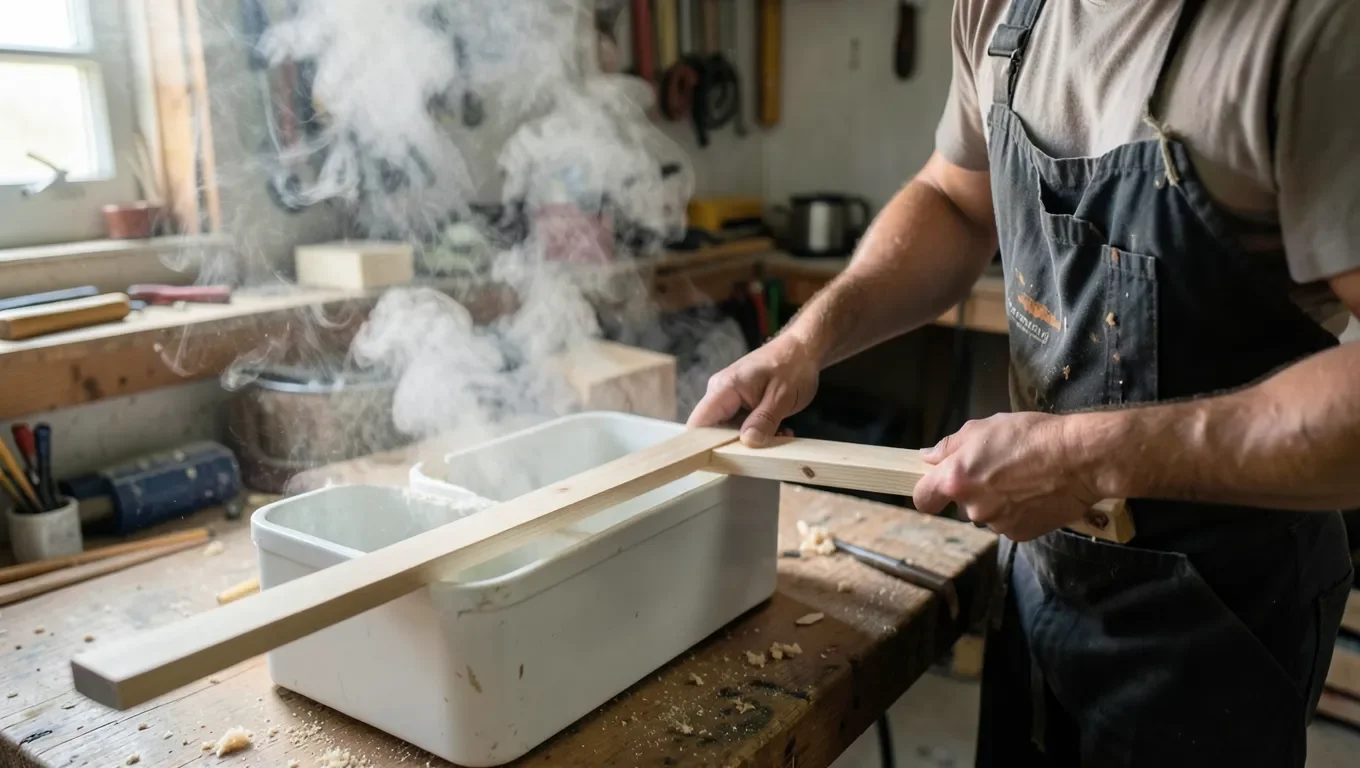
To bend wood for a rocking chair’s curved rockers or back slats, you have two realistic options: steam a thin strip of green or high-moisture straight-grained wood until it’s pliable and clamp it into a curved form, or glue several thin strips together (bent lamination) inside the same form. Steam bending gives you a solid-looking curved piece from one board; lamination is more forgiving for a first attempt and produces a stronger curve since the glue lines resist springback. Either way, the form (not the steaming or gluing) is what actually determines your final shape.
Steam Bending vs. Bent Lamination – Which One For Your Chair
Takes The Guesswork Out Of Moisture Content
 |
General Tools MMD4E Moisture Meter – $24.99 A pin-type meter tells you exactly when a soaked or air-dried strip has reached bendable moisture content instead of guessing from soak time alone.
|
Rocking chair curves – the rockers themselves and often the back slats or arms – need enough thickness to hold weight, which is exactly the range where the two bending methods trade off differently:
- Steam bending uses a single solid piece, so the grain runs continuously through the curve – this looks cleaner and shows no glue lines, but the wood will spring back somewhat after it dries and the curve needs to be slightly over-bent to compensate. It also has a real failure rate: a piece with any grain runout or hidden defect can crack partway through the bend.
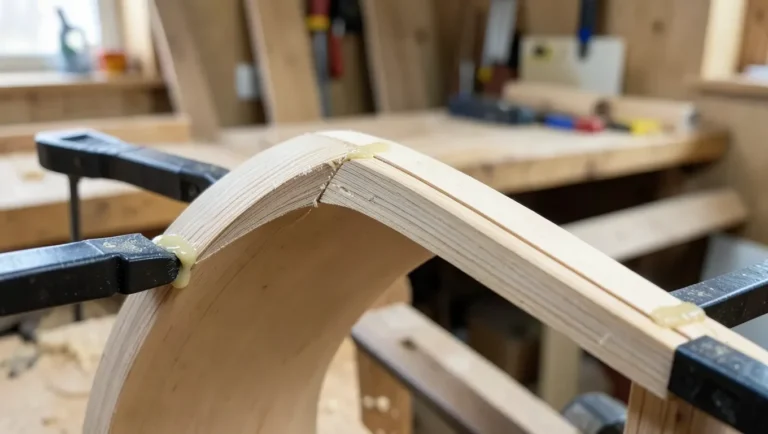
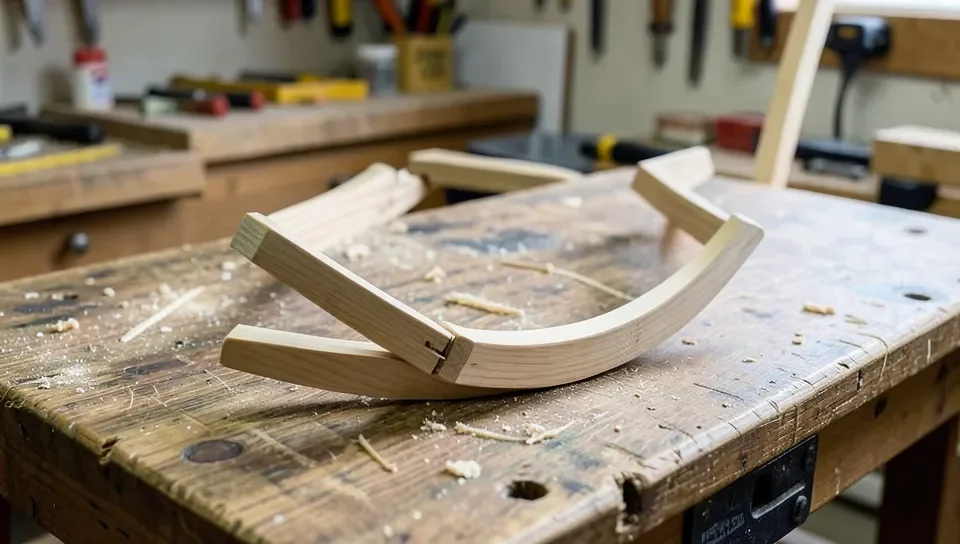
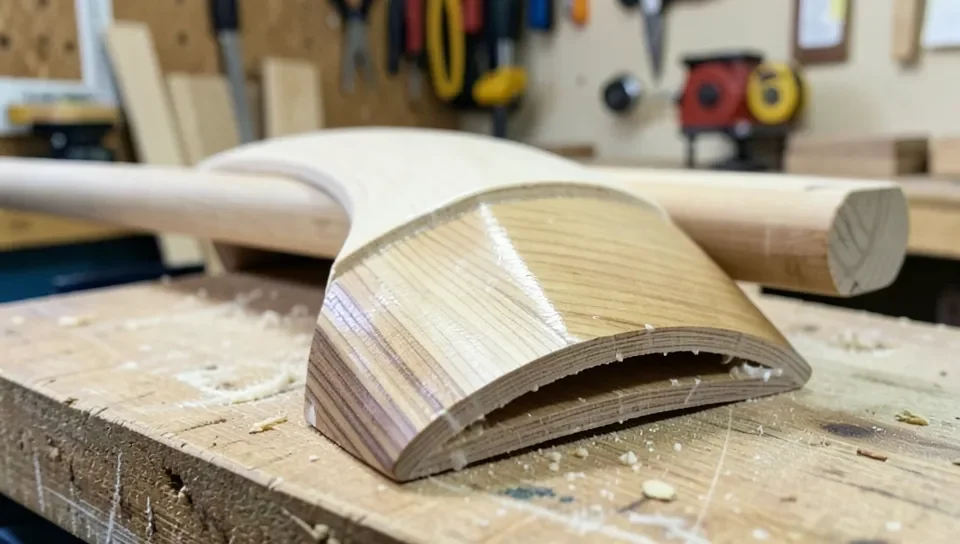
- Bent lamination glues several thin (usually 1/8″ to 3/16″) strips together inside the same curved form. It’s more predictable – thin strips rarely crack – and the finished curve holds its shape better because the cured glue locks in the bend instead of relying on the wood fibers alone to stay put. The tradeoff is visible glue lines unless you’re careful with strip selection and finish.
Most production rocking chairs actually use lamination for the rockers specifically, because a rocker takes repeated flexing load every time the chair rocks, and a laminated curve resists fatigue-cracking better than a single steam-bent piece under that kind of repeated stress.
Choosing Wood That Will Actually Bend
| Wood Type | Why It Works |
|---|---|
| White Oak | The classic steam-bending wood – long, flexible fibers and a long track record in chair-making |
| Ash | Similar bending properties to oak, slightly lighter in color and weight |
| Hard Maple | Bends well, especially in thin strips for lamination; less forgiving for thick steam bends |
| Walnut | Workable for lamination strips; more prone to cracking in thick steam bends than oak or ash |
Straight, even grain matters more than species. A board with grain that runs out at an angle instead of following the length of the piece is far more likely to snap mid-bend, no matter how good the species is for bending in general. Inspect each blank before you cut – sight along the edge and reject anything where the grain visibly angles off toward one face.
Checking Moisture Content Before You Bend
Steam bending works because heat and moisture together temporarily soften the lignin that holds wood fibers rigid – it doesn’t work nearly as well on wood that’s already kiln-dried to typical furniture moisture content (6-8%). Green or air-dried wood in the 20-30%+ range bends far more reliably. If you’re working from kiln-dried lumber, soak the strips in water for 24-48 hours before steaming to bring the moisture content back up; a moisture meter takes the guesswork out of knowing when you’re in the right range instead of estimating from how long the wood has been soaking.
Building the Bending Form
The form is what actually shapes the curve, for either method. Cut the curve you want out of thick plywood or MDF (glue two or three layers together for enough thickness to hold clamps), sand the curved edge smooth, and make it a hair tighter than your final target – both steam-bent wood and glue lamination will spring back slightly once released, typically 3-8% of the curve depending on species and thickness, so a form cut to your exact target curve will under-bend the finished piece.
Method 1: Steam Bending a Rocker Blank
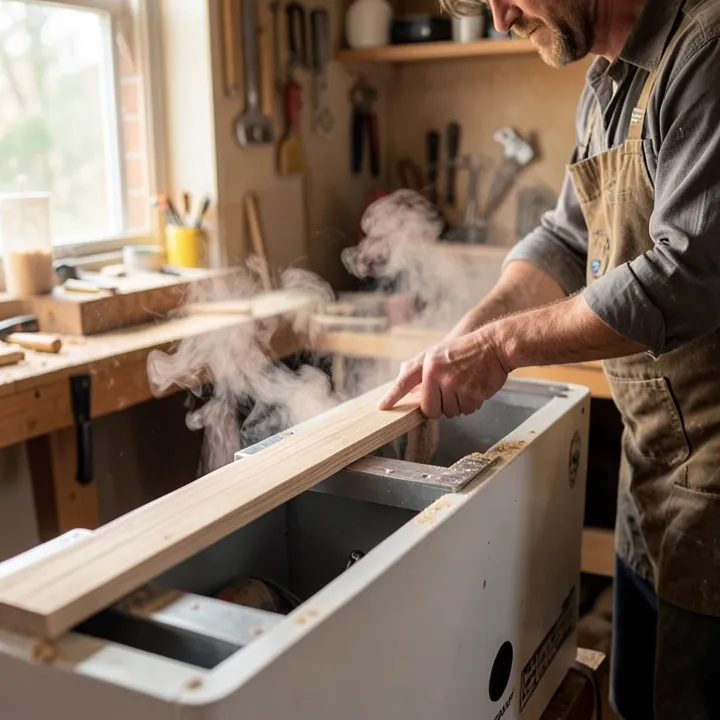
- Build or buy a steam box – a length of PVC pipe with end caps and a hose fitting works fine for chair-sized parts. Feed steam in from a wallpaper steamer or a kettle with tubing.
- Steam the strip for roughly one hour per inch of thickness, keeping the box as close to 200-212°F as you can manage.
- Pull the strip out and immediately clamp it into the form, working from the center outward so the bend doesn’t kink at one spot.
- Leave it clamped in the form for at least 24 hours – longer for thicker stock – before releasing.
Method 2: Bent Lamination
- Resaw or plane your stock into thin, uniform strips – thinner strips (1/8″) bend around a tighter radius with less risk of cracking than thicker ones (3/16″+).
- Spread glue evenly on every mating face. Standard PVA wood glue works for most rockers; epoxy is worth the extra cost and cure time for a piece that will see heavy repeated flexing.
- Stack the glued strips and clamp the whole stack into the form, working quickly before the glue starts to grab – have your clamps laid out and ready before you spread the first strip.
- Let it cure fully per the glue’s stated time (usually 24 hours for PVA) before removing from the form.
Finishing and Fitting the Curved Pieces
Once released from the form, let the piece sit for a day or two before final trimming – some additional minor springback is normal even after proper cure time. Sand progressively finer along the curve, following the grain direction on a steam-bent piece or working carefully across the layer lines on a lamination. Before assembly, dry-fit every curved piece against the rest of the chair frame and check the rock is smooth and even side to side; a rocker with even a slight twist will make the finished chair rock unevenly no matter how well the rest of the joinery is done. Finish with a durable clear coat or oil rated for a piece that will flex slightly under load – a brittle film finish is more likely to crack along a curve than a penetrating oil finish.
Common Mistakes
- Using kiln-dried wood straight off the shelf for steam bending without soaking first – it’s too dry to take a tight curve reliably.
- Cutting the form to the exact final curve instead of slightly tighter to account for springback.
- Rushing the clamp-up on a lamination – glue that starts to set before all the strips are clamped leaves a weak, uneven bond.
- Skipping the dry-fit check on rockers specifically – an uneven pair will make the whole chair rock crooked.
Frequently Asked Questions
Which method is better for rocking chair rockers – steam bending or lamination?
Bent lamination generally holds up better for rockers specifically, since they flex with every rock of the chair and a glued-up lamination resists fatigue cracking better than a single steam-bent piece. Steam bending gives a cleaner, glue-line-free look and is a reasonable choice for lower-stress curved parts like an arm or a back slat.
What wood types are best for bending?
White oak and ash are the traditional choices for steam bending thanks to their long, flexible fibers and low crack rate. Hard maple and walnut work well for thin lamination strips but are less reliable for thick, single-piece steam bends.
How long does wood need to be steamed?
Plan on roughly one hour of steaming per inch of thickness, keeping the box near 200-212°F. Work fast once you pull the piece out – it starts stiffening again as it cools, so the form needs to be ready before the wood comes out of the box.
Do I need to soak wood before steaming it?
If you’re starting from typical kiln-dried lumber (6-8% moisture), yes – soak it in water for 24-48 hours first. Green or already-high-moisture wood can usually skip the soak. A moisture meter is the reliable way to confirm you’re actually in a bendable range rather than guessing from soak time.
Conclusion
Bending wood for a rocking chair comes down to picking the right method for the part – lamination for the rockers that take the repeated flexing, steam bending where you want a single continuous grain line – and getting the moisture content and form right before you commit a good piece of wood to the process. For the more general mechanics of softening wood fibers with water instead of steam, see our guide on how to bend wood with water.
Sponsored / affiliate links. As an Amazon Associate I earn from qualifying purchases. I may earn additional commission from eligible campaigns.