How to Taper a Wood Dowel: 5 Methods (Sharpener to Lathe)
The fastest way to taper a wood dowel is a jumbo pencil sharpener, which handles dowels up to 5/8 in (16 mm). Thicker stock needs a drill and sandpaper or a lathe. Taper only the lead-in end, though: a joint dowel should stay straight-sided so glue has full contact. This guide compares five methods, gives taper lengths by dowel size, and lists the mistakes that ruin a point.
The Fastest Way to Taper a Dowel: A Jumbo Pencil Sharpener
Best Dowel Pointing Pick | |
 |
Pica 560/12 Jumbo Sharpener for Large Pencils A hand-held sharpener with a wide cone-shaped opening. It cuts the same kind of point on a small dowel that a pencil sharpener cuts on a pencil.
|
As an Amazon Associate we earn from qualifying purchases. | |
A dowel is round stock, exactly what a pencil sharpener is built to cone. The catch is size: an ordinary desk sharpener stops at roughly pencil width, while a jumbo model such as the Pica 560/12 opens to 16 mm, which covers the common 1/4 in, 5/16 in, 3/8 in, 1/2 in and 5/8 in dowels. Push the dowel in and twist, then check the point every few turns so you stop before you shave it to a needle.
Hardwood dowels such as birch and maple come out with a clean, glossy cone. Pine and other softwoods work too, but they tear at the tip if the blade is dull. If your dowel is thicker than 5/8 in, skip ahead to the drill or lathe method below.
Taper or Chamfer? What Length Each Job Needs
Most instructions say a tapered dowel makes a stronger joint. That is a myth worth correcting. A dowel in a joint works because its full length grips glue against the hole walls, so a long taper removes glue surface right where you need it. What helps is a small lead-in chamfer that lets the dowel start into the hole and keeps it from catching on the rim. Long tapers belong on pegs, stakes, spindles and pointed pins, not on glue-up dowels.
Use the table below as a starting point. The chamfer figures are the usual 1/16 in lead-in for joint dowels, and the point length uses the common 2x to 3x diameter rule of thumb, which gives a taper that looks natural without going needle-thin. Leave a flat tip about 1/16 in wide, since a razor point snaps off the first time it hits a hard surface.
| Dowel diameter | Metric | Joint chamfer (lead-in) | Gentle point length (2x to 3x) |
|---|---|---|---|
| 1/4 in | 6.4 mm | 1/16 in | 1/2 in to 3/4 in |
| 3/8 in | 9.5 mm | 1/16 in | 3/4 in to 1-1/8 in |
| 1/2 in | 12.7 mm | 1/16 in to 1/8 in | 1 in to 1-1/2 in |
| 5/8 in | 15.9 mm | 1/16 in to 1/8 in | 1-1/4 in to 1-7/8 in |
| 3/4 in | 19.1 mm | 1/8 in | 1-1/2 in to 2-1/4 in |
| 1 in | 25.4 mm | 1/8 in | 2 in to 3 in |
For drawbore pegs, the tapered lead end is the whole point: the tip has to slide through holes that are deliberately offset, then swell to full size behind it. Cut the pegs from straight-grained hardwood, and taper only the first inch or so.
Five Ways to Taper a Wood Dowel Compared
| Method | Dowel size | Speed | Skill | Best for | Main risk |
|---|---|---|---|---|---|
| Jumbo pencil sharpener | Up to 5/8 in (16 mm) | Fast | Beginner | Quick conical points on small dowels | Fixed point shape, dull blade tears softwood |
| Drill and sandpaper | Whatever your chuck grips | Medium | Beginner | Any taper length on chuckable dowels | Sanding a fingertip, whip on long dowels |
| Lathe | 1/4 in and up | Medium | Intermediate | Long, precise, matching tapers | Catches on thin stock, needs a lathe |
| Belt sander | 3/8 in and up | Fast | Intermediate | Batch of short pegs | Belt grabs and pulls the dowel |
| Knife, plane or rasp | Any | Slow | Beginner | One-off points without power tools | Uneven facets, cutting toward your hand |
If you only taper a dowel now and then, the sharpener and the drill method cover almost every case. Before any of them, cut the dowel to final length with a clean square end. The guide to cutting a dowel covers splinter-free cuts, and if you need a whole run of dowels first, see how to make wooden dowels.
How to Taper a Dowel With a Drill and Sandpaper
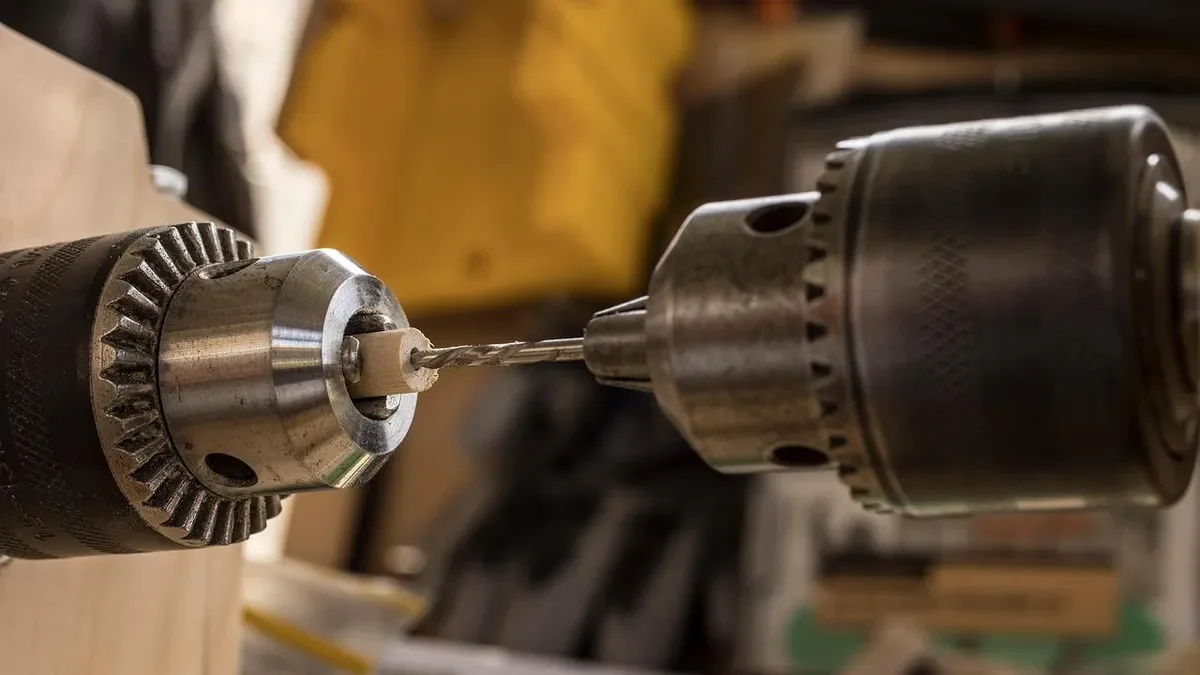
This is the method that works on almost any dowel your drill can grip, and it lets you choose the taper length. Wear safety glasses, and remove gloves and loose cuffs first, because anything that can catch will wrap around a spinning chuck.
- Chuck the dowel with about 3 to 4 in sticking out. Long overhang makes the free end whip and taper unevenly.
- Mark the taper length on the dowel with a pencil, using the table above.
- Run the drill at low to medium speed. Fold a sheet of 80 to 100 grit sandpaper into a pad so your fingers are not on the moving surface.
- Hold the pad against the end and angle it into the dowel, working from the taper line toward the tip. Rock the pad slightly so the taper stays even all the way around.
- Stop every 10 to 15 seconds to look at the profile. Sanding is quick, and a taper that is too long or too short cannot be undone.
- Switch to 150 then 220 grit to smooth the surface, and ease the very tip so it is not razor sharp.
If the taper comes out lopsided, the dowel is probably not seated straight in the chuck. Loosen it, rotate it a quarter turn, retighten, and check that the free end runs true before you sand again.
How to Taper a Dowel With a Jumbo Pencil Sharpener
- Check the dowel diameter with calipers. It must be 16 mm or less, and store dowels are often slightly off from the labeled size.
- Cut the end square and remove any splinters so it feeds smoothly.
- Push the dowel into the opening until it touches the blade, then twist it in one direction with steady pressure.
- Pull it out after four or five full turns and look at the cone. Repeat in short bursts until the tip is where you want it.
- Finish by rubbing the cone with 220 grit and blowing off the shavings.
A good check is to compare the cone against a test hole: drill a scrap board with the bit size that matches your dowel and confirm the tapered end starts into it by hand with light pressure.
How to Taper a Dowel on a Lathe
On a lathe the dowel spins between centers or in a chuck while a sharp spindle gouge or skew chisel removes wood, so you can cut a long, smooth taper and make several identical ones. Set the tool rest close to the work, keep the speed at a level with no vibration, and wear a face shield. Thin dowels flex under the tool, so support the free end with the tailstock center whenever the taper allows it.
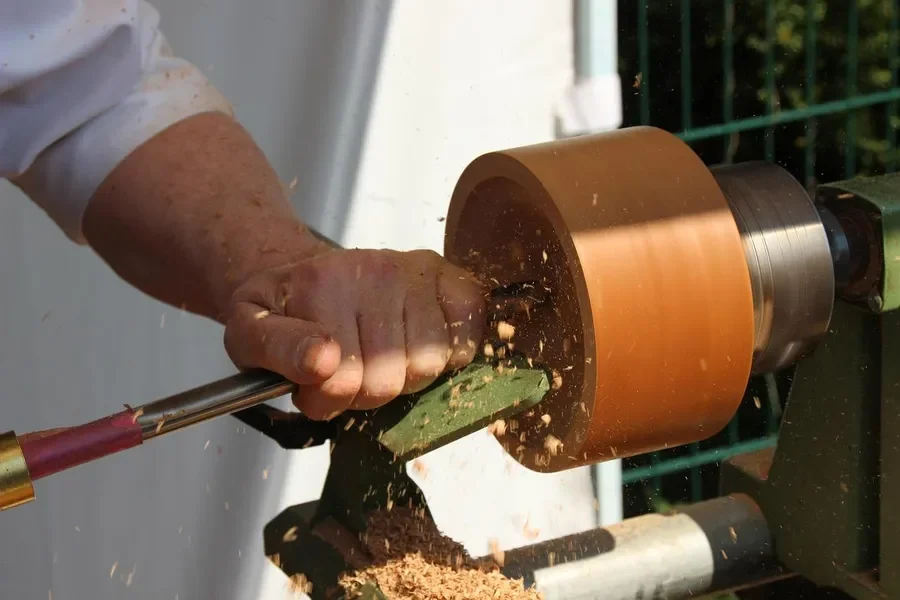
Take light cuts and work from the tip back toward full diameter rather than the other way round, since cutting into a shoulder is where thin stock catches. Finish with sandpaper while the piece is still spinning, using the same pad-and-low-pressure approach as the drill method.
Belt Sander, Knife and Hand Tools
A stationary belt sander tapers short, thick pegs quickly. Hold the dowel at a shallow angle against the belt, rotate it steadily with your fingers, and let the belt run down into the table so it pushes the dowel away from you rather than pulling it. Skip this for dowels under 3/8 in, which the belt can snatch from your fingers.
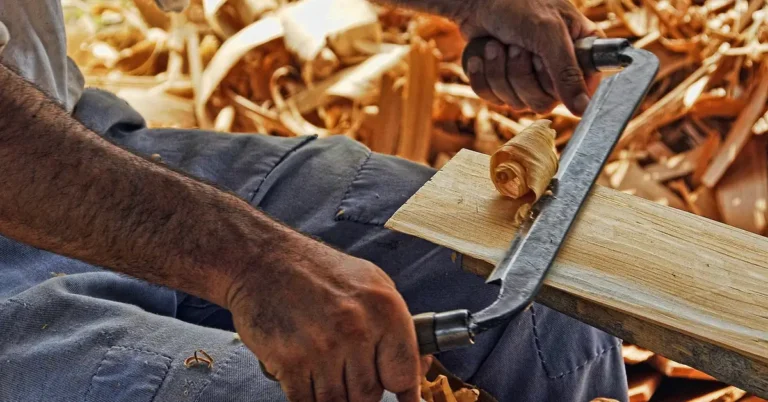
With no power tools, whittle the point with a sharp knife, cutting away from your body and rotating the dowel a little after each stroke, or rasp it and finish with sandpaper. Expect more facets than with a rotating method, so plan to sand.
If you are reducing a whole dowel to a smaller size rather than shaping the end, that is a different job. See how to reduce the diameter of a wooden dowel. For large poles and posts, use how to taper a wooden pole.
Why You Should Not Taper a Dowel on a Table Saw
Tapering jigs work well for flat or square stock such as table legs, but a round dowel rolls in the jig and can bind on the blade, which is a kickback risk. Save the saw for square stock: the table saw taper guide covers it safely. For dowels, use one of the rotating methods above.
Common Mistakes When Tapering Dowels
- Tapering a joint dowel along its whole length. It cuts glue contact where you need it. Chamfer only the lead-in.
- Wearing gloves at the drill or lathe. Gloves and cuffs can catch and wrap. Older guides often say to wear them, but rotating tools are the exception.
- Leaving too much dowel out of the chuck. The free end whips and the taper comes out uneven.
- Trusting the labeled size. Measure with calipers, especially for the sharpener limit and for hole fit.
- Sanding to a needle point. A tip that thin snaps and splinters. Leave a flat of about 1/16 in.
- Finishing the glue surface. Varnish or polyurethane on a dowel blocks the glue bond. Finish only the visible parts after assembly.
Checking the Fit Before You Glue
Drill a test hole in scrap with the bit that matches the dowel and try the tapered end. It should start by hand and seat with a light tap. If it needs a hammer to start, the chamfer is too small. For glued joints, a dowel with a shallow spiral or groove lets glue and trapped air escape, which stops a hydraulic lock in a blind hole.
Frequently Asked Questions
How do you taper a wood dowel without a lathe?
Chuck the dowel in a drill and hold sandpaper against it while it spins, or twist it in a jumbo pencil sharpener if it is 5/8 in (16 mm) or thinner. Both leave a round, centered taper in a minute or two.
Can you taper a dowel with a pencil sharpener?
Yes, if the dowel fits the opening. A standard pencil sharpener only takes about 8 mm, but a jumbo sharpener such as the Pica 560/12 takes up to 16 mm. Use a sharp blade and hardwood dowels for clean points.
How long should a dowel taper be?
For a point, a taper about 2 to 3 times the dowel diameter is a common rule of thumb, so a 1/2 in dowel gets a 1 in to 1-1/2 in taper. For a glue joint, only chamfer the last 1/16 in to 1/8 in.
Should dowels be tapered before gluing?
Only a slight chamfer on the leading end. A long taper shrinks the glued surface and weakens the joint, so keep the rest of the dowel straight-sided.
What is the best wood for tapered dowels?
Tight-grained hardwoods such as birch and maple hold a clean point. Softer species like pine crush and tear at the tip, so use a very sharp blade or fine sandpaper on them.
Conclusion
Use a jumbo pencil sharpener for quick points on dowels up to 5/8 in, a drill and sandpaper for anything you can chuck, and a lathe when several tapers must match. Keep tapers on pegs and pins short of the joint, chamfer glue dowels lightly, and never taper a round dowel on a table saw.
Sponsored / affiliate links. As an Amazon Associate I earn from qualifying purchases. I may earn additional commission from eligible campaigns.