How to Clean Sanding Belts (Crepe Stick, Solvents, When to Toss)
The fastest way to clean a sanding belt is a crepe or natural rubber cleaning stick, pressed against the belt while the sander runs. It only fixes a clogged belt, though, not a worn-out one, so a belt that still cuts slowly after cleaning needs replacing. This guide covers the stick method, when solvent is worth it, whether water is safe, and how to tell clogged from dull.
How to Clean a Sanding Belt With a Cleaning Stick
Best Belt Cleaning Stick Pick | |
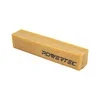 |
POWERTEC 71002 Abrasive Cleaning Stick, 8-1/2 Inch A natural rubber eraser stick that you hold against a running belt or disc to lift sawdust, pitch and gum out of the grit.
|
As an Amazon Associate we earn from qualifying purchases. | |
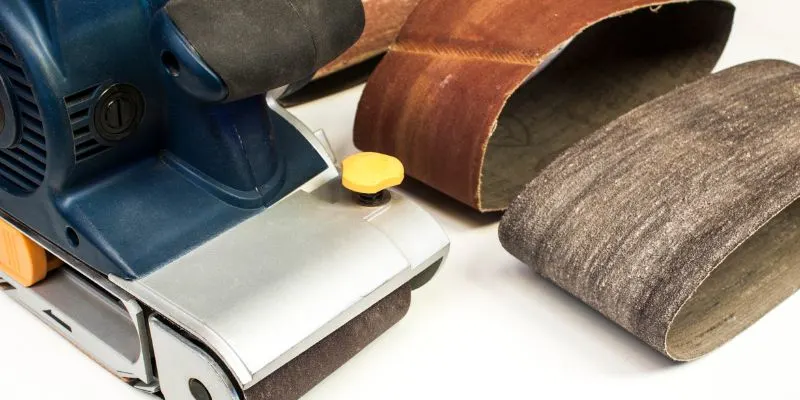
Sanding belts stop cutting for two different reasons, and only one of them is fixable. A loaded belt has sawdust, pitch or finish packed between the abrasive grains, so the grains cannot bite. A dull belt has grains that have worn down or broken away. A cleaning stick, sometimes sold as an abrasive cleaning stick or sanding belt eraser, is made from crepe or natural rubber. Held against the moving belt, the tacky rubber grabs the packed debris and pulls it out without dulling the grains.
Follow these steps on a benchtop or handheld belt sander:
- Secure the sander so both hands are free. Clamp a handheld belt sander upside down, or use the belt sander on its stand.
- Put on safety glasses and a dust mask. Loaded belts throw fine dust when the rubber hits them.
- Start the sander and let the belt come up to full speed.
- Press the stick lightly against the flat, exposed run of the belt. Keep your fingers well back from the rollers and from the point where the belt wraps around them.
- Hold the stick steady for a few seconds. You will see the belt lighten as the packed dust transfers to the rubber, and the stick will shed dark crumbs.
- Lift the stick away, switch the sander off, and inspect the belt. Repeat if dark patches remain.
Do not wait until the belt is completely black. Belt makers recommend using the stick often during a job, not just at the end, because catching the load early keeps heat down and keeps the abrasive cutting evenly. The stick should not be used on wide-belt or conveyor-type sanders. Those machines have large moving surfaces and their makers use other cleaning methods.
Cleaning sticks also work on discs. If you sand with a random orbital sander, the same stick clears loaded hook-and-loop discs, as long as you use it on a flat, spinning disc with the sander held firmly.
Which Clog Needs Which Fix
Most articles on this topic stop at the rubber stick. The stick is right for dry dust, but it is the wrong tool for some clogs. This table matches what you see on the belt to the method that suits it.
| What is on the belt | Best fix | Do it with the sander running? |
|---|---|---|
| Fine dry sawdust packed in the grit | Rubber cleaning stick | Yes, held on the exposed run |
| Cured pitch or gum from resinous wood | Rubber cleaning stick, several passes | Yes |
| Paint, varnish or finish residue | Cloth dampened with mineral spirits or denatured alcohol | No: switch off and unplug, ideally remove the belt |
| Belt is clean but still cuts slowly | Replace the belt, cleaning cannot restore worn grit | Not applicable |
| Torn edge, fraying, or a loose splice | Replace the belt right away | Not applicable |
The stick works best on residue that is cured or dry. If you have just sanded a wet or freshly finished surface, a soft, smeary load will not lift cleanly with rubber, and pressing harder only smears it deeper into the grit.
When to Use Solvent, and How to Do It Safely
For stubborn paint or resin-based clogs, belt makers suggest a cloth dampened with mineral spirits or denatured alcohol. The safety rules matter more than the technique:
- Switch the sander off and unplug it before any liquid touches the belt.
- Remove the belt from the machine if you can, and wipe it on a bench.
- Use a dampened cloth, not a soaked one, and work in a ventilated space away from ignition sources.
- Let the belt air dry completely before it goes back on. Belts with residual solvent are a fire hazard once they are running against wood.
Solvents can also soften the glue that holds the abrasive to its backing, so never soak a belt. Wipe, let it dry, and follow with the rubber stick once it is dry to lift what the solvent loosened.
Can You Wash a Sanding Belt With Water?
Water is the point where advice online splits. Woodworkers in forum threads report washing cloth-backed belts with a scrub brush and rinsing them, but they also warn that paper-backed belts swell and fall apart when wet. Because belts are made in several backings and glues, and the belt package rarely says which one you have, a rubber stick is the lower-risk first choice. If you do try water on a heavily loaded cloth-backed belt, test it on a spare belt first and let it dry flat and away from direct heat.
DIY Substitutes for a Cleaning Stick
If you do not have a stick on hand, a few household items work in a pinch:
- A crepe-soled shoe: clamp the sander upside down and press the sole against the running belt.
- A wine cork: works on the narrower belts of handheld sanders.
- Cured silicone caulk: once fully cured, peel it out of the tube and use it like a stick.
These are stopgaps. A purpose-made stick is a few dollars, is sized to be held safely, and is made of consistent rubber.
Clean or Replace: How to Tell
Cleaning restores a loaded belt only. Use this quick test after cleaning: sand a scrap of the same wood for ten seconds at your normal pressure. If the belt now removes wood at close to its normal speed and the surface looks even, the clog was the problem. If it still burnishes the wood, or leaves a shiny, slightly scorched surface, the grains are dull and the belt should be replaced.
Replace the belt immediately if you see fraying, tearing, a lifting splice or bare backing showing through, whether the belt is clean or not. A belt that fails at speed can break and throw pieces.
How to Stop Belts From Clogging So Fast
- Choose an open-coat belt for soft and resinous woods. Open coat leaves gaps between grains, roughly half to two-thirds of the surface covered, so dust has room to escape. Closed-coat belts cover more of the surface and load faster on pine and other pitchy wood.
- Slow down on resinous wood. Heat softens pitch, which then glues itself into the grit.
- Keep a steady feed. Stopping in one spot builds local heat and burns the belt and the wood.
- Use dust collection. A vacuum or dust port pulls fine dust away before it settles into the belt.
- Sand bare wood first. Sanding old finish or paint clogs belts fastest, so scrape or strip heavy finish before sanding where possible.
For help choosing a belt material that lasts longer on your project, see our comparison of aluminum oxide vs silicon carbide sandpaper. And if the sander itself is running hot or loud, that is a separate problem covered in how to clean a belt sander so it does not overheat.
Storing Sanding Belts So They Last
Abrasive makers give storage guidance because heat and humidity weaken the glue and the backing. Belt suppliers suggest keeping belts at about 60 to 80 degrees Fahrenheit and roughly 45 percent relative humidity, out of direct sun and off concrete floors. Hang them on wooden pegs or dowels rather than metal, with room between belts, rather than folding or bending them.
If you are still deciding which sander to buy, our belt sander vs orbital sander comparison and the best belt sander for floors guide cover the machine side.
Frequently Asked Questions
How often should I clean sanding belts?
Clean a belt whenever you see it darkening or the cut slows, not only when it is fully clogged. Belt makers recommend using the stick frequently during a job. For steady use, a quick pass every few minutes of sanding keeps the load from packing in.
Can I wash sanding belts with water?
Only some can be. Woodworkers report washing cloth-backed belts, while paper-backed belts swell when wet. Since the backing is often not labeled, use a rubber cleaning stick first and test water on a spare belt if you try it.
Why does my sanding belt clog so quickly?
Common causes are sanding resinous wood such as pine, sanding old paint or finish, running too slowly or pressing too hard so heat builds, and using a closed-coat belt where an open-coat one would suit. Dust collection also helps.
What can I use if I do not have a cleaning stick?
A crepe-soled shoe pressed on the running belt, a wine cork on small belts, or cured silicone caulk peeled from its tube can substitute. Keep fingers clear of the belt and rollers in every case.
Can a cleaning stick fix a dull sanding belt?
No. It removes debris packed between the grains but cannot sharpen worn grit. If the belt still cuts slowly after cleaning, or the wood looks burnished, replace the belt.
Conclusion
A rubber stick used early and often keeps most belts cutting until the grit is truly worn. Reserve solvent for paint and finish clogs, do it with the machine off and the belt fully dry, and swap the belt when cleaning stops helping. A ten-dollar stick and a habit of checking the belt saves far more belts than any deep-cleaning trick.
Sponsored / affiliate links. As an Amazon Associate I earn from qualifying purchases. I may earn additional commission from eligible campaigns.