How to Clean a Teak Wood Table (and Why You Shouldn’t Oil It Outdoors)
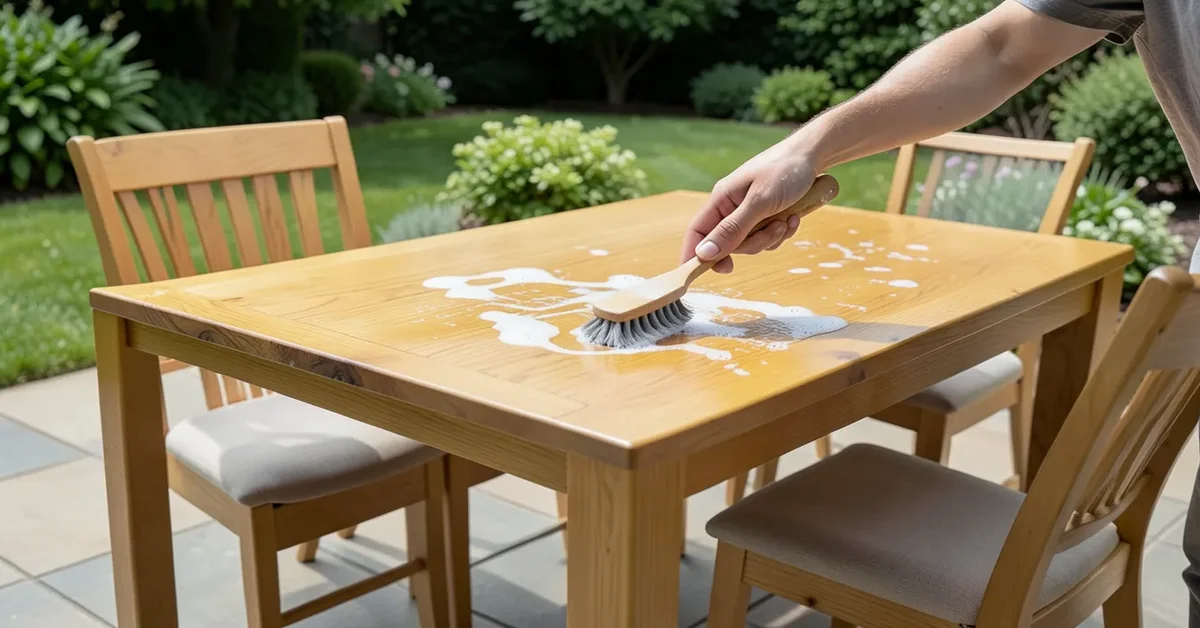
Clean a teak table with mild soap and water in the direction of the grain, rinse thoroughly, and let it dry completely — and if it’s an outdoor table, most professional teak furniture makers actually recommend against regularly oiling it, which contradicts what a lot of care guides say. Teak’s natural oils already make it one of the most weather-resistant woods available; reapplying oil outdoors traps moisture underneath the surface and can encourage the exact mildew growth you’re trying to avoid.
Why Teak Behaves Differently From Other Woods
Best Teak Cleaner for Restoring Color
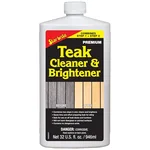 |
Star Brite Teak Cleaner & Brightener, 32 oz – $34.94 For graying or stained teak that plain soap and water won’t fully restore, a dedicated brightener lifts the surface without the aggressive scrubbing that damages the wood.
|
Teak’s natural oil and silica content is what makes it rot- and insect-resistant enough for outdoor furniture and boat decking without any finish at all. That same oil content is why harsh degreasers and strong detergents do more harm than good — stripping the natural oils dries out the wood, leading to the cracking and graying that teak owners often mistake for a cleaning problem rather than an over-cleaning problem. Left alone outdoors, teak weathers to a silvery gray patina; that’s not damage, it’s the wood’s natural response to UV exposure, and it doesn’t affect the wood’s structural integrity or lifespan at all.
What You’ll Need
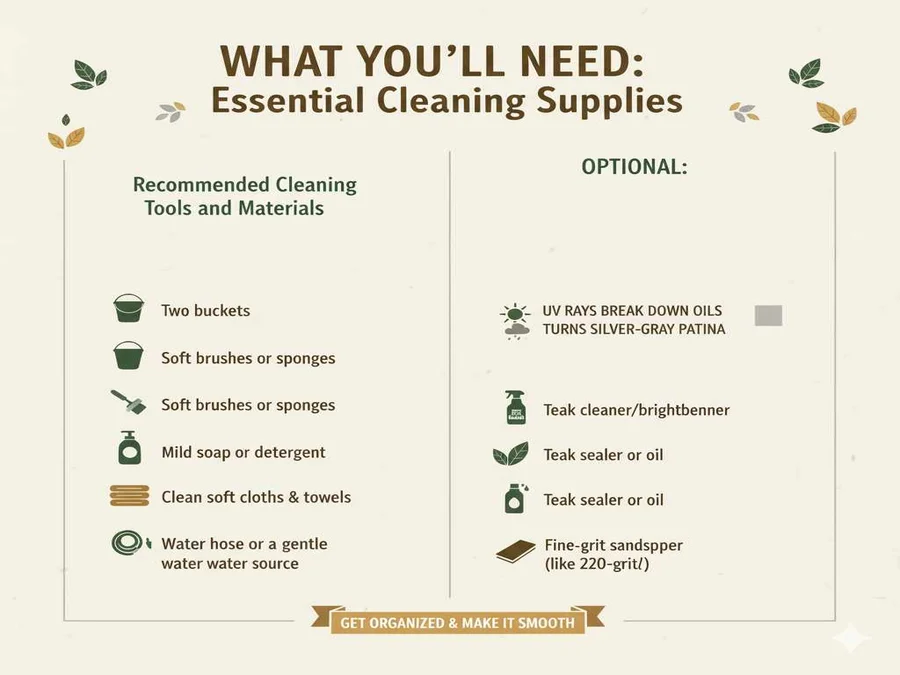
- Two buckets (one for wash water, one for rinse water)
- A soft-bristle brush or sponge — never anything abrasive
- Mild dish soap or a dedicated teak cleaner
- Clean, soft towels
- A garden hose on a gentle spray setting
- Optional: teak brightener, for restoring the original golden color after graying
- Optional: 220-grit sandpaper, for smoothing isolated rough spots
Step-by-Step Cleaning
1. Clear and Dust
Remove everything from the tabletop, then brush or wipe away loose dirt and debris before introducing any water — this keeps you from grinding grit into the wood grain once it’s wet.
2. Wash With the Grain
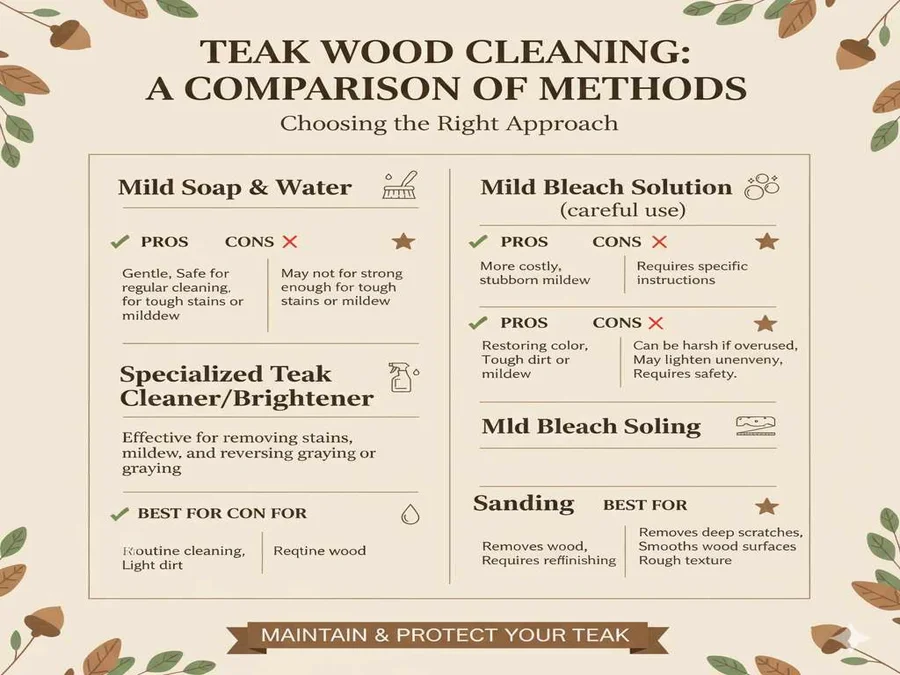
Mix about two tablespoons of mild dish soap per gallon of warm water. Dip your brush or sponge and scrub gently in the direction of the wood grain, working in small sections so the soap doesn’t dry on the surface before you rinse it. Scrubbing across the grain can lift and roughen the wood fibers over time.
3. Rinse Completely
Any soap residue left behind dries into a dull film, so rinse more thoroughly than feels necessary — a garden hose on a gentle setting works better than a bucket for getting into corners and joints.
4. Handle Mildew Separately
Green or black spots are mildew, not dirt, and soap alone won’t fully clear them. A solution of one part household bleach to four parts water, applied to just the affected spots and rinsed thoroughly after a few minutes, handles it — test on a hidden area first, since bleach can lighten teak unevenly if overused.
5. Dry Completely
Towel off excess water and let the table air dry fully before deciding whether it needs any further treatment. A few hours in open air on a mild day is usually enough; avoid leaving it in intense, direct sun for extended periods, which can dry the wood out faster than normal weathering.
Should You Oil an Outdoor Teak Table?
This is where most cleaning guides give advice that outdoor furniture manufacturers actually disagree with. Teak oil looks great immediately after application — it deepens the golden color and makes the table look freshly finished — but several major teak furniture makers explicitly advise against using it outdoors long-term, because the oil sits on the surface rather than fully curing, and it can trap moisture against the wood in humid or rainy conditions, which promotes the mildew growth you’re trying to prevent. If you want that rich golden look, a teak sealer (which forms a harder, more weather-resistant barrier and includes UV inhibitors) is generally the better choice for furniture that lives outside year-round. If you’d rather skip products altogether, letting the wood weather naturally to its silver-gray patina is also a completely valid, lower-maintenance option — it’s purely a look preference, not a durability tradeoff.
Fixing Common Problems
Stubborn Graying
A dedicated teak brightener (different from a basic cleaner) uses a mild acid to lift the gray surface layer and reveal the original color underneath. Follow the product’s instructions exactly, since overuse can leave the wood looking bleached rather than golden.
Minor Scratches
Light scratches usually sand out with 220-grit sandpaper worked along the grain. Wipe away the dust afterward; the sanded spot will blend in as the wood weathers evenly with the rest of the table.
Tree Sap or Sticky Residue
Scrape off what you can with a plastic scraper first, then dab the remainder with a cloth lightly dampened in mineral spirits, testing on a hidden spot first since mineral spirits can affect the surface finish on treated teak.
Ongoing Maintenance
Wipe up spills as they happen and use coasters or placemats to prevent ring stains and heat marks. A full cleaning once or twice a year — typically in spring for outdoor tables — keeps buildup from accumulating between deeper cleans. Never use a pressure washer on teak; the high-pressure spray tears into the wood’s softer grain lines and leaves a rough, splintery surface that no amount of cleaning fixes afterward.
Frequently Asked Questions
How Often Should I Clean My Teak Table?
Outdoor tables benefit from a thorough cleaning at least once a year, typically in spring. Indoor tables need less: wipe as needed and do a deeper clean seasonally.
Can I Use a Power Washer on My Teak Table?
No. The high pressure damages the wood’s softer grain fibers, leaving the surface rough and splintery. A garden hose on a gentle setting is safer and just as effective for rinsing.
What’s the Difference Between Teak Oil and Teak Sealer?
Teak oil sits on the surface and enhances color temporarily but can trap moisture outdoors, encouraging mildew. Teak sealer forms a more durable protective barrier with UV inhibitors and is the better long-term choice for furniture left outside.
My Teak Table Has Turned Gray. Can I Get the Golden Color Back?
Yes — graying is natural weathering, not damage. A dedicated teak brightener lifts the gray layer and restores the original color. Whether to bother is purely a style preference, since gray teak is just as structurally sound as golden teak.
What Household Cleaners Should I Avoid on Teak?
Skip abrasive cleaners, steel wool, ammonia-based products, and strong detergents. They strip teak’s natural protective oils and can leave the surface rougher and more prone to drying out.
Bottom Line
Teak cleaning is simple by design: mild soap, gentle scrubbing with the grain, and a thorough rinse handle most maintenance. The one piece of advice worth reconsidering is reflexively oiling an outdoor table — a sealer or simply letting it weather naturally often serves the wood better long-term.
Sponsored / affiliate links. As an Amazon Associate I earn from qualifying purchases. I may earn additional commission from eligible campaigns.