How to Clean Outdoor Wood Furniture (Wash, Mildew & Teak Care)
Washing outdoor wood furniture the right way comes down to three decisions: what cleaner you use, how hard you scrub, and whether the piece is teak. Get those right and a wood patio chair or bench can look presentable for another decade. Get them wrong – chlorine bleach on the wrong wood, a pressure washer held too close, resealing before the wood has actually dried – and you can strip color, gouge the grain, or trap moisture under a fresh coat of oil.
This guide covers oxygen bleach for mildew and algae stains (and why chlorine bleach is the wrong tool for that job), routine soap-and-water washing for everyday grime, the separate rules for teak furniture, and how to avoid the two most common damage mistakes: over-aggressive pressure washing and resealing wood that isn’t fully dry yet.
Deep-Cleaning Mildew and Algae With Oxygen Bleach (Not Chlorine)
Black spots, a green film, or general graying on outdoor wood furniture is almost always mildew or algae growth, not just surface dirt, and dish soap alone won’t fully clear it. Oxygen bleach – sold as a sodium percarbonate powder concentrate – breaks down those organic stains without the downsides chlorine bleach brings to wood.
Best Oxygen Bleach Wood Cleaner
 |
Wash Safe Cedar Wash Wood Cleaner – $44.27 The same type of oxygen bleach cleaner this guide recommends for mildew and algae stains on painted or sealed outdoor wood furniture.
|
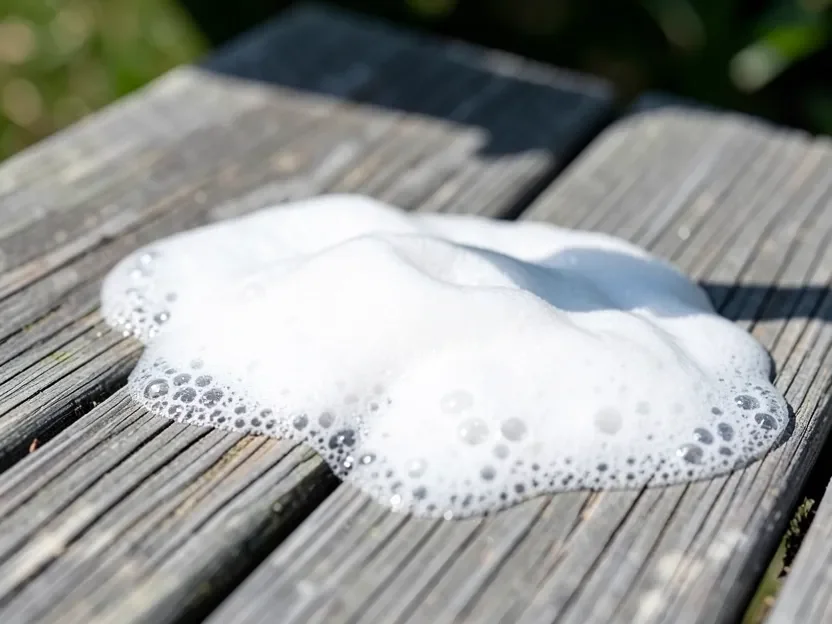
Mix the oxygen bleach powder into water per the label – most concentrates call for roughly a cup per gallon – and apply it with a garden sprayer or a brush. Let it sit and foam for 15 to 20 minutes before scrubbing with a soft-bristle brush and rinsing thoroughly with clean water. The foaming is the peroxide doing its work, so don’t rinse it off early.
Chlorine bleach can technically kill the same mildew, but it does real damage that oxygen bleach doesn’t. It breaks down lignin, the compound that holds wood fibers together, which is why chlorine-bleached wood often ends up looking gray, fuzzy, and dry. It’s also harsh on any grass or plants nearby. The one common exception is redwood and cedar – for those species, an oxalic acid-based brightener (a different product from oxygen bleach) is usually the better call, since it removes the same stains without pulling the reddish tone out of the wood.
Routine Cleaning: Mild Soap and a Soft Brush Between Deep Cleans
Between deep cleans, ordinary buildup – dust, pollen, bird droppings, general grime – doesn’t need bleach of any kind. A few drops of mild dish soap in a bucket of warm water, applied with a soft-bristle brush and rinsed off with a regular hose spray, is enough. Scrub with the direction of the wood grain rather than across it, since cross-grain scrubbing on softwoods like pine or fir can fuzz the surface.
Let the furniture air-dry in a shaded spot rather than direct sun. Full sun can dry the surface of the wood faster than the moisture trapped underneath, which is one of the more common causes of splitting on older outdoor pieces. A monthly soap-and-water wash during the season keeps most furniture from ever needing the oxygen bleach treatment above.
How Often You Actually Need to Wash It
A quick soap-and-water wipe-down every 4 to 6 weeks during the season keeps most outdoor wood furniture from ever developing the mildew and algae stains that need the oxygen bleach treatment above. Humid climates and shaded, poorly ventilated patios push that toward the shorter end – mildew needs moisture and low airflow to establish, and a covered porch that doesn’t get direct sun or wind dries out slower than an open deck. Two other times to always wash, regardless of schedule: right after peak pollen season, since pollen holds moisture against the wood and feeds mold, and before putting furniture into winter storage, since anything dirty or damp when it’s covered or boxed up will mildew in storage rather than outside where at least it gets some air and sun.
Teak Is Different: Skip the Bleach Entirely
Teak behaves differently from painted or sealed softwood furniture, and the biggest mistake is treating it the same way. Teak’s own natural oils are what make it weather-resistant without a sealer in the first place, and bleach – oxygen or chlorine – strips those oils right along with the stain.
For teak, use a dedicated teak cleaner and brightener – usually sold as a two-part kit, an acidic cleaner followed by a brightener – or, for light mildew, a mix of mild soap and warm water applied with a soft brush. If the wood has grayed and you want its original honey-brown tone back, the brightener step is what actually restores the color; plain oxygen bleach will clean teak but won’t bring the color back the way a teak-specific brightener does. Rinse well and let it dry naturally in the shade rather than direct sun, which can dry teak out and encourage the surface to check (small splits) over time.
Don’t Let a Pressure Washer Gouge the Wood
A pressure washer feels like the fast option, but it’s one of the more common ways outdoor wood furniture gets damaged during “cleaning.” Anything above roughly 1,200 to 1,500 PSI held close to a softwood surface can gouge the wood or raise and fuzz the grain, because pine, fir, and cedar are soft enough that high-pressure water physically erodes the surface fibers.
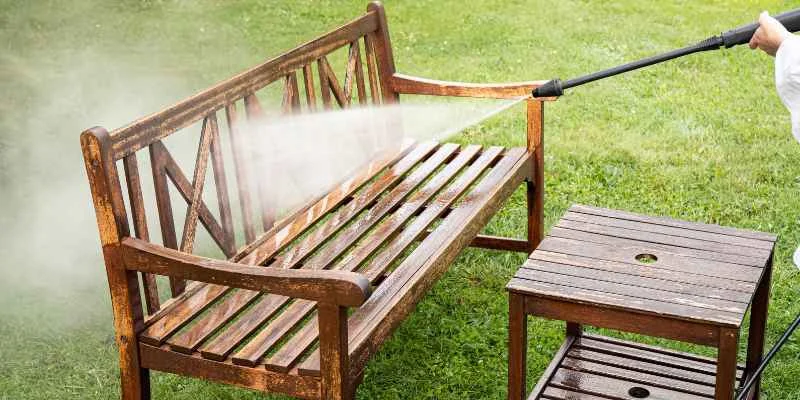
If you use a pressure washer at all, keep it on a wide fan-spray tip, hold the nozzle at least 12 inches back, and keep it moving rather than parked on one spot. For most outdoor wood furniture, a garden hose and a soft-bristle brush do the job without that risk, and they’re the right choice for teak specifically.
Let It Dry Completely Before Resealing or Oiling
Whatever cleaner you use, let the wood dry completely before applying any sealer, oil, or teak protector. That usually means a full 24 to 48 hours in dry weather, longer if it’s humid or the wood is thick. Sealing over wood that’s still damp traps that moisture underneath the new coat, which is exactly the environment mildew needs to come back, and it can cause the new finish to peel or bubble within a season.
Frequently Asked Questions
What’s the best way to clean outdoor wood furniture?
For routine grime, use mild dish soap and warm water with a soft-bristle brush, then rinse with a hose and let it air-dry in the shade. For black or green mildew and algae stains, use an oxygen bleach solution instead – let it foam for 15 to 20 minutes, scrub, and rinse thoroughly. Save chlorine bleach for nothing on wood; it breaks down the wood fibers themselves.
Can I use bleach on outdoor wood furniture?
Oxygen bleach is fine for most painted or sealed outdoor wood – it removes mildew and algae stains without harming the wood fibers. Chlorine bleach is not a good choice for any outdoor wood furniture; it breaks down lignin, the compound holding wood fibers together, which leaves the surface gray, fuzzy, and dry. Avoid both types of bleach on teak specifically, since either one strips its natural protective oils.
How do I clean teak outdoor furniture?
Skip bleach entirely and use a dedicated teak cleaner and brightener kit, or a mild soap-and-water wash with a soft brush for light mildew. A teak brightener is also the product to use if you want to restore teak’s original honey-brown color after it has grayed – plain cleaning alone won’t do that. Let it dry naturally in the shade.
Can I pressure wash outdoor wood furniture?
Carefully, and not on teak. Anything above roughly 1,200 to 1,500 PSI held close to softwood can gouge the surface or raise and fuzz the grain. If you use one, keep it on a wide fan tip, hold the nozzle at least 12 inches back, and keep it moving. A garden hose and soft-bristle brush is the safer default for most outdoor wood furniture.
Conclusion
Most outdoor wood furniture just needs a monthly soap-and-water wash with a soft brush. Reach for oxygen bleach – never chlorine – when mildew or algae actually show up, treat teak on its own separate track with a dedicated cleaner and brightener, go easy with any pressure washer, and give the wood a full day or two to dry before you reseal or oil it. That’s the whole routine, and it’s enough to keep a wood patio set looking good season after season.
Sponsored / affiliate links. As an Amazon Associate I earn from qualifying purchases. I may earn additional commission from eligible campaigns.