How to Remove Mildew From Teak Wood (Without Ruining the Finish)
To remove mildew from teak wood, brush the spores off along the direction of the grain first, then scrub with an oxygen-bleach solution (about ¼ cup of oxygen bleach powder per gallon of warm water) using a soft-bristle brush. Let it sit 10–15 minutes, scrub with the grain, then rinse thoroughly with clean water. Skip a vinegar-only wipe-down for anything past the lightest surface haze — it’s too weak on set-in fungal spores — and skip teak oil afterward too, since oil left sitting under new growth is one of the most common reasons mildew comes right back within a season.
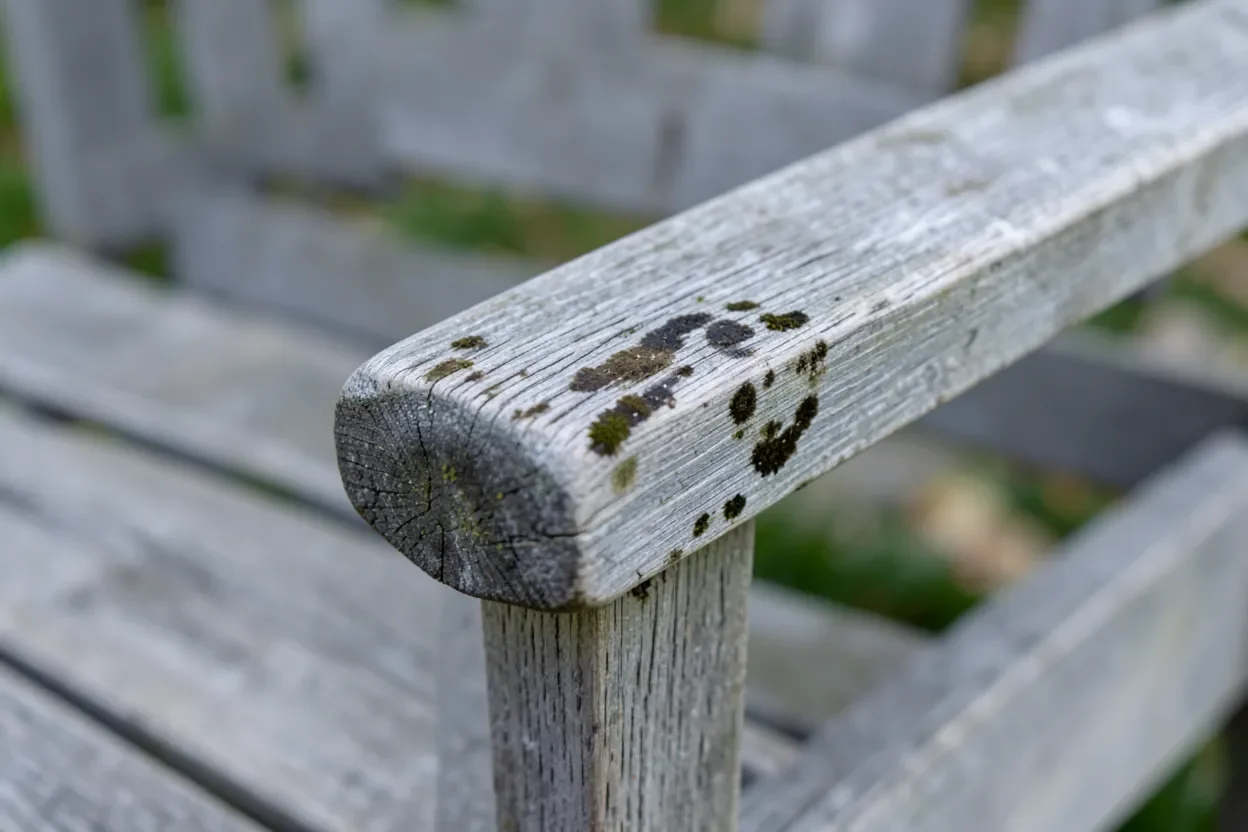
Teak’s natural oils make it one of the most rot-resistant woods you can leave outside, which is exactly why it ends up on boat decks and patio furniture in the first place. But that resistance is about the wood fibers themselves, not about what grows on the surface. Dust, pollen, and airborne mold spores still settle into teak’s open pores and grain lines, and in shaded or poorly-ventilated spots — under an eave, against a fence, beneath a cushion that never gets moved — the wood can stay damp long enough for that biological layer to take hold and darken into the gray-black speckling most people call “mildew.”
Mold, Mildew, or Algae? Why It Matters Before You Scrub
Outdoor teak can pick up three different kinds of growth, and they don’t all respond to the same treatment. Mildew is a surface-level fungus — a flat, powdery gray or white film that wipes or brushes off fairly easily once it’s loosened. Mold is a step further along: darker, often black, with a slightly raised or slimy texture because it has started feeding on organic residue trapped in the wood’s pores, not just sitting on top of it. Algae is different from both — it’s greenish, feels slick when wet, and needs direct sunlight and moisture rather than shade, so it usually shows up on the sunnier side of the same piece of furniture that has mildew in its shaded corners.
| Growth | Color | Texture | Where It Grows |
|---|---|---|---|
| Mildew | White / gray | Flat, powdery | Shaded, humid areas |
| Mold | Black / dark gray | Raised, slightly slimy | Trapped moisture, dirt buildup |
| Algae | Green | Slick when wet | Sun-exposed, damp surfaces |
The distinction matters because black mold and long-neglected mildew need the stronger oxygen-bleach treatment below, while light surface mildew or algae on a piece you clean every few months will usually come off with just soap, water, and a soft brush.
Best for Black & Weathered Teak
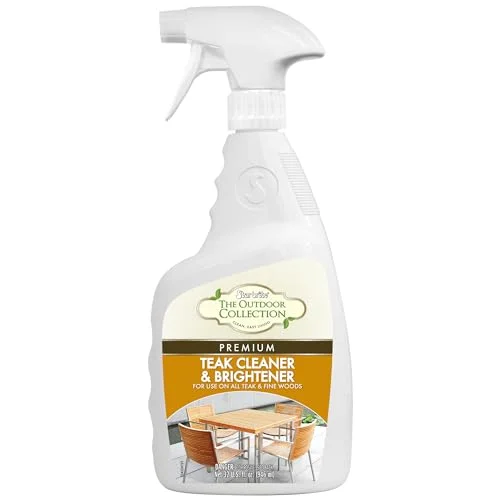 |
STAR BRITE Outdoor Collection Teak Cleaner & Brightener – $24.99 This one-step spray cleans and brightens weathered, gray, or black-mildewed teak without the separate acid-brightening step older two-step cleaners require.
|
A one-step teak cleaner and brightener like this is worth having on hand specifically for the “weathered gray or black teak” stage — it does the brushing and oxalic-acid brightening in a single pass instead of the two-step clean-then-brighten process older teak-care routines call for.
What You’ll Need
- Soft-bristle brush (a deck brush for large pieces, a toothbrush for joints and carved details)
- Oxygen bleach powder (not chlorine bleach — chlorine strips teak’s natural oils and can bleach the color unevenly)
- A bucket, warm water, and a garden hose for rinsing
- Rubber gloves and eye protection
- A stiff plastic scraper for buildup in carved grooves (never metal — it can gray the wood and leave rust flecks)
Step-by-Step: Removing Mildew From Teak Wood
- Dry-brush first. Before any liquid touches the wood, brush the surface with a dry, soft-bristle brush, working with the grain, not across it. Cross-grain brushing forces spores deeper into the wood’s pores instead of lifting them off, which is exactly the mistake that makes the next clean feel like it “didn’t work.”
- Mix the solution. Dissolve about ¼ cup of oxygen bleach powder into one gallon of warm water. For light surface mildew, mild dish soap and warm water is usually enough — save the oxygen bleach for gray, black, or set-in growth.
- Apply and let it dwell. Saturate the affected area with a sponge or brush and let the solution sit for 10–15 minutes. This dwell time is what actually kills the fungus; scrubbing immediately just spreads it around.
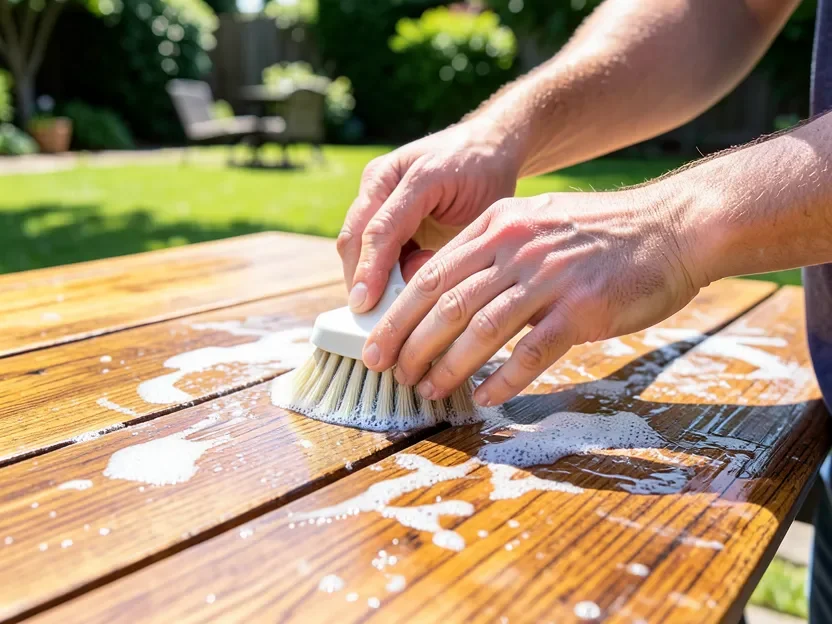
- Scrub with the grain. Using the soft-bristle brush, scrub in the direction of the wood grain with moderate pressure. Let the chemistry do the work rather than pressing hard enough to score the surface.
- Rinse thoroughly. Hose the wood down completely. Any leftover oxygen-bleach residue left to dry on the surface can leave a chalky film and continue bleaching the wood unevenly.
- Let it dry fully in the open air — at least 24 hours — before deciding whether it needs a second pass or any further treatment.
Handling Stubborn, Set-In Black Mold
If the growth has been there for more than a season, or the wood has gone visibly black in the grain lines rather than just gray on the surface, a single oxygen-bleach pass often isn’t enough. Repeat the dwell-and-scrub cycle a second time before reaching for anything stronger. If black staining persists after two passes, a two-step marine teak cleaner and brightener — a cleaner formulated to lift out embedded stains, followed by a mild acid brightener that restores the wood’s warm tone — will usually finish the job without the aggressive sanding older guides recommend.
Sanding should be a last resort, not a routine step. It removes a thin layer of the wood along with the mildew, which is fine occasionally but wears the piece down faster than cleaning alone, and it opens fresh, unweathered wood that’s actually more prone to new mildew until it re-develops a protective, weathered surface.
The Oiling Myth: Why We Don’t Recommend Teak Oil Right After Cleaning
Most older teak-care guides tell you to finish up with a coat of teak oil once the wood is clean. For furniture that lives outdoors, that advice is actually working against you. Teak oil sits mostly on the surface rather than curing hard the way a marine varnish does, and it typically needs reapplication every month or two to stay effective. Between coats, that softened, organic surface layer is far more hospitable to new mold and mildew than teak’s own bare, oil-rich heartwood is — which is why oiled outdoor teak so often looks worse a few months later than teak that was simply cleaned and left alone.
Most teak furniture makers and marine-care specialists now recommend one of two paths instead: let cleaned teak weather naturally to its silvery-gray patina (its most maintenance-free, mildew-resistant state), or apply a UV-stable outdoor teak sealer rather than a traditional oil, since a sealer forms more of a protective barrier instead of an organic film. If you’re weighing finish options for teak beyond just cleaning, our teak protector or oil breaks down how each holds up outdoors.
Preventing Mildew From Coming Back
- Improve airflow. Pull furniture a few inches away from fences and walls, and avoid leaving cushions or covers on damp wood for days at a time — trapped moisture under a cover is one of the most common mildew triggers.
- Move shaded pieces periodically. If a chair or table sits permanently in deep shade, it will stay damp longer after every rain than a piece in full sun. Rotating position, even seasonally, helps.
- Clean on a schedule, not just when it’s visible. A light soap-and-water wipe-down every 4–6 weeks during humid months keeps spores from ever establishing, which is far less work than treating set-in mold later.
- Consider a sealer over oil if you want more protection than bare weathered teak, for the reasons above — see our guide on whether teak outdoor furniture actually needs sealing.
- Fold general dirt and grime into your regular teak cleaning routine as well — our full teak cleaning guide covers day-to-day maintenance beyond mold and mildew specifically.
Frequently Asked Questions
Can I Use Regular Bleach Instead of Oxygen Bleach?
Avoid chlorine bleach on teak. It strips the wood’s natural protective oils and can bleach the surface unevenly, leaving light and dark patches. Oxygen bleach (sold as a powder for deck and outdoor-furniture cleaning) kills mold and mildew just as effectively without breaking down the oils that make teak weather-resistant in the first place.
Should I Oil Teak After Removing Mildew?
No, not for outdoor pieces. Teak oil sits on the surface and needs frequent reapplication, and the softened film it leaves behind is more prone to new mold and mildew growth than bare, cleaned teak. Let the wood weather naturally to a silver-gray patina, or use a UV-stable outdoor teak sealer instead if you want extra protection.
Why Does My Teak Furniture Keep Getting Moldy in the Same Spot?
Recurring mildew in one spot almost always means that area stays damp longer than the rest of the piece — usually because it’s shaded, pressed against a wall or fence, or sitting under a cushion or cover that traps moisture. Improving airflow around that specific spot, not just cleaning it again, is what actually stops the cycle.
Is the Black Speckling on Teak Actually Mold, or Just Aging?
It can be either. Natural weathering turns teak an even silver-gray, while mold and mildew show up as darker speckling or patches that are uneven across the surface, often concentrated in shaded or damp areas. If a stiff brush and a drop of water lift some of the color off, it’s biological growth, not just weathering.
Sponsored / affiliate links. As an Amazon Associate I earn from qualifying purchases. I may earn additional commission from eligible campaigns.