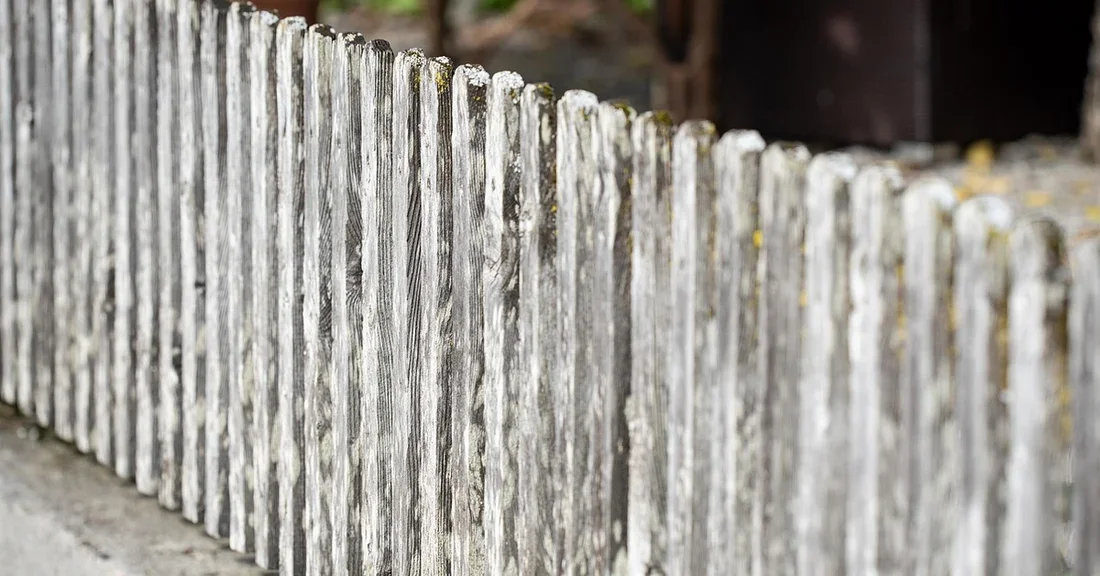
How to Clean a Wood Fence Without a Pressure Washer (4 Homemade Solutions)
Oxygen bleach (sodium percarbonate) is the best homemade cleaner for a wood fence: it lifts mildew and algae with less wood damage than chlorine bleach, per the USDA Forest Products Laboratory. But it is not plant-proof, and chlorine bleach must never meet vinegar or ammonia. This guide gives four mixes with exact ratios, a bleach test for mildew versus dirt, and the eye and plant safety rules.
Homemade Wood Fence Cleaning Solution: 4 Recipes That Work
Best Fence Oxygen Bleach Pick
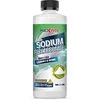 |
MAXTITE Sodium Percarbonate, 2 lb ($15.95) The listing describes it as 100% pure, uncoated sodium percarbonate, so the by-weight mixes in the recipe table below apply to it directly instead of to a diluted laundry blend.
|
As an Amazon Associate we earn from qualifying purchases.
Every mix below cleans a fence without a pressure washer. They differ in what they remove and what they can harm, so pick by the problem you actually have. Not sure whether it is mildew or dirt? Run the quick test in the next section first.
| Recipe | Mix | Best for | Contact time | Never combine with |
|---|---|---|---|---|
| 1. Oxygen bleach (sodium percarbonate) | Light: about 6.7 oz (190 g) of 100% powder per gallon of warm water. Moderate: about 13.4 oz (380 g) per gallon. | Algae, mildew film, grey surface grime | 10 to 30 minutes, keep wet | Vinegar or other acids, chlorine bleach |
| 2. Diluted chlorine bleach (5% household bleach) | 1 part bleach to 5 parts water (about 2 2/3 cups bleach topped up to 1 gallon), plus a little powdered detergent. Never stronger than 1 to 3. | Black mildew that oxygen bleach did not shift, away from plants and lawn | Scrub while wet, then rinse | Ammonia, vinegar, liquid detergents, oxygen bleach |
| 3. Dish soap wash | About 1 tablespoon of mild dish soap per gallon of warm water | Dust, pollen, bird droppings, light dirt | Scrub right away | Chlorine bleach (use powdered detergent there instead) |
| 4. White vinegar spray | 1 part white vinegar to 4 parts water | A light green algae film on shaded boards | 10 to 15 minutes, then scrub | Any bleach |
The oxygen bleach rates are a pound-to-gallon conversion of a supplier’s published cleaning strengths (50 g per litre for light cleaning, 100 g per litre for moderate). They only apply to 100% sodium percarbonate. Laundry and deck blends contain fillers, so follow the label on those. Start with the light mix and step up only if boards stay dark after one full pass.
Dish soap earns its place for a practical reason: the Forest Products Laboratory notes that mildew lives on any surface that supplies a food source such as dirt, so washing dirt off removes what the fungus feeds on. Soap alone does not kill an established colony, which is why recipes 1 and 2 exist.
Test First: Is It Mildew, Dirt, or a Stain Cleaner Cannot Fix?
Put one or two drops of liquid household bleach (5% sodium hypochlorite) on a dark patch. The Forest Products Laboratory says the dark colour of mildew usually bleaches out in a few seconds. Discoloration that stays is probably dirt, bleed-through of natural wood extractives, or iron stain, and a mildew cleaner will not fix it. Rinse the test spot with plain water and keep the drop away from plants.
- Bleaches out in seconds: mildew or algae. Use recipe 1, or recipe 2 if it returns.
- Does not change: dirt, tannin, or iron stain. Try recipe 3 first, since dirt is the likeliest cause.
- Silvery grey all over: that is surface weathering, not a fungus. Cleaning removes surface dirt, but only a stain or sealer changes the colour.
- Blue-grey streaks inside the wood: sapstain fungus that infected the lumber before it dried. The Forest Products Laboratory says neither commercial mildew cleaners nor bleach with detergent removes it.
Mildew also tells you where the fence stays wet. It is most common where moisture lingers longest, out of the sun and where air does not move, such as behind tall plants. Trimming those plants back does more to stop a repeat than any cleaner.
Oxygen Bleach vs. Chlorine Bleach on a Wood Fence
“Oxygen bleaches are likely to do less damage to the wood than chlorine-based bleaches.”
| Factor | Oxygen bleach (sodium percarbonate) | Chlorine bleach (sodium hypochlorite) |
|---|---|---|
| What it does in water | Releases hydrogen peroxide and sodium carbonate (washing soda) | 5% household bleach is the strength the Forest Products Laboratory uses for its mildew test |
| Effect on wood | Forest Products Laboratory: likely less damage than chlorine | An immersion study on beech and oak found it attacks lignin, the glue between wood fibres, at high concentrations; 2 to 5% was acceptable for limited contact |
| Hazard labels | Safety data sheets list H318 (serious eye damage), H302 (harmful if swallowed) and H272 (oxidizer) | Forest Products Laboratory warning: mixed with ammonia it forms a toxic combination |
| Solution strength | Safety data sheets give pH 10.0 to 10.8 for a 1% solution | Use as dilute as possible: 1 to 5 is adequate, never stronger than 1 to 3 |
| Best role on a fence | First choice for algae, mildew film and grey grime | Backup for stubborn black mildew, used diluted and away from plants |
The immersion study soaked wood samples for weeks or months, which is far harsher than a fence wash, so read it as a direction rather than a damage forecast. Its useful finding is that wood tolerates weak chlorine solutions far better than strong ones, which matches the Forest Products Laboratory advice to use bleach as dilute as possible. Our mildew cleaner for wood guide covers the same comparison for other wood surfaces.
Myth check: oxygen bleach is not “plant-safe”
Many labels and guides call oxygen bleach safe for plants. The more accurate statement is that it is gentler than chlorine, not harmless. In water, sodium percarbonate breaks into hydrogen peroxide and sodium carbonate, and a 2006 patent application from Biosafe Systems claimed it as a foam herbicide at 0.5 to 2.5 pounds per gallon, roughly 60 to 300 g per litre. The moderate fence mix above (about 100 g per litre) sits inside that range. The patent was abandoned and tested foam on weeds, so it does not prove a fence rinse will kill your hedge, but it does show why runoff pooling around roots is a real risk. Some supplier safety data sheets also classify it as toxic to aquatic life.
In practice: soak nearby plants and soil with plain water first, cover small plants with plastic sheeting, mix only what you need, and rinse any overspray off leaves right away.
How to Clean a Wood Fence Without a Pressure Washer, Step by Step
You need a garden hose with a spray nozzle, a plastic bucket, a plastic pump sprayer or a long-handled nylon-bristle brush, splash goggles, chemical-resistant gloves, and plastic sheeting. Use plastic rather than metal containers: one supplier safety data sheet lists sodium percarbonate as corrosive in the presence of aluminum, zinc and copper, and slightly corrosive to steel.
- Sweep and test: brush off leaves and cobwebs, then run the bleach drop test on a hidden board to choose your recipe.
- Protect plants: soak plants and the soil along the fence with plain water and cover small plants with plastic sheeting.
- Pre-wet the boards: spray the fence with the hose so the cleaner stays on the surface instead of soaking in unevenly.
- Mix in warm water: fill a plastic bucket with warm water first, then add the powder slowly, since a supplier safety data sheet says sodium percarbonate dissolves in hot water and only partly in cold.
- Apply top to bottom: spray or brush one section at a time, three or four boards wide, and let it work for 10 to 30 minutes, misting again if it starts to dry.
- Scrub with the grain: use a nylon-bristle brush and light pressure, because the Forest Products Laboratory advises gently scrubbing with a bristle brush.
- Rinse from the top: hose the section down with the stream pointed down, then rinse the plants again.
- Let it dry: leave the fence to dry fully before you judge the result or apply any finish.
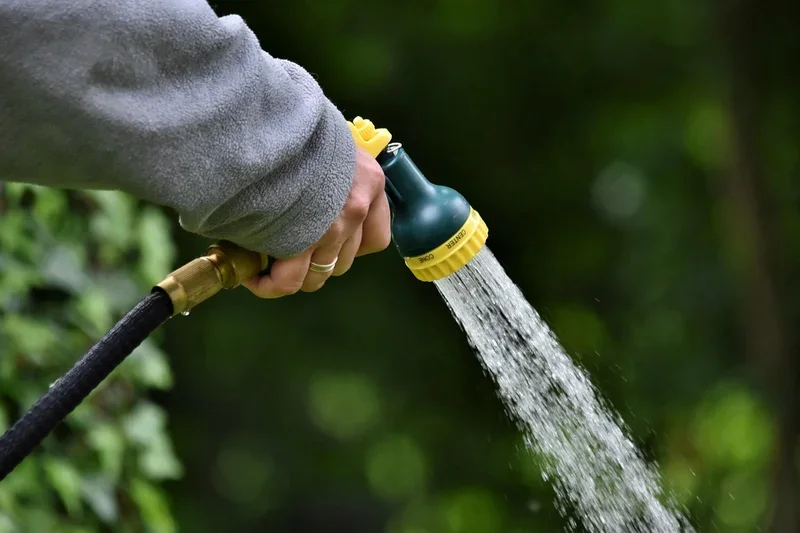
The no-scrub soak: how far it goes
Oxygen bleach works mostly through contact time, so a longer wet dwell means less elbow work. Keep the boards visibly damp for the full 10 to 30 minutes, then use a light pass with the brush. On heavy black mildew, expect to scrub or repeat, because no mix removes it without any agitation. If you are short on water, a pump sprayer wets boards with far less runoff than a hose, though you still need the hose for the final rinse.
Safety Rules From the Labels and Data Sheets
- Eyes first: sodium percarbonate is classed as causing serious eye damage (H318). Wear splash goggles while mixing and spraying. If it gets in your eyes, rinse with water for several minutes, remove contact lenses if you can, keep rinsing and call a physician.
- Add powder to water, not water to powder: that keeps dust down. Safety data sheets say to avoid forming dust.
- Never mix cleaners: the Forest Products Laboratory warns that bleach and ammonia form a toxic combination, and public health advisories add that bleach plus vinegar or any acid releases chlorine gas. A supplier of sodium percarbonate also says never to mix it with acids or chlorine-based products.
- Use powdered detergent in bleach, never liquid: the Forest Products Laboratory warns that liquid detergents may contain ingredients that react with bleach to give toxic fumes.
- Keep dry powder away from combustibles: sodium percarbonate is an oxidizer (H272), so do not leave it on wood scraps, rags or paper, and store it dry in a closed container.
- Pets and kids: keep them off until the fence is rinsed and the ground is dry.
Fence Cleaning vs. Deck Cleaning: What Changes
The chemistry is the same as on a deck, but the physics are not. A deck holds the solution flat while it works and drains through the gaps. A fence is vertical, so cleaner runs straight down the boards into the soil at the base, which is exactly where your plants sit. That is why the plant steps above matter more here. Our oxygen bleach deck cleaning guide covers horizontal boards, neutralizing and sealing timing.
Fences also stay wet on their shaded side, so clean both faces and check the base of each post, where moisture collects. If you only want the plain, chemistry-free version of the job, our basic wood fence washing walkthrough keeps it short. This guide is for choosing the right cleaner and using it safely.
After Cleaning: Dry, Check Moisture, Then Protect
Cleaning removes the fungus but not the conditions that grew it. The Western Wood Products Association says wood dried below 20% moisture content resists mold colonization, so a pin-type moisture meter reading under 20% is a better signal than counting days. The Forest Products Laboratory advises refinishing the cleaned surface as soon as it has dried, using a finish that contains a mildewcide. Our best fence stain guide compares clear, semi-transparent and solid options.
For household bleach, 1 part to 5 parts water should be adequate, and no mixture stronger than 1 to 3 should ever be necessary. Source: USDA Forest Products Laboratory, Wood Handbook chapter 16 (2021)
Common Mistakes That Damage Fences
- Going stronger than 1 to 3: the Forest Products Laboratory says a stronger bleach mix should never be needed, and it raises the risk to wood and plants.
- Spraying upward or flooding the boards: keep the rinse stream pointed down, as the Forest Products Laboratory advises.
- Letting the mix dry on the wood: the supplier guidance is to keep the surface damp, so work in small sections.
- Treating grey as mildew: weathered grey boards will not turn tan from cleaning alone.
- Skipping the mildewcide finish: a cleaned fence that is left bare in a damp corner will usually grow mildew again.
FAQ
Can you use Dawn dish soap to clean a wooden fence?
Yes, Dawn or any mild dish soap works for dirt, pollen and bird droppings at about 1 tablespoon per gallon of warm water. It removes the dirt mildew feeds on but does not reliably kill an established colony. Do not add liquid dish soap to chlorine bleach, because the Forest Products Laboratory says liquid detergents may react with it.
What is the ratio of bleach to water for cleaning a wood fence?
The Forest Products Laboratory says 1 part household bleach to 5 parts water should be adequate, and a mixture stronger than 1 to 3 should never be necessary. Add a little powdered detergent, keep it off plants, scrub gently and rinse thoroughly with the hose pointed down.
Does vinegar clean a wood fence?
Vinegar is a mild acid that suits a light green algae film. A common mix is 1 part white vinegar to 4 parts water, left 10 to 15 minutes and then scrubbed. We found no extension study testing it on fences, so treat it as a first try, and never mix it with bleach or oxygen bleach.
Is oxygen bleach safe for plants?
It is gentler than chlorine bleach but not harmless. Sodium percarbonate breaks down into hydrogen peroxide and sodium carbonate, and some supplier data sheets classify it as toxic to aquatic life. Soak plants with plain water first, cover small ones, and rinse any overspray right away.
Can you clean a wood fence without a pressure washer or lots of water?
Yes. A pump sprayer, a nylon-bristle brush and a garden hose are enough. Keep boards damp for the contact time, scrub lightly, and rinse in sections. The Forest Products Laboratory advises low pressure if you do use a power washer, so a hose is the safer default.
How do I know if my fence has mildew or just dirt?
Put one or two drops of household bleach on a dark patch. If the dark colour bleaches out in a few seconds it is probably mildew. If nothing changes, it is likely dirt, wood extractives or iron stain. Rinse the spot with plain water afterward.
Sponsored / affiliate links. As an Amazon Associate I earn from qualifying purchases. I may earn additional commission from eligible campaigns.