What Is the Best Fence Stain? Clear vs Semi-Transparent
Choosing the best fence stain is not just about color. The right stain depends on your fence wood, fence age, sunlight, moisture exposure, previous coating, and how much natural grain you want to show. If you’d rather cover the wood in one solid color than let the grain show through, see our guide to wood fence paint for prep, product, and cost differences.
For most wood fences, the best fence stain is a semi-transparent exterior wood stain. It adds color, helps protect outdoor wood from moisture and sunlight, and still lets the natural wood grain show. Use a clear sealer for new cedar or redwood fences, semi-solid stain for moderately weathered fences, and solid stain for old, gray, repaired, or mismatched fence boards.
Disclosure: This post may contain affiliate links. As an Amazon Associate we earn from qualifying purchases.
What Is the Best Fence Stain?
Best Fence Stain Pick
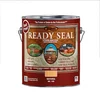
Ready Seal Exterior Wood Stain & Sealer, Natural Light Oak, 1 Gallon
A semi-transparent oil-based stain and sealer in one coat, applied with no back-brushing required — matches the semi-transparent recommendation above for most fences in good condition.
- Best for: cedar, pine, or pressure-treated fences in good to moderate condition
- Why we picked it: one-coat oil-based formula soaks in evenly on vertical fence boards without lap marks
- Main drawback: oil-based formula has a stronger odor and slower dry time than water-based stains
Compare more fence stain options
 Budget Pick Thompson’s WaterSeal Semi-Transparent Stain
|
 Best for Old Fences Thompson’s WaterSeal Solid Color Stain
|
 Best for Cedar & Redwood Olympic Maximum Redwood Semi-Transparent Stain
|
As an Amazon Associate we earn from qualifying purchases.
The best fence stain for most homeowners is semi-transparent exterior wood stain. It gives the best balance of natural wood grain, color, UV protection, and moisture resistance. Choose clear sealer for new cedar or redwood, semi-solid stain for aging fences, and solid stain for old or uneven fences that need stronger coverage.
Best Fence Stain: Fast Decision Table
| Fence Condition | Best Stain Type | Best For | Avoid If |
|---|---|---|---|
| New cedar or redwood | Clear, tinted, or semi-transparent | Showing natural grain and color | The boards are gray, stained, or mismatched |
| New pressure-treated pine | Semi-transparent exterior stain | Balanced protection and natural appearance | The wood is still wet from treatment |
| Weathered but still even | Semi-transparent or semi-solid | Refreshing color without a painted look | You need to hide heavy damage |
| Old gray fence | Semi-solid or solid stain | Hiding age, discoloration, and uneven tone | You want natural grain to remain visible |
| Repaired or mismatched boards | Solid fence stain | Creating a uniform color across mixed boards | The fence is new and attractive |
| High-sun fence line | Semi-solid or solid stain | More pigment and stronger color coverage | You prefer a very natural clear finish |
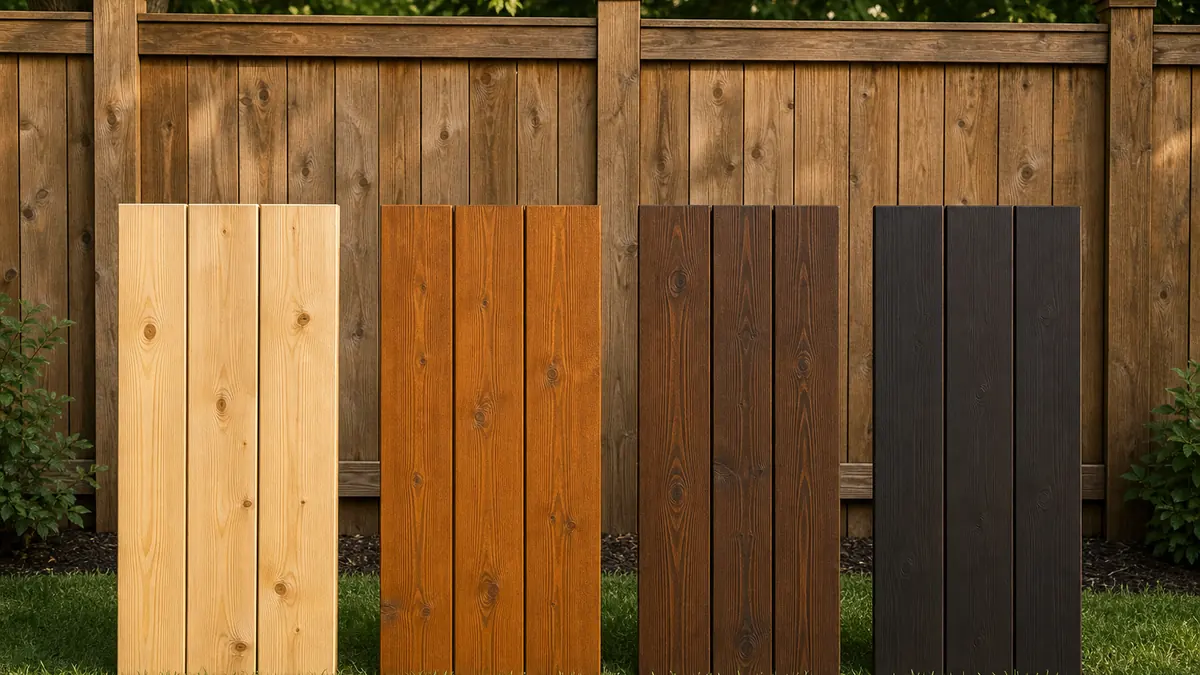
Fence Stain Opacity Explained
Fence stain opacity means how much of the wood surface remains visible after staining. This is the most important decision because opacity affects color, grain visibility, UV coverage, and how well the stain hides old boards.
| Opacity | Grain Visibility | Coverage Level | Best Use |
|---|---|---|---|
| Clear sealer | Very high | Very low | New, attractive cedar or redwood |
| Tinted sealer | High | Low | New wood needing slight color warmth |
| Semi-transparent stain | Medium to high | Medium | Most fences in good condition |
| Semi-solid stain | Low to medium | Medium to high | Weathered fences that still have texture |
| Solid stain | Very low | High | Old, gray, stained, or mismatched fences |
What Makes a Fence Stain “Best”?
A good fence stain should match the fence, not just the color you like on a sample card. The best stain should protect the wood, improve appearance, fit the climate, and be realistic to maintain.
For a new fence, the goal is usually to preserve the wood’s natural look. For an older fence, the goal is often to hide weathering and make the boards look more even. For pressure-treated lumber, the first concern is whether the wood is dry enough to accept stain.
Before choosing a product, answer these five questions:
- Is the fence new, weathered, gray, or previously stained?
- Is the wood cedar, redwood, pine, pressure-treated lumber, or unknown?
- Do you want to show the grain or hide flaws?
- Does the fence get strong sun, shade, rain, sprinklers, or ground moisture?
- Will you apply it by brush, roller, sprayer, or a combination?
Clear Fence Sealer: Best for New Cedar or Redwood
Clear fence sealer is best when the fence already looks attractive and you want the most natural finish. It helps protect the wood surface while keeping the original grain and color visible.
This is a good option for new cedar, redwood, or clean premium fence boards. But clear sealer will not hide gray wood, water stains, repaired boards, or uneven color. If the fence already looks worn, a more pigmented stain is usually better.
Use clear sealer when:
- The fence is new or freshly cleaned
- The natural grain looks good
- You want the least color change
- The boards are visually consistent
Avoid clear sealer when:
- The fence is old, gray, or blotchy
- You replaced several boards
- You want stronger color
- You need to hide imperfections
Clear Wood Sealer for Natural Fences
Choose a clear exterior wood sealer when your fence wood already looks good and you want protection without hiding the grain.
- Best for new cedar or redwood fences
- Keeps the most natural appearance
- Good for clean, even fence boards
- Not designed to hide gray or damaged wood
Semi-Transparent Fence Stain: Best Overall for Most Fences
Semi-transparent fence stain is the best overall choice for many wood fences because it gives a balanced finish. It adds color, improves weather resistance, and keeps enough grain visible for a natural wood look.
This type of stain works well on cedar, pine, redwood, and pressure-treated wood fences that are in good or moderate condition. It is especially useful when the fence needs more color than clear sealer but does not need the heavy coverage of solid stain.
For related outdoor wood guidance, read our guide on how to stain cedar and our comparison of cedar vs pressure treated fence.
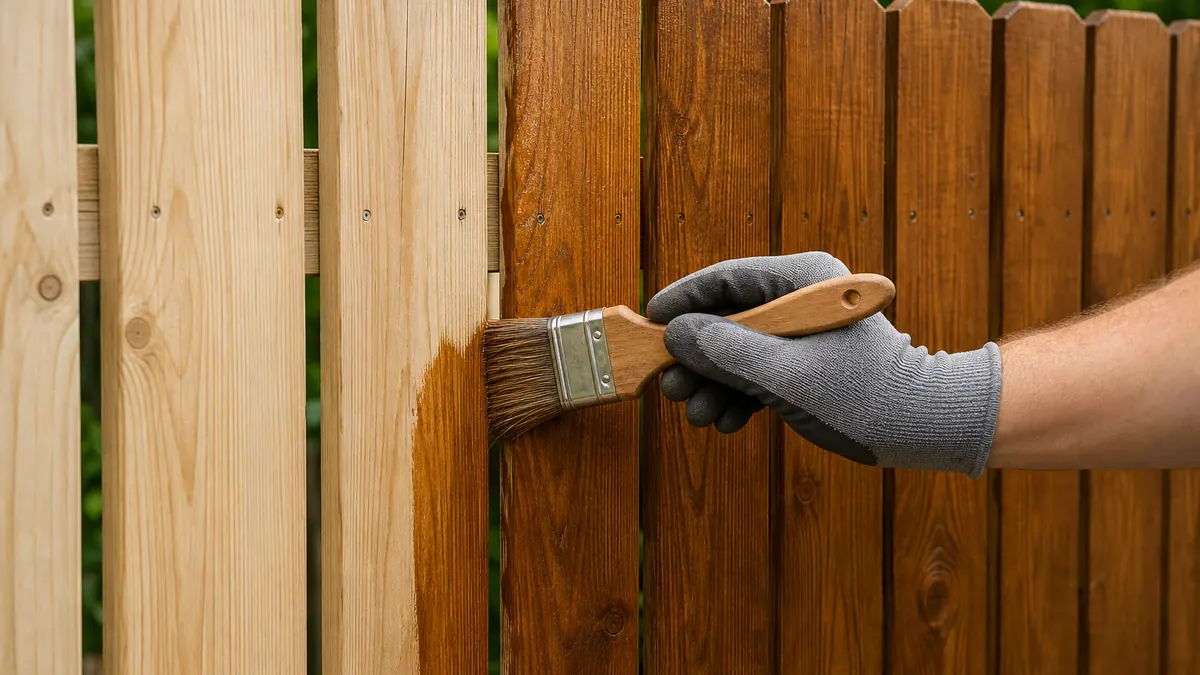
Use semi-transparent fence stain when:
- You want a natural stained-wood look
- The fence is not badly damaged
- You want more color than clear sealer
- You still want to see grain and texture
Avoid semi-transparent fence stain when:
- The fence has deep gray weathering
- Boards are badly mismatched
- You want a painted, uniform finish
- Old coating is peeling or incompatible
Semi-Solid Fence Stain: Best for Moderately Weathered Fences
Semi-solid fence stain is a middle option between semi-transparent and solid stain. It gives stronger color coverage than semi-transparent stain but still lets some wood texture show through.
Use semi-solid stain when the fence is older, slightly uneven, or faded, but you do not want a fully painted look. It is often a good choice for fences that have weathered for a few years but still have useful wood texture.
Solid Fence Stain: Best for Old, Gray, or Mismatched Fences
Solid fence stain is best when the fence needs coverage more than grain visibility. It hides most of the natural grain and creates a more uniform color, which can help old or repaired fences look cleaner.
This is usually the best option for gray fences, fences with replaced boards, fences with uneven color, or privacy fences that need a consistent appearance from a distance.
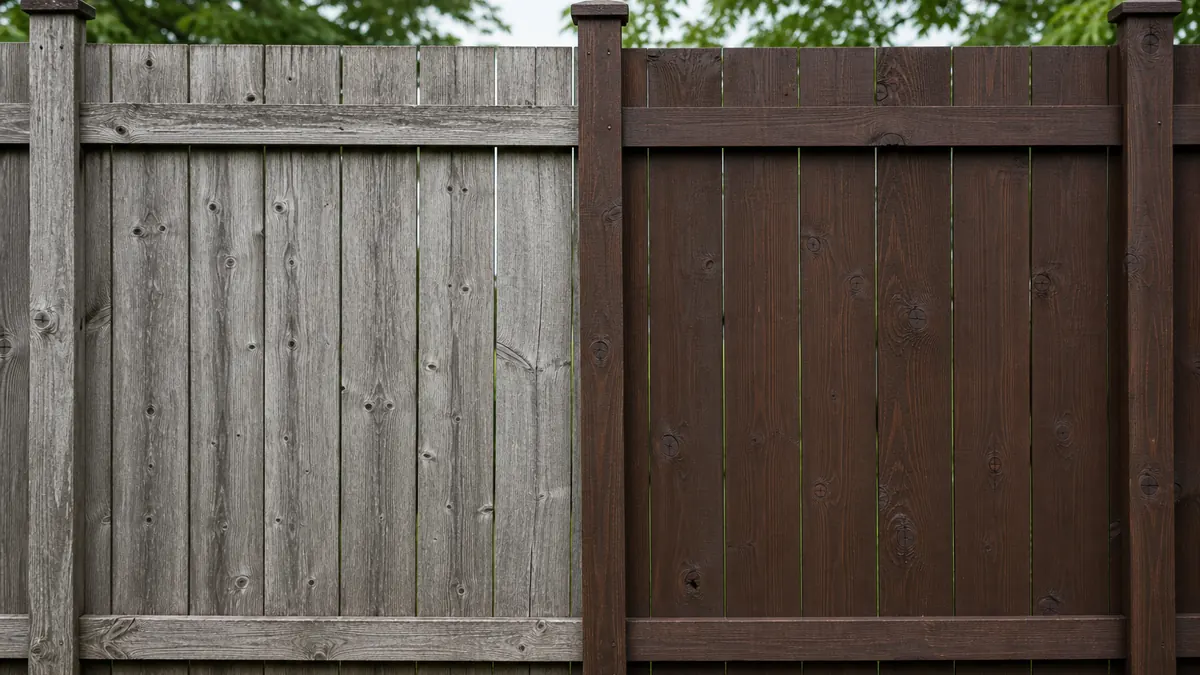
Use solid fence stain when:
- The fence is old, gray, or heavily weathered
- Several boards were replaced
- You want a uniform color
- You do not need to show natural grain
Avoid solid fence stain when:
- The fence is new cedar or redwood
- You want a natural transparent look
- You dislike a coating-like appearance
Solid Fence Stain for Older Fences
A solid fence stain is useful when your fence has weathering, uneven boards, old stains, or repairs that you want to hide with a more uniform finish.
- Best for old, gray, or repaired fences
- Helps hide uneven color and weathering
- Good for privacy fences with mismatched boards
- Creates stronger, more uniform color
Best Fence Stain by Wood Type
Cedar fence
The best fence stain for cedar is usually clear, tinted, or semi-transparent. Cedar has attractive grain and warm natural color, so it often looks best when the stain does not fully hide the wood.
If the cedar fence is new, use clear sealer or a light semi-transparent stain. If the cedar has started to fade, use semi-transparent stain. If the cedar is old, gray, and uneven, use semi-solid or solid stain.
For more cedar protection tips, see our guide on how to protect cedar wood for outdoors.
Pressure-treated pine fence
The best stain for a pressure-treated fence is usually semi-transparent exterior wood stain once the wood is dry enough to accept finish. New pressure-treated lumber often contains treatment moisture, so staining too early can cause uneven absorption.
Redwood fence
Redwood fences usually look best with clear, tinted, or semi-transparent stain when the boards are new or clean. Use more opaque stain only when the surface has aged enough that color uniformity matters more than grain visibility.
Old unknown wood fence
If you do not know the wood species and the fence is already weathered, choose based on condition. Semi-transparent stain is good for moderate wear. Semi-solid or solid stain is better when the boards are gray, blotchy, or repaired.
Best Fence Stain by Climate and Exposure
| Exposure | Better Choice | Reason |
|---|---|---|
| Strong sun | Semi-solid or solid stain | More pigment helps with color coverage |
| Frequent rain or sprinklers | Exterior stain/sealer with water-repellent properties | Moisture resistance is more important |
| Shady or damp areas | Stain after thorough cleaning and drying | Mildew and moisture can affect adhesion |
| Dry, sunny climate | Semi-transparent, semi-solid, or solid depending on age | UV exposure and color fading matter more |
Oil-Based vs Water-Based Fence Stain
Fence stains are commonly available in oil-based and water-based formulas. Both can work outdoors, but they behave differently during application and cleanup.
| Type | Best For | Main Advantage | Main Trade-Off |
|---|---|---|---|
| Oil-based fence stain | Traditional natural wood appearance | Warm look and good absorption into wood | Slower drying, stronger odor, and solvent cleanup |
| Water-based fence stain | Faster projects and easier cleanup | Lower odor, quicker drying, and water cleanup | Can dry quickly, so application technique matters |
For stain color planning, see our wood stain color chart Minwax guide and Behr wood stain color chart.
How to Know If a Fence Is Ready for Stain
A fence should be clean, dry, and able to absorb finish before staining. If the surface is dirty, wet, or sealed by an old coating, even a good stain may perform poorly.
Simple water test
Sprinkle a few drops of water on the fence. If water soaks into the wood, the fence may be ready to stain. If water beads on the surface, the wood may still be too wet, sealed, or not ready for absorption.
Visual check
- Green or black spots may indicate mildew or algae that should be cleaned first
- Peeling old finish should be removed before staining
- Gray weathered fibers may need cleaning or light sanding
- Loose boards, nails, or screws should be repaired before finishing
How to Prepare a Fence Before Staining
Even the best fence stain can fail if the fence is dirty, wet, moldy, or covered with old peeling finish. Preparation helps the stain absorb evenly and improves the final look.
- Remove vines, decorations, and loose items from the fence.
- Clean the fence with a fence cleaner or exterior wood cleaner.
- Rinse the fence if the cleaner requires it.
- Let the fence dry fully.
- Remove peeling finish or loose old coating.
- Sand rough areas, splinters, or raised grain if needed.
- Test the stain on a hidden board.
- Apply thin, even coats according to the product label.
If you need to clean a fence without heavy pressure washing, read our guide on how to clean wood fence without pressure washer.
Fence Staining Supplies You May Need
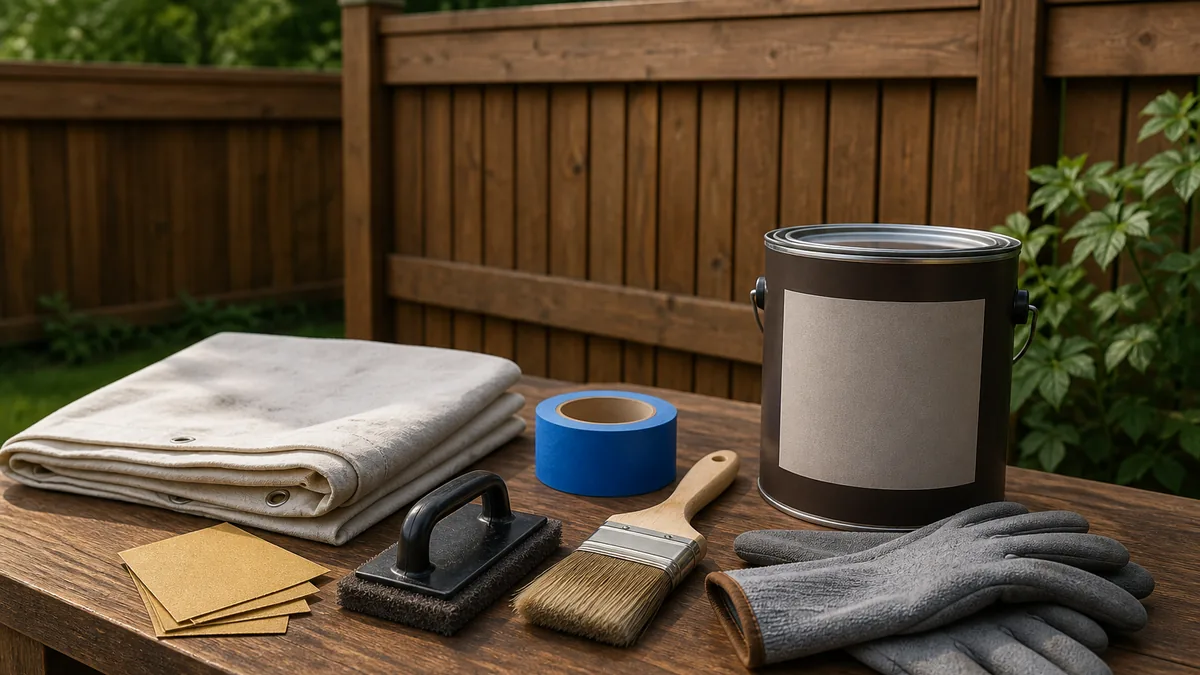
Good prep tools make fence staining cleaner and more even. Do not skip cleaning and drying before applying stain.
- Fence cleaner or exterior wood cleaner
- Stain brush, roller, or pump sprayer
- Painter’s tape and drop cloth
- Sandpaper or sanding block
- Safety gloves and eye protection
Brush, Roller, or Sprayer: Which Is Best?
A brush gives the most control and helps push stain into edges, seams, and rough grain. A roller can speed up flat board sections. A sprayer is fast for long fences, but it usually needs careful masking and back-brushing for even coverage.
| Application Method | Best For | Watch Out For |
|---|---|---|
| Brush | Edges, corners, rough boards, detail work | Slower on long fence runs |
| Roller | Flat boards and panels | May miss gaps and board edges |
| Sprayer | Large fence areas | Overspray, masking, and uneven coverage |
Common Fence Stain Mistakes
Staining a wet fence
If the fence is wet, stain may not absorb evenly. Let the fence dry before staining.
Using clear sealer on a gray fence
Clear sealer will not hide gray wood or old discoloration. Use semi-solid or solid stain if the fence needs visual coverage.
Choosing solid stain for beautiful new cedar
Solid stain hides most natural grain. If your cedar fence looks good, clear or semi-transparent stain usually makes more sense.
Skipping cleaning
Dirt, mildew, and old residue can stop stain from bonding or soaking in properly.
Applying stain too thick
Thick coats can dry unevenly, stay sticky, or peel. Follow the product label and apply thin, even coats.
How Much Fence Stain Do You Need, and How Long Does It Last?
Coverage and reapplication timing are the two numbers most fence stain guides skip, but they decide your total project cost and how often you will redo the work.
| Stain Type | Typical Coverage per Gallon | Typical Reapplication Interval |
|---|---|---|
| Clear or tinted sealer | 150–250 sq ft | 1–2 years |
| Semi-transparent stain | 150–200 sq ft | 2–3 years |
| Semi-solid stain | 150–175 sq ft | 3–4 years |
| Solid stain | 150–175 sq ft | 4–6 years |
A standard 6-foot-tall wood privacy fence uses roughly 25–30 sq ft of stainable surface per linear foot (both faces counted separately if you are staining both sides), so a 100-foot fence line typically needs 3–4 gallons for one coat of semi-transparent stain. Rough-sawn or textured boards absorb more and will land at the low end of the coverage range; smooth, previously-sealed boards land at the high end. Oil-based stains generally hold their color a season or two longer than water-based stains in full-sun exposure, which is why oil-based is the more common pick for solid-facing fence lines.
Best Fence Stain: Final Recommendation
The best fence stain for most people is a semi-transparent exterior wood stain. It gives a strong balance of color, protection, and natural wood appearance. Choose clear sealer for new cedar or redwood, semi-solid stain for moderately weathered fences, and solid stain for old, gray, or mismatched fences.
Before buying, inspect the fence condition first. If the wood grain is worth showing, do not cover it with solid stain. If the fence is uneven, gray, or repaired, do not expect clear stain to hide the flaws. The best fence stain is the one that matches the fence you actually have.
For posts and ground contact areas, also read our guide on how to keep wood posts from rotting in the ground. If you’re building or replacing the fence itself, our fence post spacing guide covers how far apart to set posts by fence type, height, and wind exposure before you stain a single board.
FAQs About the Best Fence Stain
What is the best type of fence stain?
The best type of fence stain for most wood fences is semi-transparent exterior wood stain. It adds color and outdoor protection while still showing the natural wood grain.
Is clear or semi-transparent fence stain better?
Clear stain is better for new, attractive wood when you want the most natural look. Semi-transparent stain is better for most fences because it adds more color and protection while still showing grain.
What is the best fence stain for an old fence?
The best fence stain for an old fence is usually semi-solid or solid stain. These stains help hide gray wood, uneven boards, old marks, and repairs better than clear or transparent products.
What is the best fence stain for cedar?
The best fence stain for cedar is usually clear, tinted, or semi-transparent. These options protect the wood while keeping cedar’s natural color and grain visible.
What is the best fence stain for pressure-treated wood?
The best fence stain for pressure-treated wood is usually semi-transparent exterior wood stain after the lumber has dried enough to accept finish.
Should I use oil-based or water-based fence stain?
Use oil-based fence stain if you want a rich traditional wood-stain look and slower working time. Use water-based fence stain if you want faster drying, easier cleanup, and lower odor. Whichever type you pick, check how long fence stain needs to dry before rain before you commit to a staining day.
Can I stain a pressure-treated wood fence?
Yes, you can stain a pressure-treated wood fence after the wood has dried enough to absorb stain. If water still beads strongly on the surface, wait longer before staining.
How many coats of fence stain should I use?
Many fence stains work best with one or two thin coats, depending on the product and wood condition. Always follow the product label because too much stain can create sticky or uneven results.
Does fence stain waterproof wood?
Fence stain can help resist moisture, but it does not make wood permanently waterproof. Outdoor fences still need maintenance, cleaning, and reapplication over time.
Products related to this article
Sponsored / affiliate links. As an Amazon Associate I earn from qualifying purchases. I may earn additional commission from eligible campaigns.