How to Clean a Wood Fence Without Pressure Washing
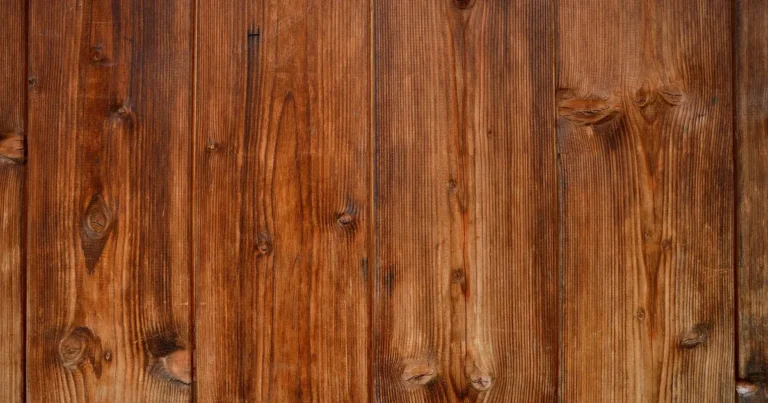
Clean a wood fence without pressure washing by scrubbing it with a solution of warm water and mild dish soap (or an oxygen-bleach cleaner for mildew) using a soft or stiff-bristle brush, then rinsing with a garden hose on a standard spray nozzle. This “soft wash” approach avoids the real risk pressure washing carries on wood: anything over roughly 500-600 PSI can fuzz up softwood grain, force water into the joints, and strip a stain or sealant you want to keep.
Here’s the full method, including what to actually use on mildew and stains, and a mistake buried in a lot of “make your fence look new” advice that quietly undoes the whole point of skipping the pressure washer.
What You’ll Need
Best For Mold, Mildew & Algae Without Scrubbing Hard
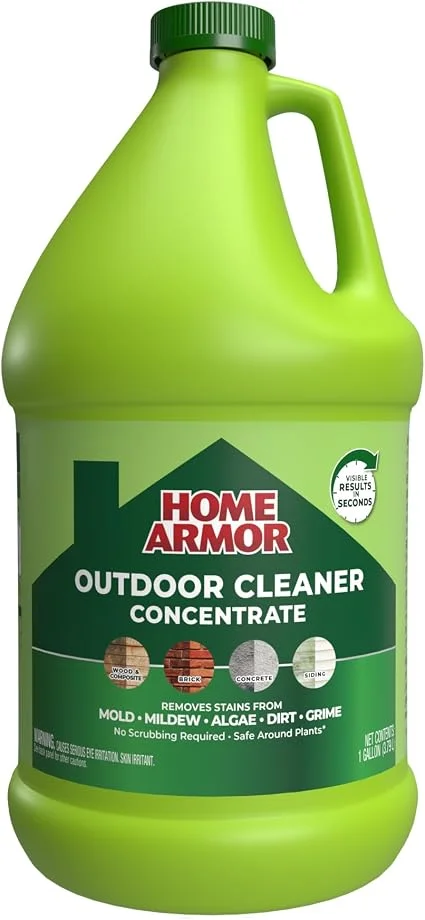 |
Home Armor Outdoor Cleaner Concentrate – $13.97 Spray-on formula lifts mold, mildew, and algae stains without the heavy scrubbing plain soap and water needs — ideal for a shaded fence line with green or black staining.
|
- A bucket, warm water, and mild dish soap (or an oxygen-bleach cleaner for mildew-heavy sections)
- A soft or medium-stiff bristle brush — never a wire or metal brush, which scratches the wood fibers
- A garden hose with a standard spray nozzle (not a pressure attachment)
- Rubber gloves and eye protection, especially if using an oxygen-bleach product
- A tarp to protect nearby plants and grass from runoff
Preparing the Area
Clear anything leaning against the fence and trim back plants touching it so you can reach every board. Cover nearby flower beds or grass with a tarp if you’re using a stronger cleaner, since some oxygen-bleach and commercial fence cleaners can scorch grass with prolonged contact. Check the fence for loose boards, popped nails, or splinters before you start — wet wood makes small damage worse, so it’s easier to fix now than after cleaning.
Choosing the Right Cleaning Solution
For routine dirt and dust, warm water with a few drops of dish soap is enough. For mildew, mix one part white vinegar to one part water, or use a dedicated oxygen-bleach deck and fence cleaner for larger or more stubborn areas — oxygen bleach breaks down mold and mildew without the wood-fiber damage that regular chlorine bleach causes over repeated use. Skip chlorine bleach if you plan to stain the fence afterward: it lightens and roughens the wood surface in a way that shows through unevenly under stain.
Applying and Scrubbing
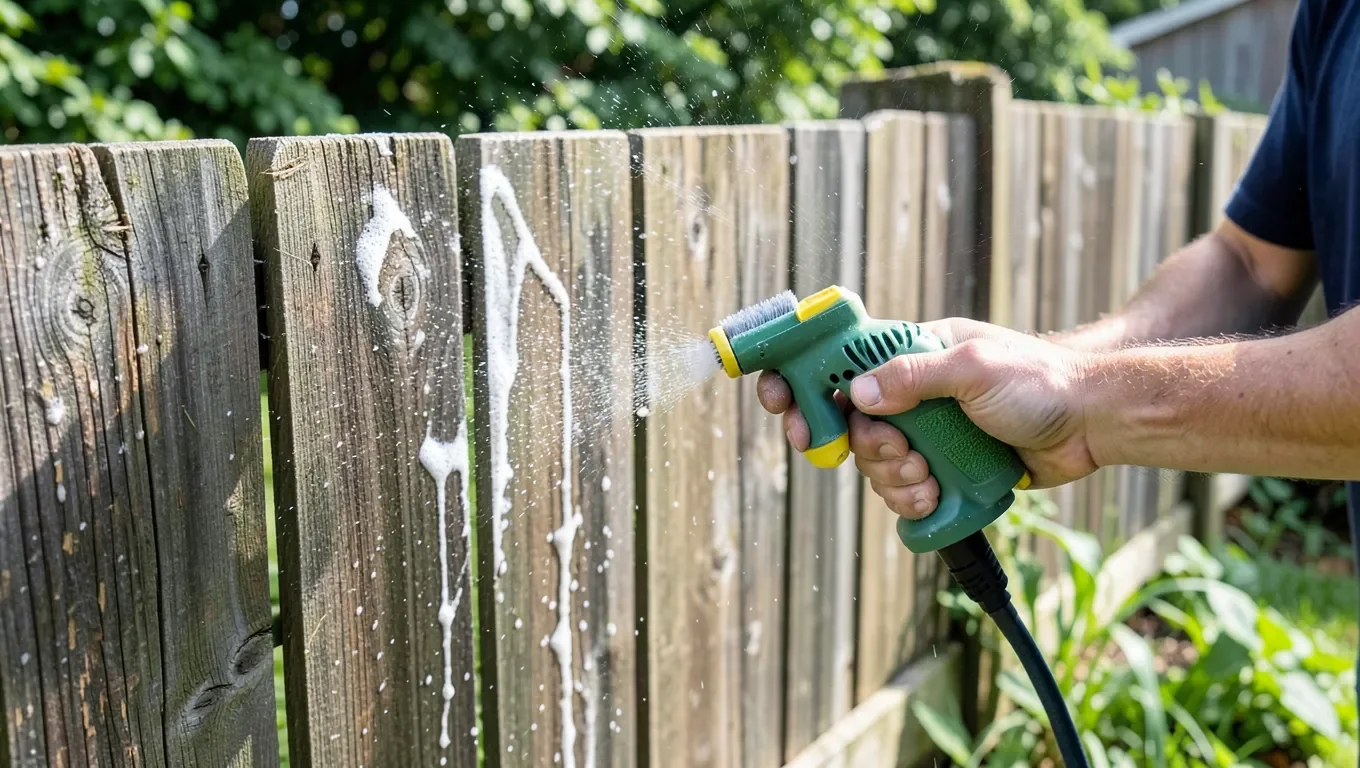
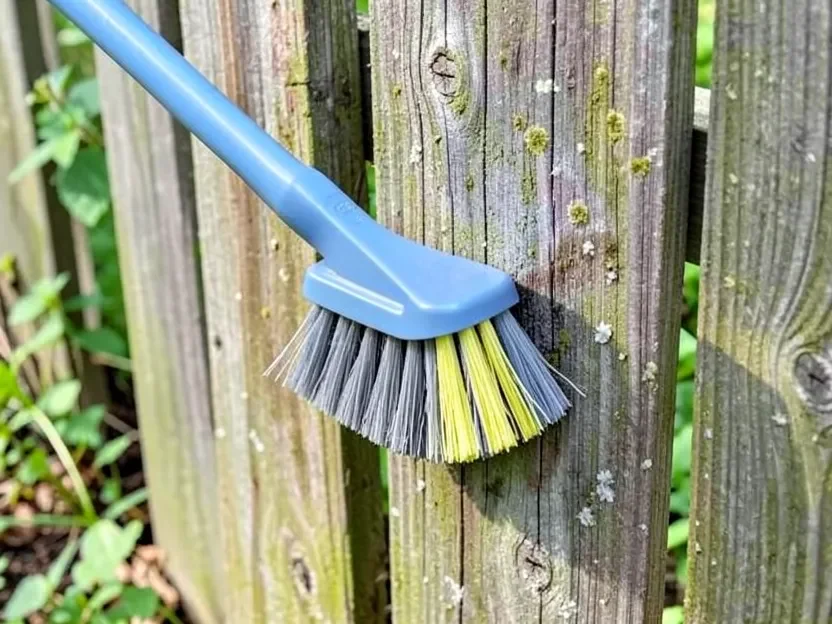
Apply the solution with a brush or garden sprayer, working in small sections so it doesn’t dry before you scrub it. Let it sit 10-15 minutes on visible stains to loosen grime, then scrub with the grain using a soft or medium-stiff brush and light, circular pressure — pressing too hard is what leaves brush-mark scratches on softer woods like cedar or pine. Rinse each section with the hose before it dries, working top to bottom so dirty runoff doesn’t re-stain the boards you’ve already cleaned.
Drying and Inspecting
Let the fence air-dry fully — usually a few hours in sun, longer in shade — before applying any stain or sealant, since trapped moisture under a fresh coat causes peeling later. While it dries, walk the fence line and check for anything the cleaning revealed: raised grain that needs a light sanding, small cracks, or protruding nails. Fixing these now, while the fence is already clean and accessible, saves a second trip later.
Ongoing Maintenance
A quick soap-and-water rinse once or twice a season keeps dirt and mildew from building up enough to need a full deep clean. Reapply a wood sealant or stain roughly every 1-2 years depending on sun and rain exposure — a well-maintained sealant is actually what keeps future cleanings easy, since dirt and mildew have a harder time gripping a sealed surface than bare, weathered wood.
Frequently Asked Questions
What Is the Best Thing to Clean a Wood Fence With?
Warm water with mild dish soap handles routine dirt. For mildew or algae, an oxygen-bleach outdoor cleaner or a 1:1 white vinegar and water mix works without the fiber damage that repeated chlorine bleach use causes. Apply with a soft brush and rinse with a standard hose, not a pressure washer.
How Do You Make a Wood Fence Look New Again Without Pressure Washing?
Deep-clean with an oxygen-bleach fence cleaner to lift dirt and mildew, let it dry fully, lightly sand any raised or rough grain, then apply a wood brightener if the boards look gray and weathered. Finish with a stain or sealant to restore color and protect the wood going forward.
What Can I Spray on My Fence to Make It Look New Again?
A dedicated oxygen-bleach or commercial deck-and-fence cleaner spray, applied evenly and left to sit before rinsing, lifts most surface dirt and mildew without scrubbing. Avoid straight chlorine bleach sprays if you plan to stain afterward, since it can leave the wood blotchy under stain.
How Do You Clean Mildew Off a Wooden Fence?
Mix equal parts white vinegar and water, or use an oxygen-bleach cleaner for larger areas, and scrub the mildew with a soft brush. Rinse thoroughly with a hose and let the fence dry completely — mildew regrows quickly on wood that stays damp, so drying fully is as important as the cleaning itself.
Conclusion
Soap and water handle everyday dirt; an oxygen-bleach cleaner handles mildew and algae — and neither needs a pressure washer that risks fuzzing the grain or stripping an existing finish. Scrub gently with the grain, rinse before the solution dries, and let the fence dry fully before sealing it back up.
Sponsored / affiliate links. As an Amazon Associate I earn from qualifying purchases. I may earn additional commission from eligible campaigns.