Pressure Washing vs Hand Cleaning for Outdoor Wood Furniture
Pressure washing is generally best reserved for heavily weathered, unfinished outdoor wood furniture. For finished pieces, painted surfaces, or furniture with delicate joints, hand cleaning is generally safer. Too much pressure can raise grain, strip finish, force water into joints, and shorten the furniture’s life. This guide compares both methods by wood condition, finish type, and damage risk so you can choose the safest one.
This guide is part of our Wood care and protection series.
| Decision factor | Pressure Washing | Hand Cleaning for Outdoor Wood Furniture | Winner |
|---|---|---|---|
| Finish protection | Higher risk on oil, stain, sealant, and paint | Better control around intact finishes | Hand Cleaning for Outdoor Wood Furniture |
| Heavy weathering removal | Can clear loose gray fibers and old surface dirt on unfinished wood | Slower on thick grime and embedded algae | Pressure Washing |
| Joinery and repair safety | Risk of loose joints and water intrusion | Lower stress on glue lines and older repairs | Hand Cleaning for Outdoor Wood Furniture |
| Surface quality after cleaning | Can leave raised grain and etched streaks | More likely to preserve a smooth surface | Hand Cleaning for Outdoor Wood Furniture |
| Best fit use case | Gray, unfinished, structurally sound pieces | Finished, painted, or repair-sensitive furniture | Hand Cleaning for Outdoor Wood Furniture |
How finish condition and wood species affect cleaning
The core trade-off is speed versus control. Pressure washing clears loose buildup faster, but hand cleaning gives you tighter control over finish loss, joint stress, and water intrusion. For most outdoor furniture that still has a finish or any repair history, hand cleaning is the safer default.
Why finish condition matters most
Unfinished wood can handle more aggressive surface cleaning than sealed, stained, painted, or oiled furniture. Once a finish is present, the cleaning method has to protect that film layer and the joints beneath it. That is why the same spray pattern that may work on weathered teak can be a poor choice on painted pine.
Species changes the margin for error
Teak is dense and naturally oily, so it often tolerates careful cleaning better than softwoods, but it still does not need high pressure. Cedar and pine are softer and can etch or fuzz more easily. Acacia and eucalyptus are harder than cedar or pine, yet the joints, glue lines, and finish still govern the safe method more than the wood species alone.
Wood furniture cleaning decision table
This table pairs condition, species, and finish with the safest method. It also shows the practical cleaning setup: low pressure only when pressure washing is justified, the brush type for hand work, cleaner choice, a reasonable drying window, and the next restoration step.
| Furniture condition | Species | Finish type | Safest method | Pressure range | Brush type | Cleaner type | Drying window | Post-cleaning step |
|---|---|---|---|---|---|---|---|---|
| Gray, heavily weathered, solid, no finish left | Teak, cedar, acacia, eucalyptus, pine | Unfinished | Pressure washing, or hand cleaning if joints are loose | About 500 to 800 PSI, wide fan only, keep the nozzle 12 to 18 inches away | Soft-bristle brush for edges and joints | Wood-safe cleaner or oxygenated cleaner | At least 24 to 48 hours in dry air; longer in shade or humidity | Re-oil or reseal only after joints and end grain are fully dry |
| Light grime, intact finish, sound joints | Teak, acacia, eucalyptus | Oil, stain, sealant | Hand cleaning | Do not pressure wash | Soft-bristle brush plus microfiber cloth | Mild soap or specialty wood cleaner | 12 to 24 hours, depending on airflow | Refresh oil or touch up finish only if the coating has faded |
| Painted surface with mildew spots | Pine, cedar | Paint | Hand cleaning | Do not pressure wash | Soft-bristle brush | Paint-safe wood cleaner; pre-treat mildew with a wood-safe formula | 24 hours or more before any repainting | Spot-prime or repaint damaged areas after full drying |
| Loose joints, lifted slats, prior repairs | Any species | Any finish | Hand cleaning | Do not pressure wash | Microfiber cloth and soft brush | Mild soap or wood cleaner | Until hidden joints and end grain are dry to the touch | Repair first, then refinish if needed |
| Shaded furniture with green slime, gray film, or black spotting | Teak, acacia, eucalyptus, cedar, pine | Unfinished or failing finish | Hand cleaning first; pressure washing only if unfinished and structurally sound | If pressure washing is used, stay at the low end and keep distance wide | Soft-bristle brush | Oxygenated or specialty wood cleaner with dwell time | 24 to 48 hours before recoating | Recondition the surface if the cleaner removed oil or left the wood dry |
When is pressure washing safe?
Pressure washing is safest on heavily weathered, unfinished furniture that is still structurally sound and has no fragile repairs. Keep the pressure low, use a wide fan spray, and hold the nozzle far enough away to avoid etching or fiber lifting. If the surface still has finish, paint, or loose joinery, skip pressure washing.
Low pressure only
A commonly cited safe range for wood furniture is about 500 to 800 PSI, using a wide fan tip rather than a narrow jet. Start farther back than you think you need, then move no closer unless the grime is not lifting. The goal is to rinse and release loose fibers, not carve the surface.
What damage looks like
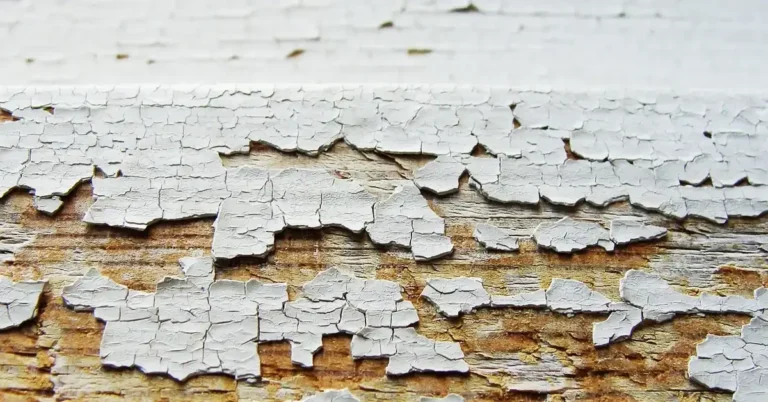
Raised grain feels fuzzy after it dries. Etching often appears as lighter streaks or wash marks that follow the spray path. If slats start to shift, joints loosen, or water pools at end grain, the pressure is too aggressive for that piece.
Say your teak bench has gone gray on the top rails but still sits tight at the mortise-and-tenon joints. Pressure washing may be acceptable only if the finish is already gone and the spray stays wide and distant; if the rails still hold an oil finish, hand cleaning is the safer choice.
When should you hand clean instead?
Hand cleaning should be the default for finished furniture, painted furniture, and any piece with weak joinery or prior repairs. It gives you control over where water goes and how much cleaner stays on the surface. That matters more than speed when the goal is to preserve finish and structure.
Joined pieces need gentler treatment
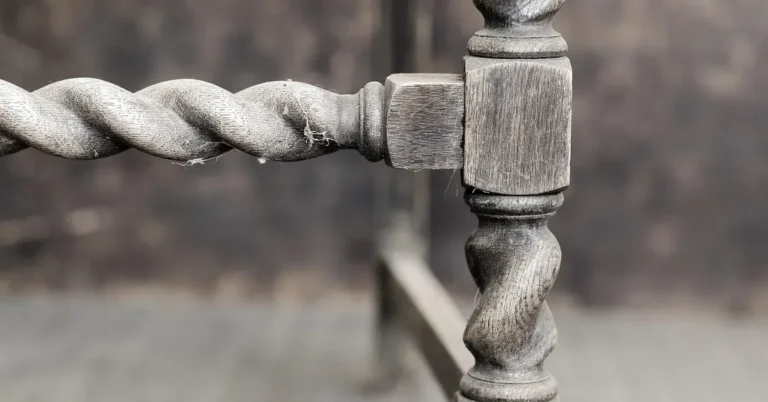
Older chairs, tables with glued stretchers, and furniture with repaired slats can absorb water through seams if sprayed too hard. Hand cleaning limits intrusion and lets you focus on dirty spots instead of soaking the whole piece. It also reduces the chance of opening a seam that was only partially stable.
Spot treatment is enough for many cases
If the furniture has a few gray patches or mildew specks, you usually do not need to strip the entire surface with water pressure. Clean the dirty area, rinse under control, and wipe dry with a microfiber cloth. That approach keeps intact finish in better condition and cuts down on reconditioning work later.
How do you clean wood furniture by hand?
Hand cleaning starts with a bucket of water, mild soap or a wood-safe cleaner, a soft-bristle brush, and a microfiber cloth. Work in sections, keep rinse water controlled, and do a test spot first so you can check for finish lift or color change. This method is slower, but it protects the surface better.
- Clear off loose dust and leaves with a dry microfiber cloth.
- Mix mild soap or a wood-safe cleaner in a bucket according to the label.
- Test a hidden spot, such as the underside of a seat or back rail.
- Brush one section with soft bristles, following the grain.
- Rinse lightly with a damp cloth or gentle spray, not a hard stream.
- Wipe dry with microfiber cloths so water does not sit in seams.
- Let the piece dry fully before any oil, sealant, or paint touch-up.
Use controlled rinsing
Keep rinse water limited. Flooding the surface can push grime into crevices and slow drying around joints and end grain. A damp cloth often does the job better than a hose, especially on finished teak, painted cedar, or furniture with small cracks.
What should you know about cleaners, mildew, and algae?
Oxygenated cleaners and specialty wood-safe formulas are usually the best starting point because they remove surface grime and help lift mildew without the harshness of routine bleach use. Gray film often means weathering, green slime points to algae, and black spotting is often mildew or embedded dirt. Finished wood needs the gentlest compatible cleaner you can use.
Choose cleaner by the stain, not by habit
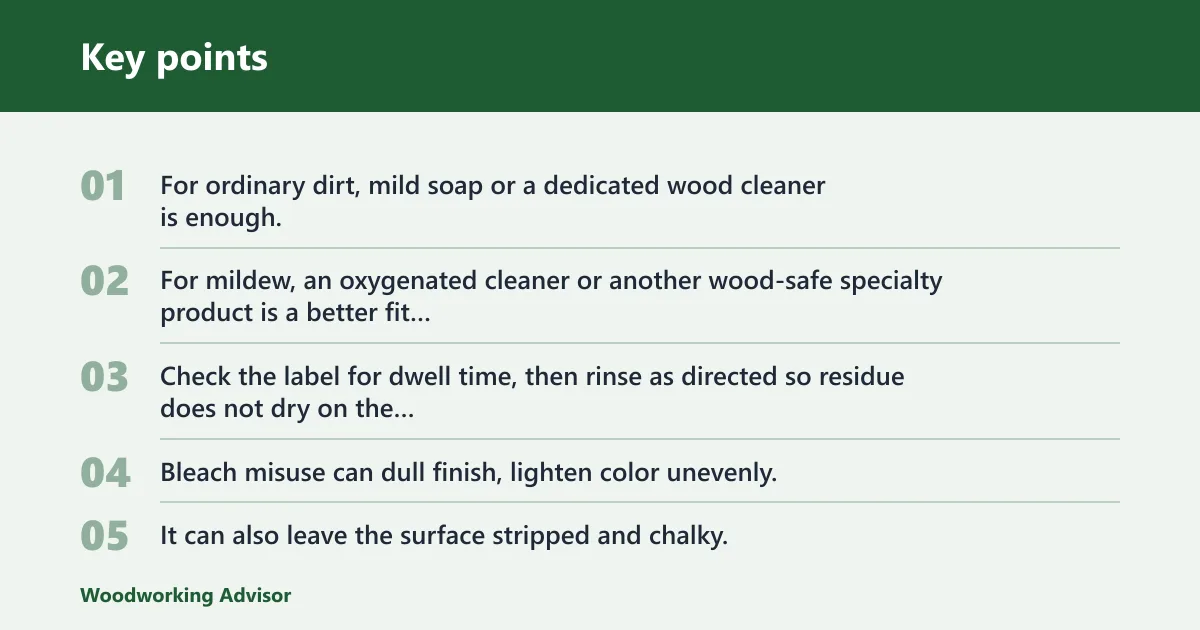
For ordinary dirt, mild soap or a dedicated wood cleaner is enough. For mildew, an oxygenated cleaner or another wood-safe specialty product is a better fit because it can attack organic growth without the same finish risk as strong chlorine bleach. Check the label for dwell time, then rinse as directed so residue does not dry on the surface.
Why bleach is a poor default
Bleach misuse can dull finish, lighten color unevenly, and stress fibers on sealed or painted wood. It can also leave the surface stripped and chalky, which means more reconditioning work after cleaning. If a cleaner calls for bleach, verify that it is specifically rated for the finish on the furniture, not just for outdoor use in general.
Picture a cedar side table under a covered porch with black spotting on one leg and a satin sealant on the top. A wood-safe cleaner can target the spotting while leaving the sealed top intact, but a bleach-heavy wash could dull both areas and create an obvious patch that needs refinishing.
How long should outdoor wood furniture dry?
Plan on at least 24 to 48 hours before resealing or re-oiling if the piece was washed heavily or the weather is humid, cool, or shaded. Drying takes longer when airflow is poor, joints are tight, or end grain has absorbed water. The surface should feel dry through the seams, not only on the face.
Weather changes the clock
Warm air and steady airflow shorten the wait. Shade, still air, and high humidity stretch it out. If the furniture sits on a porch with little circulation, give it extra time before any finish work, because trapped moisture can interfere with adhesion and invite future finish failure.
End grain and joints need special attention
End grain drinks more water than flat grain. Joints and screw holes can hold moisture after the surface looks dry, which is why a piece may need more time than expected. Do not re-oil, seal, or repaint until those areas are fully dry to the touch and no cool dampness remains.
Choose Pressure Washing if… / Choose Hand Cleaning for Outdoor Wood Furniture if…
Choose Pressure Washing if the furniture is heavily weathered, unfinished, and structurally sound, with no loose joints or repaired seams. Choose Hand Cleaning for Outdoor Wood Furniture if the piece has any finish, any paint, any repair history, or any concern about water intrusion, because those conditions make control more important than speed.
Pressure Washing
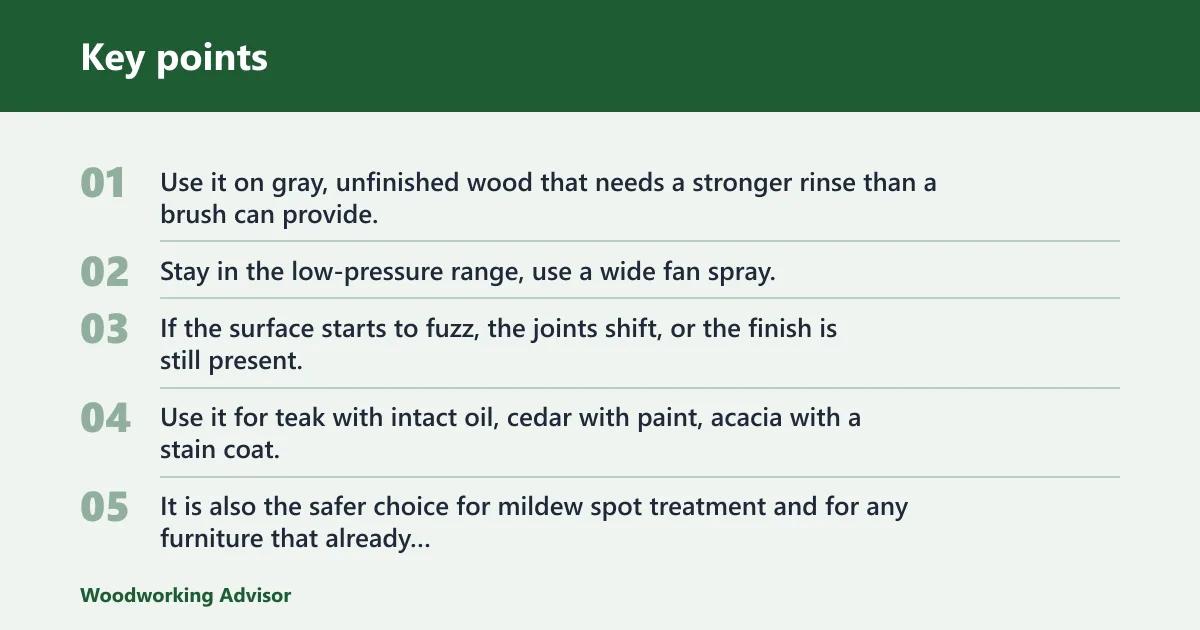
Use it on gray, unfinished wood that needs a stronger rinse than a brush can provide. Stay in the low-pressure range, use a wide fan spray, and keep the nozzle at a safe distance. If the surface starts to fuzz, the joints shift, or the finish is still present, stop and switch methods.
Hand cleaning for Outdoor wood furniture
Use it for teak with intact oil, cedar with paint, acacia with a stain coat, eucalyptus with a sealant, or pine with older repairs. It is also the safer choice for mildew spot treatment and for any furniture that already shows loose joints, stripped patches, or swelling around seams. The slower pace pays off in fewer repairs.


Frequently asked questions
Is pressure washing safe for outdoor wood furniture?
Only sometimes. It is safest on heavily weathered, unfinished furniture that is still solid at the joints. Finished, painted, or repaired pieces are better cleaned by hand because pressure can strip coatings, lift fibers, and push water into seams where drying takes longer.
Can you hand clean outdoor wood furniture instead of pressure washing?
Yes, and that is the safer default for most furniture. A soft-bristle brush, bucket of mild soap or wood cleaner, and microfiber cloth let you clean grime without blasting the surface. Hand cleaning is slower, but it reduces the chance of finish loss and joint damage.
What PSI should you use on wood furniture?
If pressure washing is appropriate at all, stay in a low-pressure range, often about 500 to 800 PSI for wood. Use a wide fan spray and keep distance, usually 12 to 18 inches. Avoid narrow tips and close passes, which are more likely to etch and lift fibers.
How do you clean teak or acacia patio furniture safely?
Use hand cleaning first if the teak or acacia still has oil, stain, or sealant. A soft brush, mild cleaner, and controlled rinse are the safest setup. If the piece is unfinished and very weathered, low-pressure washing can be considered, but only with wide spray and careful distance.
Will pressure washing remove the finish from wood furniture?
It can. Oil, stain, sealant, and paint all lose durability when hit with too much pressure, especially near edges and worn spots. Even if the finish does not come off immediately, the surface may still be left rough, patchy, or more absorbent than before.
What cleaner works best before hand washing wood furniture?
A mild soap or a wood-safe specialty cleaner is the best place to start. For mildew, choose an oxygenated or other wood-safe cleaner with clear dwell and rinse instructions. Avoid using bleach as a routine cleaner on finished wood because it can damage coatings and lighten the surface unevenly.
Sponsored / affiliate links. As an Amazon Associate I earn from qualifying purchases. I may earn additional commission from eligible campaigns.