How to Find the Center of a Piece of Wood (Square, Round, or Irregular)
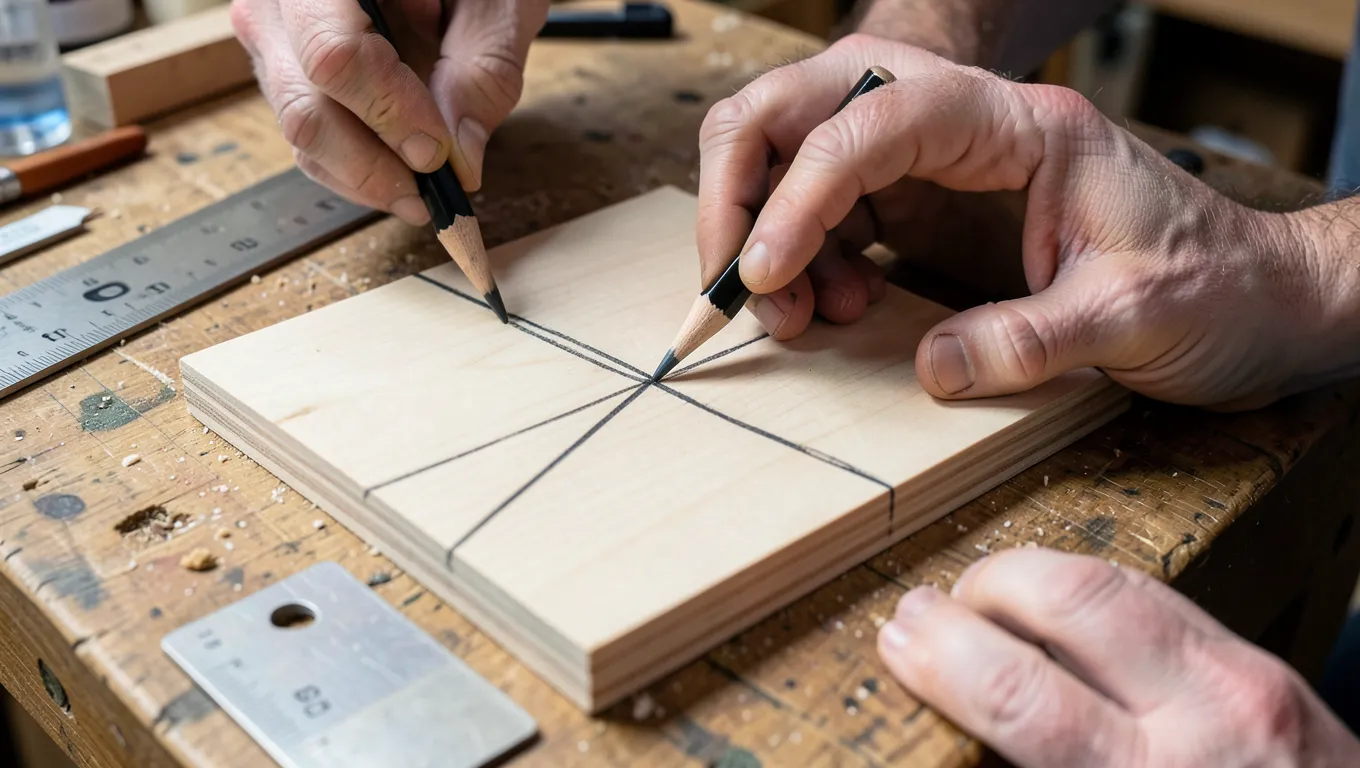
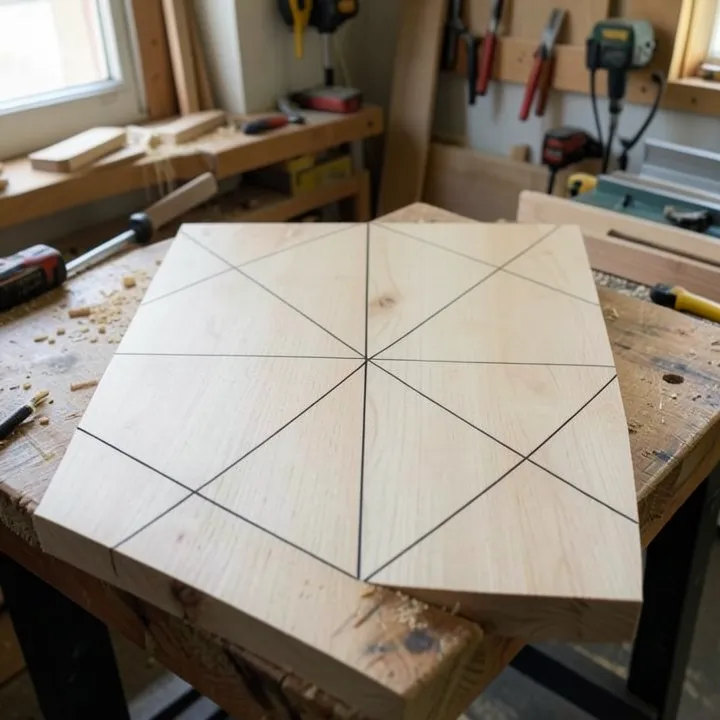
The fastest way to find the center of a rectangular piece of wood is to draw a pencil line corner to corner, then draw the other diagonal — wherever the two lines cross is the exact center, no measuring or math required.
Most guides tell you to measure the length and width and divide each by two, which works but forces you to do arithmetic on the exact same board you’re trying to mark accurately. The diagonal method skips that step entirely and self-corrects for a board that isn’t perfectly square, which a plain ruler measurement can’t do. Round stock — dowels, logs, turning blanks — needs a different approach since there are no corners to connect, covered further down.
Square or Rectangular Stock: The Diagonal Method
Best Tool For Round-Stock Centering
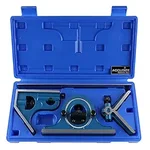 |
Accusize 12″ Combination Square Set with Center Head – $99.00 The center head swaps onto the same ruler blade as the square head, and it’s built specifically to find the center of round or cylindrical stock — dowels, turning blanks, pipe.
|
This is the method to reach for on tabletops, cutting boards, shelves, or any four-cornered panel.
- Lay a straightedge from one corner of the board to the diagonally opposite corner and draw a light pencil line.
- Draw the second diagonal, connecting the other two corners, the same way.
- The point where the two lines cross is the center — mark it with an awl or a sharp pencil point.
This works on any four-sided shape, including a board that’s slightly out of square from an imprecise cut — the crossing point is still the true geometric center of that specific piece, which “measure and divide by two” won’t give you if the two sides aren’t perfectly parallel.
Round Stock: Using a Center-Finding Head
A center head rests its V-notch against the circumference of round stock so the attached ruler blade always points toward the center, no matter where you set the V-notch down. Rest the notch against the round, draw a line along the blade’s edge, then rotate the piece roughly 90 degrees and draw a second line. Where the two lines cross is the center — the same crossing-line logic as the diagonal method, just adapted for a shape with no corners.
No center head on hand? A compass or a pair of dividers gets you there with three steps: set the compass to roughly the round’s radius, scribe an arc from three different points around the edge, and the three arcs will overlap in a small triangle near the true center — small enough at typical dowel sizes that the middle of that triangle is accurate for drilling.
Log Ends and Irregular Rounds
A cut log end is rarely a perfect circle, which is why the center-head trick above gets less accurate as the round gets more oval or irregular — the two crossing lines shift depending on which two points you scribed from. Two better approaches for a real log round:
- Bounding-rectangle method: lay a framing square against the widest points on two sides of the round to define a rectangle around it, then use the diagonal-line method from the first section on that rectangle. This gets you the center of the round’s overall footprint, which is what matters for mounting it flat or centering a slab slice.
- Balance-point method: for mounting an irregular round on a lathe, rest it across a thin dowel or pipe and slide it until it balances level. That balance point is the center of mass, which matters more than the geometric center for turning — an off-center geometric mark on a lopsided round can put the piece badly out of balance once it’s spinning.
Finding the Center Without Any Tools
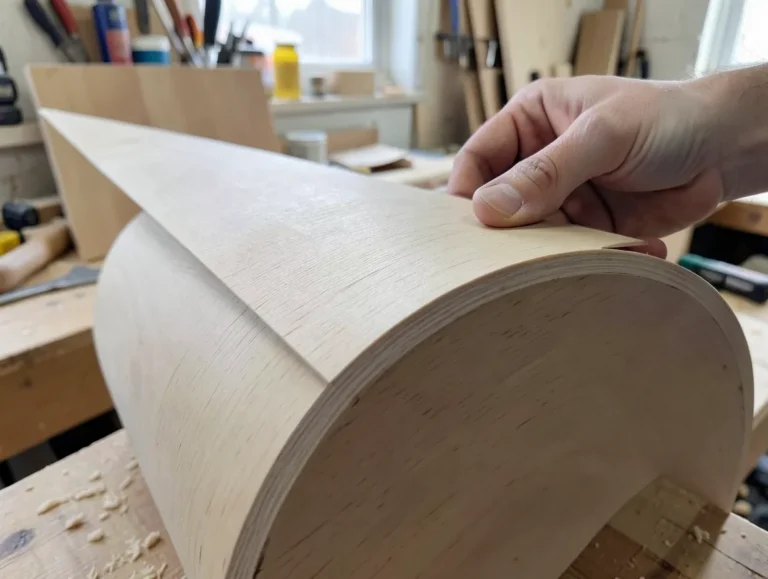
On a thin, flexible piece — plywood, thin stock, or veneer — you can fold it in half one way, crease it, unfold, then fold the other way and crease again. The two crease lines cross at the center. This doesn’t work on anything too rigid or thick to fold cleanly, and the crease itself can leave a visible line on finished veneer, so treat it as a quick shop trick for rough layout, not a finish-ready method.
Frequently Asked Questions
How do I measure the center of wood?
On a rectangular board, draw a pencil line between each pair of opposite corners; where the two diagonals cross is the exact center. This is faster and more forgiving of an out-of-square board than measuring the length and width and dividing each by two.
What tools do I need to find the center?
For square or rectangular stock, a straightedge and pencil are enough. For round stock like dowels or turning blanks, a combination square’s center head (or a compass, in a pinch) locates the center much more reliably than a ruler alone.
Can I find the center without measuring tools?
Yes — on thin, flexible material you can fold it in half lengthwise, then widthwise; the two crease lines intersect at the center. It’s fast but leaves a visible crease, so it’s better for rough layout than a finished piece.
How do I find the center of a log or an irregular round?
A cut log end usually isn’t a true circle, so a standard center-finding tool loses accuracy. Instead, box it in with a framing square to find the center of its bounding rectangle, or — if you’re mounting it on a lathe — balance it across a dowel and use the balance point, since that reflects the actual center of mass better than a geometric center mark does.
Conclusion
Square and rectangular stock is fastest with the diagonal-line method — no measuring, and it self-corrects for a board that isn’t perfectly square. Round stock needs a center-finding head or a compass to work around the lack of corners. Irregular rounds like log ends need either a bounding-rectangle trick or a balance test, depending on whether you need the true geometric center or the center of mass for turning.
Sponsored / affiliate links. As an Amazon Associate I earn from qualifying purchases. I may earn additional commission from eligible campaigns.
 PATIKIL 12 x 10 Inch Wood Panel Board, 2 Pack Unfinished Wooden Canvas Boards Square Blank Deep Cradle Board for Painting Pouring DIY Art Use with Oils Acrylics
 PATIKIL 12 x 10 Inch Wood Panel Board, 6 Pack Unfinished Wooden Canvas Boards Square Blank Deep Cradle Board for Painting Pouring DIY Art Use with Oils Acrylics