How To Get Rid Of Black Mold On Hardwood Floors: Proven, Essential
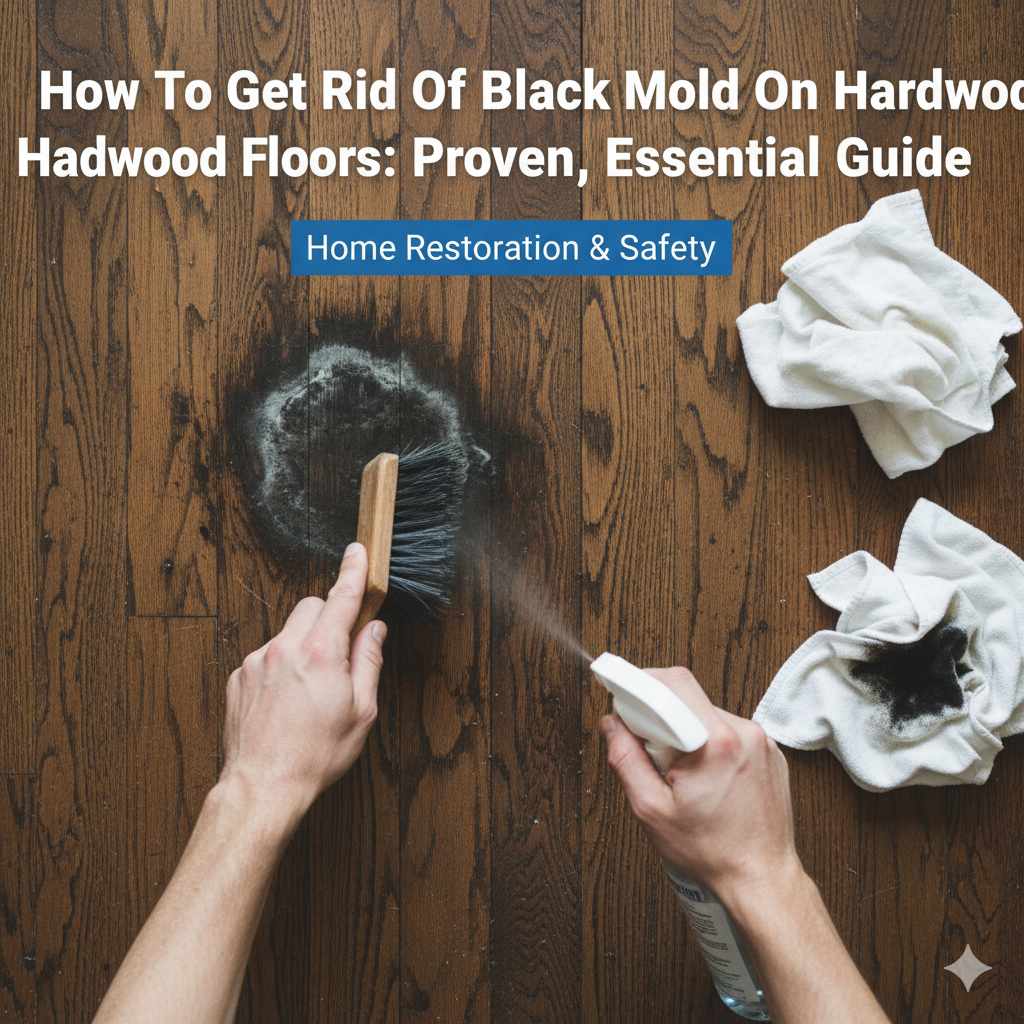
Got black mold on your beautiful hardwood floors? Don’t worry! Removing it is manageable. This guide breaks down effective, safe methods for homeowners, using simple supplies you likely have. We’ll tackle the mold and help prevent its return, restoring your floors with confidence.
Seeing black mold creep across your stunning hardwood floors can be disheartening. It’s a common problem, often born from excess moisture that loves to hide in homes. But before you panic about costly repairs, know that you can tackle this yourself! As your woodworking mentor, I’m here to guide you through proven, essential steps to safely and effectively get rid of black mold on hardwood floors. We’ll use straightforward methods and common household items, making the process less daunting and more successful. Get ready to reclaim your beautiful floors!
What is Black Mold and Why is it on My Hardwood Floors?
Black mold, often scientifically referred to as Stachybotrys chartarum, is a type of mold that appears dark green to black. It thrives in damp, humid environments and feeds on organic materials, which unfortunately includes the wood in your flooring. The key reason it appears on your hardwood floors is moisture. This moisture can come from various sources:
- Leaks: Plumbing leaks under the floor, roof leaks, or even a leaky appliance like a dishwasher or refrigerator can introduce water.
- High Humidity: Basements, bathrooms, kitchens, and laundry rooms, especially those without proper ventilation, can maintain high humidity levels.
- Condensation: Cold water pipes or condensation on windows near the floor can create damp spots.
- Spills: Spills that aren’t cleaned up promptly can penetrate the wood finish and subfloor, creating a breeding ground.
- Flooding: Major water damage events, like floods, inevitably lead to mold growth if not dried thoroughly and quickly.
The presence of black mold isn’t just an aesthetic issue; it can also impact your home’s air quality and potentially cause health problems. Understanding the source of moisture is the first, and most crucial, step in not only removing the mold but also preventing it from coming back.
Safety First: Protecting Yourself and Your Home
Before we dive into the cleaning process, let’s talk about safety. Mold spores can be harmful when inhaled, and cleaning solutions can also pose risks. It’s essential to protect yourself and avoid spreading the mold further. Think of this as preparing your workshop before a project – preparation is key!
Essential Safety Gear
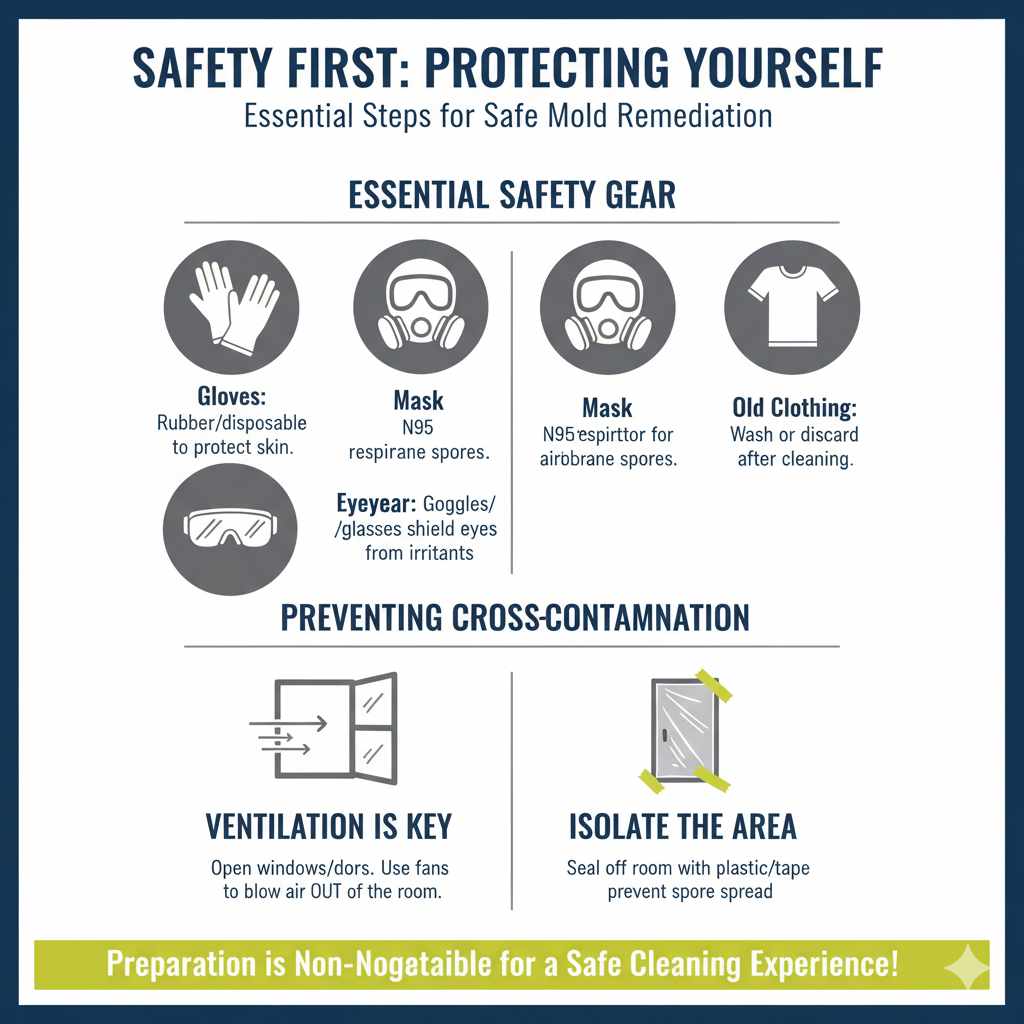
Gather these items before you start. They are non-negotiable for a safe cleaning experience:
- Gloves: Use rubber or disposable gloves to protect your skin from mold and cleaning agents.
- Mask: A N95 respirator mask is highly recommended to filter out mold spores from the air you breathe. A simple dust mask is not sufficient.
- Eyewear: Goggles or safety glasses will prevent irritants from getting into your eyes.
- Old Clothing: Wear old clothes that you can wash immediately afterward or are willing to discard.
Ventilation is Key
Mold thrives in stagnant, damp air. When cleaning, you want to improve airflow significantly. Open windows and doors in the affected area to allow fresh air in and help dry out the space. If you have fans, position them to blow air out of the room, not towards unaffected areas of your home.
Isolate the Area
If the mold infestation is significant, consider sealing off the affected room from the rest of your house using plastic sheeting and tape. This helps prevent mold spores from spreading through your ventilation system or by air currents to other parts of your home. This is especially important if you have individuals with respiratory issues, allergies, or compromised immune systems in your household.
Step-by-Step Guide: How to Get Rid of Black Mold on Hardwood Floors
Now that we’re prepared, let’s get to work! Remember, gentle but firm is the approach here. We want to remove the mold without damaging your beautiful hardwood.
Step 1: Identify the Source of Moisture
As we discussed, mold needs moisture to grow. Before you clean, find out why the mold is there. Is there a leaky pipe? High humidity? Did a plant spill? Address the water problem first. If you don’t fix the moisture issue, the mold will just come back. For persistent moisture problems or if you suspect hidden leaks, it might be time to call a professional plumber or home inspector.
Step 2: Prepare Your Cleaning Solution
You have a few proven options for cleaning solutions. Start with the mildest and work up if needed. Always test any solution on an inconspicuous spot of your hardwood first to ensure it doesn’t discolor or damage the finish.
Option A: Mild Dish Soap and Water
This is the least abrasive method and a good first choice for light mold.
- Mix a few drops of mild dish soap into a bucket of warm water.
- Stir gently to create suds.
Option B: White Vinegar Solution
Vinegar is a natural disinfectant and is effective against many types of mold. It’s generally safe for sealed hardwood floors.
- Mix equal parts white vinegar and water in a spray bottle or bucket.
- Shake or stir well.
Important Note: Do NOT mix vinegar with bleach. This creates dangerous toxic fumes. For more on safe cleaning combinations, check out EPA’s guidance on mold cleanup.
Option C: Hydrogen Peroxide Solution
A 3% hydrogen peroxide solution can be effective and is a gentler alternative to bleach. It also has mild bleaching properties, so a spot test is crucial.
- Use a 3% hydrogen peroxide solution straight from the bottle.
- Pour it into a spray bottle.
Option D: Mild Bleach Solution (Use with Extreme Caution)
Bleach can kill mold, but it’s harsh and can damage the finish of your hardwood floors. Use this only as a last resort for stubborn mold and always test first. Ensure the area is extremely well-ventilated, and never mix bleach with ammonia or vinegar.
- Mix 1 cup of bleach with 1 gallon of water.
- Use immediately.
Step 3: Apply the Cleaning Solution
This is where you’ll be doing the actual cleaning. Work in small sections to keep the wood from getting too wet.
- For Dish Soap or Vinegar/Peroxide: Lightly dampen a clean cloth or sponge with your chosen solution. Wring it out thoroughly so it’s not dripping wet. Gently wipe the moldy area. If using a spray bottle, lightly mist the area, but avoid saturating the wood.
- For Bleach Solution: Apply very sparingly with a sponge or cloth, as it’s more likely to damage the finish. Work quickly and rinse thoroughly.
Step 4: Scrub Gently
For stubborn mold spots, you might need a little gentle scrubbing. Use a soft-bristled brush (an old toothbrush works well for details) or a soft cloth. The goal is to lift the mold without scratching the wood surface. Work in the direction of the wood grain.
Step 5: Rinse the Area
After cleaning the mold, it’s important to rinse the area to remove any cleaning solution residue. Use a clean cloth dampened only with plain water. Again, wring it out well so it’s just damp, not wet. Wipe down the cleaned area thoroughly.
Step 6: Dry Thoroughly
This is a critical step! Any lingering moisture can invite mold back. Use clean, dry towels to Immediately dry the floor. If possible, set up fans to speed up the drying process. Ensure the area is completely dry to the touch before proceeding to the next step or allowing foot traffic.
Step 7: Deodorize (If Necessary)
Mold can leave behind a musty odor. If the smell lingers after cleaning and drying, you can try placing bowls of baking soda or activated charcoal in the room for a few days to absorb odors. Ensure the room remains well-ventilated.
Step 8: Inspect and Repeat (If Needed)
Once the floor is dry, inspect the area carefully. For most light mold issues, the steps above should be sufficient. If you still see traces of mold or if the discoloration persists, you may need to repeat the cleaning process. Sometimes, especially with older or deeply ingrained mold, multiple applications are necessary.
What If the Mold is Deeply Embedded or the Wood is Damaged?
Sometimes, black mold can penetrate deep into the wood, especially if the finish is compromised or the wood itself is porous. If the mold has caused permanent staining or has started to degrade the wood, surface cleaning might not be enough. In these more severe cases, you might need to consider:
- Sanding: For lightly embedded mold, you might be able to sand down the affected wood. This is a more involved process that requires dust protection and refinishing the area afterward. It’s best suited for small, localized spots.
- Wood Sealants/Finishes: After thorough cleaning and drying, applying a quality sealant or finish can help protect the wood from future moisture penetration and mold growth. Ensure the product is appropriate for hardwood floors.
- Board Replacement: If an entire section of flooring is severely damaged or the mold is extensive, it may be necessary to replace the affected boards.
For significant mold problems or if you’re unsure about repairs, consulting a professional restoration company or experienced carpenter specializing in wood flooring is always a wise choice. They have the tools and expertise to handle more complex situations safely and effectively. The International Code Council (ICC) offers resources on home safety and building standards that are relevant to managing mold issues.
Preventing Future Black Mold on Your Hardwood Floors
The best way to deal with black mold is to prevent it from appearing in the first place. Prevention is always easier and far less costly than remediation. Here’s how you can keep your hardwood floors mold-free:
Control Humidity Levels
This is paramount. Aim to keep indoor humidity levels between 30-50% year-round. Use a dehumidifier in damp areas like basements or bathrooms. Ensure attics and crawl spaces are properly ventilated. Consider using a hygrometer (a device that measures humidity) to monitor levels.
Ensure Proper Ventilation
Use exhaust fans in bathrooms and kitchens when showering, cooking, or doing laundry. Make sure clothes dryers are vented to the outside. Ensure your home’s general ventilation systems are working efficiently.
Fix Leaks Immediately
Don’t ignore dripping faucets, leaky pipes, or condensation issues. Even small leaks can create enough moisture over time to encourage mold growth. Regularly inspect plumbing, appliances, and your roof for any signs of water intrusion.
Clean Up Spills Promptly
Accidents happen! If you spill water, juice, or anything else on your hardwood floors, clean it up immediately. Wipe the area dry with a clean cloth and ensure it’s completely dry.
Regular Cleaning and Maintenance
Keep your floors clean and dry. Regular sweeping or vacuuming and occasional damp mopping (using a well-wrung-out mop) can help prevent dirt and moisture buildup.
Inspect Regularly
Periodically check areas prone to moisture, such as around sinks, under appliances, near windows, and along baseboards. Catching problems early makes them much easier to solve.
Tools and Supplies Checklist
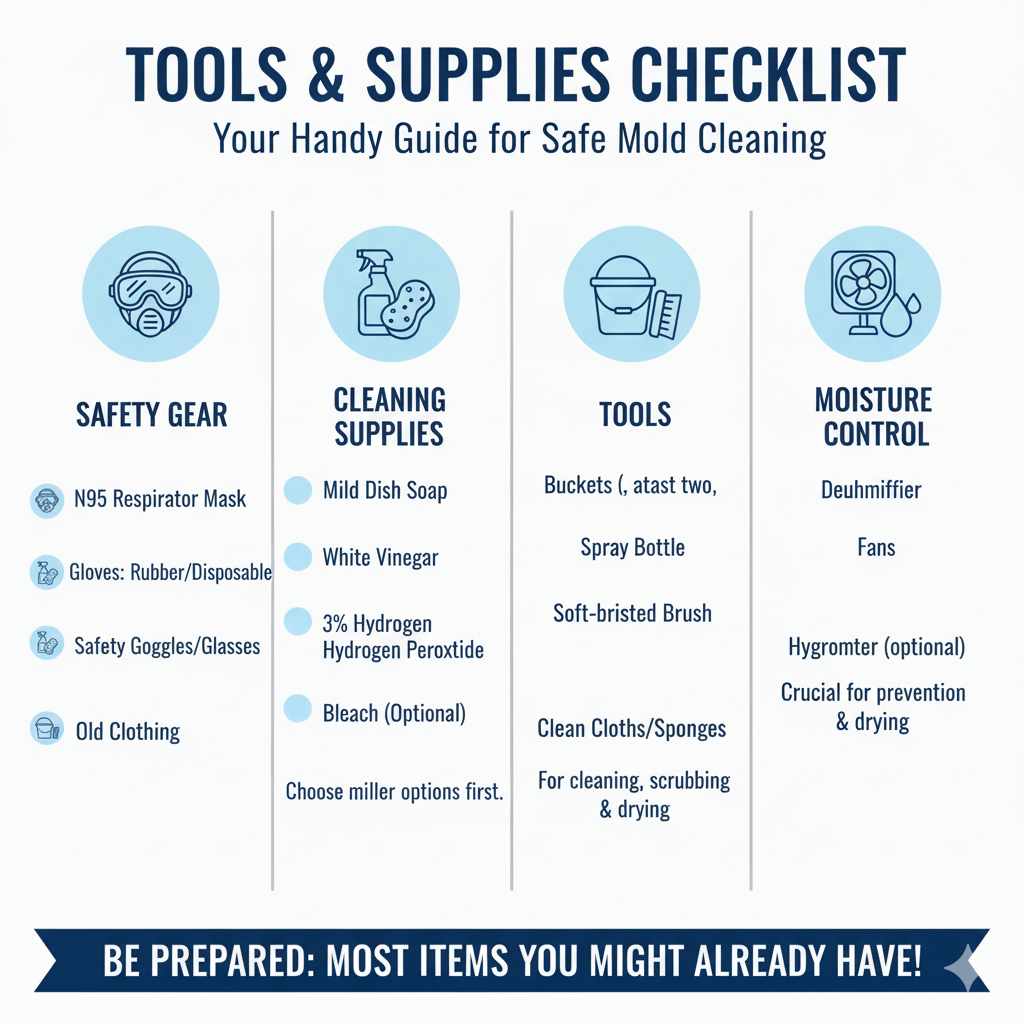
To sum up, here’s a handy list of what you’ll likely need. You might already have most of these items at home!
| Category | Items | Notes |
|---|---|---|
| Safety Gear | N95 Respirator Mask Rubber or Disposable Gloves Safety Goggles/Glasses Old Clothing | Essential for protection. |
| Cleaning Supplies | Mild Dish Soap White Vinegar 3% Hydrogen Peroxide (Optional) Bleach (Optional, use with extreme caution) Baking Soda or Activated Charcoal (for odors) | Choose milder options first. |
| Tools | Buckets (at least two) Spray Bottle (if using vinegar/peroxide) Soft-bristled Brush (e.g., toothbrush) Clean Cloths or Sponges Dry Towels | For cleaning, scrubbing, and drying. |
| Moisture Control | Dehumidifier Fans Hygrometer (optional) | Crucial for prevention and drying. |
Frequently Asked Questions (FAQ)
Q1: Is black mold on hardwood floors dangerous?
Yes, black mold can be a health concern. Inhaling mold spores can trigger allergies, asthma symptoms, and other respiratory issues, especially in sensitive individuals. It’s important to take precautions during cleaning and address the moisture source to prevent its growth.
Q2: Can I use bleach to clean black mold on hardwood floors?
Bleach can kill surface mold, but it needs to be used with extreme caution on hardwood. It can damage the wood’s finish and color. Always test in an inconspicuous spot first. Vinegar or hydrogen peroxide are often safer, more effective choices that won’t harm the wood finish as much. Never mix bleach with ammonia or vinegar, as this creates toxic fumes.
Q3: How much does it cost to fix black mold on hardwood floors?
The cost varies greatly. For minor surface mold that you can clean yourself, the cost is minimal, primarily for cleaning supplies and safety gear. If the mold has penetrated the wood and requires sanding and refinishing, or if entire boards need replacement, costs can range from a few hundred to several thousand dollars depending on the extent of the damage and your location. Professional remediation can also add to the cost.
Q4: Should I seal my hardwood floors after cleaning mold?
Yes, if the finish on your hardwood floors has been compromised or is old, sealing them after cleaning and ensuring they are completely dry can help prevent future moisture absorption and mold growth. Choose a high-quality, clear sealant or finish appropriate for hardwood floors.
Q5: How long does it take for mold to grow on hardwood floors?
Mold can start to grow within 24 to 48 hours in moist conditions. The visible signs of mold growth on hardwood floors may take longer to appear, depending on the type of mold, the amount of moisture, and the surface conditions. Consistent dryness is key to preventing rapid growth.
Q6: What’s the best way to deal with mold smell on hardwood floors?
After cleaning the mold and ensuring the area is dry, mold odors can linger. You can try placing bowls of baking soda, activated charcoal, or even a bowl of white vinegar in the affected room for a few days to absorb the smell. Ensure good ventilation to help clear the air.
Conclusion
Tackling black mold on your hardwood floors might seem like a daunting task, but with the right approach and a bit of patience, you can successfully remove it and restore the beauty of your home. Remember, the core of solving this problem lies in identifying and eliminating the moisture source. By following these step-by-step instructions, using the recommended safety precautions, and focusing on thorough drying, you’ll be well on your way to a mold-free floor. Don’t forget that consistent prevention—controlling humidity, ensuring good ventilation, and fixing leaks promptly—is your best defense against this unwelcome guest. You’ve got this!