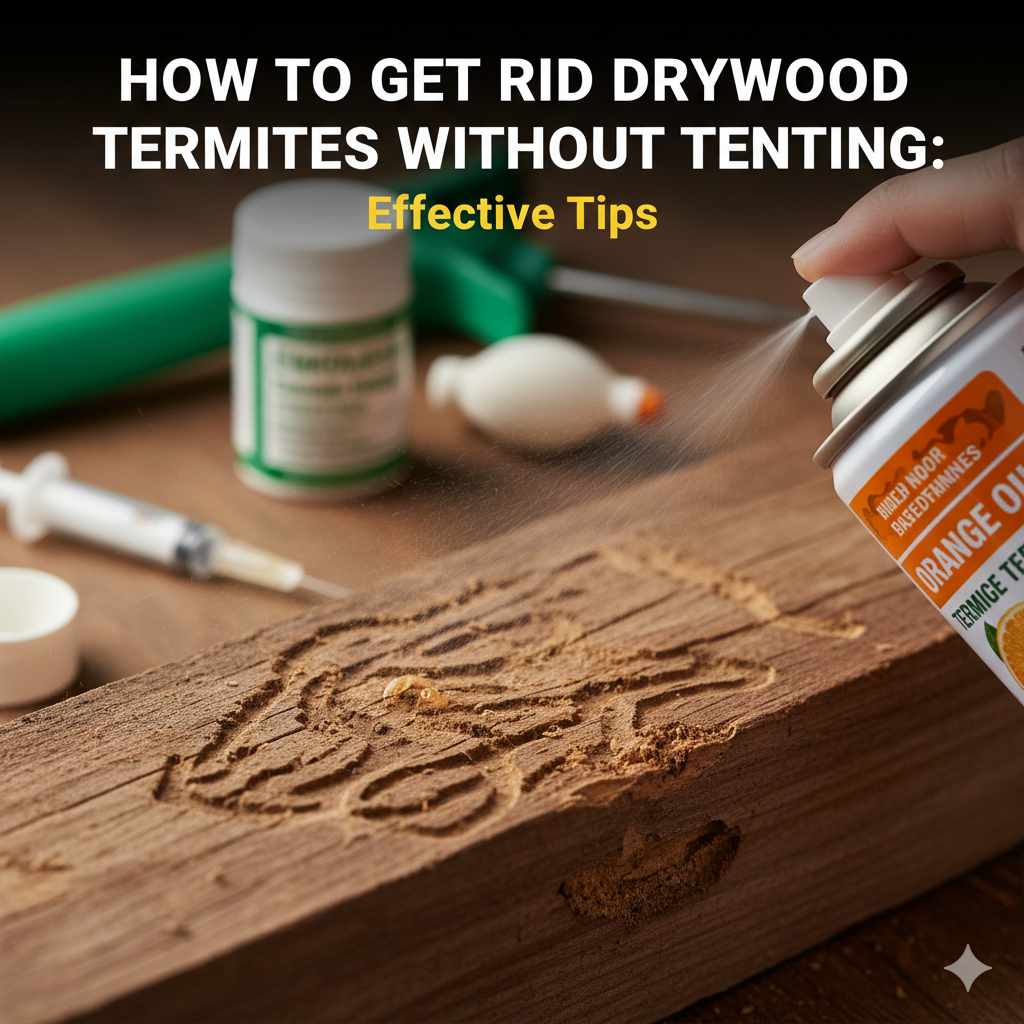
How to Get Rid of Drywood Termites Without Tenting: Effective Tips
Are you tired of sharing your home with unwanted guests like drywood termites? These pesky critters can wreak havoc on your wooden structures, leaving you frustrated and your property at risk.
You’ve probably heard of tenting as a solution, but the idea of wrapping your entire house in a large tarp might not be appealing. Fortunately, there are effective ways to tackle this problem without resorting to tenting. Imagine reclaiming your space without the hassle and stress.
Picture your home safe and secure, free from the hidden damage these termites can cause. You’ll discover practical and proven methods to eliminate drywood termites from your home, keeping your family safe and your property intact. By using strategies that don’t involve tenting, you can save time, money, and avoid the inconvenience of a large-scale operation. Dive in, and learn how you can protect your home from these silent invaders with ease and confidence. Your termite-free future starts now.
Signs Of Drywood Termite Infestation
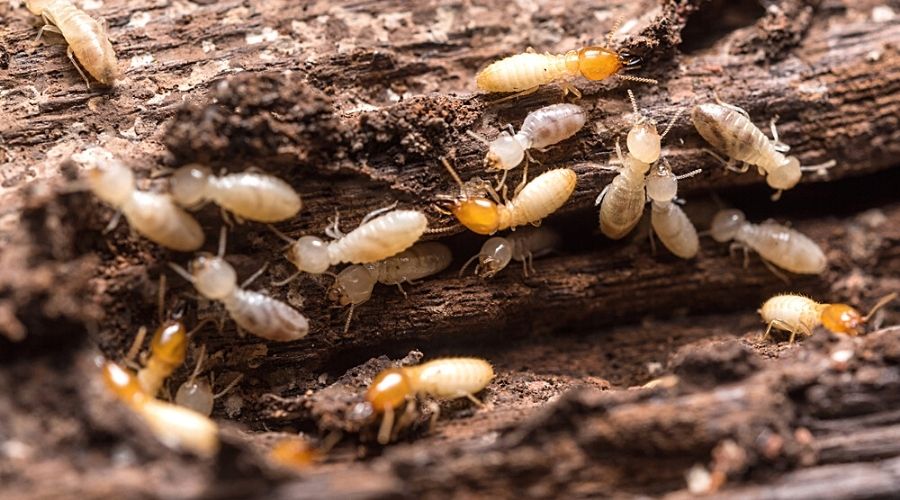
Small piles of frass resembling sawdust and hollow-sounding wood are signs of drywood termite infestation. Eliminating them without tenting involves careful inspection, targeted treatments, and ongoing monitoring to ensure complete removal.
Identifying Termite Droppings
Termite droppings look like tiny, hard pellets. They are often found in piles. These pellets can be brown, black, or tan. Droppings are usually close to infested wood. Check window sills and corners. Droppings are a clear sign of termites. Look for them in hidden spots. They often resemble sawdust. Droppings are called “frass.” Finding frass means termites are near. Clean up droppings to monitor activity.
Spotting Damaged Wood
Termites eat wood from the inside. Damaged wood sounds hollow. Tap it with a stick to check. Look for cracks or holes. Check walls and furniture. Damaged wood may have a wavy surface. Paint on damaged wood can bubble. Wood may break easily. Examine wooden beams closely. Lightly press on the surface. Signs of damage mean termites are active. Wood damage is a big warning.
Natural Remedies For Termite Control
Eliminate drywood termites with natural remedies like orange oil, vinegar, or borax. These solutions penetrate wood, disrupting termite habitats. Regular application ensures effectiveness and minimizes infestation without the need for tenting.
Using Essential Oils
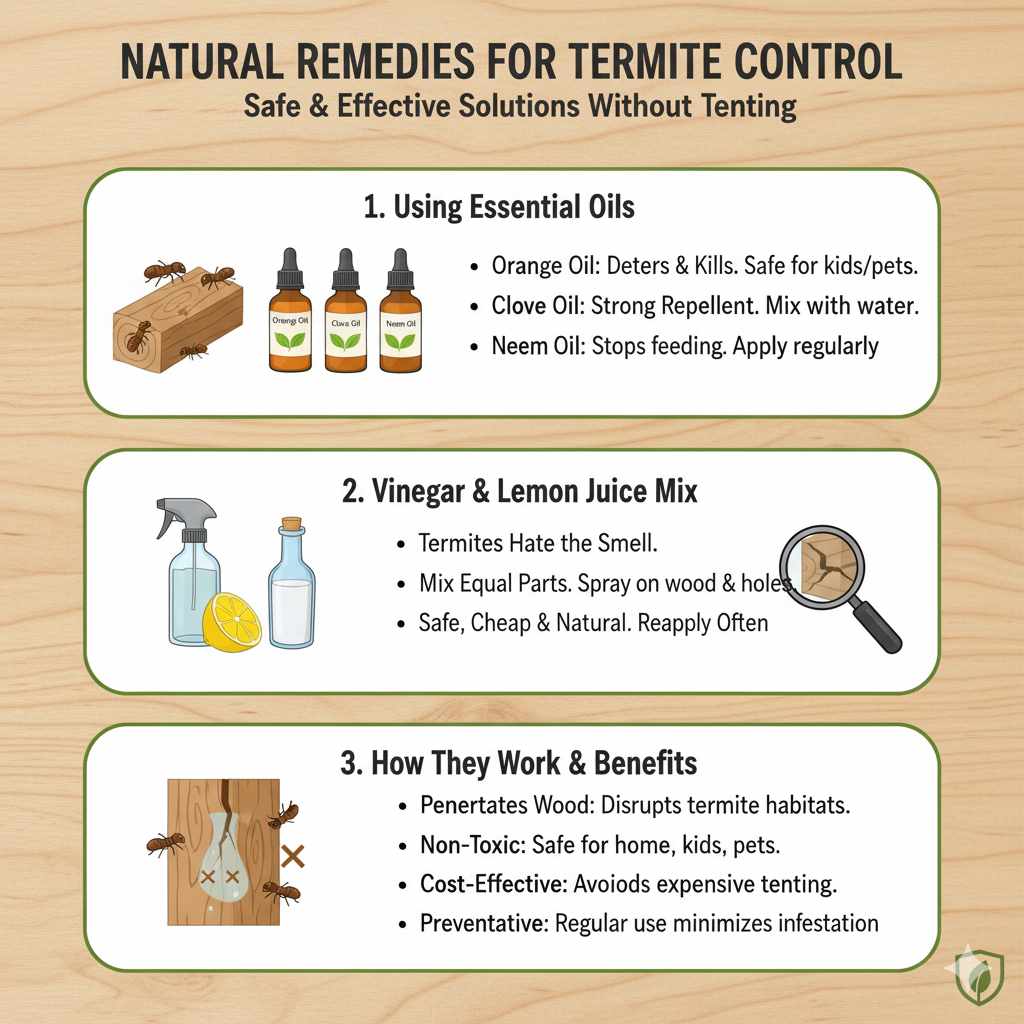
Essential oils can help fight termites. They are safe for kids and pets. Orange oil is popular. Termites hate it. You can spray it where you see termites. Clove oil is strong too. It makes termites go away. Mix it with water. Then spray it on wood. Neem oil works like magic. It stops termites from eating wood. Use these oils often for best results.
Vinegar And Lemon Juice Mix
Mixing vinegar and lemon juice is easy. Termites dislike the smell. It can make them leave. Mix equal parts in a spray bottle. Spray it on wood and holes. The mix is safe for your home. Repeat the spray often. Watch termites go away. This mix is natural and cheap. Easy to make and use.
Chemical-free Solutions
Beneficial nematodes are tiny worms. They are natural termite killers. These worms are safe for people and pets. They hunt termites in the soil. The nematodes enter the termites’ bodies. They release bacteria inside. This bacteria kills the termites quickly. Nematodes are easy to use. Just mix them with water. Spray the mixture on termite areas. Keep the area moist for best results. This method is eco-friendly and effective.
Orange oil comes from orange peels. It is a natural termite repellent. The oil has a strong smell. This smell bothers termites. It also destroys their eggs. To use orange oil, drill holes in infested wood. Inject the oil into these holes. The termites will die in a few days. Orange oil is safe for homes. It is also kind to the environment. Repeat treatment if needed.
Credit: romneypestcontrol.com
DIY Termite Control Methods
Sunlight is a natural enemy of termites. Place infested furniture outside. The sun will kill the termites. Heat is another effective method. If the sun isn’t strong, use a heater. Keep temperatures above 120°F. Termites cannot survive such heat. Repeat this process often. It helps keep termites away.
Cold can also eliminate termites. Lower the temperature to below 15°F. This method works best in freezers. Place small items inside. Leave them for a few days. Termites will die. Always make sure items can handle cold. Check for damage afterward.
Preventative Measures
Drywood termites love moist places. Keep your home dry. Fix any leaking pipes. Ensure your roof is not leaking. Use a dehumidifier in damp areas. Keep your gutters clean and free of debris. Moisture in wood attracts termites. Seal any cracks in walls. This blocks moisture from coming in. Ventilate your attic and basement well. Dry spaces are less attractive to termites.
Check your home every few months. Look for signs of termites. Check wooden structures like beams. Look for small holes or frass. Frass is termite droppings. Inspect window frames and doors. Tap wood to hear for hollow sounds. This may mean termites inside. Call a professional if you see signs. Early detection helps stop damage. Protect your home by checking often.

Credit: www.fixr.com
Professional Pest Control Options
Eliminate drywood termites without tenting through professional pest control options. Experts use targeted treatments like heat or liquid applications. These methods effectively address infestations while minimizing disruption to your home.
Localized Treatments
Localized treatmentscan target specific areas. They avoid the need for tenting. Experts use special tools for this. They find termite colonies in walls or wood. Then, they apply treatments directly. This method saves time and money. It is also less disruptive to your home.
Foam And Dust Applications
Foamand dustapplications are popular. Foam expands to fill gaps. It reaches deep inside wood. Dust works well in tight spaces. Both are effective against termites. They are used by professionals for safety. These treatments are less harmful to the environment. They help control termite infestations effectively.
Frequently Asked Questions
Can You Treat Drywood Termites Without Tenting?
Yes, drywood termites can be treated without tenting. Localized treatments like heat, chemicals, and electro-gun methods work effectively. These options target specific areas and minimize disruption. Consult a pest control expert to choose the best method for your situation. Regular inspections and maintenance can prevent infestations.
How Do I Get Rid Of Drywood Termites Permanently?
Use a professional pest control service to apply termiticide treatment. Seal entry points and fix moisture issues. Regularly inspect and maintain the area to prevent re-infestation. Consider using wood treatments like borate for long-term protection. Ensure proper ventilation and repair damaged wood promptly.
How Effective Is Tentless Termite Treatment?
Tentless termite treatment is effective for localized infestations. It targets specific areas without disrupting your home. Results can vary based on infestation severity. Professional assessment ensures optimal outcomes.
What Is The Best Alternative To Tenting For Termites?
The best alternative to tenting for termites is heat treatment. It effectively eliminates termites using high temperatures without chemicals. This method is eco-friendly and safe for humans and pets. Another option is localized spot treatments using liquid termiticides or bait systems, targeting specific infestation areas.
Conclusion
Eliminating drywood termites is possible without tenting. Use effective alternative methods. Borate treatments work well. Apply them to wood surfaces for best results. Essential oils also help. They repel and disrupt termite activity. Regular inspections are crucial. Catching infestations early prevents damage.
Maintain proper wood moisture levels. Dry environments deter termites. Seal entry points in your home. This blocks their access. Hiring professionals offers peace of mind. They provide thorough inspections and treatments. Consistent maintenance keeps termites away. Protect your home with these simple steps.
Enjoy a termite-free space.