Is Melamine Weather Resistant? Board vs. Dinnerware Explained
Melamine board is not weather resistant — the resin-coated core is particleboard or MDF, and once moisture reaches an unsealed edge it swells, delaminates, and warps within days outdoors. Melamine dinnerware is a different story: solid melamine resin dishware shrugs off sun and rain fine. Confusing the two is why this gets asked so often. This guide covers the board-vs-dinnerware split, the four factors that actually control moisture damage, and what to use instead if a project needs to live outside.
Quick Answer
Melamine board (particleboard or MDF with a fused resin surface) is not weather resistant — its core absorbs moisture at any exposed edge and swells or delaminates. Melamine dinnerware (solid molded resin) is genuinely weather resistant and safe for outdoor dining. If you’re building furniture or storage, treat melamine board as an indoor-only material and use marine plywood or exterior-grade MDF outside instead.
What Melamine Actually Is
Best Melamine Edge Protection Pick
Edge Supply Birch Pre-Glued Iron-On Wood Veneer Edge Banding
Real wood veneer tape with a hot-melt adhesive backing that irons onto raw particleboard and MDF edges — the first line of defense on any melamine panel headed outdoors.
- Best for: Closing off raw factory or field-cut edges before any moisture exposure
- Why we picked it: Works on the exact substrate melamine board is built on — particleboard and MDF — and applies with just a household iron
- Main drawback: Slows moisture entry at the edge but doesn’t waterproof the panel face or the fasteners
Compare more melamine protection options
 Option 1 Thompson’s WaterSeal Multi-Surface Waterproofer
|
 Option 2 Clear 100% Silicone Caulk & Sealant
|
 Option 3 Rain Guard Hydrophobic Wood Sealer Spray
|
As an Amazon Associate we earn from qualifying purchases.
Melamine is a thermosetting resin (melamine combined with formaldehyde) that’s fused under heat and pressure onto a substrate. What that substrate is changes everything about how the finished product handles weather — and it’s the detail most articles on this topic skip. For more material-selection basics like this, see our full woodworking tips collection.
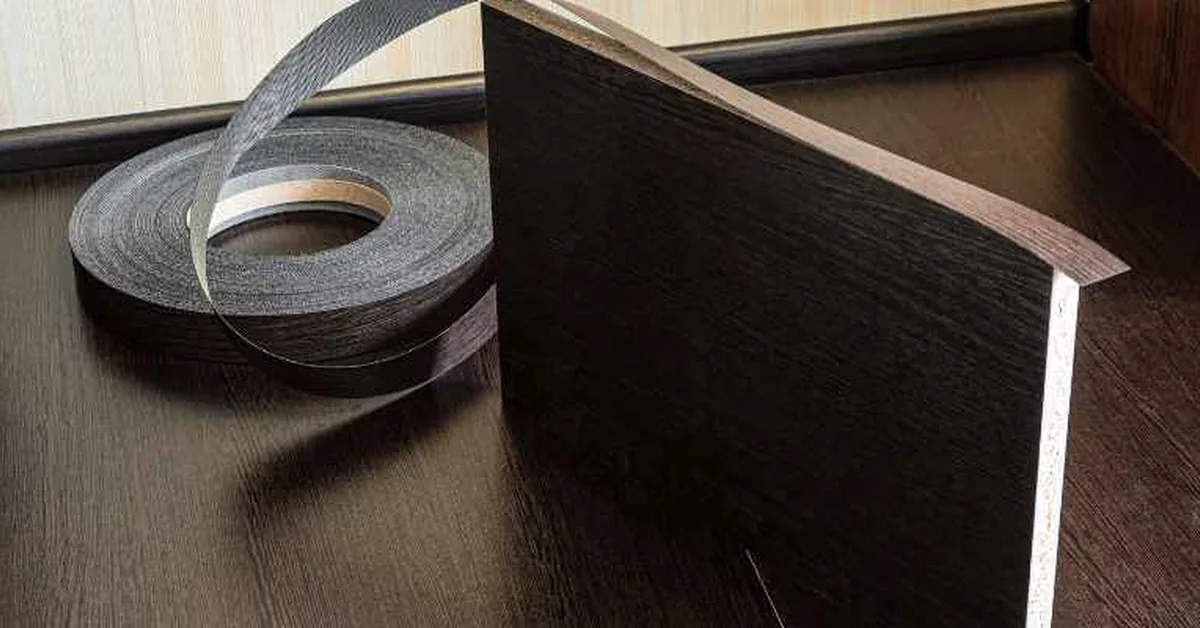
- Melamine board — a thin decorative resin layer fused to particleboard or MDF. This is what’s used for cabinet interiors, closet shelving, and flat-pack furniture. The resin face is fine in rain; the wood-composite core underneath is not.
- Melamine dinnerware — solid molded resin all the way through, no wood core to swell. This is the material behind most “unbreakable” outdoor plates and picnic sets.
- Melamine laminate (Formica-type) — a harder, thicker high-pressure laminate bonded to a substrate, used for countertops. More abrasion-resistant than melamine board but the same moisture rule applies to the substrate.
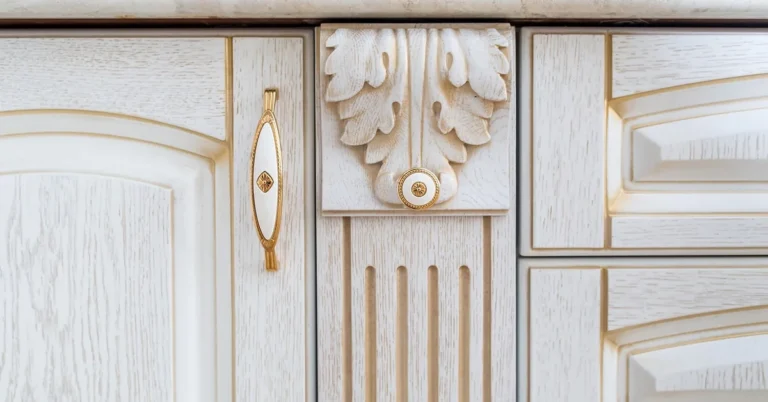
Melamine board is also common in particleboard cabinetry, so if you’ve ever seen a kitchen base cabinet swell along the toe-kick after a dishwasher leak, that’s the same failure mode outdoor exposure causes — just from rain instead of an appliance.
Why Melamine Board Fails Outdoors
Four factors determine how fast an outdoor melamine board fails, and none of them can fully offset the core problem — the substrate underneath the resin face is moisture-absorbent wood composite.
- Edge exposure: The flat faces are sealed by the resin, but factory-cut edges are raw particleboard or MDF unless banded. This is almost always where failure starts.
- UV exposure: Direct sun fades the resin’s color and pattern over months, even where moisture isn’t an issue yet.
- Panel thickness: Thicker panels (3/4″ vs 1/2″) take longer to fully saturate and swell, but thickness only delays the failure — it doesn’t prevent it.
- Standing water and humidity cycles: Repeated wet/dry cycling is worse than one soaking rain, because each cycle re-swells the core fibers a little more and eventually breaks the resin’s bond to the substrate.
How Manufacturers Actually Test This
Weather-resistance claims on melamine products (and the exterior-grade alternatives below) are usually backed by accelerated-weathering lab tests, not real outdoor exposure. Knowing the standard tells you what “weather resistant” is actually certifying — UV and color stability, not waterproofing the core.
| Testing Standard | What It Measures |
|---|---|
| ASTM G154 | Fluorescent UV lamp exposure for nonmetallic materials — color and surface degradation from sunlight |
| ISO 4892-2 | Xenon-arc lamp exposure — simulates full-spectrum sunlight aging on plastics and coatings |
| JIS D 0205 | Xenon-arc lamp test for automotive paints and coatings, adapted for laminate surfaces |
None of these three standards test moisture absorption into a wood-composite core — they’re color and UV tests. A melamine panel can pass every one of them and still swell the first time its raw edge sits in standing water.
If You Have to Use Melamine Board Outdoors, Protect It Like This
For short-term or covered outdoor use — a patio storage box under a roof overhang, a temporary event display — melamine board can survive if every exposed edge and cut is sealed before it ever sees weather.
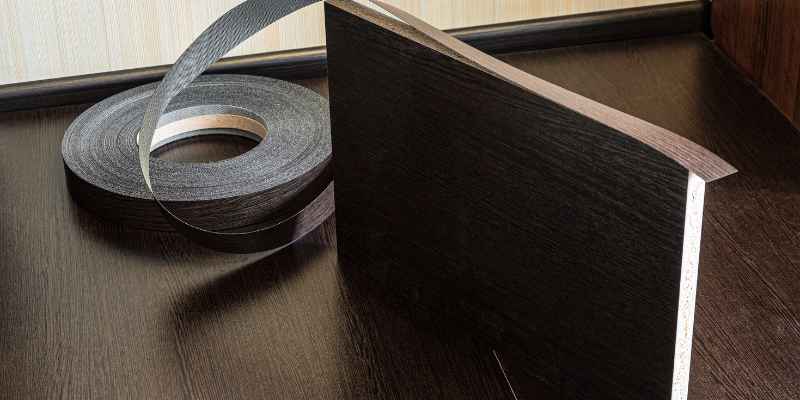
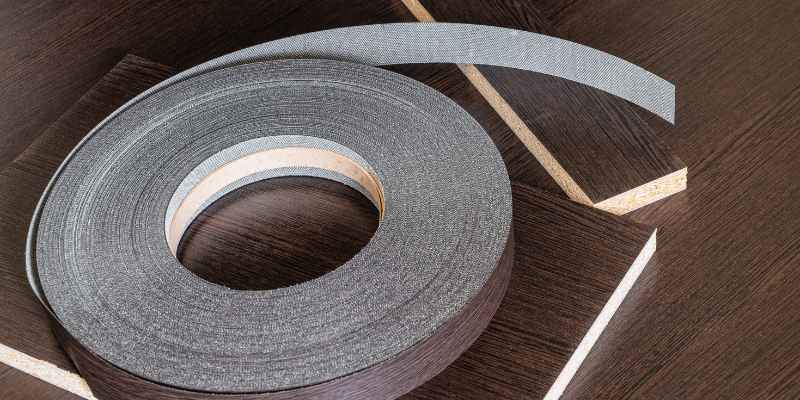
- Band every raw edge: Iron-on edge banding fuses to any factory or field cut and closes off the entry point moisture uses first.
- Seal fastener holes and seams: Run a bead of 100% silicone sealant anywhere screws penetrate the panel or two panels meet — these punctures bypass the edge banding entirely.
- Apply a penetrating waterproofer to any cut you can’t band: A multi-surface waterproofing sealer soaks into exposed core fiber and slows absorption, even though it won’t stop it long-term.
- Keep it covered and off the ground: Standing water and direct rain contact are what cause swelling within days; covered, elevated placement extends usable life from days to months.
- Reapply sealant seasonally: Any of the above treatments wear off with sun and rain cycling — check edges every season, not just at build time.
Better Materials for Anything That Lives Outside
For anything staying outdoors permanently — a shed, planter, or outdoor storage bench — skip melamine board entirely and build with a material designed for the exposure instead.
| Material | Outdoor Performance | Best For |
|---|---|---|
| Marine-grade plywood | Void-free core, waterproof glue lines; the most durable option for permanent outdoor structures | Boat-adjacent builds, outdoor cabinetry that must last years |
| Pressure-treated commercial plywood | Chemically treated core resists rot and insects; still needs sealed edges and fasteners | Decking, framing, outdoor furniture on a budget |
| Exterior-grade MDF | Wax-resin treated to resist moisture better than standard MDF, but still not waterproof | Painted outdoor trim under a roof overhang |
| HDPE (marine board) | Solid plastic, immune to moisture and rot entirely, never needs sealing | Outdoor kitchens, planters, anything in constant wet contact |
If the project is a cabinet interior or shelving that will always stay indoors, melamine board remains the right call — it’s cheaper than plywood and easier to keep clean, and particleboard cabinet cores hold up fine as long as they never see standing water. It’s specifically the transition to outdoor use that changes the material recommendation.
Melamine Board vs. Plywood Outdoors
The comparison matters because both materials look similar at a lumber yard, and the outdoor answer is the opposite for each. Untreated plywood also struggles outdoors unless it’s rated exterior or marine grade — the difference is that plywood has an exterior-rated version built for the job. Melamine board doesn’t; there’s no “exterior melamine board” product to reach for, only edge protection and sealant to slow the damage.
Common Mistakes When People Try to Use Melamine Outside
- Assuming the resin face means the whole panel is sealed. Only the flat faces are protected — every cut edge is raw core.
- Sealing the face but skipping fastener holes. Screw penetrations puncture the resin exactly like an unbanded edge does.
- Confusing melamine dinnerware reviews with melamine board reviews. “Melamine is weather resistant” articles about plates and mugs don’t apply to particleboard-core panels — they’re describing a completely different product made from the same resin.
- Leaving cut edges exposed “temporarily.” A weekend of rain is enough to start core swelling; there’s no safe amount of “just for now.”
Is melamine waterproof?
No. The resin surface resists spills and light moisture, but it isn’t waterproof, and the particleboard or MDF core underneath absorbs water readily at any unsealed edge or fastener hole.
Can melamine dinnerware go outside?
Yes. Melamine dinnerware is solid molded resin with no wood core, so it resists sun, rain, and temperature swings well — it’s why melamine plates and cups are common for outdoor dining and picnics.
Will melamine board swell if it gets rained on once?
A single brief rain exposure on a sealed face usually causes little visible damage, but any water that reaches an unsealed edge or screw hole starts absorbing into the core immediately, and repeated exposure compounds quickly.
What’s a cheap alternative to melamine for outdoor cabinets?
Pressure-treated commercial plywood is the budget-friendly option for outdoor cabinetry — it costs less than marine plywood while still resisting rot and moisture far better than melamine board, as long as cut edges and fasteners are sealed.
Does painting over melamine make it weatherproof?
No. Paint adheres poorly to melamine’s slick resin surface without heavy sanding and a bonding primer first, and even a well-adhered paint layer doesn’t waterproof the particleboard core at the edges — edge banding and sealant are still required.
Conclusion
Melamine board is not a weather-resistant material — treat it as indoor-only, and if a piece needs to survive outside, band every edge, seal every fastener, or switch to marine plywood, pressure-treated plywood, or HDPE instead. Melamine dinnerware is the one exception, and it’s genuinely fine left out in the sun and rain. Knowing which “melamine” a search result is actually talking about is most of the answer.
Sponsored / affiliate links. As an Amazon Associate I earn from qualifying purchases. I may earn additional commission from eligible campaigns.