How to Make Wood Ash Tea for Your Garden (Not for Drinking)
“Wood ash tea” is a garden term for water steeped with wood ash to release potassium, calcium, and other minerals for plants – it is not a beverage. Mixed with water, wood ash forms a mild lye solution (potassium hydroxide), which is genuinely caustic and not safe to drink, despite how some articles online frame it as a health tonic. This guide covers the real, legitimate use: making and applying wood ash tea as a garden fertilizer.
Why Not to Drink Wood Ash Tea
Test Before You Apply It
 |
YAMRON 4-in-1 Soil Moisture & pH Meter Since wood ash tea only helps plants when the soil is actually acidic, checking pH before and after applying it is the difference between helping your garden and overcorrecting it.
|
Wood ash is largely potassium and calcium compounds, and when it dissolves in water it raises the water’s pH significantly – the same basic chemistry behind traditional lye-making for soap. A dilute mixture may not look dangerous, but the alkalinity can irritate or burn the mouth, throat, and digestive tract, and wood ash can also carry trace heavy metals and other contaminants depending on what was burned. There’s no established safe human dosage, and claims about “detox” or mineral health benefits from drinking it aren’t backed by real evidence.
Concentration matters here in a way that’s easy to underestimate: even a “weak” mixture that tastes mild is still meaningfully more alkaline than plain water, and repeated exposure to an alkaline liquid on soft tissue (mouth, throat, esophagus) can cause irritation that builds up over time rather than showing up immediately after one sip. If you’ve seen this framed as a health drink online – sometimes marketed for “alkalizing” the body or as a folk remedy – treat that as inaccurate and potentially harmful advice. The legitimate, well-documented use of this mixture is exclusively in the garden.
What Wood Ash Tea Actually Does for Plants
Wood ash contains potassium (supports root development and overall plant vigor) and calcium (supports cell wall strength), both of which become more available to plants once dissolved in water rather than left as dry ash sitting on top of soil. Because wood ash raises pH, it works best on acidic soil that needs to be made more alkaline – it’s the wrong choice for plants that specifically need acidic soil (blueberries, azaleas, rhododendrons), where it can do more harm than good.
Test your soil’s pH before using wood ash tea regularly – see our guide on how much wood ash to use per gallon of water for application ratios. Applying it to soil that’s already alkaline pushes pH too high, which can lock out nutrients and actually hurt plant growth rather than help it.
Choosing the Right Wood Ash
Use ash from clean, untreated hardwood (oak, maple, hickory) – hardwoods burn more completely and leave a more mineral-dense ash than softwoods, and their higher density means more usable ash volume per fire compared to pine or spruce. Softwood ash isn’t harmful, it’s just less concentrated in the minerals you actually want for the garden.
Never use ash from painted, stained, pressure-treated, or chemically-treated wood, charcoal briquettes, or trash – these can carry chemicals and heavy metals that have no place in a vegetable garden, and burning treated lumber in the first place is its own separate hazard (some preservatives release toxic fumes when burned). Let the ash cool completely before handling or storing it – a fire can smolder internally for days even when the surface looks cold, and hot embers in a plastic storage container is a real fire risk.
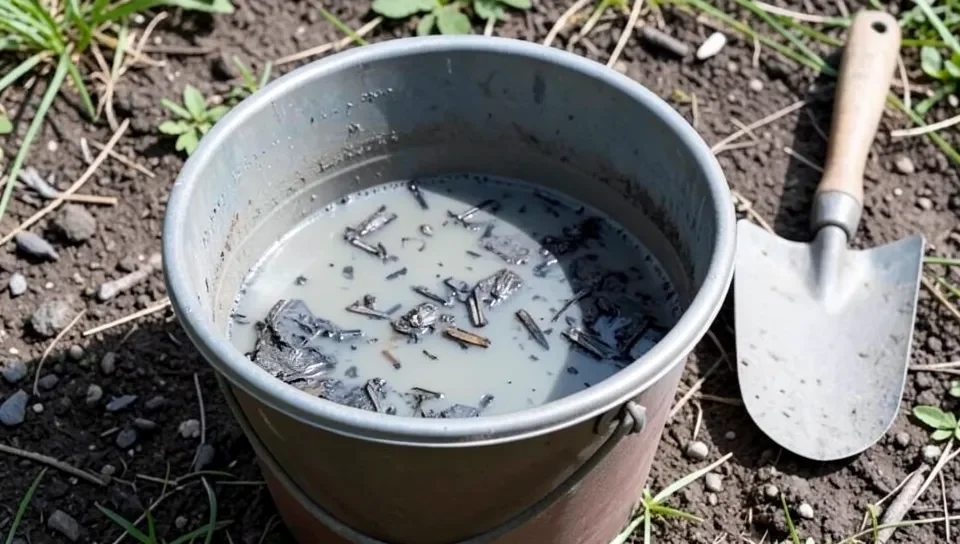
How to Make Wood Ash Tea for the Garden
- Gather materials: a bucket, clean cooled hardwood ash, water, a stick for stirring, and a strainer or cheesecloth. Wear gloves – wood ash is alkaline enough to irritate skin with prolonged contact, similar to handling lime.
- Mix ash and water: a common starting ratio is about 1 cup of ash per gallon of water, though this varies by intended use – see the linked ratio guide above for specifics by application.
- Steep: let the mixture sit for at least 24 hours (some gardeners steep up to a week), stirring occasionally. This gives the water time to dissolve more of the soluble minerals out of the ash.
- Strain: pour through a cheesecloth or fine strainer to remove solids before applying, so you’re not dumping gritty ash directly onto plant roots.
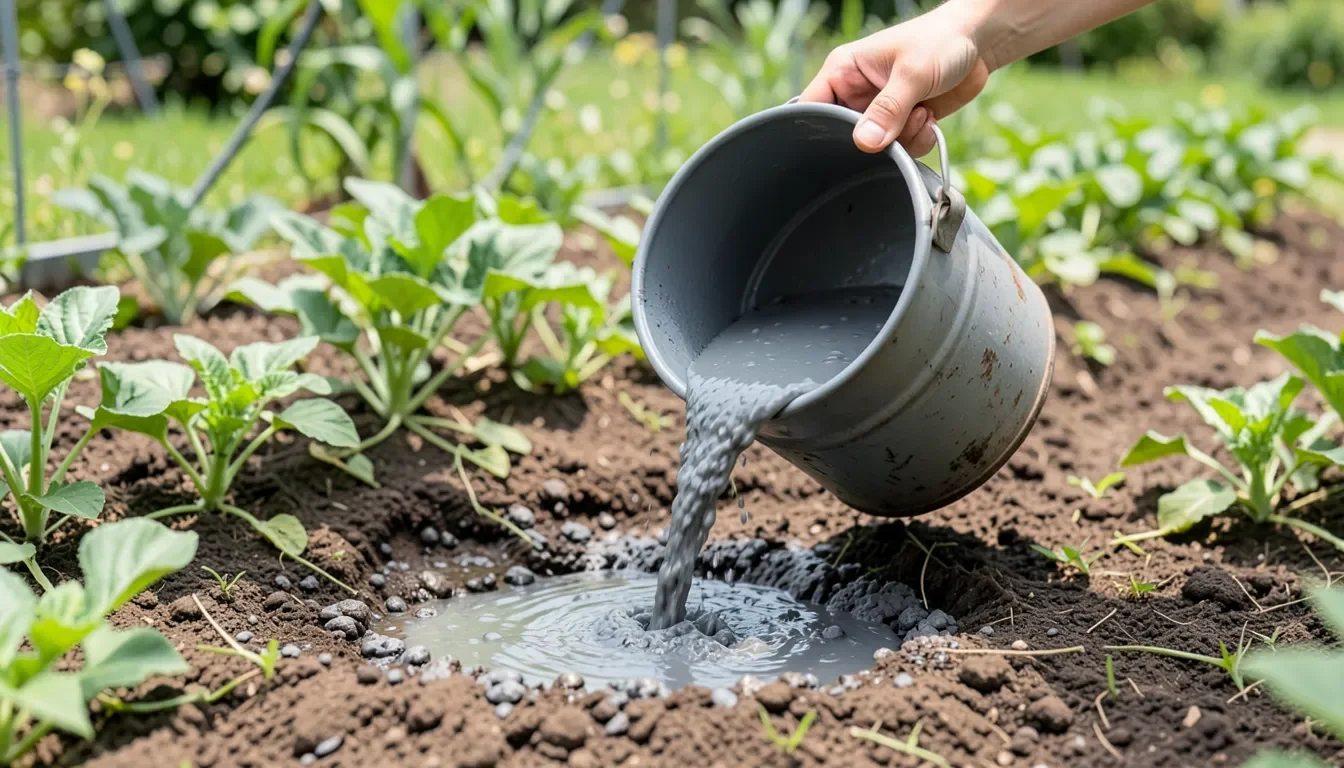
- Apply: water it directly onto soil around the base of plants that benefit from the extra potassium/calcium and a pH boost, not directly onto leaves, which can cause leaf burn from the alkalinity.
How Often to Apply It
Once every few weeks during the growing season is a reasonable starting point for most vegetable gardens, adjusted based on what your soil test actually shows – more isn’t automatically better, since over-applying pushes pH higher than most plants can tolerate. Watch the plants for signs of over-alkalinity (yellowing leaves, stunted growth despite otherwise good conditions) and back off the frequency if you see them.
Storing Leftover Wood Ash Tea
Store any unused mixture in a sealed, clearly-labeled container (glass or plastic) away from areas where it could be mistaken for something else – this is worth being explicit about precisely because it superficially resembles a beverage. It’s most effective used fresh; the dissolved nutrients don’t spoil the way food does, but there’s little benefit to storing it for extended periods versus just making a fresh batch when needed.
Frequently Asked Questions
Is wood ash tea safe to drink?
No. Wood ash mixed with water forms a mild lye solution that is alkaline and potentially caustic, and may contain trace heavy metals depending on what was burned. It has no established safe use as a beverage. Its legitimate use is as a garden fertilizer applied to soil.
Can I brush my teeth with wood ash?
This isn’t recommended. Wood ash is abrasive and alkaline, and overuse can damage tooth enamel and irritate gums. Talk to a dentist before trying any non-standard oral care method.
What plants benefit from wood ash tea?
Plants that prefer neutral-to-alkaline soil and benefit from extra potassium, like tomatoes and most vegetable-garden crops, generally respond well. Avoid it on acid-loving plants like blueberries, azaleas, and rhododendrons, since it pushes soil pH in the wrong direction for them.
How do I know if my soil needs wood ash tea?
Test your soil’s pH first with a home soil tester. Wood ash tea is only useful if your soil is on the acidic side and the plants you’re growing prefer more neutral-to-alkaline conditions – applying it to already-alkaline soil does more harm than good.
Other Legitimate Uses for Wood Ash
Beyond diluted garden tea, wood ash has several other genuine uses worth knowing, since it’s a useful byproduct rather than just waste from a fire pit or wood stove.
| Use | Notes |
|---|---|
| Garden soil amendment (dry) | Sprinkled thinly and worked into soil, rather than steeped – a slower-release version of the same nutrients |
| Compost pile addition | Small amounts help balance an overly acidic compost pile; too much can slow decomposition |
| Traditional soap-making (lye) | Historical potash production – a genuinely caustic process requiring real safety precautions, not a casual DIY project |
| Slug and snail deterrent | A dry ring of ash around plants can deter soft-bodied pests, though it needs reapplying after rain |
| Icy walkway traction | Sprinkled ash adds grip on ice, similar to sand, without the mess of rock salt |
Conclusion
Wood ash tea is a legitimate, useful garden fertilizer when made from clean hardwood ash and applied to soil that genuinely benefits from the extra minerals and pH boost – test your soil first, and never treat this mixture as something to drink.
Sponsored / affiliate links. As an Amazon Associate I earn from qualifying purchases. I may earn additional commission from eligible campaigns.