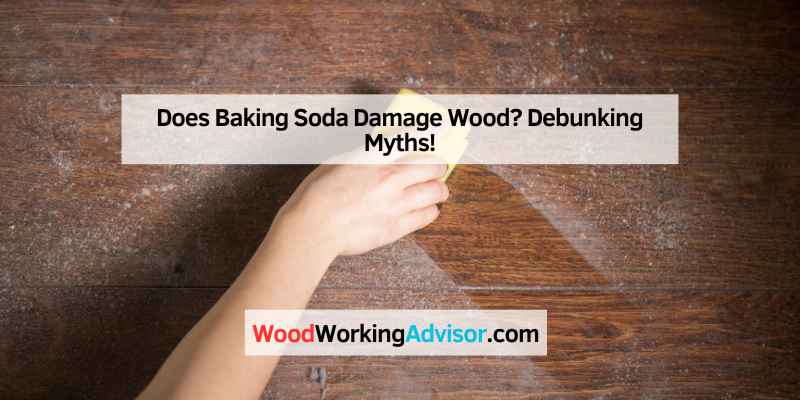
Does Baking Soda Damage Wood?
Baking soda is safe on sealed, finished wood but can damage unfinished or high-tannin wood — its pH of 8.3–9 reacts with tannins in oak, walnut, and redwood to cause dark stains, and its grit scratches soft finishes like fine sandpaper. Skipping a spot test is the top cause of ruined furniture. This guide covers which species react, the safe dry and paste methods, and better alternatives.
Quick Answer
Baking soda can damage wood, but only under specific conditions: its mild alkalinity (pH 8.3–9) reacts with tannins in oak, walnut, cherry, and redwood to cause dark staining, and its grit can scratch soft finishes. It’s fine as a brief dry deodorizer on sealed wood, but skip it on unfinished or high-tannin surfaces.
Which Woods Baking Soda Can Stain (and Which Are Safe)
Best Wood-Safe Cleaner Pick
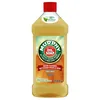
Murphy Oil Soap Wood Cleaner – $9.49
A pH-neutral, ready-to-use spray that replaces the baking-soda paste step in this guide entirely — no tannin reaction, no abrasion, no 5-minute contact timer to watch.
- Best for: routine cleaning of finished, high-tannin woods like oak and walnut
- Why we picked it: pH-neutral, so it skips the tannin reaction this guide’s chemistry section covers
- Main drawback: not meant for unfinished or raw wood
Compare more wood-safe cleaning options
 Option 1 Howard Feed-N-Wax – $5.99
|
 Option 2 Weiman Cabinet & Wood Cleaner – $21.98
|
 Option 3 MR.SIGA Microfiber Cloths – $13.99
|
As an Amazon Associate we earn from qualifying purchases.
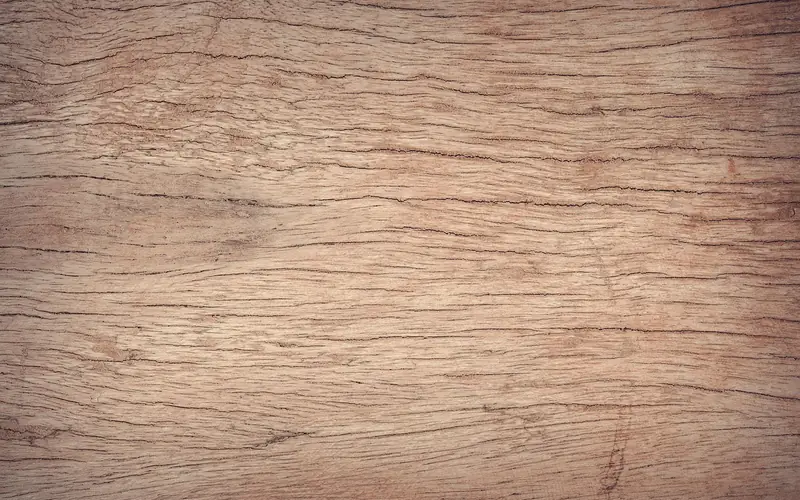
Baking soda stains wood by reacting with tannins, so the real risk depends on species. Oak, walnut, cherry, mahogany, cedar, and redwood are high-tannin woods prone to dark gray-brown blotches, while maple, birch, aspen, and pine rarely react at all.
Here’s why: baking soda dissolved in water forms a mildly alkaline solution, and that alkalinity oxidizes tannin compounds in the wood’s grain, turning them a permanent gray-brown color that light sanding often can’t fully remove. This isn’t a surface residue — it’s a chemical reaction that sets into the wood once a wet paste sits for roughly 30 to 60 minutes. Teak behaves differently: it’s low in tannin but rich in natural oils, so baking soda’s main risk there is stripping those oils rather than staining, which is why teak needs its own cleaning approach.
| Wood Type | Tannin Level | Baking Soda Risk |
|---|---|---|
| Oak, Walnut, Redwood, Cedar | High | Stains readily with wet contact |
| Cherry, Mahogany | Medium-High | Can stain with extended contact |
| Teak | Low (but oil-rich) | Strips natural oils, not tannin staining |
| Maple, Birch, Pine, Aspen | Low | Rarely reacts |
📊 A 1% baking soda solution measures roughly pH 8.3–9 — mildly alkaline, which is what triggers the tannin reaction in high-tannin species. Source: PubChem, National Institutes of Health
How To Use Baking Soda On Wood Safely
There are two genuinely safe uses for baking soda on wood: dry odor absorption and brief spot-treatment of stains on sealed, low-tannin wood. Both depend on keeping contact time short and skipping wet paste on anything unfinished or high in tannin.
- Test a hidden spot first: Dab a small amount on an inconspicuous area and check after 5 minutes before treating the visible surface.
- Deodorize with the dry method: Sprinkle plain baking soda over the smell, leave it 4 to 8 hours or overnight, then vacuum or wipe it away. No water means no staining risk.
- Spot-treat stains with a thin paste: Mix 1 tablespoon of baking soda with a few drops of water, and use it only on sealed, low-tannin wood. Apply with a soft cloth in gentle circular motions — never scrub.
- Limit contact to under 5 minutes: Wipe the paste off with a clean, damp cloth well before it dries onto the surface.
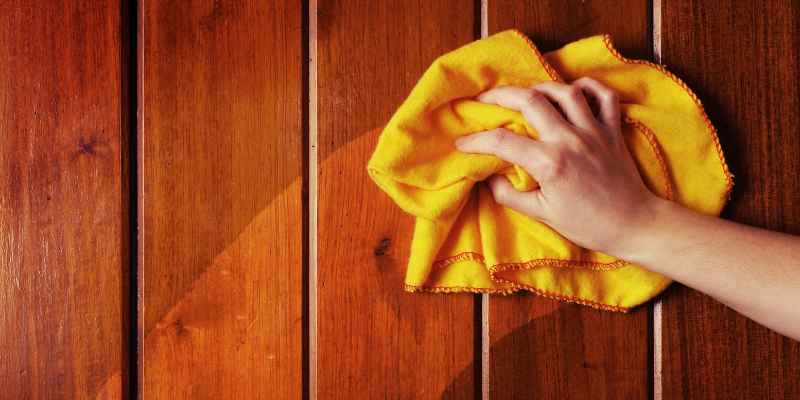
- Dry the wood immediately: Follow with a dry cloth to remove all moisture and prevent residual dampness from causing warping.
One real myth worth clearing up: mixing vinegar and baking soda before applying it to wood doesn’t make a stronger cleaner. The two react on contact, fizzing into mostly water and sodium acetate — which cancels out the alkalinity that would otherwise react with tannins. In practice, a pre-mixed vinegar-and-baking-soda solution cleans about as well as plain water and offers none of either ingredient’s individual benefits.
For mossy or algae-covered outdoor lumber, a stronger soak (4 to 6 tablespoons of baking soda per quart of water) for under 10 minutes can loosen the growth. Rinse and dry the wood promptly afterward — sustained outdoor moisture, not the baking soda itself, is what causes lasting damage in that scenario.
Common Mistakes That Cause Damage
Most baking-soda wood damage traces back to one of four habits, not the ingredient itself.
- Scrubbing instead of wiping. Baking soda’s crystals are hard enough to act like extremely fine sandpaper under pressure, which is what dulls a glossy finish over repeated use.
- Leaving wet paste on too long. Extended moisture contact is what pushes the tannin reaction from a light surface change into a set-in stain, and it also raises the risk of warping — always follow up with a full dry-down.
- Using it on unfinished or oiled wood. Bare wood and oiled species like teak absorb both the moisture and the alkalinity directly into the grain instead of sitting on a protective finish, which is why a properly finished cutting board tolerates it far better than a raw one.
- Skipping the spot test. The same abrasiveness that lifts a stain can also strip a thin or aging finish, and a hidden-area test is the only way to know which one will happen — the same logic applies to removing rust stains from furniture, where testing first prevents a second problem.
Everything above applies to furniture, cutting boards, and other wood objects. If you’re dealing specifically with a hardwood floor, the finish type, foot traffic, and repair options are different enough that we cover them separately in our dedicated guide to baking soda on wood floors.
Baking Soda vs. pH-Neutral Wood Cleaner
Once you know the tannin and abrasion risks, the choice between baking soda and a dedicated wood cleaner comes down to what you’re cleaning and how often.
| Property | Baking Soda Paste | pH-Neutral Wood Cleaner |
|---|---|---|
| Abrasive | Yes, mildly | No |
| Reacts with tannins | Yes, on high-tannin species | No |
| Safe for unfinished wood | No | Usually, check label |
| Best for | Occasional dry odor absorption | Routine cleaning of all finished wood |
For general upkeep beyond this one question, our wood maintenance guides cover cleaning and care methods for specific finishes and wood types.
Frequently Asked Questions
Does baking soda harm wood surfaces?
It can, but only under specific conditions. Baking soda’s mild alkalinity reacts with tannins in oak, walnut, cherry, and redwood to cause dark staining, and its grit can scratch soft or aging finishes if scrubbed. Low-tannin woods like maple and birch, kept to a brief dry contact, rarely show any damage.
Can baking soda clean wooden furniture safely?
Yes, on sealed, low-tannin furniture, if used correctly. Mix a thin paste, test a hidden spot, apply gently for under 5 minutes, then rinse and dry immediately. Skip this method on unfinished furniture or oil-finished pieces like teak, where a dedicated wood cleaner is the safer choice.
Does baking soda stop wood rot?
No. Baking soda is a mild cleaning agent, not a fungicide or wood hardener, and it does not stop or reverse active wood rot. Rot requires removing the decayed material and treating the area with a borate-based wood preservative or epoxy consolidant made for that purpose.
Can you mix baking soda and vinegar to clean wood?
You can, but it doesn’t help. Vinegar and baking soda neutralize each other on contact, fizzing into mostly water and sodium acetate. The resulting solution loses the alkalinity that reacts with tannins, so it cleans about as well as plain water — using either ingredient alone, briefly and correctly, works better.
What are the alternatives to baking soda for wood care?
A pH-neutral wood cleaner is the most reliable alternative for routine cleaning, since it skips the tannin reaction and abrasiveness entirely. For oiled woods like teak, a beeswax or oil-based conditioner restores moisture that cleaning removes. Both are safer than baking soda for regular, ongoing care.
Is baking soda effective for removing stains from wood?
It can lift some surface stains and grease on sealed, low-tannin wood when used as a brief paste. Results vary by stain type and finish, and it will not remove stains that have already penetrated the wood fibers — those need sanding and refinishing instead.
Conclusion
Baking soda isn’t inherently dangerous to wood, but it isn’t a universal cleaner either. The deciding factors are tannin content and finish: high-tannin species like oak, walnut, and redwood risk staining, unfinished or oiled wood like teak risks absorption, and any species risks fine scratching if scrubbed instead of wiped. Keep contact brief, test first, and reach for a pH-neutral cleaner for anything beyond occasional dry deodorizing.
Sponsored / affiliate links. As an Amazon Associate I earn from qualifying purchases. I may earn additional commission from eligible campaigns.