How to Seal a Wooden Cheese Board: Food-Safe Guide
To seal a wooden cheese board, use only a food-safe finish: food-grade mineral oil, a beeswax-and-mineral-oil board butter, or pure tung oil. Skip polyurethane, boiled linseed oil, and cooking oils like olive or vegetable oil, since they either aren’t rated for direct food contact or turn rancid over time.
A cheese board gets cut into, scored by knives, and set down damp more often than most other wood in your kitchen, so the finish matters more here than on a decorative piece. An unsealed board soaks up moisture and cheese oils unevenly, which is what causes warping, cracking along the grain, and a board that starts smelling sour no matter how well you scrub it. The right food-safe oil or board butter fills the wood’s pores so liquid beads off instead of soaking in, and it’s simple enough to redo at home every few weeks with no special tools.
The Best Food-Safe Sealant for a Wooden Cheese Board
Best Food-Safe Board Oil
 |
Kate Naturals Food-Grade Mineral Oil, 8oz – $7.99 A single-ingredient, odorless mineral oil sized right for seasoning and re-oiling a wooden cheese board between uses.
|
How to Prepare Your Board Before Sealing
Wash the board with warm water and a mild dish soap, using a soft sponge rather than anything abrasive, then rinse and stand it on edge to air-dry completely — never let a wood cheese board soak or go through a dishwasher, since standing water works into the grain and pulls it apart from the inside. Once it’s fully dry, run your hand over the surface. If it feels rough, fuzzy, or has any raised grain, sand it lightly with 220-grit sandpaper, moving with the grain, then wipe away the dust with a dry cloth. A brand-new board benefits from this step even if it looks smooth, since factory sanding is often coarser than what you want for a food-contact surface.
How to Apply Mineral Oil or Board Butter
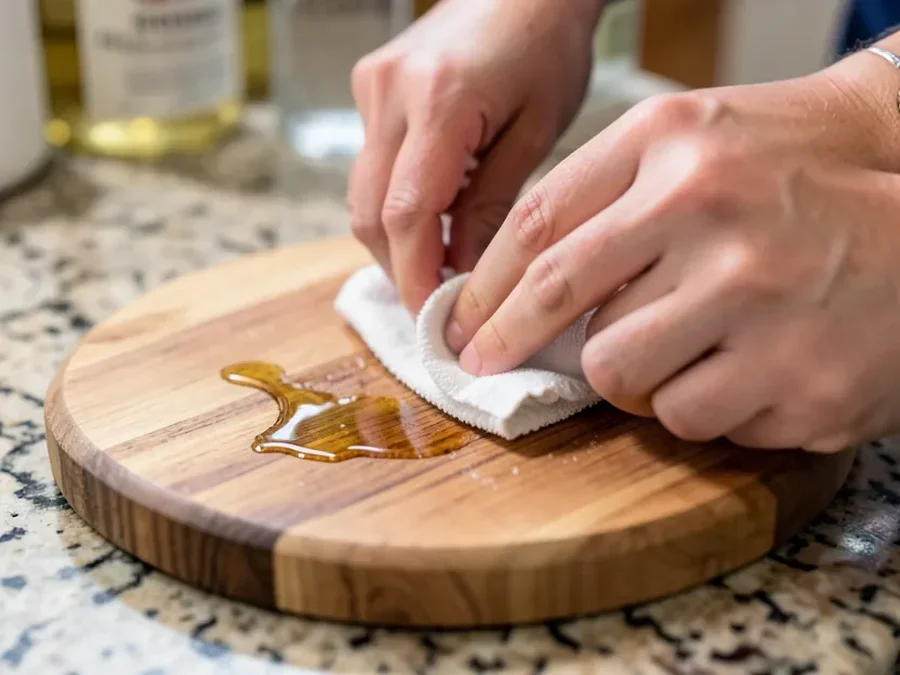
Pour a tablespoon or two of food-grade mineral oil directly onto the board and spread it with a clean cloth or paper towel, working it into the grain in circular motions and paying extra attention to the end grain, which absorbs more than the flat faces. Let it sit for 15 to 20 minutes so the oil has time to soak in, then wipe off whatever hasn’t absorbed — a board that still feels slick after wiping has had enough for that session. A new or very dry board can usually take three or four coats in the first sitting, applying each new coat as soon as the previous one is absorbed, until the wood stops soaking it up.
If you want more lasting water resistance than oil alone gives you, follow the oil with a beeswax-and-mineral-oil board butter, sometimes called board cream or board conditioner. The standard homemade ratio is 4 parts food-grade mineral oil to 1 part pure beeswax by weight: melt the beeswax in a glass container set inside a pot of simmering water, stir in the mineral oil once it’s fully melted, then pour it into a small jar and let it cool into a soft paste. Rub a thin layer into the wood with a cloth, let it sit for a few hours or overnight, then buff off the excess. The wax sits on top of the oil-saturated wood and adds a water-repelling layer that plain oil doesn’t have.
Beeswax Board Butter vs. Pure Tung Oil
Mineral oil and beeswax board butter are the lowest-maintenance food-safe options, but they never fully cure — the finish stays soft and has to be renewed on a schedule for as long as you own the board. Pure tung oil is a different kind of food-safe finish: applied in thin coats and given two to three days to cure between each one, it polymerizes as it dries and eventually hardens into the wood rather than sitting as a surface film that wipes away. That makes a fully cured tung oil finish more water-resistant and longer-lasting between touch-ups, but it takes several days of waiting between coats to build up, versus an afternoon for a mineral oil treatment. Make sure any tung oil you buy is labeled 100% pure tung oil — many products sold as “tung oil finish” are actually varnish blends thinned with solvents and metallic dryers, and those aren’t food-safe once cured.
Finishes to Avoid on a Cheese Board’s Food-Contact Surface
Three finishes show up constantly in general wood-finishing advice but don’t belong on a surface you’ll cut cheese on or set food directly onto:
- Boiled linseed oil (BLO): despite the name, “boiled” linseed oil is raw linseed oil with metallic drying agents (often cobalt or manganese compounds) added to make it cure faster. Those driers aren’t meant for ingestion, so BLO isn’t considered food-safe even after it’s fully cured.
- Olive oil, vegetable oil, or other cooking oils: these are unsaturated fats that never fully cure. Left in wood, they go rancid over weeks, leaving a sour smell and a sticky film that also becomes a place for bacteria to grow.
- Polyurethane, lacquer, and standard wood varnish: these form a hard film finish that isn’t rated for direct food contact, and once a knife scores through that film, it can flake or chip into whatever you’re serving.
How Often to Reseal Your Cheese Board
For the first two to three weeks after a new board’s initial seasoning, oil it once a week while it’s still soaking up more than it did the time before. After that, a board used a few times a week typically needs mineral oil every two to four weeks, and a board with a beeswax board butter layer can often stretch to once a month. Climate matters more than a fixed schedule: a kitchen with dry winter heat or low humidity dries out wood faster and calls for more frequent oiling, while a humid kitchen needs less. The board itself will tell you when it’s due — if the surface looks dull, feels rough, or water stops beading on the wood, it’s time to reoil, regardless of how many weeks it’s been.
If you’re building your own board from scratch rather than sealing one you already have, the wood selection and shaping steps matter just as much as the finish — see our guide on how to make a cheese board from wood for the full build process, which uses this same food-safe finish.
Troubleshooting Common Cheese Board Problems
A board that’s gone gray or ashy-looking, especially at the edges, has simply dried out faster than you re-oiled it. That’s not damage, and a normal application of mineral oil brings the color and shine back within one treatment. The opposite problem, a surface that stays tacky or feels greasy hours after oiling, usually means too much oil was applied in one sitting or it wasn’t wiped down firmly enough; buff it again with a clean dry cloth, and next time stop adding coats once the wood stops absorbing what you put on it.
Small white or grayish spots are usually mold that took hold because the board was put away while still damp. Scrub the spot with a paste of coarse salt and half a lemon, or a cloth dampened with food-safe 3% hydrogen peroxide, then rinse, dry the board fully standing on edge, and re-oil once it’s bone dry. Deep knife grooves from years of use aren’t a defect to sand out on their own; only sand them down if a groove is deep enough to catch a knife edge or hold food debris after washing, then re-oil the sanded area to match the rest of the board.
Frequently Asked Questions
What is the best food-safe sealant for a wooden cheese board?
Food-grade mineral oil is the simplest food-safe sealant for a wooden cheese board. It penetrates the wood without altering flavor or odor. For more water resistance, follow it with a beeswax-and-mineral-oil board butter, or use pure tung oil if you want a finish that eventually hardens into the wood instead of staying soft.
How often should you seal a wooden cheese board?
Oil a new board weekly for the first two to three weeks, then every two to four weeks after that for a board in regular use. Dry climates and boards used more often need oiling more frequently; a board with a beeswax board butter layer can often go about a month between applications.
Can I use olive oil or vegetable oil to seal my cheese board?
No. Olive oil, vegetable oil, and other cooking oils are unsaturated fats that go rancid inside wood over a matter of weeks, leaving a sour smell and a sticky surface that can harbor bacteria. Use a food-grade mineral oil, a mineral-oil-and-beeswax board butter, or pure tung oil instead.
Is boiled linseed oil food-safe for a cheese board?
No. Boiled linseed oil contains metallic drying agents added to speed up curing, and those aren’t food-safe even once the oil has fully dried. Use plain food-grade mineral oil or 100% pure tung oil instead, both of which are formulated without those additives.
Sponsored / affiliate links. As an Amazon Associate I earn from qualifying purchases. I may earn additional commission from eligible campaigns.
 Virginia Boys Kitchens Coconut Cutting Board Oil - NO Mineral Oil - Food Safe Wood Seasoning for Kitchen Countertops, Cutting Boards, and Butcher Blocks - Made in USA
 Wood Butter Cutting Board Wax 3 oz - Food-Safe Butcher Block Cutting Board Utensil Conditioner - Food Grade Mineral Oil and Beeswax - Restore and Protect all Wood - Bamboo, Walnut, Maple