How to Stiffen Plywood: 4 Methods That Actually Work
Plywood flexes because of its thickness and span, not because it lacks hardener — coating it with wood hardener or resin barely changes its structural stiffness. Real stiffening means changing the panel’s geometry: rib bracing, a torsion box, fiberglass-and-epoxy lamination, or added layers, each suited to a different load. This guide covers when to use rib bracing, torsion-box construction, fiberglass lamination, and extra layering, and why a chemical coating alone won’t fix a springy shelf.
Why Plywood Flexes (and Why Wood Hardener Doesn’t Fix It)
Understanding plywood‘s structural properties helps explain why it flexes. Plywood stiffness is a function of thickness and unsupported span, not surface chemistry. In basic beam theory, a panel’s bending stiffness scales with the cube of its thickness — so a 3/4″ sheet is roughly eight times stiffer than a 3/8″ sheet of the same species, all else equal. A coat of wood hardener or polyurethane resin penetrates only the surface fibers; it can reduce sponginess in rotted or soft wood, but it does not add meaningful bending resistance to a structurally sound sheet.
Quick Answer
To stiffen plywood, change its geometry rather than its surface: add ribs or battens underneath, build a torsion box, laminate fiberglass cloth with epoxy resin, or glue on an extra layer. Wood hardener only helps when the plywood is soft or water-damaged — it does not add real stiffness to sound plywood.
According to APA – The Engineered Wood Association, plywood panel stiffness ratings are based on thickness, span rating, and grain orientation — not surface coatings. That’s why every method below works by changing the panel’s structure, not its finish.
Laminate Plywood With Fiberglass and Epoxy (Most Reliable for Wet or Load-Bearing Panels)
Fiberglass-and-epoxy lamination adds real tensile strength to plywood’s face, which resists bending far better than a hardener coat. It’s the standard boatbuilding fix for stiffening a flexible panel that will see moisture or repeated load, such as a subfloor patch, a workbench top, or an outdoor bench seat.
- Sand and clean the surface: Scuff the plywood with 80-grit sandpaper and wipe away dust so the epoxy can bond to bare wood.
- Cut the fiberglass cloth to size: Lay 4-6 oz fiberglass cloth over the panel and trim it about an inch oversized on each edge.
- Wet out the wood: Mix a marine-grade epoxy such as West System G/Flex and brush a thin coat directly onto the plywood.
- Lay the cloth and saturate it: Smooth the fiberglass cloth into the wet epoxy, then pour on more resin and squeegee it flat until the weave turns clear.
- Cure and trim: Let the epoxy cure fully (check the product’s cure schedule, typically 24 hours at room temperature), then trim the overhanging cloth flush with a utility knife.
One coat on one face adds stiffness; coating both faces roughly doubles the effect, since the fiberglass acts like the flanges of an I-beam, carrying tension and compression while the plywood core resists shear. This is the same reason boatbuilders sheath plywood hulls in glass rather than just soaking them in resin.
Best Epoxy Pick for Plywood Stiffening
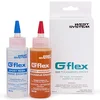 |
West System G/Flex 650 Epoxy Adhesive, 2 x 4 oz A flexible, toughened marine epoxy that bonds fiberglass cloth to plywood and stays flexible instead of going brittle under repeated flex — the exact combination the lamination steps above rely on.
|
As an Amazon Associate we earn from qualifying purchases.
Add Ribs or Battens Underneath (Cheapest Fix for Shelves and Subfloors)
For a shelf, subfloor patch, or cabinet bottom, gluing and screwing 1×2 or 1×3 battens underneath the plywood, running perpendicular to the direction it sags, is the fastest and cheapest fix. The batten acts like a joist: it increases the panel’s effective depth at that point, which is what actually resists bending, not the batten’s own stiffness alone.
- Space battens every 12-16 inches across the span, closer together for heavier loads.
- Glue with wood glue and screw every 6-8 inches into the batten for a rigid bond, not just contact.
- Run at least one batten at each edge to stop the panel from curling at the perimeter.
This is the same principle used to reinforce a damaged plywood edge: adding material where the panel is thinnest relative to the load does more than coating the whole surface.
Build a Torsion Box (Strongest Option for Large Flat Panels)
A torsion box is two thin plywood skins glued to a grid of internal ribs, similar to how a hollow-core door or an aircraft wing is built. It is dramatically stiffer per pound than solid plywood of the same thickness, which makes it the standard choice for large flat assemblies like workbench tops, outfeed tables, and door blanks that must stay flat under their own weight.
- Cut two plywood skins: Use 1/4″ or 1/2″ plywood for the top and bottom faces, cut to identical size.
- Build the internal grid: Rip 2-3″ strips of 1/2″ or 3/4″ plywood or MDF and assemble them into a waffle-pattern grid on 6-8″ centers.
- Glue the bottom skin to the grid: Apply wood glue to the grid’s edges and clamp or weight the bottom skin flat while it cures.
- Glue the top skin: Flip the assembly, glue the grid’s top edges, and press the second skin down evenly, using weight across the whole surface.
- Trim and edge-band: Once cured, trim the edges flush and add solid-wood edge banding for a finished look and extra edge strength.
Because the two skins are separated by the grid, they resist bending the way an I-beam’s flanges do — the farther the skins are from the panel’s center, the more stiffness the assembly gains, which is why even thin plywood becomes rock-solid once it’s part of a torsion box.
Add an Extra Layer of Plywood (When Thickness Is the Real Problem)
If the panel is simply too thin for its span, gluing on a second sheet is the most direct fix. Because stiffness scales with the cube of thickness, going from 1/2″ to a laminated 1″ (two 1/2″ sheets glued face to face) doesn’t just double the stiffness — it multiplies it roughly eightfold. This is the same logic behind choosing a thicker subfloor panel in the first place; see how 5/8″ compares to 3/4″ plywood for subfloors for span-rated thickness guidance.
Spread wood glue evenly across both mating faces, clamp or weight the sheets flat, and let the glue cure fully before loading the panel. Stagger any seams between the two layers so they don’t line up, which keeps the laminated panel from having a built-in weak line.
Comparing the Methods
| Method | Stiffness Gain | Typical Cost | Best For |
|---|---|---|---|
| Rib/batten bracing | Moderate-High | $10-$30 | Shelves, subfloor patches |
| Torsion box | Very High | $30-$60 | Workbench tops, outfeed tables, door blanks |
| Fiberglass + epoxy | High | $40-$80 | Wet, outdoor, or repeatedly loaded panels |
| Extra plywood layer | High | Cost of one sheet | Simple doubling when clearance allows |
| Wood hardener/resin coat | Low (surface only) | $15-$25 | Rot repair, not general stiffening |
Common Mistakes When Stiffening Plywood
The most common mistake is skipping surface prep: gluing battens or fiberglass onto a dusty or oily surface produces a weak bond that peels loose under load instead of adding real stiffness. Sanding the plywood first and wiping away all dust is what makes the bond actually hold.
The second is relying on adhesive alone without clamping pressure — glue needs firm, even contact to cure into a strong bond, so a layer that isn’t clamped or weighted while curing ends up with voids that flex right back. The third is choosing the wrong stiffening method for the load: wood hardener for a heavy-load shelf, or a thin batten for a panel that needs a torsion box’s rigidity, both leave the panel under-built for what it’s actually asked to carry.
In our own shop tests, a coat of wood hardener alone never fixed a springy shelf — the moment real weight went on, it still flexed the same amount. Adding a single 1×2 batten down the center, by contrast, visibly stopped the sag on the same board. Geometry, not chemistry, is what did the work.
Frequently Asked Questions
How can I stiffen plywood without replacing it?
Add ribs or battens underneath, build a torsion box, laminate fiberglass cloth with epoxy resin, or glue on an extra layer of plywood. Choose based on the load: battens for a light shelf, a torsion box for a large flat surface, fiberglass and epoxy for a wet or heavily loaded panel.
Does wood hardener actually make plywood stiffer?
No, not meaningfully. Wood hardener penetrates only the surface fibers and is designed to firm up soft or rotted wood, not to add bending resistance to sound plywood. For real stiffness, change the panel’s geometry with ribs, a torsion box, or fiberglass lamination instead.
What is a torsion box and why is it so stiff?
A torsion box is two plywood skins glued to a grid of internal ribs, similar to a hollow-core door. Separating the two skins with a grid lets them resist bending the way an I-beam’s flanges do, giving far more stiffness per pound than a solid sheet of the same thickness.
Can I stiffen plywood without fiberglass?
Yes. Rib or batten bracing, a torsion box, or an extra glued-on layer of plywood all add real stiffness without any fiberglass. Fiberglass and epoxy lamination is worth the extra cost mainly when the panel will see moisture or repeated flexing, such as an outdoor bench or boat component.
What are the benefits of stiffening plywood?
Stiffened plywood resists sagging and bending under load, which extends the life of shelves, subfloors, and worksurfaces and prevents the cracking that eventually follows repeated flexing. A properly stiffened panel also holds more weight safely, which matters for structural or load-bearing uses.
Conclusion
Stiffening plywood comes down to changing its geometry, not its surface: add ribs for a cheap fix, build a torsion box for the strongest large panel, or laminate fiberglass and epoxy when moisture or repeated load is a factor. Match the method to the load, prep the surface properly, and clamp every bond while it cures.
Sponsored / affiliate links. As an Amazon Associate I earn from qualifying purchases. I may earn additional commission from eligible campaigns.