How to Stop MDF From Warping: Storage, Sealing & Repair
MDF warps when its raw, porous edges pull in moisture faster than the finished faces release it, so a humid garage alone can start the bend. In sustained high humidity, an unsealed edge can swell 20 to 30 percent before the warp is visible, and by then flattening it takes real work. This guide covers what causes the warp, how to store and seal MDF so it never starts, and the exact steps to flatten a board that already has.
Why MDF Warps — and Why Sealing Is the Real Fix
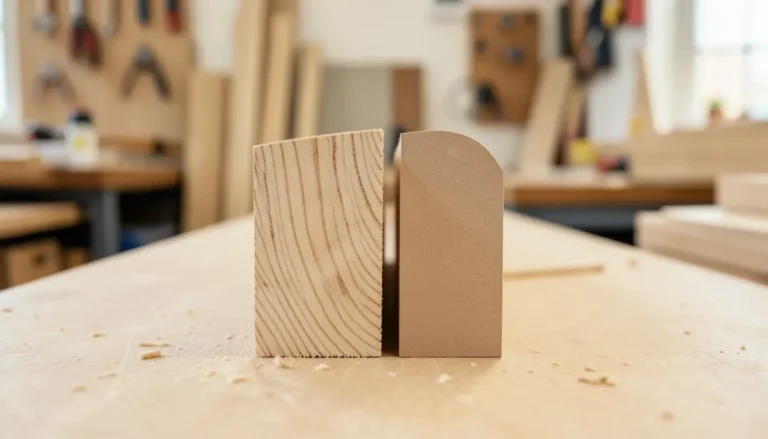
MDF (medium-density fiberboard) is made of wood fibers pressed with resin into a dense, uniform panel — unlike solid wood or plywood, it has no grain direction, which is why it cuts and paints so smoothly. That same fiber structure is also what makes it absorb water fast: mills dry MDF to roughly 7–9% internal moisture content, and any cut or unsealed edge is a direct path back to whatever humidity the board sits in. If the board has taken a one-time soaking rather than ongoing humidity exposure, see what happens if MDF gets wet for the repair-or-replace decision.
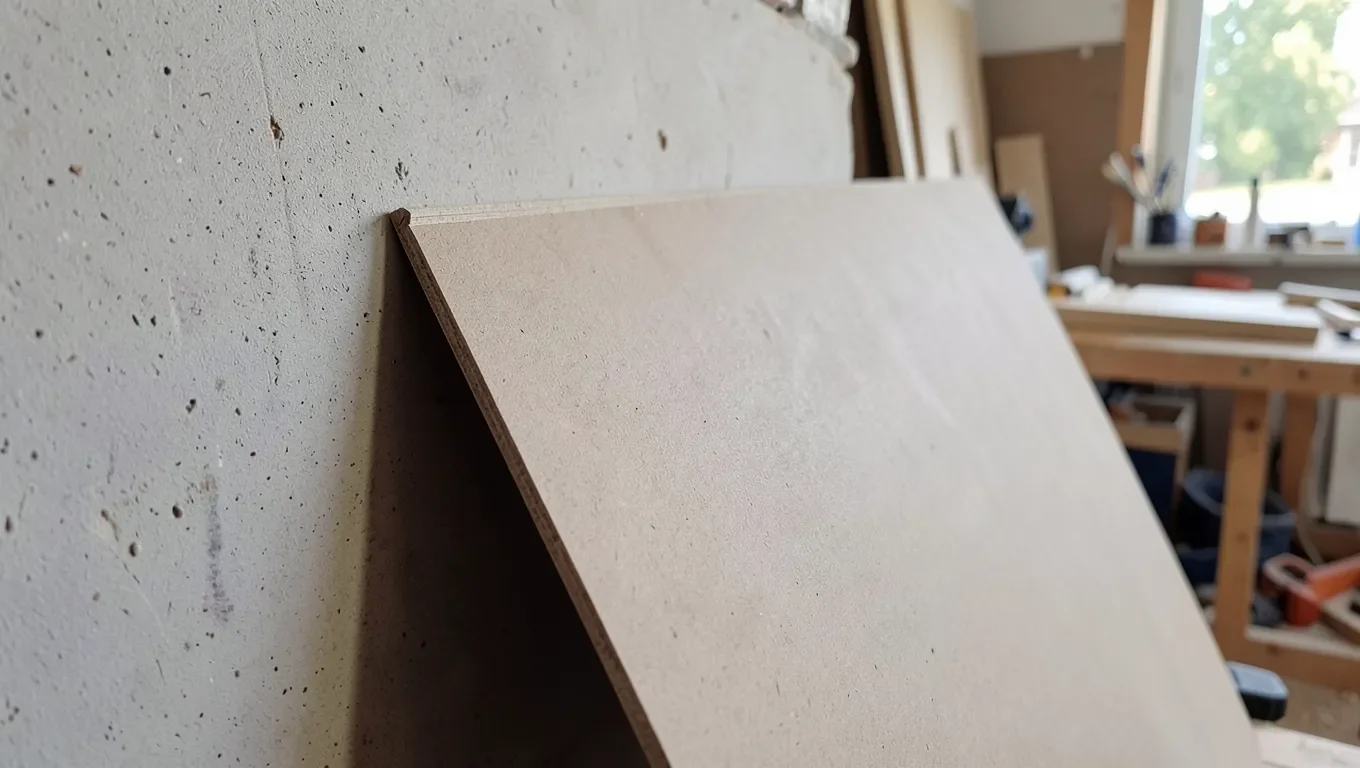
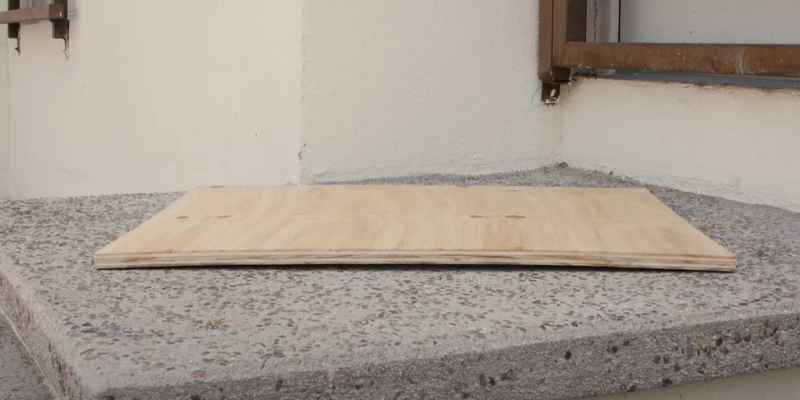
Warping happens when one side of the panel takes on more moisture than the other. The wet side expands, the dry side doesn’t, and the board bows toward the drier face. This is why a sheet leaned flat against a wall — with only one face getting airflow — warps faster than one stored horizontally with air on both sides. Sealing every cut edge is what actually stops this, because the edges (not the factory-finished faces) are where MDF absorbs moisture fastest.
The swelling isn’t evenly distributed either — composite wood panels like MDF typically move far more in thickness than in length or width for the same moisture change, roughly 0.3–0.5% thickness growth per 1% rise in moisture content, versus only about 0.03–0.06% along the length. That’s why warping shows up as a bow or cup across the face long before you’d notice the board getting measurably longer.
Best MDF Edge Sealer Pick
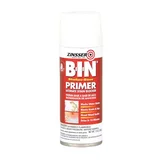 |
Zinsser B-I-N Shellac-Based Primer, 13 oz. Aerosol A true shellac-base primer-sealer that blocks moisture on raw MDF edges in one coat — the fastest of the three sealing methods below.
|
How to Store MDF So It Never Warps
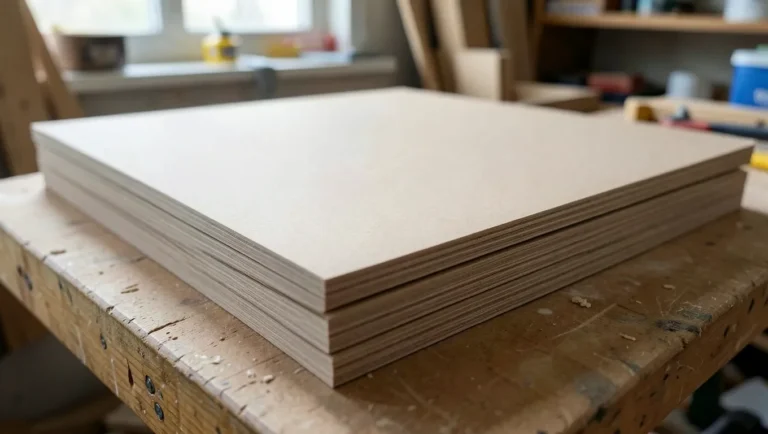
Store every sheet flat, not leaning on edge — vertical storage lets gravity pull the panel down at the unsupported ends over time, especially on longer sheets. Stack sheets on blocks or a pallet so air can move underneath, and use spacers between sheets in a stack so both faces of every panel get equal airflow.
- Keep storage humidity between 30% and 50% — a basic hygrometer makes this easy to check, and a dehumidifier is worth running if the space runs consistently higher
- Never store MDF directly on a concrete floor or slab; concrete wicks moisture even when it looks dry
- Keep panels out of direct sunlight and away from exterior walls, where temperature swings are largest
- Cover stored sheets loosely with plastic sheeting for extra protection, but don’t seal them airtight against a damp surface underneath
If you’re unsure whether MDF is the right call for a given spot in the first place — a damp basement, an exterior application — see our full breakdown of why and when MDF warps, which covers the causes and myths in more depth than fits here.
Sealing MDF Edges: PVA Glue vs Primer vs Edge Banding
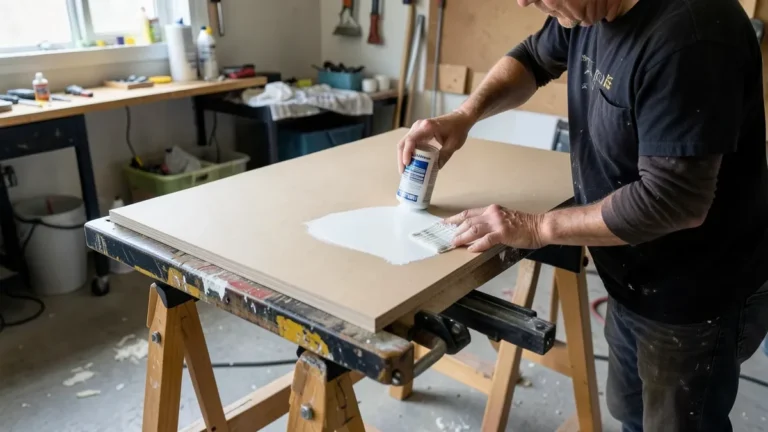
Sand the raw edge to about 220-grit first so the sealer soaks in evenly, then choose one of three methods. Each has a real tradeoff — there isn’t a single best option for every project.
| Method | Cost | Dry Time | Best For |
|---|---|---|---|
| Diluted PVA glue (1:1 with water) | Cheapest, pennies per edge | ~30 min per coat, 2–3 coats needed | Budget builds, edges that will be painted anyway |
| Shellac-based primer | Moderate | 15–30 min, often one coat | Any edge, especially in higher-humidity rooms |
| Self-adhesive edge banding | Moderate | No drying time | Straight edges only — fastest finish, can’t wrap curves |
For a full side-by-side with more brands and specifics, see our comparison of the best way to seal MDF edges, or the broader MDF sealing guide if you also need to seal the flat faces before painting. For more primer options beyond the one above, our shellac-based primer roundup compares seven by real cost per 100 square feet.
Does Moisture-Resistant (MR) MDF Still Warp?
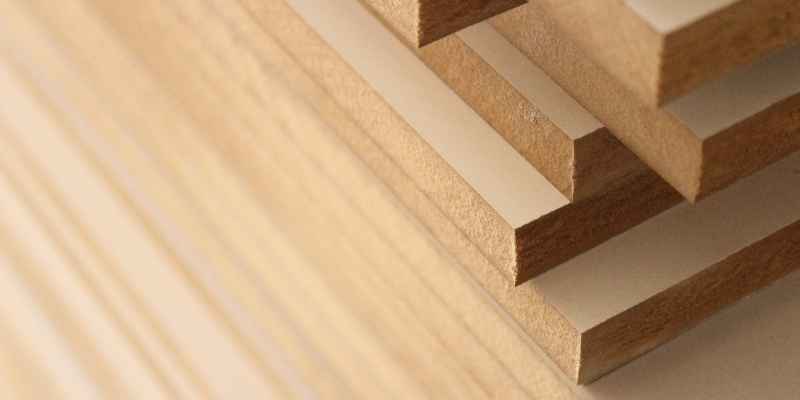
Moisture-resistant MDF (often called MR-MDF or “green MDF” for its dye tint) is standard MDF made with a wax sizing agent added during pressing, which slows how fast the fibers take on water. It’s the right choice for kitchens, bathrooms, and other higher-humidity rooms — but the name is misleading if you take it to mean waterproof.
MR-MDF still warps under the same conditions as standard MDF: an unsealed edge, standing water, or one-sided humidity exposure. The wax sizing buys time — it slows moisture absorption rather than blocking it — so an MR-MDF edge left unsealed in a damp room will still swell, just more slowly than a standard sheet would. Every storage and sealing step in this guide applies equally to both; MR-MDF is not a substitute for sealing the edges.
Cutting and Handling MDF Without Causing Warping
A dull blade tears the fiber instead of slicing it, leaving a rougher, more porous edge that absorbs moisture faster even after sealing. Use a sharp blade, cut slowly, and fully support the sheet on both sides of the cut line so it can’t sag or flex under its own weight — unsupported overhang is a common way a flat sheet picks up a permanent bend before it’s even installed. For cuts without a table saw or track saw, see our guide to cutting MDF without power tools.
When moving sheets, lift them straight up rather than dragging or sliding — dragging flexes the panel and can start a stress warp that shows up later, even if the sheet looks fine right after. Carry full sheets on edge with support at multiple points, never by the corners alone.
How to Fix a Warped MDF Board
A mild warp can often be corrected before you write the board off. This won’t fix delamination or swelling from standing water — that damage is permanent — but a bend from uneven moisture exposure usually responds to this:
- Find the warp: Set the board on a flat, level surface and look for gaps where it doesn’t touch. Mark the high points with a pencil.
- Dampen the concave side: Lightly dampen the side that curves inward with a damp cloth, avoiding any already-sealed faces.
- Apply even weight: Lay the board flat, dampened side down, and place evenly distributed weight across the warped section — boards and cinder blocks work well.
- Wait and check: Leave it under weight for 24 to 48 hours, checking once a day. Re-dampen and reset the weight if it’s still bowed.
- Reseal the repaired area: Once flat, sand the treated edge smooth and reseal it with primer before repainting or reinstalling.
Frequently Asked Questions
How do you stop MDF bases from warping?
Store MDF bases in a dry, flat area and seal every cut edge with a shellac-based primer or diluted PVA glue before finishing. Support the full width of the base during installation rather than just the corners, and keep it off damp floors on blocks or a pallet.
How do you fix MDF that’s already warped?
Lay the board flat, warped side down, on a level surface, then place even weight across the bowed area and let it sit for 24 to 48 hours. Light warps often flatten this way — check progress daily and reseal any exposed edges once it is flat again.
Is MDF prone to warping?
Yes. MDF’s wood fibers absorb moisture quickly through any unsealed edge or surface, and once one face takes on more moisture than the other, the board bows toward the drier side.
What thickness of MDF resists warping best?
Thicker sheets warp less because there is more material resisting the bend, so 3/4 inch (18mm) MDF holds its shape far better than 1/4 inch panels for shelving, cabinet sides, or anything spanning more than about 24 inches unsupported.
Does it matter if you use screws or nails on MDF?
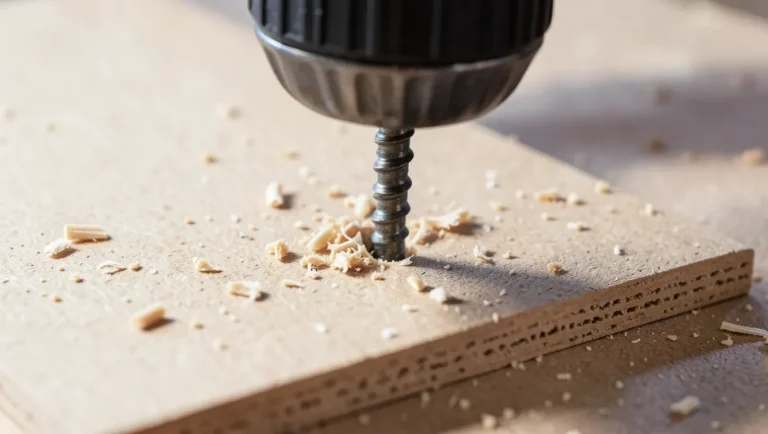
Screws hold better and put less repeated stress on the board than nails, which can work loose and create the small gaps that let moisture in around the fastener. Pre-drill pilot holes near edges to avoid splitting, which also compromises the seal.
Conclusion
Most MDF warping traces back to one of two things: an unsealed edge or uneven airflow during storage. Seal every cut edge before the board goes anywhere near a damp garage or bathroom, store sheets flat with air on both faces, and keep humidity in the 30–50% range. If a board does bow, a light warp from moisture is usually fixable with even weight and a couple of days — it’s only standing water or delamination that’s permanent.
Sponsored / affiliate links. As an Amazon Associate I earn from qualifying purchases. I may earn additional commission from eligible campaigns.