Best MDF Sheets for Cabinet Doors
For painted cabinet doors, moisture-resistant MDF (MR MDF) is a better choice for kitchens, baths, and built-ins; standard MDF is generally better kept for dry rooms, and HDF or pre-primed MDF can help when tighter edges and less fuzz are needed. Pick the wrong sheet and you can get swollen edges, telegraphed grain, chipped profiles, and failed paint at the first splash or steam. This guide compares MDF sheet types by finish system, moisture exposure, and fabrication risk so you can choose the right sheet type for doors, vanities, and replacement fronts.
Best MDF sheet picks
The best MDF sheet for cabinet doors depends on where the door will go, what finish you want, and how much cutting the part needs. For painted kitchen doors, moisture-resistant MDF is the safest default. For a faster refacing job, pre-primed MDF cuts prep time. For a high-sheen front, acrylic-faced MDF is the better surface because it arrives with the finish built in.
Best choice for painted cabinet doors
For painted cabinet doors, moisture-resistant MDF with sealed edges is the most balanced choice. CabinetNow says MDF is ideal for painted cabinet doors because it helps reduce expansion and contraction, and OpenSpindle calls MDF the industry standard for painted cabinet doors and millwork. That fit is strongest on slab and shaker doors.
Best pick for damp rooms
For bathrooms, vanities, laundry rooms, and kitchens near sinks or dishwashers, MR MDF is the first choice if the door will be painted. OpenSpindle says MDF is not ideal for moisture-exposed applications unless sealed, and Crafty Home notes MDF may require sealing to protect against moisture in high-humidity areas. Unsealed MDF is the wrong call there.
Best budget pick for refacing
For refacing, unfinished MDF replacement doors are the budget-friendly pick when you plan to prime and paint them yourself. That works best in dry or lightly used rooms.
MDF decision matrix
This matrix ranks the main MDF sheet choices by finish compatibility, moisture exposure, edge durability, machining quality, and budget. The recommendation column points to the most sensible use case instead of treating every MDF sheet as the same product.
| Sheet option | Finish compatibility | Moisture exposure | Edge durability | Machining and hardware fit | Budget | Final recommendation |
|---|---|---|---|---|---|---|
| Standard MDF | Best for primer and paint | Dry rooms only | Fair after sealing | Good routing; hinge boring needs clean support | Lowest | Closets, built-ins, dry-room refaces |
| Paint-grade MDF | Excellent for painted doors | Moderate, with sealing | Better edge finish than basic sheet stock | Very good for shaker and slab fabrication | Low to mid | Best all-around painted cabinet-door pick |
| Primed MDF | Fastest for paint systems | Moderate, with sealing | Good if edges are sealed well | Good for replacement doors and field work | Mid | Best for quick refaces and repaint jobs |
| Acrylic-faced MDF | Best for matte or high-gloss finish faces | Better surface resistance; edges still need care | Strong face, vulnerable cut edges | Clean on the face; routed edges need planning | Highest | Best for sleek modern fronts and clean wipe-downs |
| HDF | Very good for paint and crisp detail | Dry to moderately humid only when sealed | Best of the fiberboard options for thin parts | Very clean for profiles and narrow parts | Mid to high | Best for thin doors, panels, and detailed profiles |
Is MDF good for cabinet doors?
Yes, MDF is a good cabinet-door material when the door will be painted and the edges are sealed. Its dense, uniform face gives you a smooth paint surface with no grain telegraphing, which is why it is common for slab, shaker, and some raised-panel doors. It is a poor choice for unsealed wet exposure.
Why paint-grade MDF works well on flat fronts
Paint-grade MDF suits flat fronts because the face sands evenly and does not have open grain to fill. Conestoga describes MDF as a dense, uniform cabinet door material with a smooth surface, and that is the main advantage for paint work. On slab doors, that smoothness saves time before primer and topcoat.
Where MDF fails first: edges, corners, and hinge areas
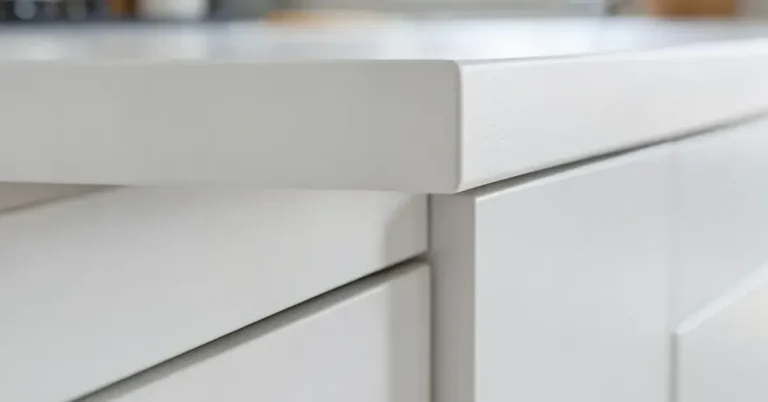
MDF usually fails first at cut edges, outside corners, and hinge boring zones. Those areas take the most abuse from moisture, sanding, and screw loads. If the edge is not sealed, swelling can start there long before the door face looks worn. That is why edge treatment matters more than the panel face.
When plywood or solid wood is the better call
Plywood or solid wood is the better call when the door will take hard edge abuse, visible dents, or a stained finish. Solid wood also moves more with humidity, so it is not automatically safer, but it handles repair better at the edge. Use it when the look depends on natural grain.
Which MDF type should you choose?
The right MDF type depends on finish system, moisture exposure, and how much machining the door needs. Standard MDF is fine for dry, painted work. Primed MDF saves prep. Acrylic-faced MDF fits modern finishes. HDF is the stronger option for thin or highly detailed parts that need crisp edges.
Standard MDF versus paint-grade MDF
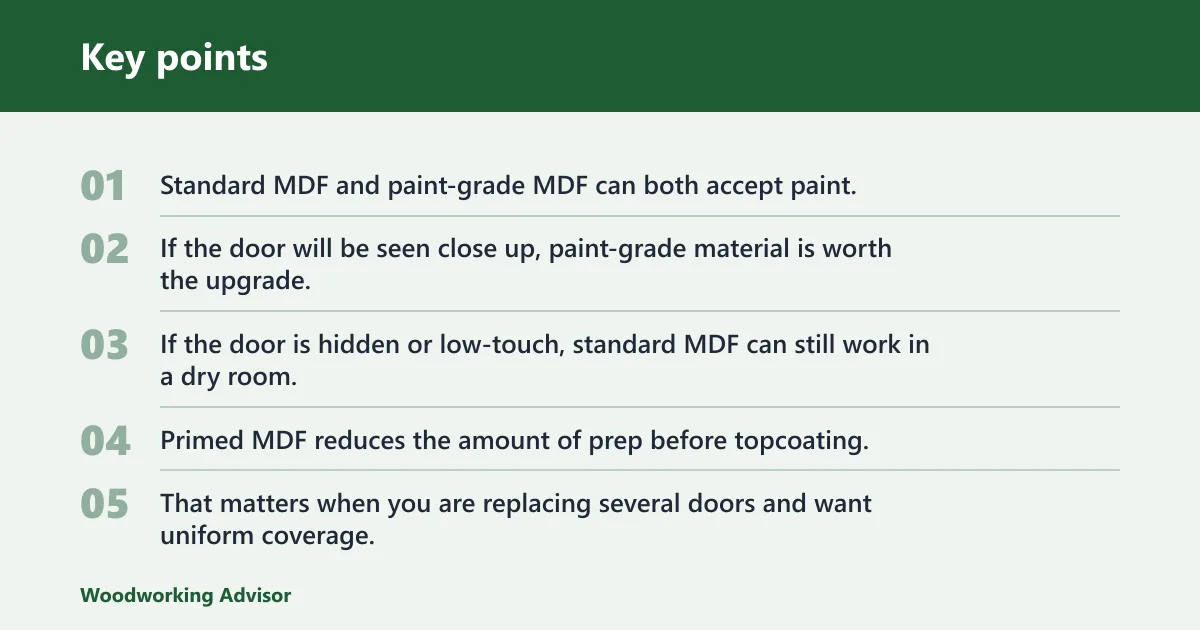
Standard MDF and paint-grade MDF can both accept paint, but paint-grade stock is selected for a better finish surface and more predictable cabinet work. If the door will be seen close up, paint-grade material is worth the upgrade. If the door is hidden or low-touch, standard MDF can still work in a dry room.
Primed MDF versus unfinished MDF
Primed MDF reduces the amount of prep before topcoating. That matters when you are replacing several doors and want uniform coverage. Unfinished MDF gives you more control over the primer system, but it also asks for more sanding and more attention to the edges. For field refacing, primed stock is usually faster.
Acrylic-faced MDF versus painted MDF
Acrylic-faced MDF is about the surface finish, not just the core. Berta Store lists matte and high-gloss acrylic finish options for cabinet-grade MDF panels and says its acrylic MDF panels use a stable 3/4-inch MDF core. That makes it a fit for modern slab fronts where you want a ready-made face.
HDF for thin or highly detailed parts
HDF is useful when the part is thin or the profile is detailed enough that ordinary MDF would fuzz at the edge. It is often a better choice for narrow rails, small routed details, and crisp painted profiles, especially on doors made with routed one-piece construction rather than a true rail-and-stile build. Use it where machining quality matters more than bulk thickness.
Thickness and sheet size
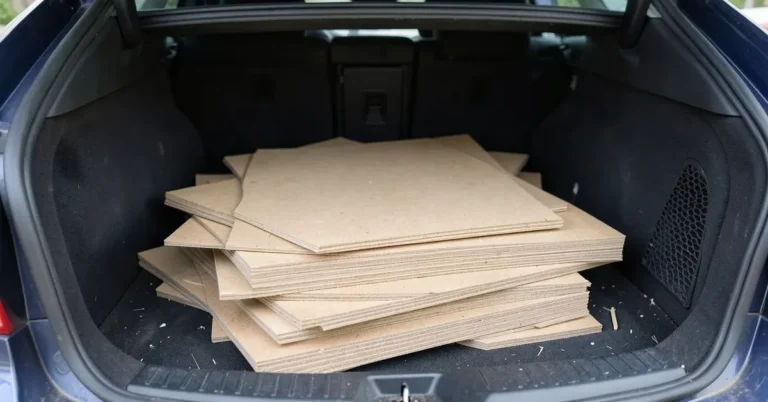
Cabinet-door MDF is commonly found around 3/4 inch (19.05 mm) or 18 mm, and many shops treat those sizes as a similar working range. Thicker stock usually stays flatter, machines more cleanly, and gives you more meat around hinge bores and routed edges. Thin stock is better for special parts, not most doors.
Why 3/4 inch or 18 mm is common
3/4 inch or 18 mm is common for cabinet doors because it balances flatness, screw support, and routing depth. Berta Store’s acrylic MDF panels use a stable 3/4-inch MDF core, which matches that practical cabinet range. You get enough thickness for hardware while keeping the door manageable.
How 4×8 sheets affect door layout and waste
A 4×8 sheet is the standard planning size for cabinet work because it gives efficient nesting for many door layouts. Berta Store sells premium acrylic MDF panels in 4×8 sheet size, which is useful when you want predictable yield. Slab doors waste less than arched or heavily profiled fronts. Shaker parts leave more offcut around the rails and stiles.
Say you need ten 15 by 30 shaker doors for a laundry room. A 4×8 sheet can nest the flat parts efficiently, but the frame members and groove allowances mean you should plan for more waste than you would with ten slab doors of the same overall size.
Door styles that work best
MDF is often a good fit for styles that depend on clean paint and controlled edges. It is strongest in slab and shaker forms, works well in raised panels when sealed carefully, and can be used for fluted, reeded, and arched fronts when the profile is kept clean and the edges are handled properly.
Slab doors
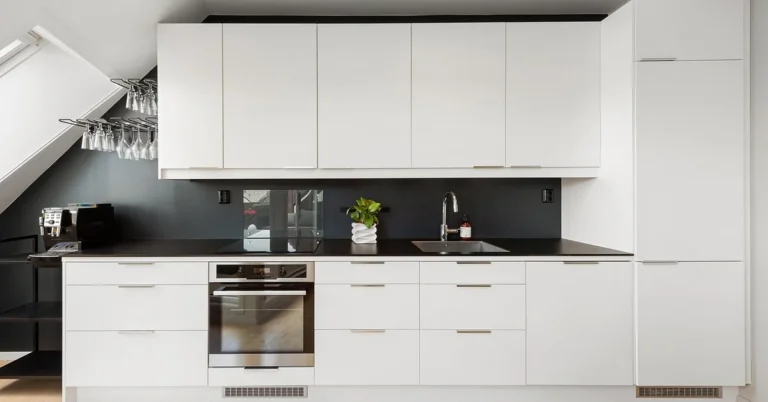
Slab doors are the easiest MDF format to execute because they depend on flatness and finish, not complex edge detail. That makes them a strong match for painted kitchens, matte acrylic fronts, and simple built-ins. If the edge is sealed well, slab MDF can look very clean.
Shaker doors
Shaker doors are one of the best uses for MDF. The same source recommends MDF for painted kitchen cabinet doors and shaker profiles, and that lines up with the material’s smooth face and paint-friendly edges. The profile is simple enough to machine cleanly, but it still needs careful edge sealing.
Raised-panel doors
Raised-panel MDF doors work when the profile is painted and the panel edges are sealed before finishing. The shape can look sharp and consistent, but the more complex the relief, the more important machining quality becomes. If you want a stained wood look, MDF is the wrong material.
Fluted and reeded fronts
Fluted and reeded fronts demand cleaner machining than a flat slab. That pushes the choice toward higher-density sheet stock or HDF, especially when the grooves are shallow and closely spaced. Acrylic-faced MDF can work for the face, but any cut or trimmed edge needs attention.
Arched panels
Arched panels are more fabrication-sensitive because curved edges expose more fiber and invite sanding issues. MDF can still work, but the cut edge must be sealed carefully before paint. If the arch is decorative and the room is dry, it is a reasonable choice. If the door is near steam, choose more caution.
How does MDF compare with wood?
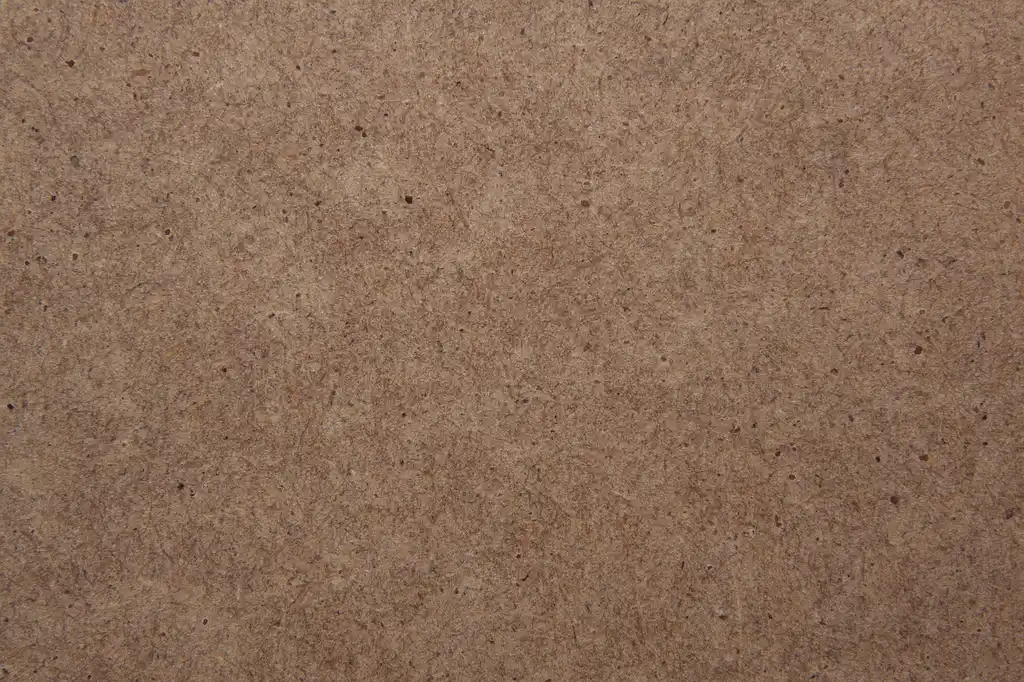
MDF compares well with wood for painted doors, but not for stained grain or for parts that live in repeated moisture. Solid wood brings natural grain and easier spot repair. Plywood offers better structural behavior in some uses. HDF is cleaner on detail. Thermofoil and acrylic-faced fronts reduce finishing labor.
MDF versus solid wood
MDF gives a smoother paint surface than solid wood and does not telegraph grain. Solid wood is better when you want visible grain, stain, or a naturally repairable edge. For painted cabinet doors, MDF is often the more predictable finish choice. For a stained door, solid wood wins.
MDF versus plywood
Plywood is stronger in some structural uses, especially where screw holding and edge abuse matter. MDF is easier to sand smooth and usually gives a better painted face. For cabinet doors, plywood can be the tougher substrate, but MDF usually gives the cleaner paint result. Pick plywood when edge stress is the main concern.
MDF versus HDF
HDF is denser and usually better for thin, crisp, or heavily detailed parts. MDF is easier to use for full-thickness cabinet doors and larger flat fronts. If you want a painted door with sharp profiles and less fuzz at the edge, HDF can be the better option. For broad flat doors, MDF is simpler.
MDF versus thermofoil fronts
Thermofoil over MDF gives you a factory-applied surface that avoids paint work, but damage is harder to repair cleanly if the skin lifts. Acrylic-faced MDF plays in a similar visual space with matte and high-gloss options, while painted MDF gives you the most flexibility for touch-ups and color changes. Choose based on repair tolerance.
Who it’s for
This choice suits DIYers, cabinet buyers, and remodelers who need painted cabinet doors for kitchens, bathrooms, vanities, built-ins, or rental refaces. It does not suit stained-wood projects, doors that will live in wet, unsealed locations, or jobs where heavy edge abuse and repeated screw resets are expected.
Picture a bathroom vanity with a 24 by 30 shaker door placed about two feet from a shower. Painted MDF can work there, but only if the edges are sealed well and the room has decent ventilation. Leave the bottom edge raw, and swelling can start there first.
Pros and cons
- Pros: smooth paint surface, easy to machine, good fit for slab and shaker doors, predictable sizing, strong match for replacement fronts.
- Cons: edge swelling risk, weaker screw tolerance than wood at stressed points, less suitable for stain, needs sealing in humid areas.
Start by sealing all cut edges, then sand the face lightly, apply a quality primer, and sand again before topcoating. MDF drinks finish at the edges, so the first coat often needs extra attention there. Use a paint system that bonds well to a sanded, sealed substrate, and let each coat dry fully.
- Seal all routed and cut edges first.
- Sand the face and break sharp corners lightly.
- Apply primer to faces and edges.
- Sand the primer smooth after it cures.
- Topcoat, then inspect hinge-bore and edge areas for missed spots.
Minor edge damage can often be repaired with filler, sanding, and repainting. If the edge has swollen from moisture, trim away the damaged fiber first, then rebuild the edge with a suitable filler or patch method before priming again. If screw holes at the hinge have blown out badly, a wood patch or replacement door may be the better fix.
Frequently asked questions
Is mdf a good material for cabinets?
Yes, MDF is a good material for painted cabinets when the room is dry or only moderately humid and the edges are sealed. It is especially useful for slab and shaker doors, drawer fronts, and built-ins. It is not the right material for stained finishes or unsealed wet exposure.
Are mdf kitchen cabinet doors good?
Yes, MDF kitchen cabinet doors are good when you want a painted finish and a flat, smooth face. They are common for shaker and slab doors because they machine cleanly and paint evenly. The weakness is moisture at the edges, so sealing and good installation matter.
Mdf vs wood for kitchen cabinet doors
MDF beats wood for a painted surface because it does not show grain and sands more evenly. Wood beats MDF for stain, visible grain, and easier spot repair on dents. For kitchens that will be painted, MDF is often the more practical choice. For natural wood looks, wood wins.
Mdf vs hdf cabinet doors
HDF is denser and usually better for thin parts, small profiles, and crisp detail. MDF is easier for larger doors and full-thickness cabinet work. If you want a painted door with fine routing and tighter edges, HDF has the edge. For general cabinet doors, MDF is more common.
How to paint mdf kitchen cupboard doors
Seal the edges first, then prime, sand, and topcoat. Kitchen cupboard doors need extra attention at the bottom edge, hinge area, and any routed profile because those spots take the most moisture and handling. A patient primer-and-sand cycle matters more than the topcoat brand alone.
Are mdf cabinets good quality?
MDF cabinets can be good quality if the build uses the right sheet type, sealed edges, and hardware that does not overload weak zones. Quality depends less on the word “MDF” than on density, finish system, and joinery. Poor sealing or sloppy hinge boring can make a good sheet fail early.
Sponsored / affiliate links. As an Amazon Associate I earn from qualifying purchases. I may earn additional commission from eligible campaigns.