How to Treat Reclaimed Wood for Termites: Borate & Heat Methods
Only drywood termites and Formosan termites can survive inside dried, reclaimed lumber — subterranean termites die within days once wood is removed from soil contact and dries out. Reused lumber that still shows live activity, soft or hollow-sounding wood, or fresh frass needs a borate soak (Bora-Care, Tim-bor) or heat treatment before it goes into a build. This guide covers how to tell which termites you actually have, which EPA-registered treatments work on wood (not just soil), and when reclaimed lumber is safe to reuse.
Quick Answer
Soak or brush an EPA-registered borate solution (Bora-Care or Tim-bor) onto bare, dry reclaimed wood, or drill-and-fill finished pieces. Heat treatment (kiln-drying above 120°F for 24+ hours) or professional fumigation is required for active drywood termite colonies deep inside a beam. Regular over-the-counter sprays only kill what they touch on the surface — they will not reach termites tunneling inside the wood.
Which Termites Actually Survive in Dried, Reclaimed Lumber?
Best Reclaimed Wood Termite Treatment Pick
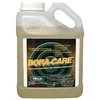
Boracare Borate Wood Preservative & Termiticide – $103.10
A borate solution that penetrates bare, dry wood the same way the Bora-Care/Tim-bor treatments this guide recommends do — brush or spray it onto reclaimed lumber before it goes into a build.
- Best for: Pretreating bare, dry reclaimed boards before a project
- Why we picked it: Borate-based, penetrates the wood fibers like Bora-Care/Tim-bor, and won’t discolor wood once dry
- Main drawback: Water-soluble — needs a sealed finish if the piece will see rain or high humidity
Compare more reclaimed wood termite treatment options
 Option 1 TERRO Ready to Use Termite & Carpenter Ant Killer Spray – $13.99
|
 Option 2 Klein Tools Pinless Moisture Meter – $49.97
|
 Option 3 Valhalla Eco-Friendly Wood Preservative – $23.15
|
As an Amazon Associate we earn from qualifying purchases.
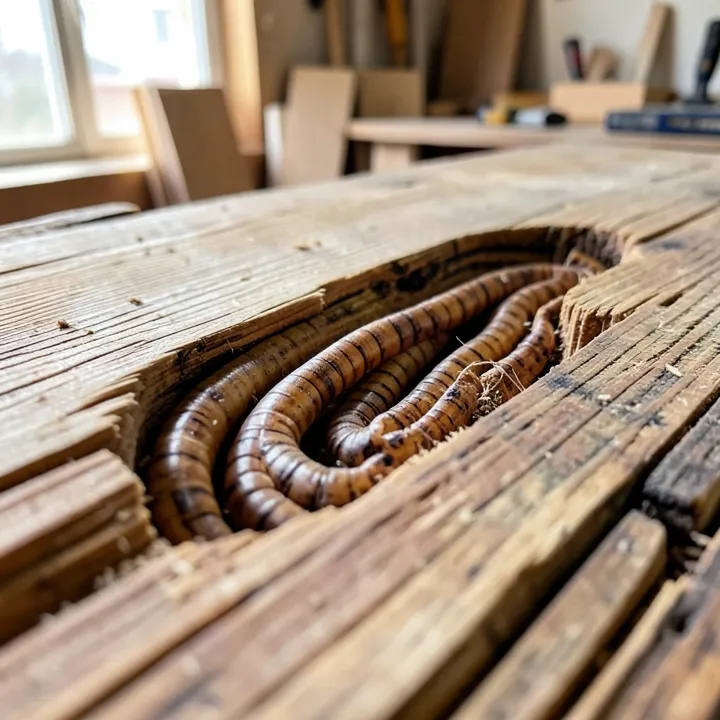
Drywood termites are the real threat to reclaimed lumber — they live entirely inside dry wood and never need soil contact, so they can survive for years in a salvaged barn beam or dresser drawer. Formosan termites behave the same way in warmer climates. Subterranean termites, by contrast, must maintain contact with damp soil to survive; once wood is pulled from a structure and dries out, any subterranean termites in it die off within days, leaving only their tunnels and dried mud tubes behind.
This distinction matters for reuse decisions. Much reclaimed wood is old-growth heartwood, which is denser and more resistant to termite feeding than modern fast-growth lumber — and by the time a piece has been salvaged, cleaned, and dried, an active subterranean infestation is unlikely to still be alive inside it. Wood-boring beetles (powderpost beetles in particular) are actually the more common live threat in reclaimed lumber, since their larvae can survive inside dry wood for years and only emerge as adults, leaving small round exit holes.
📊 Drywood termite colonies are small (a few thousand insects) compared to subterranean colonies, which can reach hundreds of thousands to millions. — Source: Truly Nolen, Drywood vs. Subterranean Termites
How to Identify Termite Damage in Reclaimed Wood
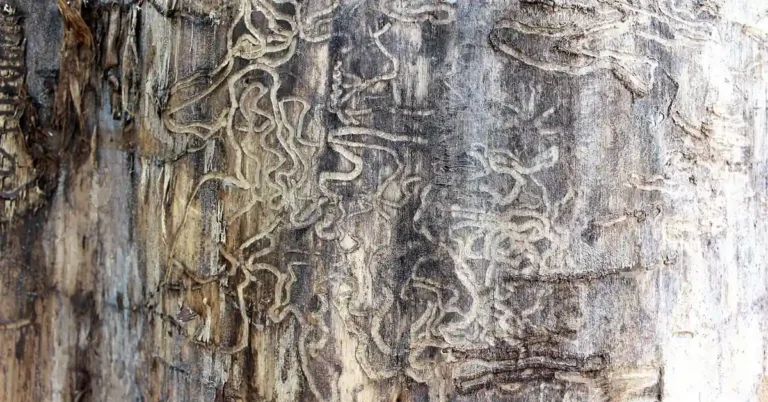
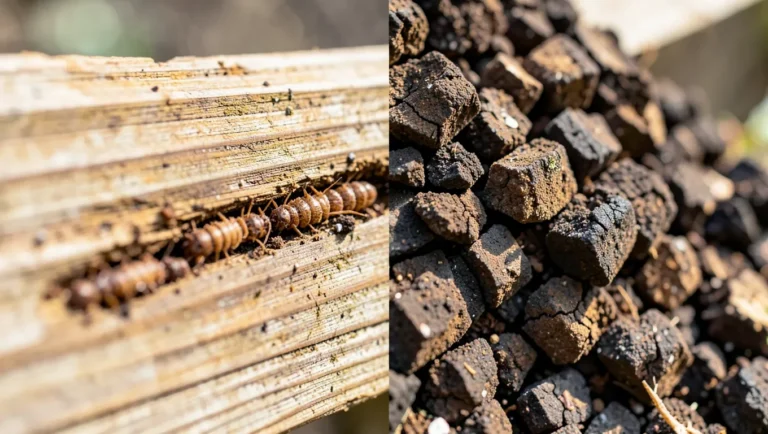
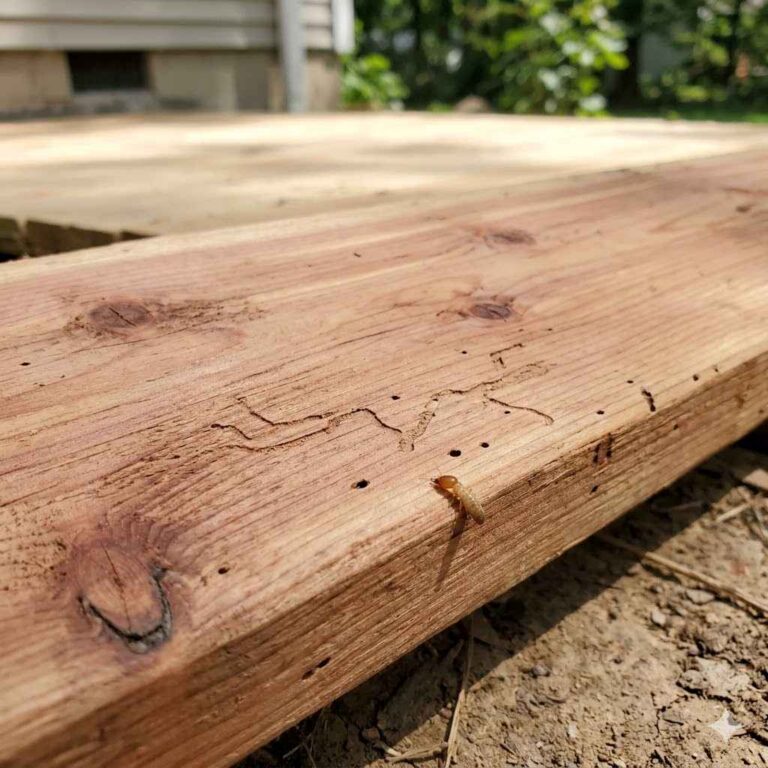
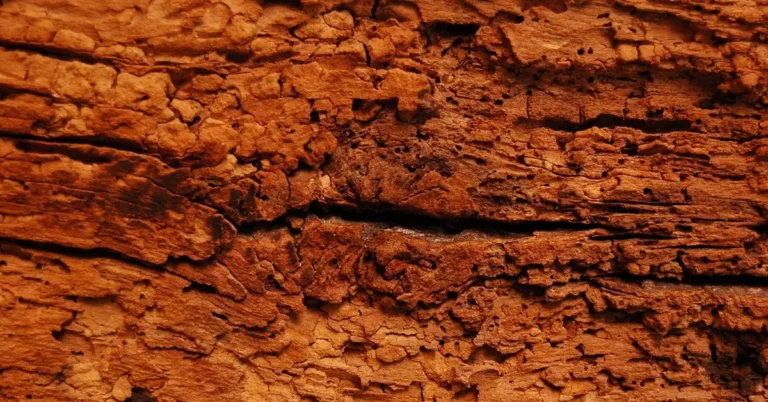
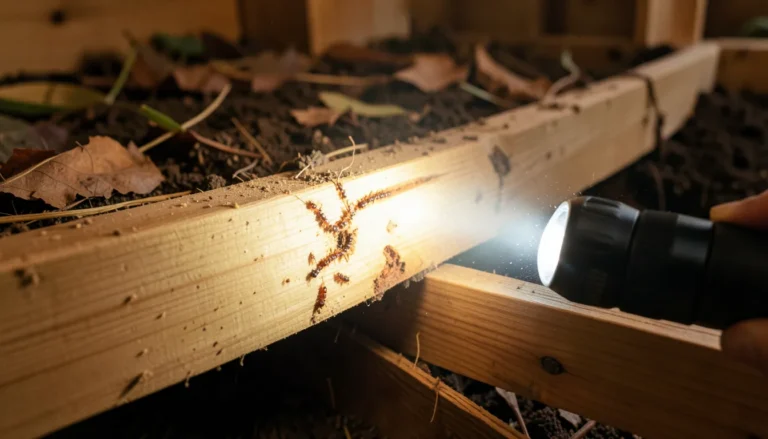
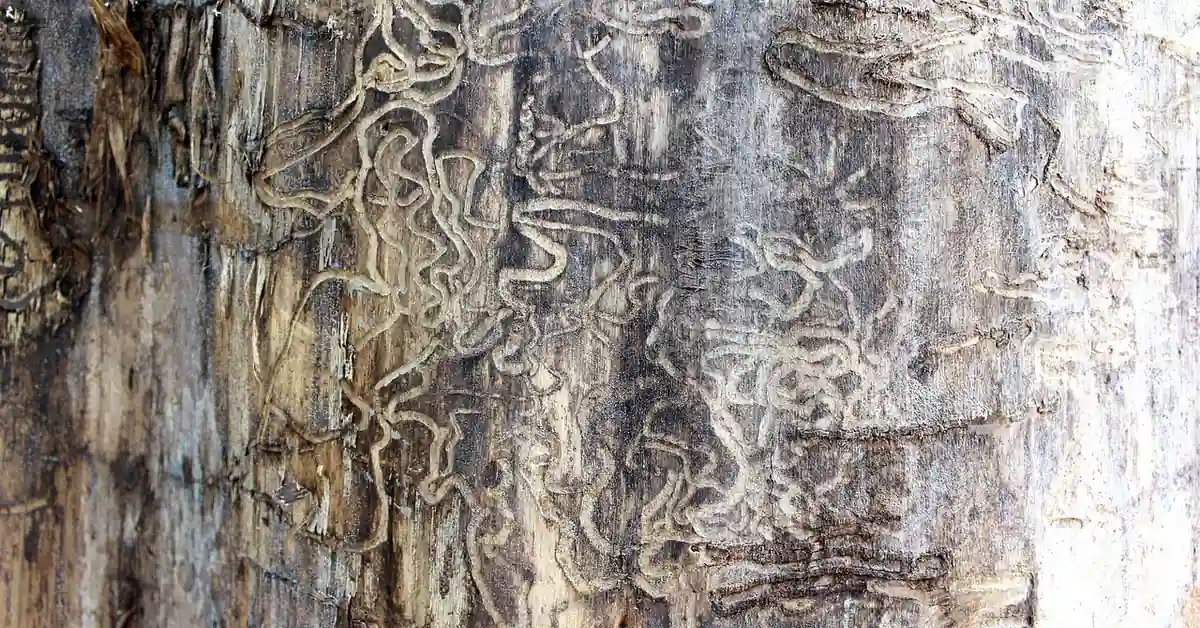
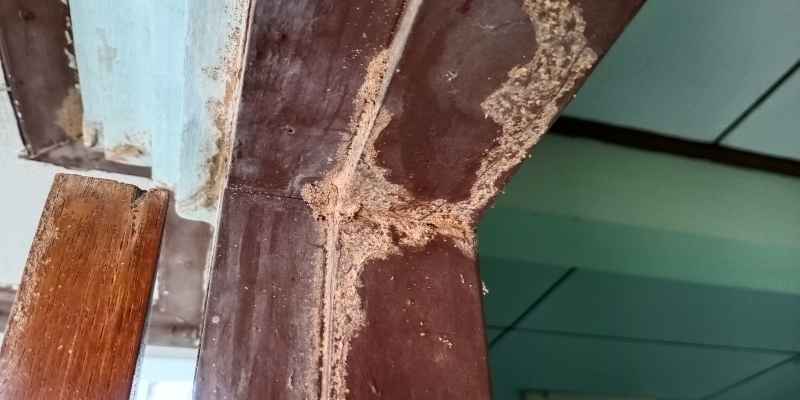
Look for small round or oval exit holes, hollowed-out wood that sounds hollow when tapped, and frass (droppings that look like fine sawdust or coffee grounds) collecting near seams or joints. Drywood termite frass has a distinct ridged, six-sided pellet shape visible under a magnifying glass, while subterranean damage usually shows dried mud tubes or mud packed into old tunnels.
| Termite Type | Needs Soil Contact? | Survives in Dried Reclaimed Wood? |
|---|---|---|
| Drywood termites | No | Yes — primary risk |
| Formosan termites | No (warm climates) | Yes — primary risk |
| Subterranean termites | Yes | No — dies once wood dries and loses soil contact |
Preparation Steps Before Treatment
Remove loose debris, dirt, and old finish with a stiff brush or shop vacuum so hidden tunnels and frass are visible. All cutting, planing, and drilling should be finished before treatment — a borate or termiticide coating only protects the surfaces it touches, so freshly cut faces need their own application.
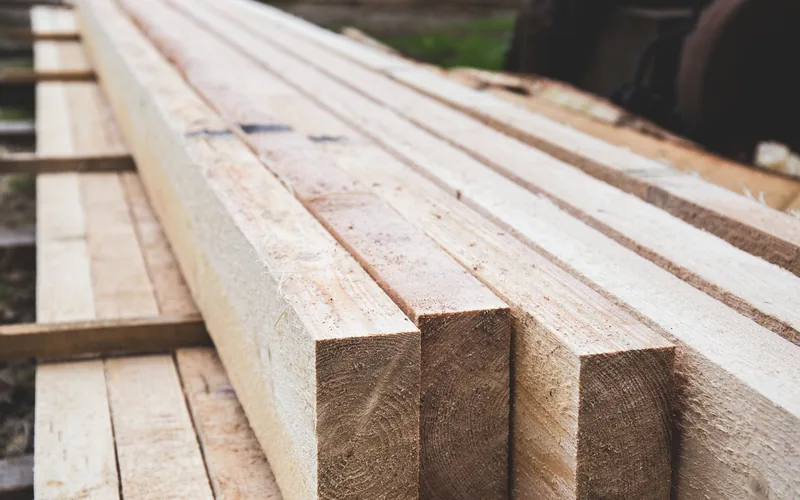
Wood should be bare, dry, and free of bark before a borate solution is applied — finishes and sealants block penetration. If the piece is already finished and stripping isn’t practical, the drill-and-fill method works instead: drill holes every 8–10 inches along the infested run and inject a labeled insecticide or borate gel directly into the cavity.
Chemical Treatments That Actually Work on Wood
Borate-based wood preservatives are the standard treatment for reclaimed lumber because they penetrate the wood fibers themselves rather than just coating the surface. Disodium octaborate tetrahydrate (DOT) products like Bora-Care and Tim-bor are EPA-registered specifically as wood preservatives and meet American Wood Preservers Association Standard #5. They’re low-odor and low-toxicity to people and pets once dry, but they are water-soluble — wood treated with them still needs a sealed finish or indoor use, since rain will eventually leach the borate back out.
For localized, active infestations in finished wood, Termidor HE (fipronil) is EPA-labeled for direct application to wood members at a 0.125% dilution — this is a professional-grade product, not a typical hardware-store spray. Premise (imidacloprid) is the termiticide sold for structural wood injection; note that “Advantage” is a different product entirely — it’s a pet flea and tick treatment that happens to share the same active ingredient, not a wood termiticide, so don’t substitute one for the other.
| Product Type | Active Ingredient | Best For |
|---|---|---|
| Bora-Care / Tim-bor (borate) | Disodium octaborate tetrahydrate | Bare, dry wood pretreatment before a build |
| Termidor HE | Fipronil | Localized active infestation in finished wood members |
| Premise | Imidacloprid | Structural wood injection (professional use) |
Non-Chemical Alternatives
Essential oils like tea tree and orange oil have some repellent effect on termites in lab studies, but they don’t penetrate wood the way borate does and won’t stop an established colony — treat them as a light deterrent for finished pieces, not a cure for active infestation. Diatomaceous earth works mechanically, cutting into termites’ exoskeletons and dehydrating them; it needs to stay dry to work and must be reapplied after rain or cleaning.
Heat treatment is the most reliable non-chemical option for a whole piece: raising the wood’s core temperature above 120°F for at least 24 hours kills all life stages of drywood termites. A kitchen oven on its lowest setting can work for small pieces if you can verify internal temperature with a probe thermometer; freezing is sometimes suggested but is less reliable since some insects tolerate cold better than sustained heat.
Preventive Measures After Treatment
Seal treated wood with a quality finish once the borate has dried, covering edges and end grain where moisture enters fastest. Store reclaimed lumber off the ground on stickers or a rack in a well-ventilated space, never directly against soil or a damp slab, and keep the storage area’s humidity low — termites and the wood-decay fungi that often travel with them both need moisture to survive. Check periodically for water damage, since damp wood is what draws termites back.
Professional Help vs. DIY
A single board with old, dry tunnels and no fresh frass is a DIY job — clean it, treat it with borate, and move on. Live termites, soft or crumbling wood, or an infestation spanning multiple pieces from the same source call for a licensed pest control company, since fumigation and whole-structure treatment require equipment and permits a homeowner can’t access.
“There is never any reason to treat wood for termites unless there is evidence of dry wood termites in the wood — and if you do find them, the wood can be hooded and fumigated. Check with local pest control about what’s available in your area.”
Long-Term Care for Reclaimed Wood
Re-inspect treated pieces every few months for the first year, especially if the wood lives outdoors or in a humid space — look for fresh frass, new tunnels, or soft spots that weren’t there before. Borate protection can leach out over years of moisture exposure, so a piece stored outside may need a second application; wood kept dry indoors under a sealed finish typically doesn’t need retreatment.
How This Differs from General Wood Termite Treatment
This guide focuses specifically on reclaimed and salvaged lumber — wood that’s already been removed from a structure and needs to be checked and treated before reuse. If you’re dealing with an active infestation in wood that’s still part of a building or piece of furniture in place, see our broader guide on how to safely handle termite infestations in wood, which covers inspection, treatment comparison, and prevention for in-place structural wood.
Frequently Asked Questions
How Can I Identify Termite Damage In Reclaimed Wood?
Look for hollowed-out wood, small round exit holes, and frass (termite droppings that resemble sawdust or coffee grounds). Tap the wood; a hollow sound indicates internal tunneling. Dried mud tubes packed into old tunnels point to a subterranean infestation that’s already inactive once the wood is dry.
What Treatments Are Effective For Termites In Reclaimed Wood?
EPA-registered borate solutions (Bora-Care, Tim-bor) are the standard pretreatment for bare, dry reclaimed lumber. For active infestations in finished wood, drill-and-fill with a labeled termiticide or professional fumigation is more effective than a surface spray, since sprays only kill what they directly touch.
How Can I Prevent Termites In Reclaimed Wood?
Store reclaimed wood off the ground in a dry, well-ventilated space, never in direct soil contact. Apply a borate treatment or protective finish before storage, and re-inspect periodically for fresh frass or soft spots, especially on pieces kept outdoors.
Is Reclaimed Wood Safe After Termite Treatment?
Yes, once all termites are eliminated and the wood is sealed with a protective finish, treated reclaimed wood is safe to build or craft with. Confirm there’s no remaining soft or hollow wood before finishing, since structural weakness from old damage doesn’t reverse with treatment.
Do I Need to Treat Reclaimed Wood If It’s Already Completely Dry?
If the wood is bone dry with no fresh frass, active tunnels, or soft spots, any subterranean termites that were once present have already died off from lack of soil moisture. Still inspect closely for drywood termites, which don’t need moisture and can remain alive in dry wood for years — when in doubt, a borate treatment is inexpensive insurance before building with it.
Are Wood-Boring Beetles a Bigger Risk Than Termites in Reclaimed Wood?
Often, yes. Powderpost beetle larvae can live inside dry wood for one to several years before emerging as adults, making them a more common live threat in salvaged lumber than termites, which mostly leave old, inactive damage behind once wood is fully dried. The same borate treatments used for termites also protect against wood-boring beetles.
Conclusion
Reclaimed wood is safe to build with once you’ve confirmed there’s no active drywood termite or beetle activity and treated any bare wood with a borate solution before finishing. Inspect first, treat before you build, seal afterward, and recheck periodically — that sequence protects both the wood’s structural integrity and whatever room or furniture piece it ends up in.
Sponsored / affiliate links. As an Amazon Associate I earn from qualifying purchases. I may earn additional commission from eligible campaigns.
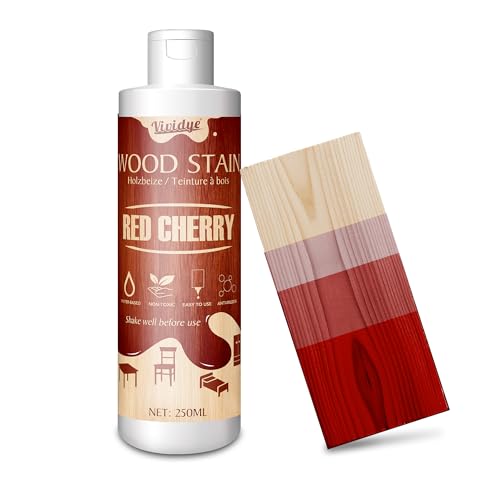 Wood Stain, 8.5oz/250ml Water Based Wood Stain for Indoor and Outdoor Furniture, Cabinet, Door, Trim and More - Fast Drying, Low Odor&Non-Toxic, Easy to Apply, Multiple Finishes (Red Cherry)
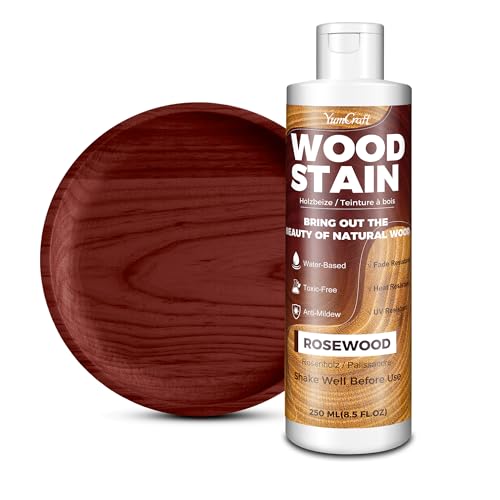 Water Based Wood Stain 8.5oz/250ml, Matte Fast Drying Stain & Varnish, Low Odor Non-Toxic Indoor Outdoor Wood Paint for Furniture, Cabinet, Door, Window, Wardrobe, Paneling, Trim & Multiple Finishes