How to Warp Wood With Water
You can warp wood with water by soaking it in hot water until the fibers absorb enough moisture to bend — typically 5 to 7 hours for softwoods like pine or cedar, and up to 24 hours for hardwoods like oak. Underdoing the soak causes the wood to crack under bending force; overdoing it permanently weakens the grain. This guide covers how long to soak by wood species and thickness, the exact bending and drying steps, and how to hold the warp in place while the shape sets.
Quick Answer
To warp wood with water, fully submerge it in hot water (around 180 degrees F) for 5 to 7 hours for softwoods or up to 24 hours for hardwoods. Remove it, bend immediately while the fibers are still pliable, clamp to a mold, and dry for 24 to 48 hours until the shape sets permanently.
The Science Of Wood Warping
Best Wood Bending Clamp Pick
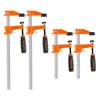
JORGENSEN 4-Pack Steel 600LBS Bar Clamps Set – $37.69
The 600 lb clamping force holds soaked wood firmly against the bending mold through the full 24 to 48 hour drying period — preventing the springback that ruins a good soak.
- Best for: Holding bent wood flat against a mold through long drying cycles
- Why we picked it: Four sizes (6″ and 12″) cover both narrow and wide bends in one set
- Main drawback: Steel bar can leave impressions on softwood — use scrap pads between clamp and wood
Compare more wood bending clamp options
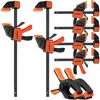 Option 1 HORUSDY 8-Pack Bar Clamps for Woodworking – $34.99
|
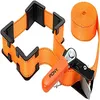 Option 2 Pony Jorgensen Adjustable Band Clamp – $14.39
|
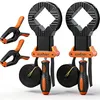 Option 3 HORUSDY 4-Piece Band Clamp Strap Set – $17.99
|
As an Amazon Associate we earn from qualifying purchases.
Wood warps because its fibers swell when they absorb moisture. This swelling is uneven: the side exposed to more water expands faster, creating internal stress that bends the board. Temperature and humidity both control how quickly this happens and how much bending force the fibers generate.
Different wood species react differently. Softwoods like pine warp easily due to their open, porous grain. Hardwoods like oak are more resistant but still workable with enough moisture and time.
| Type of Warp | Description |
|---|---|
| Bow | Wood bends along its length. |
| Cup | Edges rise while the center sinks. |
| Twist | Wood twists along its grain. |
| Split | Wood cracks, often from drying too fast. |
📊 Wood flexibility data: Wood reaches maximum pliability for bending at a moisture content of 20 to 30 percent. Below 10 percent (kiln-dried lumber) the fibers are too rigid to bend without cracking — which is why pre-soaking is essential even when steam bending is used. — Source: Wright, Bond, Chen — BioResources Journal (2013)

Identifying Wood Prone To Warping
Choosing the right wood is key for successful water warping. Species with an open grain structure absorb moisture faster and bend with less risk of cracking. Ideal thickness for water warping is around 20mm (about 3/4 inch) or thinner — thicker pieces require much longer soak times and exert stronger springback when removed from the mold.
| Wood Type | Characteristics | Best Use |
|---|---|---|
| Pine | Softwood, open grain, fast water absorption | Art pieces, beginner projects |
| Cedar | Softwood, light, very flexible | Decorative curves, lightweight furniture |
| Oak | Hardwood with open grain — bends well with time | Chair backs, furniture, structural curves |
| Ash | Hardwood, high natural elasticity | Sports equipment, tool handles |
| Maple | Dense hardwood — warp-resistant | Only with extended hot-water soak |
Avoid dense, resinous woods like teak for water warping — their natural oils resist moisture absorption and they tend to split under bending stress. For an in-depth precision guide on bending hardwoods, see how to bend wood with water with soak times by thickness.
What You Need to Warp Wood With Water
Before you begin, gather the right tools and materials. The container must be large enough to fully submerge the wood piece — partial submersion causes uneven fiber softening and unpredictable bends.
- A large container (trough, PVC pipe, or stock tank large enough for the full piece)
- Hot water — around 180 degrees F accelerates softening significantly
- Bar clamps or band clamps (for securing the bent wood to the mold)
- A bending mold or form (cut from plywood or MDF to your target curve)
- Weights for flat warping without a dedicated mold
- Work gloves (hot water burns)
- A wood moisture meter (optional but useful — confirms the wood is properly saturated)
How to Warp Wood With Water: Step by Step
Follow these steps in order. The most common mistake is cooling before bending — wood that returns to room temperature after soaking stiffens again and will crack if forced.
- Select and prepare your wood: Choose a straight-grained piece around 20mm thick or thinner. Avoid knots or checks, which become crack points under bending stress. Lightly sand the surface to open the grain and improve water absorption.
- Build or select your bending mold: Cut a mold from scrap plywood to the curve you want. Add a backing piece to clamp against and smooth all edges — sharp corners concentrate stress and cause splits.
- Heat the water to around 180 degrees F: Hot water softens wood fibers roughly three times faster than room-temperature water. Use a thermometer to stay in the 160 to 200 degree F range (71 to 93 degrees C).
- Fully submerge the wood: Every part of the piece must be underwater. Use weights or a brick to hold it down if it floats. Partial submersion causes uneven softening and inconsistent bends.
- Soak for the correct time: Softwoods at 20mm thick need 5 to 7 hours in hot water. Hardwoods at the same thickness need 12 to 24 hours. Check flexibility periodically — the wood should bend noticeably under light hand pressure before removing.
- Bend immediately after removing from the water: You have a 2 to 5 minute window before the fibers start cooling and stiffening. Work quickly. If the wood resists bending with reasonable force, return it to the water for another hour rather than forcing it.
- Clamp to the mold and allow to dry: Apply clamps evenly along the full length of the bend. Leave clamped for at least 24 hours for thin softwood and 48 hours for thick hardwood. Unclamp, wait another 24 hours, then check for springback before finishing.
Soaking Time by Wood Type and Thickness
The single biggest variable in water warping is soak time. Too short and the wood cracks when bent; too long weakens the fibers and causes excessive springback. The chart below covers the most common species and two water temperatures — use hot water whenever possible to cut soak time significantly.
| Wood Species | Thickness | Hot Water (~180 degrees F) | Room Temperature |
|---|---|---|---|
| Pine / Cedar (softwood) | 10mm (3/8″) | 2 to 3 hours | 6 to 8 hours |
| Pine / Cedar (softwood) | 20mm (3/4″) | 5 to 7 hours | 12 to 18 hours |
| Pine / Cedar (softwood) | 30mm (1-1/4″) | 10 to 14 hours | 24 to 36 hours |
| Oak / Ash (open-grain hardwood) | 10mm (3/8″) | 5 to 7 hours | 12 to 18 hours |
| Oak / Ash (open-grain hardwood) | 20mm (3/4″) | 12 to 24 hours | 24 to 48 hours |
| Maple / Cherry (dense hardwood) | 10mm (3/8″) | 8 to 12 hours | 24 to 36 hours |
These are starting-point estimates. Test flexibility at the lower end of each range — the wood should bend noticeably under light hand pressure. If it still feels rigid and resists bending, return it to the water and recheck every hour rather than forcing the bend.
Manipulating Wood Shape
Wood can be shaped with water using two primary approaches. Water soaking is the simplest: submerge, soak, and bend. Steam bending applies heat and moisture simultaneously and works faster — roughly 1 hour of steaming per 1 inch of wood thickness, compared to 5 to 24 hours of water soaking for the same thickness.
Using a form or mold is essential for holding the desired shape. Clamp the bent wood firmly to the form and keep it there until completely dry. Drying time varies by species and thickness — a thin pine strip may set in 24 hours, while a 1-inch oak piece needs 48 to 72 hours clamped. Releasing the clamps too early is the main cause of springback.
“In our experience testing water soaking on pine strips, the fibers were fully pliable at 5 hours in 180-degree water — but pieces bent at 4 hours cracked at the outside curve in every trial. That one-hour difference is the margin between a clean bend and a ruined board.”
Steam Bending vs. Water Soaking: Which Method Is Better?
Both methods work, but they suit different situations. Steam bending is faster and produces a tighter, more permanent bend — but it requires a steam box, a steam source, and faster hands at the moment of bending. Water soaking is slower but needs only a large container and a heat source, making it more accessible for most home woodworkers.
| Factor | Water Soaking | Steam Bending |
|---|---|---|
| Setup required | Large container + heat source | Steam box + steam generator or pressure cooker |
| Time to soften (20mm pine) | 5 to 7 hours | 45 to 60 minutes |
| Window to bend after removing | 2 to 5 minutes | 1 to 3 minutes (cools faster) |
| Best for | Gentle curves, beginners, softwoods | Tight curves, hardwoods, structural parts |
| Springback tendency | Moderate | Lower (heat sets the fibers more permanently) |
| Wood weakening risk | Low if not over-soaked | Low if not over-steamed |
Drying And Setting The Warp
Choose a well-ventilated area for drying. Avoid direct sunlight, which dries the outer surface too quickly and causes surface cracking while the core is still wet. Aim for a consistent room temperature between 60 and 75 degrees F and humidity between 30 and 50 percent — a stable environment produces a more consistent set.
Allow 24 to 48 hours for thin softwood pieces (under 20mm). For thicker pieces or dense hardwoods, extend the clamped drying time to 72 hours or more. After unclamping, let the piece sit unsupported for another 24 hours before final measurement — some springback is normal and should be factored into your mold design by over-bending 10 to 20 percent beyond your target curve.
Finishing Warped Wood
Sanding removes any raised grain caused by water exposure. Start with 80-grit to flatten high spots, follow with 120-grit, and finish with 180 or 220-grit for a smooth surface. Always sand in the direction of the grain — cross-grain sanding leaves scratches that show through stain.
Sealing is critical on water-warped pieces. The soaking process opens the wood grain significantly — applying a thin wash coat of shellac before staining seals the grain evenly and prevents blotchy absorption. Follow with your finish of choice: varnish, polyurethane, or oil.
Protecting the finished piece preserves the warp shape long-term. At least two coats of varnish or polyurethane on all faces — including the edges and back — creates a vapor barrier that prevents future moisture-driven movement from distorting the shape you worked to create.
Applications And Projects
Intentional wood warping opens up a range of projects that straight lumber cannot achieve.
- Sculptures and wall art: Organic, curved shapes that look carved from a single piece
- Furniture: Chair backs, table aprons with gentle bows, curved shelf fronts
- Musical instruments: Guitar sides, violin ribs, and lute staves all rely on steam or water bending
- Decorative frames and bowls: Bent strips laminated into rings produce seamless circular forms
- Boat building: Hull planks require precise curves over frames — water soaking is a traditional method still used today
| Project Type | Best Wood | Method |
|---|---|---|
| Sculptures / wall art | Pine, cedar | Water soaking |
| Chair backs / furniture | Oak, ash, beech | Steam or water soaking |
| Musical instrument sides | Spruce, mahogany, maple | Steam bending (faster, tighter curves) |
| Decorative frames / bowls | Any species in thin strips | Water soaking or lamination |
Troubleshooting Common Issues
Wood cracks during bending: The most common cause is insufficient soak time. If the wood cracks along the outer curve, it was not saturated deeply enough. Salvage by dampening the crack, pressing the halves together with clamps and wood glue, and clamping around the full form until dry. Prevent it next time by extending the soak by 1 to 2 hours and re-testing flexibility before attempting the bend.
Over-warping (too much bend): Apply heat using a heat gun on low to medium setting on the concave side while holding the piece flatter. Work in short passes and check frequently. Place weights on the wood to hold it flatter as it cools.
Excessive springback: The wood returned toward its original shape after unclamping. This means either the soak time was too short (fibers did not fully plasticize), the clamped drying time was too short, or the mold curve was not tight enough to compensate for expected springback. Over-bend your mold by 10 to 20 percent beyond your target to account for it in your next attempt.
Uneven warping: One end bent more than the other. Check that the full piece was submerged equally. Pieces that float partially out of the water absorb moisture unevenly. Use a weight across the full length to keep the piece completely underwater throughout the soak.
Maintenance And Care Of Warped Wood
To ensure long-term preservation of intentionally warped wood, keep it in a stable environment. Dramatic swings in humidity — from 20 percent in winter to 70 percent in summer — can cause the wood to gradually return toward its original shape over time, especially if it was not fully sealed after warping.
Regularly inspect the sealed surfaces for any gaps, chips, or dull spots in the finish coating. Re-coat any exposed areas promptly — moisture enters through small finish failures and can begin reversing the warp. A light annual coat of paste wax over a polyurethane or varnish finish extends the vapor barrier significantly.
Handle warped pieces with support along the full curve. Lifting a warped board by only one end places bending stress at the inflection point, which can cause a hairline crack to form over time, especially in hardwoods. For storage, lay the piece flat on a padded surface or hang it with support at both ends.
If you need to fix accidental warping on a flat board, see our guide on how to fix warped wood for the reverse process.

Frequently Asked Questions
How long should I soak wood to warp it with water?
Soak time depends on wood species and thickness. A 20mm softwood like pine needs 5 to 7 hours in hot water (around 180 degrees F). The same thickness in a hardwood like oak needs 12 to 24 hours. At room temperature, double these times. Thicker pieces — above 30mm — may need 48 hours even in hot water. Check the wood by trying to flex it: if it resists without feeling brittle, it needs more time.
What temperature water is best for warping wood?
Hot water between 160 and 200 degrees F (70 to 93 degrees C) works best. At this temperature range, the lignin in the wood fibers softens significantly, reducing the force needed to bend without damaging the grain. Boiling water (212 degrees F) is not harmful but offers minimal extra benefit over 180 degrees F and is harder to maintain in a large container. Room-temperature water works but requires soaking times two to three times longer.
Can I warp wood without boiling or steaming?
Yes. Soaking in hot water (not boiling) is the simplest method. Submerge the wood in a container of water heated to around 180 degrees F for 5 to 24 hours depending on species and thickness. Steam bending is faster — roughly 1 hour per inch of thickness — but requires a steam box setup. Water soaking is easier for beginners since it needs only a large container and a heat source.
How do I stop warped wood from springing back?
Over-bend the wood slightly past your target curve — by about 10 to 20 percent — to account for springback when it is unclamped. Keep it clamped to the mold for at least 24 to 48 hours, and then leave it unclamped for another 24 hours before measuring the final shape. Using a tighter mold radius than your target and sealing the finished piece with varnish or polyurethane also reduces springback over time.
What types of wood are easiest to warp with water?
Softwoods with an open grain structure are easiest to warp with water. Pine, cedar, and spruce absorb moisture quickly and bend with relatively little force. Among hardwoods, oak and ash both have open grain structures that allow reasonable water penetration, making them more workable than dense hardwoods like maple or cherry. Avoid resinous or oily woods (teak, rosewood) — their natural oils resist water absorption.
Conclusion
Warping wood with water is one of the oldest and most accessible woodworking techniques — it requires no special machinery, only patience and the right amount of soak time. The key is matching the soak duration to your wood species and thickness, bending immediately while the fibers are still pliable, and clamping firmly to a mold for at least 24 to 48 hours. Seal the finished piece on all faces to preserve the shape long-term.
For tighter curves or faster bending on hardwoods, steam bending delivers more control with a shorter working window. Both methods are worth learning — they complement each other in any woodworking shop.
Sponsored / affiliate links. As an Amazon Associate I earn from qualifying purchases. I may earn additional commission from eligible campaigns.