How to Fix Warped Wood: 5 Methods That Actually Work
Fixing warped wood means restoring flatness by rebalancing the moisture inside the board, usually with steam, a damp cloth and iron, or soaking, followed by clamping or weight while it dries. Thin boards under 1 inch can often be corrected in a few days; thicker stock or finished furniture may take a week or more, and some warps never fully release.
Warping happens because wood keeps absorbing and releasing moisture from the air even after it’s cut and milled. Uneven drying, one-sided humidity exposure, or poor storage makes one face of a board shrink or swell faster than the other, and the board bows, cups, twists, or kinks to compensate. The fix is almost always the reverse: add moisture and heat back to the dry side, then hold the board flat while it re-dries.
This guide walks through the five methods that actually work, moisture soaking, steam, heat, clamping, and sanding/refinishing, with realistic timeframes for each, a comparison table so you can pick the right one for your situation, and the moisture-content numbers a $30 meter can save you from repeating the mistake. We’ll also cover the point where warping stops being fixable, and when it’s smarter to call a professional.
Note: these methods are for solid wood, boards, furniture, trim, and similar stock. If the problem is a warped laminate floor, the fix is different, since laminate is a manufactured product that doesn’t respond to steam or clamping the same way solid wood does.
Quick Answer: Dampen the warped side with a wet cloth, apply a hot iron on the steam setting for 5-10 minutes per section, then clamp the board flat between two straight boards for 24-48 hours while it dries. For thicker or more severely warped stock, soak the concave face for several hours, then weight it flat for 3-7 days. Check moisture content with a meter before and after , wood for indoor furniture should settle at 6-8%.
Identifying Warped Wood
Best Moisture Meter Pick
 |
Klein Tools ET140 Pinless Moisture Meter – $49.14 Reads moisture up to 3/4 inch below the surface without pin holes, so you can confirm a board has settled into the 6-8% range this guide recommends before you clamp, sand, or finish it.
|
As an Amazon Associate we earn from qualifying purchases.
Fixing warped wood starts with identifying the problem. Look for bends, twists, or uneven surfaces in the wood.
Types Of Warping
Warped wood can be tricky to spot. There are several types of wood warping. Bow is when the wood bends along its length, edge to edge. Cup happens when the edges rise up or dip down relative to the center, across the width of the board. Twist is when the four corners no longer sit in the same plane. Kink forms a sharp, localized bend rather than a gradual curve. Each type responds a little differently: bows and cups usually respond well to moisture and clamping, while twist is the hardest to correct because it fights the wood’s grain in two directions at once.
Common Causes
Moisture is the main cause of wood warping. Wood is hygroscopic, it constantly absorbs and releases water vapor from the surrounding air. Too much moisture makes it swell; too little makes it shrink, and if one face changes faster than the other, the board bends. Heat can also warp wood by drying it unevenly, especially near heating vents or in direct sun. Improper storage, leaning boards on edge, stacking without stickers, or storing flat on a damp floor, is another major cause. Lower-grade or improperly dried lumber warps more easily because internal stresses from the drying process haven’t fully released.
Preparation Steps
Gather what you’ll need before starting: sandpaper to smooth the surface once it’s flat, clamps to hold the wood in place, water or a damp towel for the moisture methods, weights (bricks, books, or a straight caul) to press the wood flat, and a wood moisture meter so you know when the board has actually reached a stable moisture level instead of guessing.
Wear work gloves to avoid splinters and safety goggles if you’re using a heat gun, and work in a well-ventilated area away from children and pets. Read the instructions on any heat tool before using it, a heat gun or iron left in one spot too long can scorch the wood or, in rare cases, start a fire on very dry material.
How Much Moisture Is Too Much? (The Numbers That Matter)
Most warping traces back to a single number: moisture content (MC), the percentage of water in the wood relative to its dry weight. According to USDA Forest Products Laboratory guidance, wood for indoor furniture and cabinetry should sit at 6-8% MC once it’s acclimated to a conditioned home (roughly 30-50% relative humidity). At 40% relative humidity, wood settles around 8% MC; at 70% humidity, that climbs to about 13% MC, and that swing is exactly what pulls a flat board into a bow or cup.
Before finishing a repaired piece, let it dry back down to 12% MC or lower for oil-based stain, or 9% MC or lower for water-based finish, applying finish over wood that’s still too wet traps moisture and invites the warp to come back. A pinless moisture meter paired with a shrinkage calculator takes the guesswork out of knowing when a board is actually ready.
Using Moisture To Fix Warping
Water can fix warped wood by re-swelling the dry, concave side back toward the wet, convex side. Soak the concave face of the board, a wet towel works for large pieces, full submersion for small ones, for several hours to overnight. Once it’s absorbed moisture, place it on a flat surface with the convex side up, weight it evenly, and let it dry slowly over 3 to 7 days, checking daily and re-wetting if it starts to dry unevenly. Drying too fast can introduce a new warp in the opposite direction.
The steam-and-iron method works faster on thinner stock. Lay a damp (not soaking wet) cloth over the warped area, set a steam iron to its highest heat and steam setting, and let it heat for 2 to 5 minutes before use, a cool iron won’t do anything. Move the iron over the damp cloth in the same spot for 5 to 10 seconds at a time, working the whole warped section for roughly 5 to 10 minutes total. Check the wood’s shape every couple of minutes; once it’s flat, clamp it immediately and let it cool and dry undisturbed. This method is best for bows or cups on stock under about 1 inch thick, it has less effect on thicker boards or on twist.
Applying Heat To Straighten Wood
A heat gun can straighten warped wood without a wet cloth, but it works by driving moisture out of the wet side rather than adding it to the dry side, so it’s most useful when the warp came from one side getting too damp. Hold the heat gun about 4 inches from the surface and keep it moving continuously; holding it in one spot scorches the wood in seconds. After heating, immediately clamp or weight the board flat and let it cool fully before releasing it.
Sunlight combined with a wet towel is a slower version of the same idea: place the wood warped-side-up in direct sun, lay a damp towel over it, and check it hourly. Expect this to take several hours of direct sun rather than minutes, and move the piece to shade once it’s flat so it doesn’t over-dry and crack.
Clamping And Weight Methods
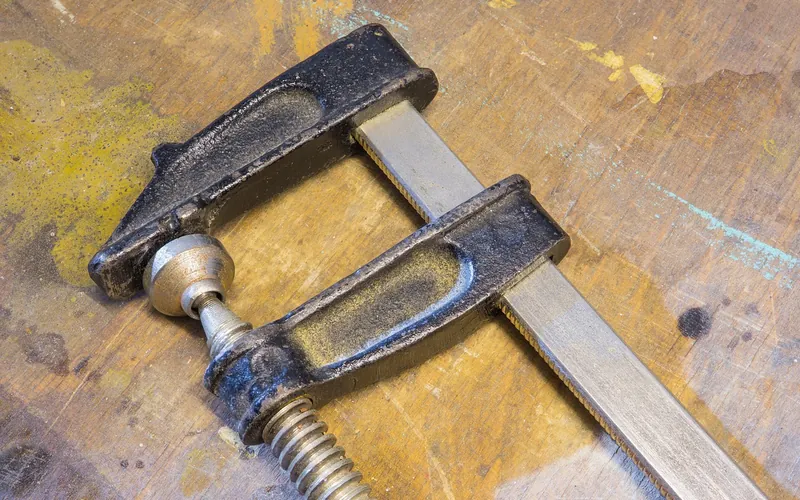
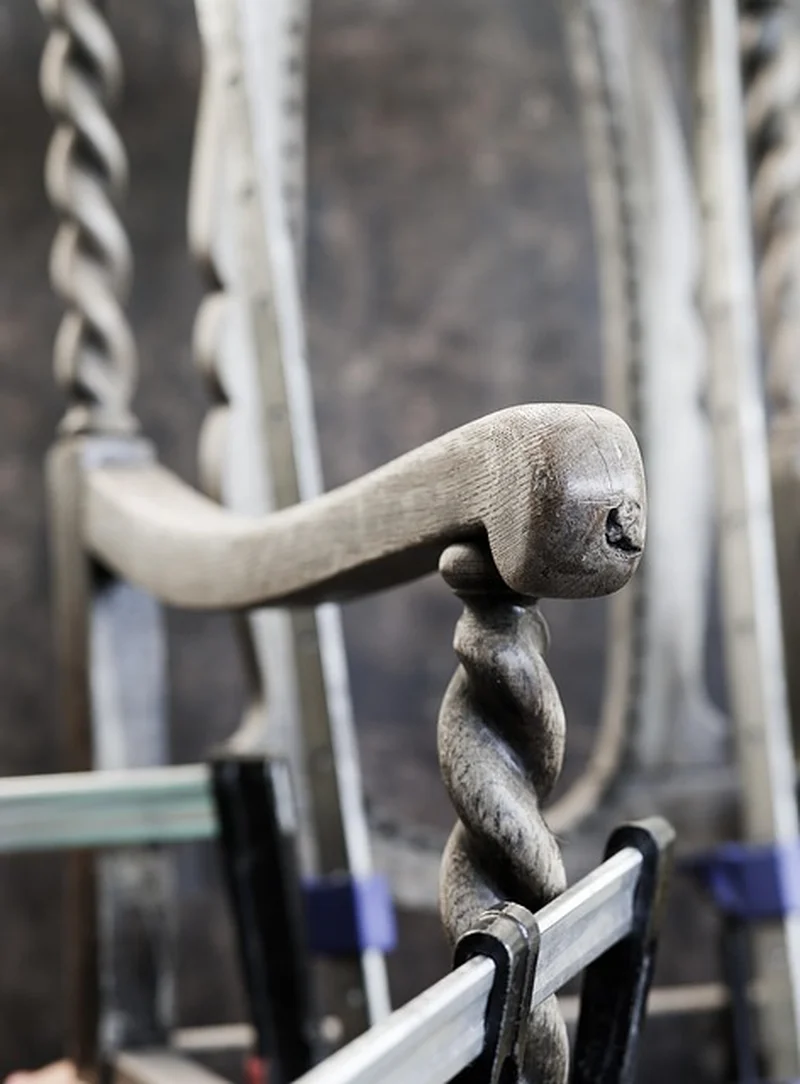
Whichever moisture or heat method you use, clamping is what actually locks the correction in, moisture and heat just make the wood pliable enough to move. Place the wood on a flat reference surface, sandwich it between two straight cauls (scrap 2x4s work well) above and below the warp, and tighten clamps evenly along the length so pressure doesn’t concentrate at one point. Leave the clamps on for 2 to 5 days for a fresh correction, checking daily.
For milder warps, dead weight works instead of clamps: bricks, weight plates, or stacked books spread across the warped area, left in place for about a week. Either way, don’t rush the release, pulling the clamps too early is the single most common reason a “fixed” board warps right back within a few weeks.
| Method | Best For | Typical Time | Success Rate |
|---|---|---|---|
| Steam iron + damp cloth | Bows/cups under 1″ thick | 10-30 min active + 1-2 days drying | High on thin stock |
| Soaking + weights | Moderate bow/cup, thicker boards | Several hours soak + 3-7 days drying | Moderate-High |
| Heat gun / sun + wet towel | One-sided moisture damage | 1-4 hours | Moderate |
| Clamping / weight only | Locking in any of the above | 2-7 days | High (as a finishing step) |
| Sanding / board replacement | Twist, or warps that won’t release | 1-3 hours | High, but removes material |
Sanding And Refinishing
If moisture, heat, and clamping have brought the board back close to flat but left the surface uneven, sanding finishes the job. Start with coarse-grit sandpaper to remove the high spots, always sanding with the grain, then step down to finer grits as the surface levels out. Check with a straightedge as you go so you don’t sand a new low spot into the board.
Once it’s smooth, clean off the dust and apply a wood conditioner before staining, it helps the stain absorb evenly instead of blotching, which matters more on repaired wood because the re-wetted areas can absorb differently than the rest of the board. Let the conditioner and stain dry fully, then finish with a protective sealant to guard against the next round of moisture exposure.
When Warped Wood Can’t Be Fixed
Not every warp releases. Moisture and heat correction works by re-swelling wood cells so the board can be coaxed back into shape, but if a board is clamped or restrained too aggressively while still wet, those swollen cells can actually crush and compress permanently, a change that doesn’t reverse when the wood dries. Conservation research on wood movement notes that a warp becomes effectively permanent once the panel is restrained on one side (for example, by veneer, a frame, or hardware) so it physically can’t move back.
There’s also a difference between a warp and a drying defect. Honeycombing, internal cracking caused by uneven kiln drying, is invisible from the face of the board and cannot be corrected by any moisture or clamping method, because the damage is structural, not just a bend. If a finished piece of furniture has a pronounced bow or cup, especially one that’s been that way for months or years, the realistic odds of a full, lasting correction drop sharply; sanding it flat (losing some thickness) or replacing the board is usually more reliable than repeated soak-and-clamp cycles.
Preventing Future Warping
Proper storage of wood is key to prevent warping. Keep wood in a dry place, out of direct sunlight, stored flat on a level surface. Use stickers, thin strips of wood, to separate stacked pieces and let air circulate around each board. Never store wood in damp areas, since moisture is the main cause of warping.
Humidity control matters just as much. Maintain a stable indoor humidity level, using a dehumidifier if needed, and check it with a hygrometer, aim for 30-50% relative humidity, which keeps wood in that 6-8% moisture sweet spot. Keep windows closed on rainy or humid days to stop moisture from working its way in, and check wood periodically with a moisture meter rather than waiting until a warp is visible.
When To Seek Professional Help
Severe warping, heavy twist, a bow that’s been set for years, or warping in a large or structural piece like a stair tread or door, can be difficult to correct safely on your own. See our full time breakdown by warp type before you commit to a method. A professional with steaming equipment, a press, or the ability to replace individual boards can save time and often produce a better result than repeated DIY attempts.
Hiring a professional costs more upfront, but a failed DIY attempt on an expensive or structural piece can cost more in the long run, especially if aggressive clamping crushes the wood cells and makes the warp permanent. Weigh the value of the piece against the repair cost before deciding.
Why gentle pressure matters: a panel that cannot move freely, for example because a frame, veneer, or hardware restrains one side, can lock a warp in permanently. Clamp with even, moderate pressure, remove hardware first when you can, and never force a board flat in one session.
Frequently Asked Questions
How Do You Flatten Warped Wood?
Flatten warped wood by applying heat and moisture. Use a damp cloth and iron to steam the wood, or soak the concave side, then clamp the wood flat between straight cauls until it dries.
Can You Fix Warped Wood From Water?
Yes, you can fix warped wood from water damage. Use moisture and clamps to straighten it, then let it dry slowly to the target 6-8% moisture content before finishing.
Can You Salvage Warped Wood?
Yes, you can salvage warped wood in most cases. Use moisture, heat, and clamps to straighten it, then dry it slowly to prevent re-warping. Wood that’s been restrained on one side for a long time, or has internal drying defects like honeycombing, may not fully recover.
Can You Fix Warped Hardwood?
Yes, you can fix warped hardwood. Use methods like soaking, steaming, clamping, or sanding to restore it; badly warped or damaged boards may need replacing instead.
What Moisture Content Should Wood Be To Avoid Warping?
Wood for indoor furniture and cabinetry should sit at 6-8% moisture content once acclimated to a normal home environment. Checking with a moisture meter before finishing is the most reliable way to confirm it, rather than guessing by feel.
Conclusion
Fixing warped wood comes down to reintroducing moisture or heat, then holding the board flat while it dries, steam and an iron work fastest on thin boards, soaking and weights suit thicker stock, and clamping locks either method in. Dry the wood back down to 6-8% moisture content before finishing, and check with a moisture meter rather than guessing.
Not every warp comes all the way back, especially on wood that’s been restrained for a long time or has internal drying defects, in those cases, sanding flat or replacing the board is usually the more reliable fix. With the right method and a little patience, most warped wood can be brought back into shape.
Sponsored / affiliate links. As an Amazon Associate I earn from qualifying purchases. I may earn additional commission from eligible campaigns.