Rust Preventive Oil Application on Tools
Wipe on a thin rust preventive oil film, then wipe it back off so only a light residue remains on steel, cast iron, and exposed fasteners. Skip that step, and humid storage can leave orange staining, dust buildup, and contaminated saw tables or abrasive surfaces. This guide shows how to choose the lightest effective oil, where to apply it, what to keep dry, and how to recoat precision tools without leaving transfer on wood or finishes.
What you’ll need


- Rust preventive oil for metal tools and parts
- Clean cloths or lint-free wipes
- Brush, spray, or applicator pad
- Solvent or alkaline cleaner for full removal
- Gloves
- Dry storage cloth
How do you apply rust preventive oil on shop tools?
Begin with a clean, dry surface, then spread a thin, even film and remove the excess right away. The goal is a soft protective layer that pushes out moisture and slows corrosion, not a wet coating that transfers to wood, paper, or abrasives. Low-viscosity oil helps on recesses and machined edges because it moves more easily into corners.
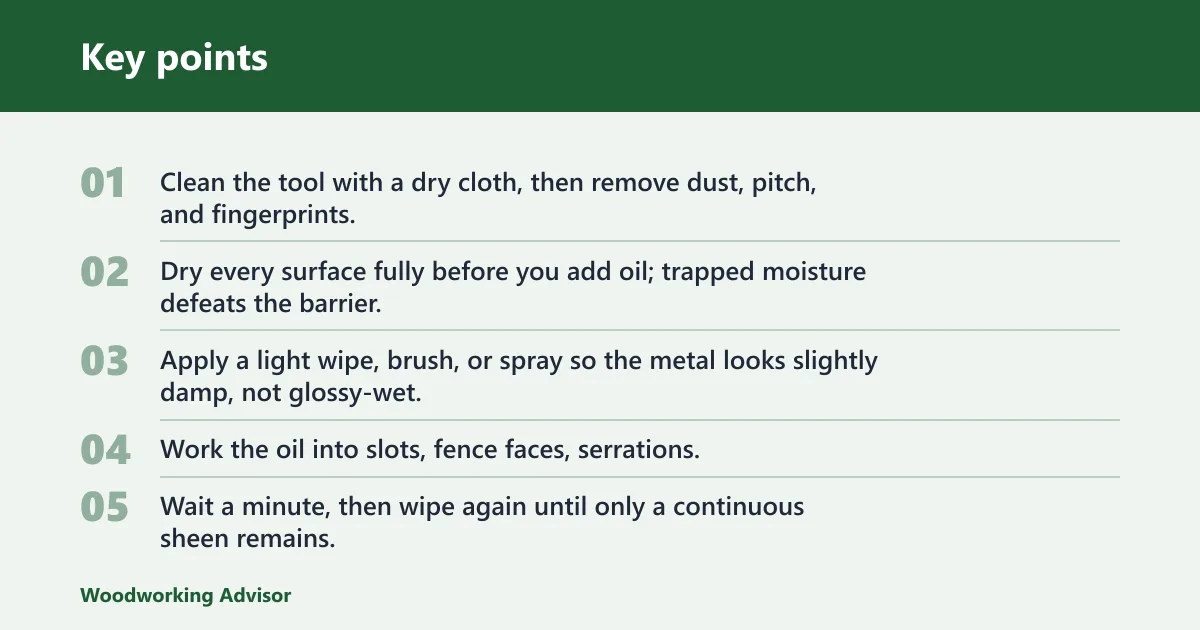
- Clean the tool with a dry cloth, then remove dust, pitch, and fingerprints.
- Dry every surface fully before you add oil; trapped moisture defeats the barrier.
- Apply a light wipe, brush, or spray so the metal looks slightly damp, not glossy-wet.
- Work the oil into slots, fence faces, serrations, and other recesses if the shape allows it.
- Wait a minute, then wipe again until only a continuous sheen remains.
- Add 1 to 2 extra drops or a light mist only where bare steel still looks dull, then recheck after wiping.
Suppose a jointer bed shows a few dull streaks after a damp night. A second pass on those streaks is enough. Do not soak the whole bed to chase one patch.
Which tools need the most protection?
Cast iron tables, bare steel, and machined surfaces need attention first because they collect condensation and show rust fast in a cold shop. Table saw tops, jointer beds, drill press tables, vises, fence faces, plane soles, chisels, and saw plates sit near the top of the list. Measuring tools and exposed fasteners also deserve protection.
What needs oil first
- Table saw tops and extensions
- Jointer beds and planer beds
- Fence faces and rip guides
- Drill press tables
- Bench vises and machined slide parts
- Plane soles, chisels, and saw plates
- Squares, rules, and other precision measuring tools
What should stay dry or get a full wipe-down?
- Sandpaper-backed surfaces and abrasive tools
- Clamp pads and gluing faces
- Any surface that will touch finish, stain, or adhesive
- Handles, knobs, and wooden parts that do not need rust protection
Winter shop application matrix
This matrix ranks common woodworking tools by rust risk, oil compatibility, wipe-off urgency, and reapplication timing. Cast iron and other bare machined surfaces need the most frequent attention because winter humidity and condensation can put a film at risk within days, especially in an unheated garage.
| Tool type | Surface sensitivity | Recommended application method | Residue risk | When to remove the oil before use | Reapplication interval |
|---|---|---|---|---|---|
| Table saw top | High; machined cast iron | Wipe-on or light spray, then buff | Medium to high if overapplied | Before cutting clean lumber, sanding, or finish work | After heavy handling or every 1 to 2 weeks in damp storage |
| Jointer bed | High; flat reference surface | Wipe-on with a lint-free cloth | High if left wet | Before use on stock that must stay clean | Weekly in cold, humid storage |
| Plane sole | High; slides on wood | Wipe-on, then remove nearly all film | Low if fully buffed, high if greasy | Before planing finish-sensitive work | After handling or visible dulling |
| Chisels and saw plates | High; cutting edges must stay clean | Light wipe or brush on exposed steel only | Medium | Before fine joinery or finish-adjacent cuts | Every few uses, and after condensation |
| Fence faces and guides | Medium to high; sliding contact | Thin wipe or spray on accessible steel | Medium | Before any cut where residue could mark stock | Every 1 to 2 weeks, sooner in wet spells |
| Vises and screws | Medium; moving hardware | Brush into threads, then wipe | Low to medium | Before clamping parts for glue-up | Monthly indoors; sooner after washing or condensation |
| Measuring tools | Very high; accuracy and transfer matter | Micro-wipe only | Low if wiped dry | Before layout, marking, or finish inspection | Only after handling, moisture, or dulling |
When should you wipe it off?
Wipe rust preventive oil off before sanding, finishing, gluing, or any cut that must stay clean. The soft film protects storage surfaces, but residue can contaminate sandpaper, weaken glue bonds, or leave fish-eye risk on finish surfaces. A solvent or alkaline cleaner helps when you need a full wipe-down instead of a light buff.
- Wipe the surface with a clean dry cloth before use.
- Check for slick spots by touch and by a dull sheen under light.
- Use solvent or an alkaline cleaner on the full surface if residue must be removed completely.
- Dry the part again before returning it to service.
- Reapply a lighter film after the session if the tool goes back into winter storage.
A common first-timer mistake is leaving a thin haze on a table saw top and then starting a glue-up nearby. That haze can move from hands to stock or paper goods, so the safer habit is to wipe clean before any bonding step.
What is the best way to protect tools from rust in a cold garage?
Use the lightest effective oil film, keep the garage as dry as possible, and focus on surfaces that gather condensation first. Rust preventive oil works well for short-to-medium-term storage because it pushes out moisture, leaves a soft protective film, and is easy to apply and remove. In a damp winter shop, the best protection is a thin coat plus regular rechecks.
Should I use rust preventive oil or paste wax on woodworking tools?
Use rust preventive oil when you need moisture displacement and short-to-medium-term storage protection, especially on cast iron and exposed steel in a humid shop. Use paste wax when you want a drier feel and lower transfer risk on some machine tops, but expect different maintenance tradeoffs and less moisture displacement. Oil is the safer pick after washing, condensation, or seasonal storage.
Rust preventive oil additives based on microbial fats were discussed in a 1982 scientific article, and modern products still follow the same practical idea: form a soft barrier that keeps air and water vapor off the metal. That barrier is useful indoors, but it still needs periodic renewal when winter moisture keeps returning.
Common mistakes
Most problems come from too much oil, not too little. A greasy layer attracts dust, transfers to stock, and can leave a slick surface where a clean shear cut or finish-ready surface should be.
- Using a heavy coat instead of a barely visible film.
- Leaving oil on tables, fences, or soles that will touch wood directly.
- Skipping reapplication after a cold night, a damp cleanup, or hand contact.
- Treating a plane sole, a saw plate, and a glue-up table the same way.
- Using oil where a full wipe-down is needed before sanding, finishing, or bonding.
Picture a 24-inch jointer parked in an unheated garage. If the bed beads moisture after a temperature swing, one quick clean-and-recoat beats waiting for orange staining to appear.
Frequently asked questions
How much rust preventive oil should I use on cast iron and steel tools?
Use enough to leave a continuous sheen, then wipe until the surface no longer looks wet. On a table saw top or jointer bed, that usually means one light pass with a cloth, followed by a second dry wipe. If the cloth comes away wet, too much remains on the tool.
Can I use rust preventive oil on hand saws, planes, and chisels?
Yes, but keep the film very light on cutting tools. Apply only to exposed steel, avoid the cutting edge area when possible, and wipe nearly all of it away before use. For plane soles and chisels that touch wood directly, residue control matters as much as rust protection.
How often should I reapply rust preventive oil in winter?
Check after each condensation event, after heavy handling, and at least weekly on exposed cast iron in a damp shop. For covered indoor storage, a longer interval may work, but exposed tables and fence faces need closer attention when humidity swings between cold nights and warmer daytime use.
Will rust preventive oil affect finishes, glue, or sanding?
Yes, if residue stays on the tool or moves to the workpiece. Wipe the surface clean before sanding, finishing, or any glue-up, and use solvent or an alkaline cleaner when you need full removal. A soft film is useful in storage, not on a bonding or finishing surface.
What tools need oil protection most in a winter woodshop?
Start with cast iron tables, jointer beds, fence faces, vise hardware, plane soles, chisels, saw plates, and measuring tools. These surfaces rust quickly in humidity and matter most to accuracy. Tools that must stay dry for sanding or gluing should get a complete wipe-down before use.
Do I wipe rust preventive oil off after applying it?
Yes. The target is a soft protective film, not a wet layer. Wipe until only a light sheen remains, then remove more before any cut, glue-up, sanding, or finishing step. If a tool feels slick, it still has too much oil on it.
Brush, dip, or spray?
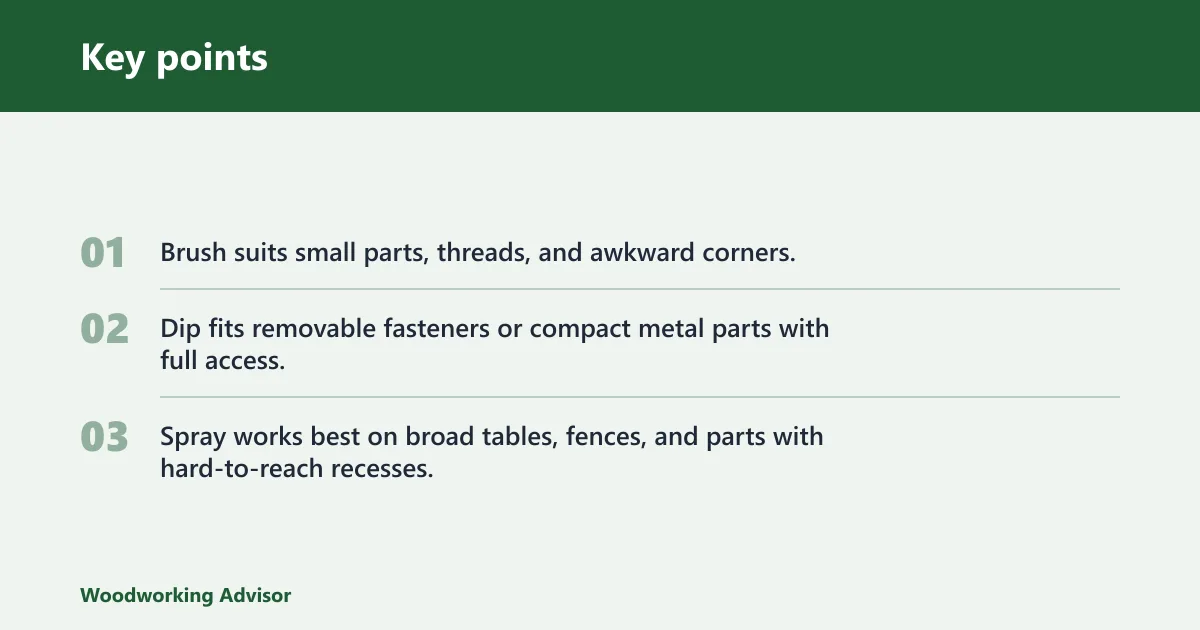
- Brush suits small parts, threads, and awkward corners.
- Dip fits removable fasteners or compact metal parts with full access.
- Spray works best on broad tables, fences, and parts with hard-to-reach recesses.
Low-viscosity rust preventive oil is useful on recesses, fence hardware, and machined parts because it flows better than thicker oils. That helps coverage without piling up residue, which matters on surfaces that later touch wood or abrasive media.
Sponsored / affiliate links. As an Amazon Associate I earn from qualifying purchases. I may earn additional commission from eligible campaigns.