Is Hardwood Flooring Waterproof? What Actually Happens With Water
Short answer: no. Hardwood flooring is not waterproof – it’s only ever as water-resistant as its finish, and that finish can wear thin or fail long before you notice.
That distinction gets blurred on a lot of flooring sites, and it matters more than a simple yes-or-no answer suggests. A quality polyurethane topcoat can shrug off a splashed glass of water if you wipe it up in a few minutes. It cannot stop a slow leak under a dishwasher, a forgotten wet umbrella by the door, or indoor humidity that sits above 60% for weeks at a stretch. The wood underneath that finish is still wood – a porous, hygroscopic material that pulls in moisture whether the label on the box says “water-resistant” or not.
Below is what actually happens when hardwood meets water, why “water-resistant” and “waterproof” keep getting used interchangeably, and how to catch a problem before it turns into a full refinishing job.
Water-Resistant Finish vs. Waterproof Material – The Real Difference
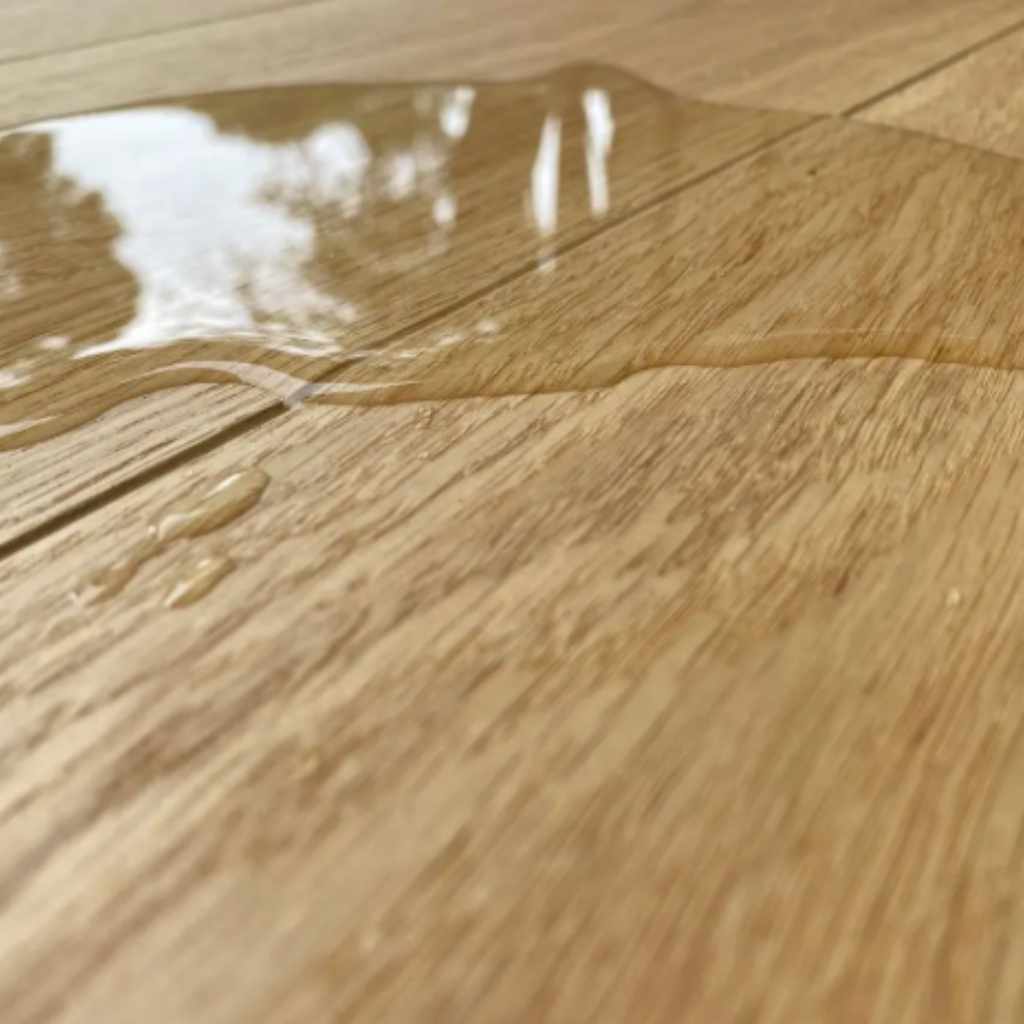
A hardwood floor’s water resistance almost entirely comes from what’s on top of it, not the wood itself. Polyurethane, whether oil- or water-based, cures into a thin plastic-like film that sits over the wood grain. That film can genuinely repel a quick spill – a dropped ice cube, a splash from a dog’s water bowl, a little rain tracked in on shoes. Wipe it within a few minutes and the wood underneath usually never even absorbs moisture.
What that same finish cannot do is make the wood itself impervious. Solid and engineered hardwood are both installed with a specific moisture content in mind – typically somewhere around 6-9% for most U.S. climates once the wood has acclimated to the room. Flooring installers and inspectors generally start treating a moisture-meter reading above roughly 12-14% as a warning sign, because that’s the range where boards start absorbing enough water to swell unevenly. Once water gets past the finish – through a seam, a scratch, a worn spot near a doorway, or simply because it was left standing long enough – there’s nothing left to stop the wood from doing what wood does: expanding, contracting, and eventually distorting.
This is also why “waterproof laminate” and “waterproof engineered hardwood” marketing claims deserve a second look. A handful of newer engineered products use a rigid core and a fully sealed edge system that really can tolerate short-term standing water, but that’s a different (and pricier) construction than a standard finished hardwood or engineered floor. If you want the full side-by-side on that, our LVP vs. engineered hardwood comparison breaks down which of the two actually earns a waterproof rating and which only earns water-resistant.
Best For Catching Water Damage Before It Spreads
 |
General Tools MMD4E Moisture Meter – $39.98 Since you can’t see moisture soaking into hardwood from the surface, a meter reading is the only way to catch a problem while it’s still fixable.
|
What Actually Happens When Water Sits on a Hardwood Floor
The damage isn’t random – it follows a fairly predictable pattern based on how wood absorbs moisture unevenly.
Cupping
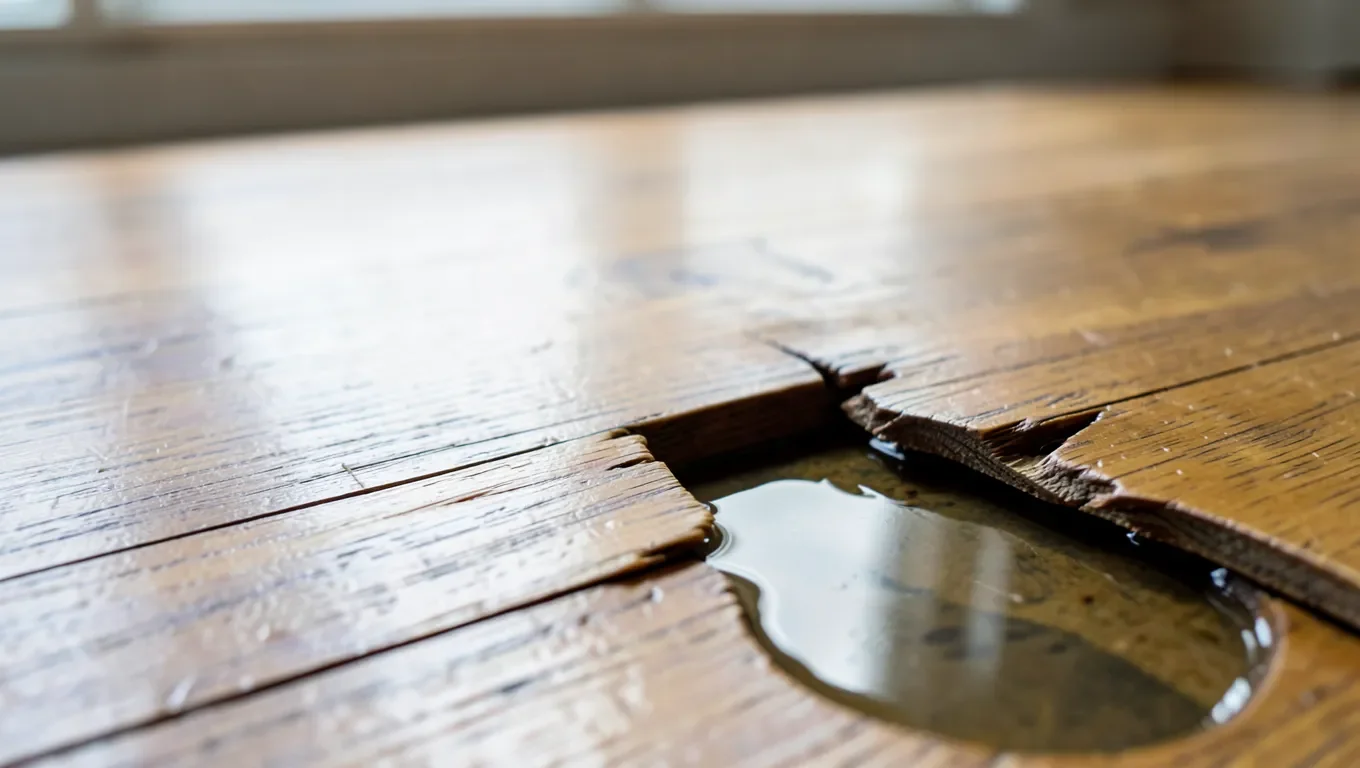
This is the first sign most homeowners notice: the edges of a board sit slightly higher than its center, so the floor feels ridged under bare feet. It happens because the edges and the underside of a board (which has more exposed grain and is closer to a wet subfloor) absorb water faster than the sealed top surface. The edges swell first and push upward while the center lags behind. Cupping from a short-term spill often relaxes once the wood dries back out. Cupping from a slow, ongoing leak usually doesn’t reverse on its own.
Warping, Crowning, and Gapping
Left long enough, uneven swelling turns into permanent warping – boards twist or the whole plank bows. Crowning is the reverse problem: it usually shows up after a wet floor is dried too aggressively (fans, heaters) following a flood, and the center swells higher than the edges. Gapping happens on the way back the other direction, when a board that swelled and then over-dried shrinks smaller than it started.
Staining and Mold
Standing water reacts with tannins naturally present in wood, and with any iron or minerals dissolved in the water itself, which is why water stains on finished hardwood often show up gray or black rather than just a lighter water mark. If moisture gets trapped under the finish or down into the subfloor, it creates exactly the dark, damp environment mold needs – and by the time you can smell it, the growth is usually already inside the wood, not just on top of it.
Solid vs. Engineered Hardwood: Does Either Handle Water Better?
Solid hardwood is a single piece of wood, top to bottom, which means it expands and contracts as one unit with every swing in humidity. Engineered hardwood swaps that for a plywood or HDF core built from several thin layers glued with the grain running in alternating directions, topped with a thinner layer of real hardwood veneer. That cross-grain construction is genuinely more dimensionally stable – it resists the wide seasonal expansion and contraction that solid wood goes through, which is why engineered hardwood is the more common recommendation over a concrete slab or in a basement.
Stability is not the same thing as waterproofing, though. The top layer of an engineered board is still real wood with the same finish as a solid floor, so it absorbs surface water and stains the same way. If you want the full explanation of how that veneer layer is built and why it still counts as genuine hardwood rather than a printed laminate look-alike, see our guide on whether engineered hardwood flooring is real wood. Neither solid nor engineered hardwood should be treated as safe for a floor that regularly sees standing water.
How to Actually Protect a Hardwood Floor From Water Damage
Move Fast on Spills
The window that matters most is the first several minutes. A spill wiped up promptly rarely gets past an intact finish. The same spill left overnight has had hours to find a seam, a scratch, or a worn spot to soak through.
Control the Entry Points
Most hardwood water damage doesn’t come from a dramatic flood – it comes from the same few spots, repeatedly: under a refrigerator or dishwasher supply line, by an exterior door where wet shoes and umbrellas drip, under a houseplant that gets watered on a schedule, and around a pet’s water bowl. Use trays or mats in those exact spots rather than relying on the finish alone.
Keep Humidity in a Reasonable Range
Hardwood does best with indoor relative humidity kept roughly between 30% and 50% year-round. Running a dehumidifier in a humid summer or a humidifier in a dry winter keeps the wood’s moisture content stable, which is exactly what prevents the seasonal gapping and cupping that shows up when a room swings between very dry and very damp.
Reapply Finish on a Schedule, Not Just When It Looks Bad
A polyurethane topcoat wears thinnest in high-traffic paths – hallways, in front of a sink, at a doorway – well before the rest of the floor looks worn. Those are the spots that lose water resistance first and the spots worth checking with a moisture meter if you suspect a problem.
When Hardwood Isn’t the Right Call: Genuinely Waterproof Alternatives
For a full bathroom, a laundry room, a basement, or anywhere standing water is a realistic, recurring possibility, hardwood – solid or engineered – simply isn’t the right material, regardless of the finish used. A floor described as truly waterproof is built from materials that don’t absorb water at all: rigid or luxury vinyl plank with a closed synthetic core, porcelain or ceramic tile, or laminate built around a waterproof (not just water-resistant) core. None of these have organic wood fibers to swell, stain, or feed mold in the first place.
For a full breakdown of water-resistant and specialty waterproof wood-look flooring options by room, see our water-resistant wood flooring guide.
Frequently Asked Questions
Is hardwood flooring waterproof?
No. Hardwood flooring, solid or engineered, is not waterproof. A finish like polyurethane makes the surface water-resistant for a short time, but the wood underneath still absorbs moisture if water is left standing or gets past the finish.
Can hardwood flooring handle spills and moisture?
It can handle a spill that’s wiped up within a few minutes without any lasting damage. Spills left for hours, or repeated moisture in the same spot, will eventually get past the finish and reach the wood.
Does a good finish make hardwood floors waterproof?
No. Even a high-quality polyurethane finish only makes the surface water-resistant, not waterproof. It buys time to clean up a spill; it doesn’t let a floor tolerate standing water or constant humidity.
Is engineered hardwood more water resistant than solid hardwood?
Engineered hardwood is more dimensionally stable thanks to its cross-layered core, so it resists warping from humidity swings slightly better. Its top layer is still real wood, though, so it is not more waterproof than solid hardwood when it comes to standing water or spills.
How can I tell if my hardwood floor has water damage?
Look for boards with edges that sit higher than their centers (cupping), dark or gray staining, a musty smell, or a soft, spongy feel underfoot. A moisture meter reading well above the normal 6-9% range for that room is a reliable early warning before any of those signs are visible.
Conclusion
Hardwood flooring is not waterproof, and no finish changes that fact – it only changes how much time you have to clean up before the wood underneath starts absorbing moisture. Wipe spills quickly, control the handful of spots where water actually reaches your floor, keep indoor humidity in a stable range, and check suspect areas with a moisture meter before cupping or staining shows up.
If a room genuinely needs to tolerate standing water on a regular basis, that’s a sign to choose a truly waterproof material instead of asking hardwood to do a job its construction was never meant for.
Sponsored / affiliate links. As an Amazon Associate I earn from qualifying purchases. I may earn additional commission from eligible campaigns.