Is Engineered Hardwood Real Wood? What’s Actually Inside It
Yes, engineered hardwood is real wood. The confusion comes from a genuine mix-up with laminate flooring, which really is fake: a printed picture of wood grain under a plastic wear layer, with no actual wood anywhere near the surface. Engineered hardwood is a different animal entirely.
What changes between engineered and solid hardwood isn’t whether the surface is real wood – it is, in both cases – it’s what sits underneath that surface, and that difference is what actually matters when you’re deciding which one to put in your home.
What’s Actually Inside Engineered Hardwood
Best Cleaner for Engineered Hardwood’s Thin Wear Layer
 |
Bona Hardwood Floor Spray Cleaner, 36 oz – $16.70 Because engineered hardwood’s real wood veneer is thin, it can’t take the standing water or harsh degreasers a thicker solid floor might shrug off.
|
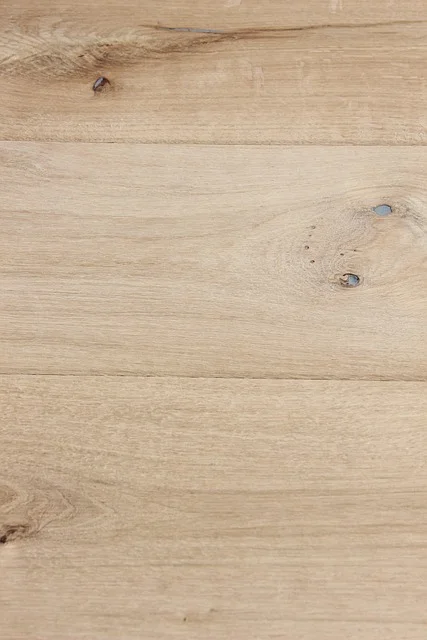
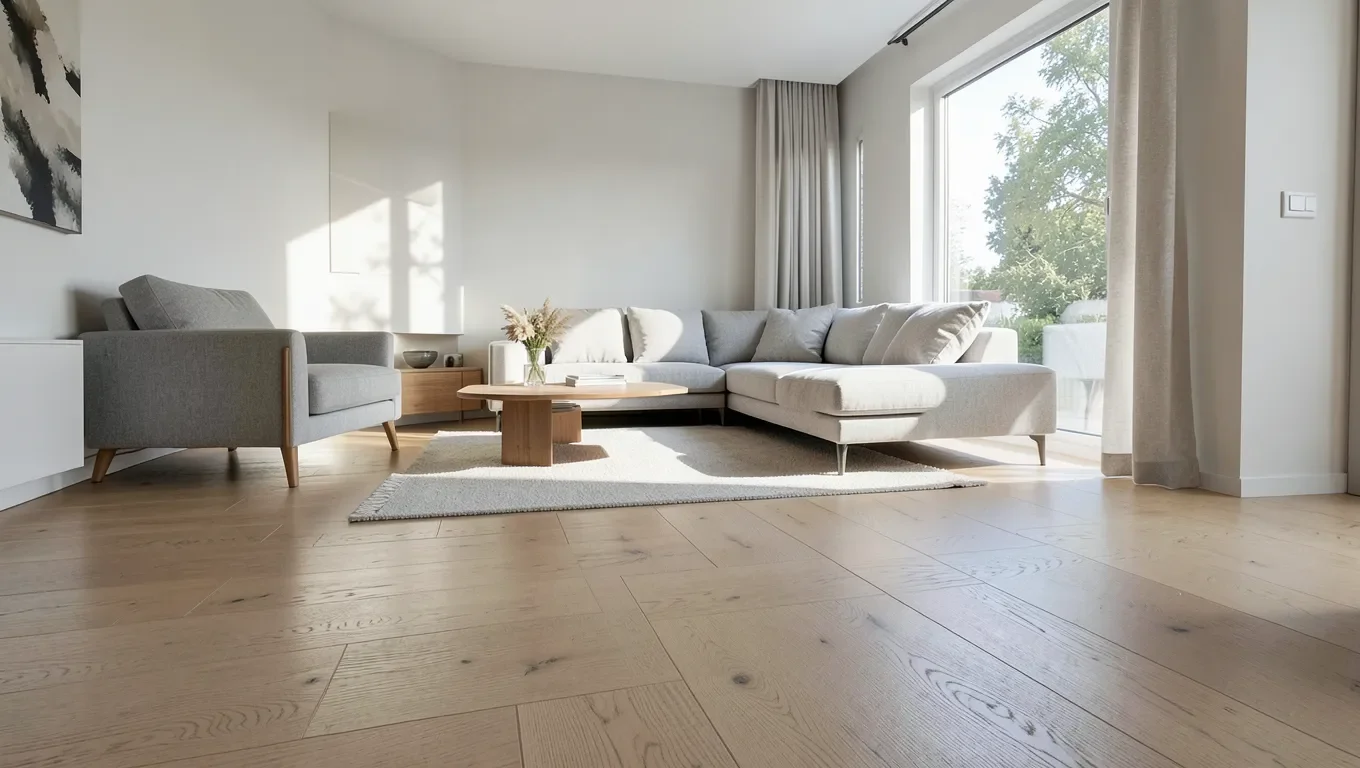
Engineered hardwood is built in layers, and the layer you actually walk on and see is a solid slice of real hardwood, called the wear layer or veneer. It’s cut from the same species you’d get in a solid plank – oak, maple, hickory, walnut – and it shows real wood grain because it is real wood grain, not a photograph of one.
That veneer is bonded under heat and pressure to a core of plywood or high-density fiberboard (HDF), usually with several thin layers running in alternating directions like plywood does. That cross-layered core is the entire point of engineered construction: wood naturally expands and contracts across the grain as humidity changes, and stacking layers at right angles cancels most of that movement out. A solid plank has nothing canceling it out, which is why solid hardwood is pickier about the rooms it can go in. Small, poorly-ventilated rooms like a bathroom are exactly where that pickiness shows up first — see our breakdown of flooring options that actually hold up in a small bathroom for what to use instead.
Engineered Hardwood vs. Laminate: The Difference Most Pages Skip
This is the comparison that actually explains the “is it real wood” confusion, and most articles on this topic go straight to solid-vs-engineered without ever mentioning it. Laminate flooring has zero real wood in it. Its surface is a high-resolution photograph of a wood grain pattern, printed onto paper, then sealed under a clear melamine wear layer. Sand through a laminate floor and you hit printed paper and fiberboard – never wood.
Engineered hardwood’s surface is never printed. It’s a physical, sliced piece of hardwood veneer sitting on top of the core. That’s the actual dividing line between “real wood flooring” and “wood-look flooring” – and engineered hardwood sits firmly on the real-wood side of it, right alongside solid hardwood, just with a different core underneath.
That distinction matters most against laminate. If the comparison you’re actually weighing is engineered hardwood against LVP (luxury vinyl plank) rather than laminate, see our head-to-head LVP vs. engineered hardwood guide for the practical decision factors – moisture tolerance, refinishing, and resale perception.
Engineered vs. Solid Hardwood: Where They Actually Differ
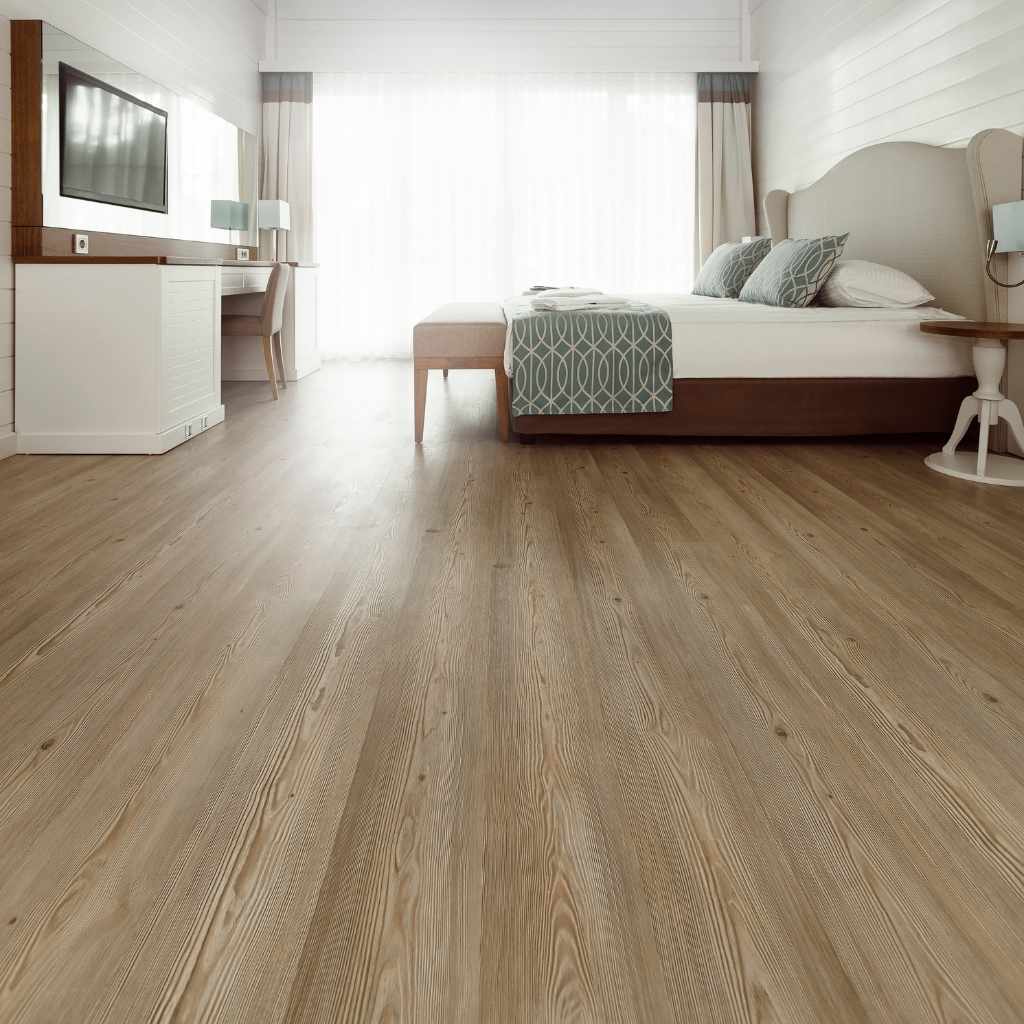
Since both are genuine wood on the surface, the real differences are all below it. Solid hardwood is one piece of wood from top to bottom, typically 3/4 inch thick, and it’s been the traditional choice for generations because it can be refinished many times over decades. Engineered hardwood trades some of that lifetime refinishing capacity for a core that resists warping, cupping, and gapping when humidity swings – something solid wood, as a single piece, can’t do as well.
See our full wood flooring guide for how both stack up against bamboo, laminate, and vinyl if you’re still comparing flooring types broadly rather than just real-wood options.
How Many Times Can You Actually Refinish It?
This is the honest tradeoff, and it’s worth real numbers instead of a vague “fewer times than solid wood.” Engineered wear layers generally fall into three bands: thin veneers around 0.6mm to 2mm, standard veneers around 2mm to 4mm, and thick veneers around 4mm to 6mm. A thin veneer typically can’t be sanded and refinished at all, or only once very lightly. A standard veneer usually supports one to two light refinishes. A thick veneer – closer in practice to a solid floor – can often handle two to four refinishes over several decades.
Solid hardwood, by contrast, is typically 3/4 inch (about 19mm) of wood above the tongue and groove, which is why it can be sanded down and refinished many more times over a home’s lifetime. If long-term refinishing is your priority, check the wear layer thickness on the spec sheet before buying engineered – it’s usually listed, and it’s the single number that determines how the floor ages.
When Engineered Hardwood Is Actually the Smarter Choice
Engineered hardwood isn’t just a cheaper substitute for solid wood – in several situations, it’s the objectively better-performing option because of that stable, cross-layered core:
- Basements and below-grade rooms: solid hardwood is generally not recommended below grade because of ground moisture; engineered hardwood’s stable core handles that environment far better.
- Over radiant floor heating: the repeated heating and cooling cycles that make solid wood crack or gap are largely absorbed by engineered hardwood’s layered core.
- Humid or humidity-swinging climates: kitchens, coastal homes, and rooms without tight humidity control put less strain on an engineered floor’s dimensional stability.
- Installing over concrete slabs: engineered hardwood can be glued or floated directly over concrete in ways solid wood typically can’t.
When Solid Hardwood Still Wins
Solid hardwood earns its higher price in rooms with stable, controlled humidity – a main-floor living room or bedroom in a climate-controlled home, for example – where its main weakness (moisture-driven movement) rarely gets tested. Its thicker wood profile means it can be refinished far more times over the decades, which matters most to buyers planning to keep a home for a very long time or who value the resale perception of “solid hardwood” specifically. If a floor will realistically be sanded and refinished five or more times over its life, solid wood’s extra thickness is what makes that possible.
Maintaining Engineered Hardwood So the Veneer Lasts
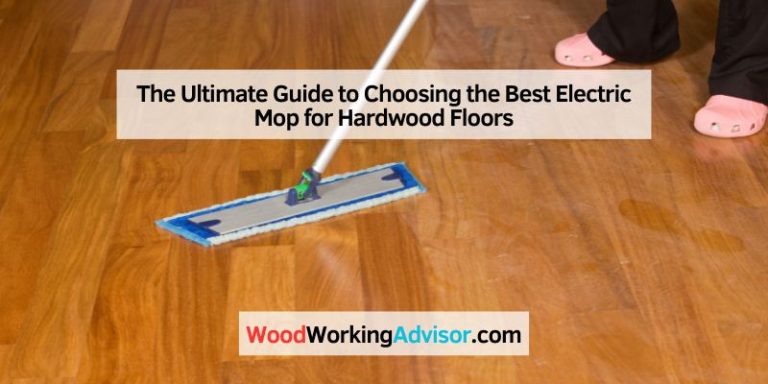
Because the real wood layer on top is thinner than a solid plank, engineered hardwood is less forgiving of two specific mistakes: standing water and abrasive cleaning. Wipe up spills right away rather than letting them sit, use a damp (not wet) microfiber mop, and skip steam mops entirely – the heat and moisture can work into the seams between planks and reach the core underneath the veneer.
Stick to a pH-neutral cleaner made for finished wood floors rather than an all-purpose cleaner or vinegar-and-water mix, which can dull a polyurethane finish over time. For the full room-by-room maintenance routine, including how often to dust-mop versus deep-clean, see our guide to caring for engineered hardwood floors.
Frequently Asked Questions
Is engineered hardwood flooring real wood or fake?
It’s real wood. Engineered hardwood has a solid hardwood veneer as its top wear layer, bonded to a plywood or HDF core. The confusion usually comes from laminate flooring, which is genuinely fake – a printed photo of wood grain under a plastic layer, with no real wood at all.
How thick is the real wood layer on engineered hardwood?
Wear layers typically range from about 0.6mm on thin, budget veneers up to about 6mm on thick, premium veneers. The thickness directly determines how many times the floor can be sanded and refinished – thin veneers usually can’t be refinished at all, while thick veneers can often handle two to four refinishes.
How many times can you refinish engineered hardwood?
It depends on the wear layer thickness: thin veneers (0.6mm-2mm) generally support zero to one light refinish, standard veneers (2mm-4mm) support one to two, and thick veneers (4mm-6mm) can often handle two to four refinishes over several decades. Solid hardwood, with roughly 19mm of wood above the tongue and groove, supports many more refinishes over its lifetime.
Is engineered hardwood better than laminate?
For anyone who wants real wood, yes – laminate has no actual wood in it, while engineered hardwood has a genuine hardwood surface. Laminate can be more scratch- and moisture-resistant in some cases, but it cannot be sanded or refinished at all since there’s no wood to sand.
Conclusion
Engineered hardwood is real wood – a genuine hardwood veneer bonded to a stable plywood or HDF core, not a printed imitation like laminate. The tradeoff for that stability is a thinner wear layer than solid wood, which limits how many times it can be refinished over its life. In basements, over radiant heat, or in humid rooms, that tradeoff usually works in engineered hardwood’s favor; in a stable, climate-controlled space where decades of refinishing matter more, solid hardwood still has the edge. Either way, what you’re standing on is genuine wood, not a picture of it.
Sponsored / affiliate links. As an Amazon Associate I earn from qualifying purchases. I may earn additional commission from eligible campaigns.