Mahogany Wood Marker: Best Picks & Shade-Match Guide
A mahogany wood marker is a touch-up pen filled with wood-tone dye that fills in scratches and worn spots on reddish-brown furniture — not a labeling tool, despite the name. Using the wrong shade leaves a lighter, more obvious patch than the original scratch, since mahogany’s color ranges from bright red-brown to deep chocolate. This guide covers how to match your shade, apply the marker correctly, and when a marker alone won’t fix the damage.
What Is a Mahogany Wood Marker?
Best Mahogany Marker Pick
 |
Minwax Wood Finish Stain Marker, Red Mahogany – $6.95 A true Red Mahogany shade in the .33 oz stain-marker format this guide’s color-match section walks through — the closest off-the-shelf match for most reddish-brown mahogany furniture.
|
As an Amazon Associate we earn from qualifying purchases.
A mahogany wood marker is a touch-up pen or fill stick loaded with reddish-brown wood-tone dye or stain, made to hide scratches, nicks, and worn edges on mahogany-finished furniture, cabinets, and floors. It is not a tool for labeling or identifying wood species — that confusion comes from the word “marker,” but the product itself is a cosmetic repair pen, sold in the same aisle as furniture polish and wood filler.
Because mahogany covers several related species (Honduran, Cuban, and African/Khaya mahogany) with color that ranges from pinkish-tan when freshly cut to a deep reddish-brown after years of UV exposure, “mahogany” on a marker label is a starting shade, not a guaranteed match — see the shade-matching section below before you buy. For a deeper look at telling mahogany species apart by color and grain, see our mahogany wood identification guide.
Types of Mahogany Wood Markers
Three formats cover most repair needs, and many kits combine more than one:
| Format | Best for | Limitation |
|---|---|---|
| Oil-based stain marker (felt tip) | Thin surface scratches that haven’t broken the finish | Color sits on the surface — won’t fill depth |
| Wax fill stick | Deeper scratches and small gouges | Needs a marker or blending to match surrounding grain |
| Combo touch-up kit (marker + wax stick) | Mixed damage — light scratches and small gouges on the same piece | Usually one general “mahogany” shade, not species-specific |
For a broader look at stain-marker options beyond mahogany-specific products, see our wood finish stain marker guide.
How to Match Your Mahogany’s Exact Shade
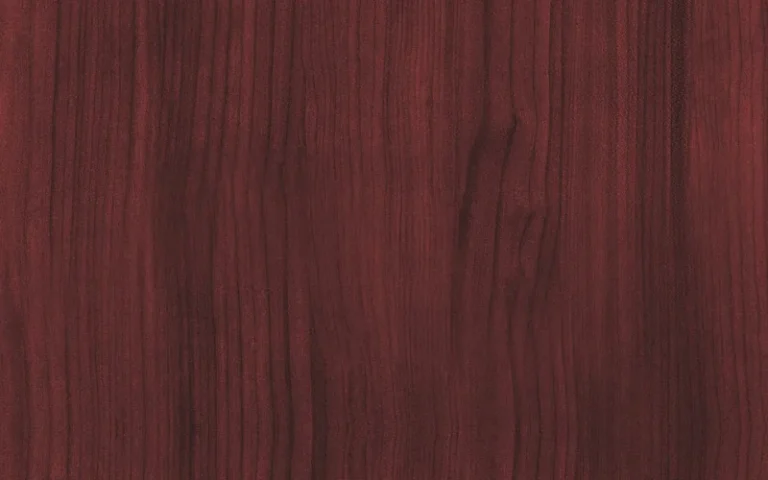
“Mahogany” on a marker cap usually means Minwax’s Red Mahogany, a warm reddish-brown — but real mahogany furniture spans a much wider range depending on species, finish, and age. Freshly finished Honduran mahogany often reads more pink-tan; the same piece deepens to a darker red-brown within months of sun exposure. African mahogany (Khaya, a common substitute species) tends toward a duller, more purplish brown.
Always test the marker on a hidden edge, like the underside of a tabletop or the back of a drawer, before touching a visible scratch. If the stock “mahogany” shade runs too red, a light layer of a natural or golden-brown marker underneath can neutralize it; if it runs too light, a second pass after the first coat dries deepens the color.
📊 Honduran mahogany measures roughly 800 lbf on the Janka hardness scale — noticeably softer than red oak (1,290 lbf) — which is one reason a wood-tone marker’s dye absorbs quickly and rarely needs more than two passes. Source: Janka Hardness Test, Wikipedia
How to Use a Mahogany Wood Marker

- Clean the area: Wipe the scratch with a soft, dry cloth to remove dust, wax, and grease so the marker’s dye can grip the wood.
- Test on a hidden spot: Run the marker on an inconspicuous edge or the underside of the piece first to confirm the shade matches before touching the visible damage.
- Apply thin layers along the grain: Draw the marker along the direction of the wood grain, not across it, using light pressure. Start with one pass — you can always add more.
- Let it set, then buff: Wait 5 to 15 minutes for the color to stop transferring, then buff gently with a soft cloth to blend the new color into the surrounding finish.
- Seal high-use surfaces: On tabletops, desks, and other frequently touched spots, add a thin coat of furniture wax or clear finish over the repair once the marker has fully cured, typically after 24 hours.
Minwax markets its Wood Finish Stain Markers as containing its actual wood-stain formula rather than a plain surface dye, which is why the same marker can be used both for a quick touch-up and, with a few extra passes, a slightly deeper color repair.
When a Marker Won’t Fix It

A marker fixes color, not depth or structure. Deep gouges, water rings that have lifted the finish, sun-faded panels, and separated veneer all need more than a stain pen. For those repairs — including when to bring in wax sticks, when to reglue veneer, and when to call a professional — see our full mahogany wood repair guide.
Common Mistakes to Avoid
- Skipping the hidden-spot test — mahogany’s shade varies too much to trust the cap color alone.
- Applying across the grain instead of along it, which leaves a visible cross-hatch under raking light.
- Pressing too hard on the first pass — it’s easier to add a second thin layer than to lighten an over-dark patch.
- Skipping the seal coat on tabletops and desks, so the touch-up wears off faster than the surrounding finish.
Frequently Asked Questions
Can you use a regular Sharpie as a mahogany wood marker?
No. A permanent marker’s ink sits on top of the finish instead of blending into it, and its color is flat black-brown rather than a wood-tone dye. A dedicated wood stain marker like Minwax Red Mahogany is formulated to soak into the scratch and match reddish-brown wood tones.
Does a mahogany wood marker actually stain the wood, or just cover it?
It does both. Oil-based stain markers contain real wood stain, so the color penetrates bare wood fibers exposed by the scratch rather than sitting as a surface coating. On finished (lacquered or varnished) wood, the marker mainly recolors the exposed scratch line, which is why testing on a hidden spot first matters.
How long does a mahogany wood marker take to dry?
Most oil-based touch-up markers set within 5 to 15 minutes and can be buffed with a soft cloth once the color stops transferring. Full cure for a topcoat or wax seal over it takes closer to 24 hours, so avoid heavy use of that surface the same day.
What’s the difference between a wood marker and a wax fill stick?
A marker deposits color only, so it works on thin surface scratches that haven’t broken through the finish. A wax fill stick physically fills a gouge or deeper scratch with colored wax first; many repair kits pair a marker for color-matching with a wax stick for depth, using the marker to blend the wax patch into the surrounding grain.
Conclusion
A mahogany wood marker is a fast, inexpensive fix for surface scratches — as long as the shade is tested first and applied along the grain in thin layers. For anything deeper than a surface scratch, pair it with a wax fill stick or move up to a full repair.
Sponsored / affiliate links. As an Amazon Associate I earn from qualifying purchases. I may earn additional commission from eligible campaigns.