Is MDF Waterproof? The Real Answer (And What Protects It)
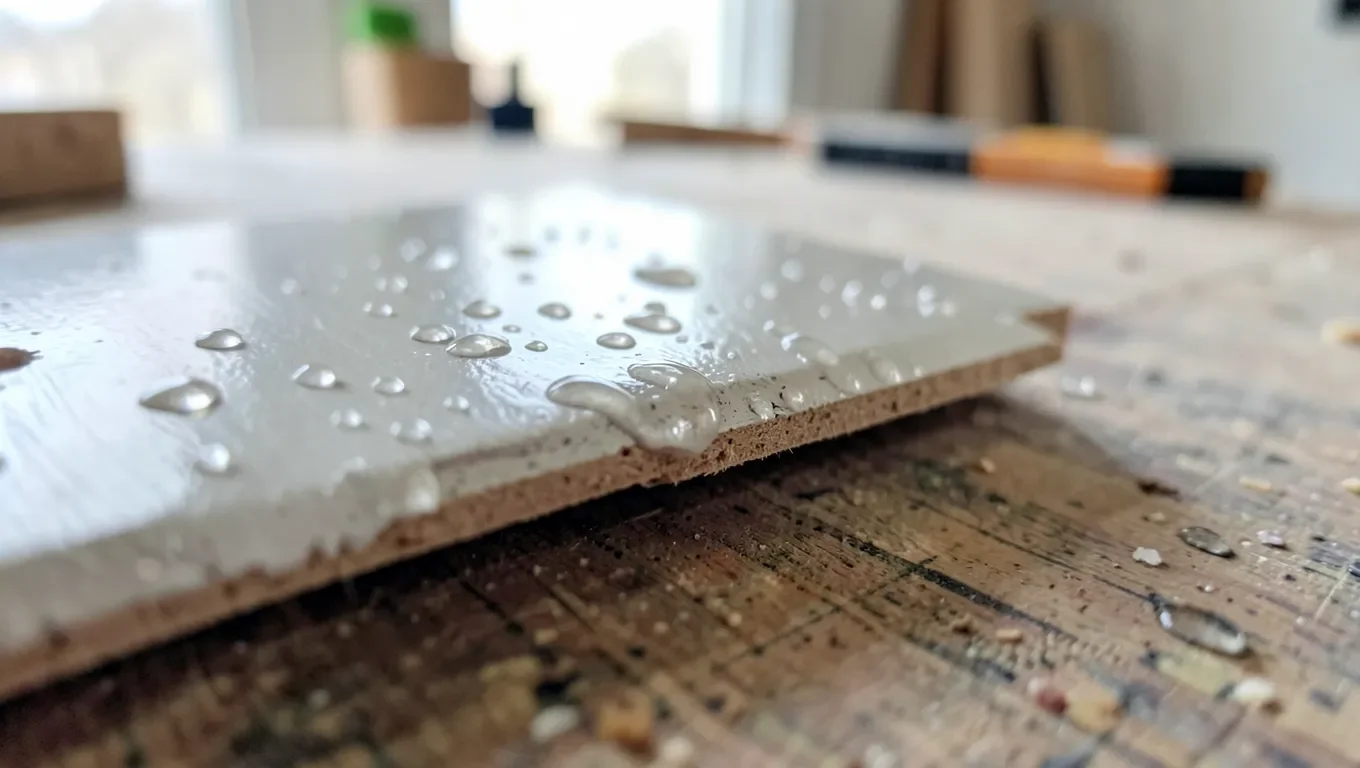
No, standard MDF is not waterproof. It will absorb water, swell at the edges, and lose strength if it stays wet – no amount of paint changes the base material. What trips people up is the labeling: plenty of MDF sold online is marketed as “waterproof” or “moisture-resistant” when it’s really neither, or something in between.
This guide gives you the direct verdict, explains what “waterproof,” “water-resistant,” and “moisture-resistant” actually mean when you see them on an MDF product label, and covers the real ways to protect a standard board when you can’t avoid a little dampness. If your board is already wet, What Happens If MDF Gets Wet covers the damage timeline and repair-vs-replace call in detail – this page focuses on the yes/no answer and what to buy or do about it.
Is MDF Waterproof? The Short Answer
No. Standard MDF (medium-density fiberboard) is wood fiber and resin pressed under heat, and none of that composition repels water. Mills dry the board to roughly 7-9% internal moisture content before it ships, and once it sits in a humid room or takes direct contact with water, it absorbs faster than solid wood or plywood because there’s no grain direction to slow the water down – it just wicks straight into the exposed fibers.
That’s true even for “moisture-resistant” MDF (often called MR-MDF or green-core MDF, since the resin is usually tinted green in manufacturing). MR-MDF resists moisture for longer and shrugs off humidity swings better than standard board, but it is still not waterproof – submerge it or leave it wet for days and it will swell and break down, just more slowly.
Best For Checking Hidden Moisture
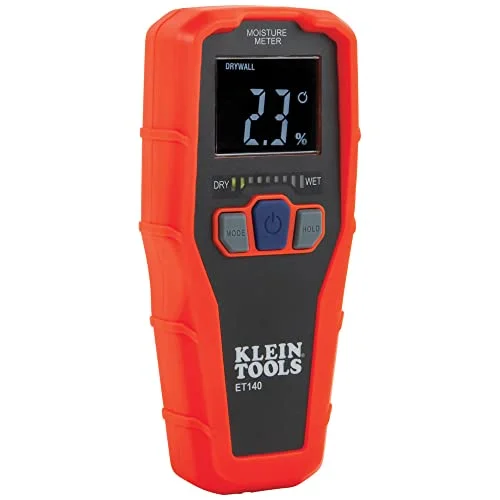 |
Klein Tools ET140 Pinless Moisture Meter – $49.97 Since no MDF is truly waterproof, this pinless meter checks a sealed panel’s internal moisture reading in seconds, without drilling a test hole, so a failing seal gets caught before the board actually swells.
|
Waterproof vs. Water-Resistant vs. Moisture-Resistant MDF: What the Label Actually Means
These three words get used almost interchangeably in product listings, but they describe very different levels of protection. If you’re comparing boards or sealants, this is the distinction that actually matters:
- Waterproof means the material is unaffected by sustained water contact or submersion. No standard or MR-MDF product meets this bar on its own – true waterproof board materials are a different category entirely (covered below).
- Water-resistant means the material sheds or slows water for a limited time or amount – splashes, brief spills, high humidity – without immediate damage. A well-sealed standard MDF panel can reach this level for everyday use, but only as long as the seal stays intact.
- Moisture-resistant (MR-MDF) is a manufacturing spec, not a surface treatment. The core itself is formulated to absorb moisture more slowly and swell less than standard MDF, which is why it’s the base material used in most bathroom cabinets and kitchen kickboards – but it still needs sealed edges and isn’t rated for standing water or outdoor exposure.
Practically: if a listing says “waterproof MDF” and the price is close to standard board, that’s marketing language for moisture-resistant, not a literal claim. Check the spec sheet for a swell-rate or water-absorption percentage (usually tested to EN 317 or similar) rather than trusting the word on the box.
How to Protect MDF From Moisture
Since no MDF is fully waterproof, protection comes down to keeping water away from the exposed fibers – especially the cut edges, which absorb water far faster than the smooth faces because that’s where the raw fiber structure is exposed.
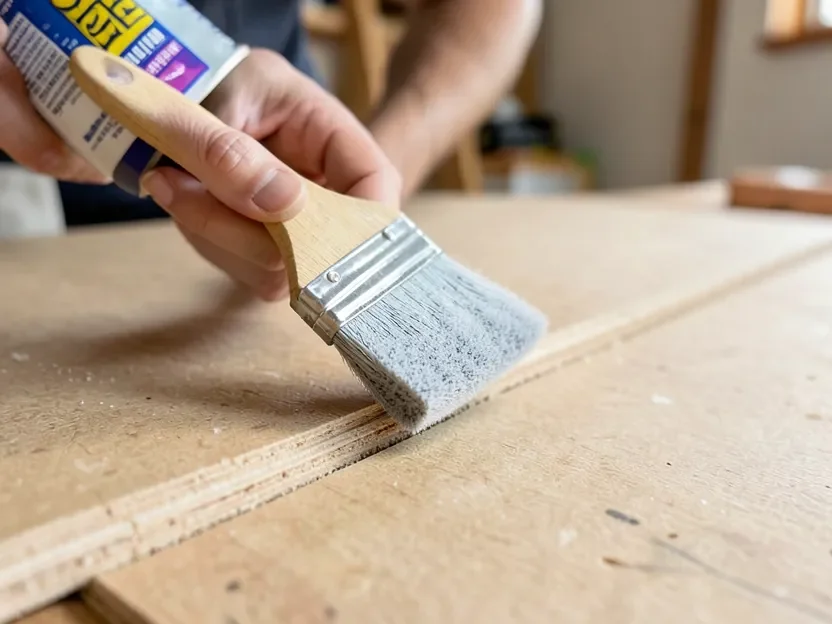
A three-step approach holds up well for furniture, shelving, and cabinet parts that see occasional dampness (not submersion):
- Seal every cut edge first. A dedicated MDF sealer soaks into the fibers rather than sitting on top – two thin coats, sanded lightly between, beats one thick coat that just skins over.
- Prime and paint the faces. Oil-based or water-resistant acrylic paints add a real barrier; a polyurethane or varnish topcoat over paint adds another layer of protection and is worth it in kitchens and bathrooms.
- Check it periodically. A pinless moisture meter lets you check the internal moisture reading in seconds without drilling a test hole – useful for catching a failing seal before the board actually swells, especially in a spot you can’t inspect visually (under a sink cabinet, behind a baseboard).
For the full storage-and-sealing method (including how to flatten a board that’s already started to bow), see How to Stop MDF From Warping and Does MDF Warp? – both cover the sealing process in more depth than fits here.
If MDF Has Already Gotten Wet
Briefly: wet MDF swells within hours and, unlike solid wood, doesn’t shrink back once it dries – the fibers separate rather than just expanding, so a soaked edge is usually a replacement situation rather than a sand-and-reseal fix. How bad it is depends on how long it was wet and whether the damage is edge-only or has spread into the face. For the full 24-48 hour response plan, how to judge whether a piece is salvageable, and how MDF compares to plywood and solid wood for water damage specifically, see What Happens If MDF Gets Wet.
Truly Waterproof Alternatives to MDF
If a project genuinely needs a waterproof board – not just moisture-resistant – MDF isn’t the right material at any grade. These hold up to sustained water contact where MDF can’t:
| Material | Water Performance | Trade-off vs. MDF |
|---|---|---|
| Marine-grade WBP plywood | Genuinely waterproof glue bond; can handle sustained wet exposure | Higher cost, visible grain/voids, heavier |
| HDPE/PVC board (e.g. “King StarBoard” type sheet) | Fully waterproof, won’t swell, rot, or delaminate | Doesn’t hold screws or glue like wood fiber; more expensive per sheet |
| WPC (wood-plastic composite) board | Water-resistant to waterproof depending on formulation | Heavier, less rigid over long spans, limited finish options |
| Exterior-grade MR-MDF | Better moisture resistance than standard MDF, still not waterproof | Not a true swap – same caveats as MR-MDF above |
For anything that sits in standing water, gets pressure-washed, or lives outdoors uncovered, marine plywood or an HDPE sheet is worth the extra cost – a sealed MDF panel in that environment is a matter of when, not if, it fails.
Frequently Asked Questions
Is MDF waterproof?
No. Standard MDF absorbs water and swells; even moisture-resistant (MR-MDF) grades only slow that process down, they don’t prevent it. A sealed and painted MDF panel can be water-resistant for everyday splashes, but it’s never truly waterproof.
What’s the difference between waterproof and moisture-resistant MDF?
Waterproof means unaffected by sustained water contact – no MDF grade qualifies. Moisture-resistant (MR-MDF) is a manufacturing spec where the core absorbs moisture more slowly and swells less than standard MDF, which is why it’s used in bathroom cabinets, but it still needs sealed edges and isn’t rated for standing water.
Can MDF be used in bathrooms?
Yes, if it’s moisture-resistant (MR-MDF) grade and every edge and face is properly sealed and painted. Keep it away from direct spray zones like inside a shower stall – vanity cabinets and shelving away from direct water contact are the safer use case.
How do you waterproof MDF board?
Seal every cut edge with a dedicated MDF sealer (two thin coats), then prime and paint the faces with an oil-based or water-resistant acrylic paint, optionally topped with a polyurethane or varnish coat. This gets you water-resistant, not waterproof – for a truly waterproof board, use marine plywood or an HDPE sheet instead.
Is there a material as strong as MDF that’s actually waterproof?
Marine-grade WBP plywood and HDPE/PVC sheet both hold up to sustained water contact where MDF can’t, and marine plywood in particular matches or exceeds MDF’s rigidity for most furniture and cabinetry uses. Both cost more per sheet than MDF.
Conclusion
Standard MDF is not waterproof, and neither is moisture-resistant MDF – MR-MDF just fails more slowly. If you’re building something that will see occasional dampness, sealed edges plus a good paint system get you real water resistance. If it needs to survive standing water or outdoor exposure, skip MDF entirely and use marine plywood or an HDPE sheet. And if a board has already gotten wet, What Happens If MDF Gets Wet walks through whether it’s worth saving.
Sponsored / affiliate links. As an Amazon Associate I earn from qualifying purchases. I may earn additional commission from eligible campaigns.