Boardsmith Cutting Board Review: Is It Worth It?
Boardsmith is worth buying if you want a premium end-grain wood board and will oil it regularly; choose maple for the best balance of durability, knife care, and easier cleaning, or walnut for a darker board with a slightly softer surface. Skip that care and you raise the risk of warp, cracks, lingering moisture, and a duller edge over time. This review covers wood choice, construction, food-safety and maintenance tradeoffs, knife-friendliness, and where Boardsmith fits versus other high-end boards.
Verdict

Based on the manufacturer’s specs and published product details, Boardsmith fits serious home cooks: premium direct-to-consumer boards, wood choices that matter, and a construction style that is kinder to knives than harder surfaces. The tradeoff is maintenance. Wood boards are not low-care tools, and the ownership value depends on whether you will dry them fully, oil them on schedule, and avoid leaving them wet in a sink or against a backsplash.
Pros and cons
- Pros: End grain construction is gentler on knife edges than hard, flat boards.
- Pros: Maple, walnut, and cherry give clear choice by color and care preference.
- Pros: Premium butcher-block-style boards can stay stable and useful for heavy prep when sized well.
- Cons: The board still needs oiling, drying, and moisture control.
- Cons: Premium pricing raises the bar on long-term value.
- Cons: Deep grooves, warp, and black staining are real failure modes if care slips.
Specs at a glance
| Item | What Boardsmith offers | Why it matters |
|---|---|---|
| Brand | Boardsmith | Premium direct-to-consumer wood cutting boards. |
| Wood options | Maple, walnut, cherry | Color, hardness, and stain visibility change the ownership experience. |
| Construction | End grain and butcher block styles | End grain is kinder to knives; butcher block styles can suit heavier countertop use. |
| Typical use | Daily prep, heavy prep, countertop use | Best for buyers who want a long-term board, not a disposable surface. |
| Care burden | Regular oiling, full drying, moisture control | Wood needs routine maintenance to resist warp, cracking, and staining. |
| Buyer profile | Serious home cooks | Best when knife care and long ownership value matter more than low maintenance. |
Cutting board matrix
Use this matrix to narrow Boardsmith’s wood choices by upkeep, knife feel, and how well each color hides use marks. The best board is the one you will maintain, because neglected wood loses the safety and longevity advantage that made it appealing in the first place.
| Wood | Likely maintenance burden | Knife-friendliness | Stain visibility | Best user type |
|---|---|---|---|---|
| Maple | Moderate; needs oiling and dry storage | Very good in end grain form; a hard, durable surface | High visibility because of the light color | Buyers who want the most practical balance of durability and food prep |
| Walnut | Moderate; same care, but darker wood can make wear harder to read | Very good; slightly softer feel than maple for many users | Lower visibility for light stains, though dark blotches can still show | Buyers who want a premium look and a board that reads less “busy” in the kitchen |
| Cherry | Moderate to higher if you want the patina to stay even | Very good; middle-ground feel | Medium visibility; color change over time is part of the appeal | Buyers who like a warmer tone and accept that the board will age visually |
Quick pick by cooking style and kitchen size
For a compact kitchen or small sink, choose the size you can wash, dry, and store without balancing it on edge. For heavy prep, a larger and thicker board is more stable and more forgiving, especially for chopping vegetables, breaking down poultry, or handling a lot of sliced fruit that would otherwise flood a small surface.
Say your prep is mostly weeknight vegetables, garlic, and herbs on a narrow counter. A smaller end-grain board can make sense if it still gives enough landing space for the knife and keeps the board easy to lift and dry. If you routinely trim roasts or portion several pounds of produce at once, a thicker butcher block style is the safer fit because it resists movement and tolerates repeated impact better.
Who is it for?
Boardsmith is for buyers who want a premium wood board for daily cooking, care about knife edge wear, and are willing to maintain the board. It is also a strong fit if you want a countertop-worthy piece for heavy prep and plan to keep it for years rather than treat it as a budget consumable.
Best fits
- Home cooks who prep often and want a knife-friendlier surface.
- Buyers who value countertop stability and a heavier board.
- Shoppers choosing between maple, walnut, and cherry for a specific look.
Not ideal
- Low-maintenance shoppers who do not want regular oiling.
- Small-sink kitchens where drying a large board is awkward.
- Anyone expecting wood to be automatically sanitary without care.
What works
Boardsmith’s main strength is the combination of end grain construction, premium wood options, and a DTC buying path that aims at buyers who know why they want wood instead of plastic or bamboo. End grain is kinder to knives than harder surfaces because the blade meets more fiber ends and less direct resistance, which can reduce the harsh cutting feel and slow edge wear.
End grain and knife friendliness
End grain cutting boards are a strong choice when knife edges matter. The cutting surface can feel softer because the knife is meeting the ends of wood fibers, not slicing across them, so the board is less abrasive than many flat, hard alternatives. That does not eliminate sharpening, but it can lower the rate at which a good edge feels tired.
Stability and heavy-prep usefulness
Butcher block boards, especially thicker ones, add mass and help the board stay put during heavy prep. That matters if you chop hard, move quickly, or work with dense ingredients. A thicker board also tends to feel more like a workstation than a temporary cutting surface, which is part of the ownership value premium buyers expect.
Wood choice tradeoffs for long ownership
Maple brings a hard, light-colored surface that suits general food prep well. Walnut is darker and can look more refined, while cherry sits between the two and will patina over time. Those visual differences are not cosmetic only; they affect how easy it is to spot stains, drying marks, and wear lines.
Direct-to-consumer buying strengths
Boardsmith’s direct-to-consumer model usually means the brand can center the product around board choice rather than mass-market bundling. For buyers comparing premium boards, that matters because the decision becomes more about construction, species, and size than about flashy accessory kits. It also makes price comparison more transparent, which is useful in this category.
What does not?
The biggest drawback is maintenance. A wood cutting board needs regular oiling, full drying, and moisture control, and that requirement does not disappear just because the board is premium. If you leave it wet, soak it, or store it while damp, you increase the odds of warp, cracking, and black staining in areas that stay wet too long.
Failure cases to watch
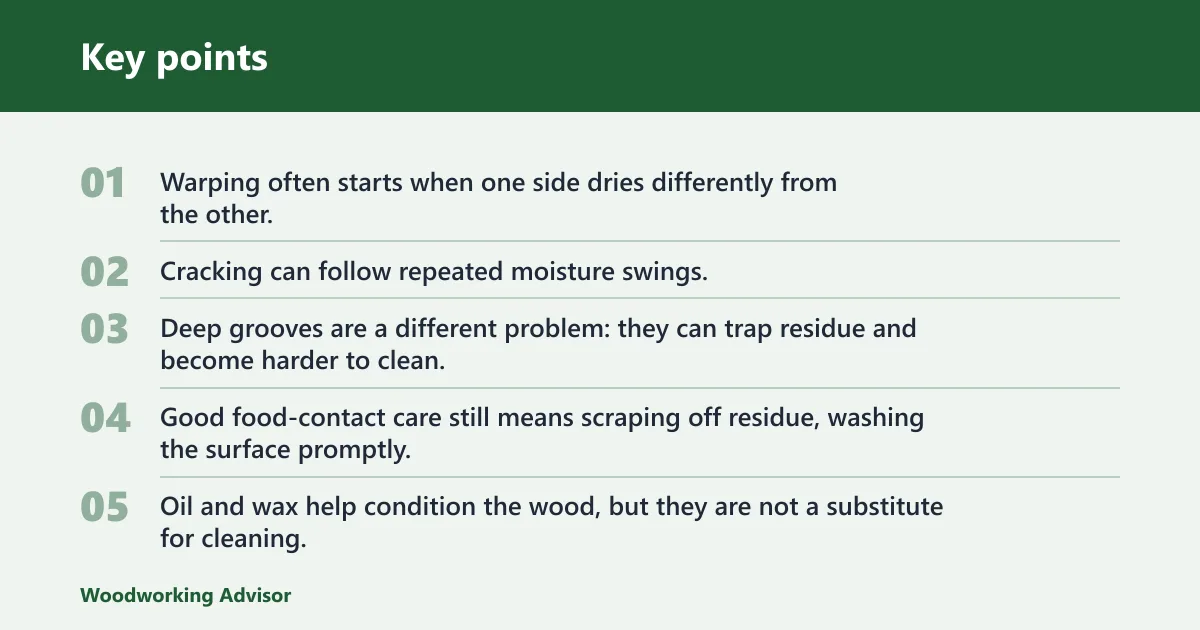
Warping often starts when one side dries differently from the other. Cracking can follow repeated moisture swings, especially if the board is neglected after washing. Deep grooves are a different problem: they can trap residue and become harder to clean, which is why knife-friendly construction still needs periodic inspection and eventual resurfacing when wear builds up.
Sanitation limits matter
Wood boards are not magic surfaces. Good food-contact care still means scraping off residue, washing the surface promptly, drying it fully, and preventing standing moisture. Oil and wax help condition the wood, but they are not a substitute for cleaning. If sanitation is your top concern, the right answer is disciplined care, not wishful thinking.
Price pressure versus cheaper boards
Premium wood boards cost more than basic plastic or lower-end wood options, so the value question is whether you will use the board enough to justify that cost. Serious home cooks usually can. Occasional users may not, especially if the board spends more time stored than on the counter.
How does it compare with John Boos and Larch Wood?
Boardsmith sits in the same premium conversation as John Boos and Larch Wood, but the details differ enough to matter. Boardsmith leans into end grain wood board options and DTC buying, while John Boos is widely associated with butcher blocks and commercial-style heritage, and Larch Wood is known for end grain boards with a distinct presentation. Choose based on construction, care tolerance, and what size fits your kitchen.
Material and construction differences
John Boos boards often appeal to buyers who want a classic butcher-block profile and a known name in the category. Larch Wood often attracts people who prioritize end grain presentation and a premium visual finish. Boardsmith belongs in that same premium lane, with maple, walnut, and cherry options that let you tune hardness, stain visibility, and appearance.
Maintenance expectations versus competitors
Maintenance expectations do not disappear with any of these brands. End grain boards still need oiling, drying, and periodic inspection. If one competitor offers a lower entry price, that can matter for a buyer who wants a decent wood board without committing to a top-tier budget; if another offers a size or style better matched to your counter, that may be the better buy even if the brand is less talked about.
When a competitor may be the better buy
Choose John Boos if you want a more butcher-block-forward identity and find the size or construction that fits your kitchen better. Choose Larch Wood if the end grain look and finish are worth paying for and you accept premium upkeep. Choose Boardsmith if you want a direct-to-consumer premium board with clear species choices and a strong knife-care argument.
Should you buy it?
Buy Boardsmith if your budget allows a premium board and you will actually maintain it. It makes the most sense for people who prep food often, value knife edges, and want a stable wood board that can stay in service for a long time. If you want a set-it-and-forget-it surface, look elsewhere.
Boardsmith cutting board review checklist
- Wipe the board clean after each use and dry both sides fully.
- Do not soak it or leave it in standing water.
- Apply food-safe mineral oil as needed so the surface stops looking dry.
- Store it where air can reach both faces, not flat against a damp wall.
- Check for raised grain, edge checking, or new cracks after washing.
- Inspect cutting grooves for residue buildup and clean them early.
- Reapply oil before the board looks chalky or thirsty.
Maintenance cost over time
The ongoing cost is usually low in dollars but real in attention. A bottle of food-grade mineral oil can last a long time because you use small amounts, and a conditioner costs far less than replacing a premium board. The true cost is consistency: if you skip care, the board’s lifespan and cutting feel suffer together.
Alternatives

Thirteen Chefs Mineral Oil is the practical companion purchase for any wood board, including Boardsmith. At $7.99 for 8 oz, it is a low-cost way to reduce dryness, cracking, and warp risk when you maintain a board properly. The drawback is simple: oil helps condition wood, but it does not fix damage, clean residue, or replace careful drying.
Frequently asked questions
What is the best cutting board to buy?
The best cutting board is the one that matches your cooking volume, sink size, and maintenance habits. For serious home cooks, an end-grain wood board is often the best blend of knife care and work surface feel, but only if you are willing to dry and oil it on schedule.
What is the best quality cutting board?
The best quality cutting board is usually a well-made end-grain hardwood board with stable construction and a size that fits your prep routine. Quality is not only about appearance. It also means fewer warping problems, less knife drag, and a board you can keep in service for years.
What is the best brand of cutting boards?
The best brand depends on what you value. Boardsmith belongs near the top if you want premium wood choices and direct-to-consumer shopping. John Boos is often the reference point for butcher-block buyers, while Larch Wood appeals to shoppers who want a premium end-grain look and feel.
Are Boardsmith cutting boards good?
Yes, Boardsmith cutting boards are a good option for buyers who want premium wood, end-grain knife friendliness, and a board designed for long-term ownership. The catch is maintenance. If you do not want to oil and dry a board carefully, the fit drops fast.
Are Boardsmith cutting boards worth it?
They are worth it if you will use the board often enough to benefit from better knife feel, stable prep space, and a premium wood species choice. They are less worth it for casual cooks who want the cheapest workable board and do not want ongoing care.
Which wood is best for a Boardsmith cutting board?
Maple is the safest default for most buyers because it balances hardness, food-prep suitability, and a clean look. Walnut is attractive if you want a darker board and a slightly softer feel. Cherry works well if you like how it ages and do not mind visible patina over time.
How do I choose the right size and thickness for a wood cutting board?
Choose size from your prep volume and counter space, not from appearance alone. A larger, thicker board suits heavy prep and countertop use because it stays steadier and gives you more working area. A smaller board is easier to wash, dry, and store in tight kitchens.
Is an end grain Boardsmith board better for knife edges?
Yes, end grain is generally gentler on knife edges than harder flat surfaces because the blade cuts into the ends of wood fibers rather than across them. That does not make the board maintenance-free, but it does make it a strong choice if edge retention matters.
Are Boos cutting boards good?
Yes, John Boos boards are generally well regarded, especially for buyers who want a premium butcher-block style board with a long-standing reputation. They still need the same basics as any wood board: drying, oiling, and protection from soaking or repeated moisture exposure.
Are Boos cutting boards worth it?
They are worth it if you want a substantial butcher block and the available size, thickness, and price fit your kitchen. If you mainly want end-grain knife friendliness in a specific wood species, Boardsmith or Larch Wood may fit better depending on the exact model.
Sponsored / affiliate links. As an Amazon Associate I earn from qualifying purchases. I may earn additional commission from eligible campaigns.