Best End Grain Boards for Cooks (2026): we compared
The best end grain cutting board is dense, flat, and built with tight glue lines, a food-safe finish, and roughly 1.5 inches or more of thickness. Pick thicker boards for heavy prep and lighter upkeep if you cut every day. Poor boards dull knives faster, warp sooner, and cost more to maintain or replace. This guide compares end grain boards by knife protection, maintenance burden, and build and finish quality so you can buy or build the right one.
Quick comparison
| Product | Badge | Best for | Price | ||
|---|---|---|---|---|---|
 |
muso wood Black Walnut End Grain Cutting Board, 20 x 15 Inchmuso wood | Upgrade pick | 20 x 15 Inch black walnut end grain | $159.99
Price as of 10 Oct 2026
|
View |
 |
Labell Maple End-Grain Butcher Block, Juice Groove, 12 x 16LABELL | Budget pick | 12 x 16 x 1.25 in Canadian maple | $64.99
Price as of 10 Oct 2026
|
View |
 |
EZ FURNITURE Extra Large (XL) Teak End Grain Cutting Board,EZ FURNITURE | Also great | 24 x 18 x 1.5 extra large teak | $99.99
Price as of 10 Oct 2026
|
View |
 |
The Boardsmith Maple End Grain Cutting Board – Premium EndThe Boardsmith | Our pick | Medium sustainably sourced maple wood | $269.99
Price as of 10 Oct 2026
|
View |
Use the table to compare the boards by species, thickness, finish burden, and how forgiving they are on knives. The best choice depends less on style and more on how often you cut, what knives you own, and how much care you are willing to give the board later.
📊 The board cost $140. Source: Shanson.
How we chose
We compared boards on five practical criteria: wood species, thickness, finish type, repairability, and knife gentleness. We also weighed maintenance burden, counter stability, and whether the design details help or hurt daily cleanup.
Only boards with clear end grain construction, known dimensions, and enough information to judge finish or handling features made the cut. That matters because end grain boards are made by cutting strips and gluing them back with the end grain facing up, and the build details change how they wear.

muso wood Black Walnut End Grain Cutting Board: best for heavy prep
This is the safest default for most buyers who want a large walnut board with a thick body and a practical juice groove. At roughly 20 x 15 inches and 2 inches thick, it gives you more mass, more knife forgiveness, and more margin against flex during chopping.
Based on the spec sheet and review patterns, the walnut surface should be gentle enough for daily chef’s knives while still resisting deep gashes better than many other wood boards. The dual-sided layout is useful if you want one side for wet prep and the other for dry service.
The honest drawback is weight and upkeep. A 2-inch board is less convenient to move, and walnut still needs regular oiling and careful drying to stay flat and clean.
Labell Maple End-Grain Butcher Block: best budget pick
This board fits buyers who want a lower-cost maple end grain board and do not need a very thick slab. At about 12 x 16 x 1.25 inches, it is lighter, easier to store, and easier to lift for cleaning than larger butcher blocks.
Maple is a hard, food-safe hardwood with a clean, pale look that hides less than walnut but suits bright kitchens. The pre-oiled condition is useful out of the box, and the deep juice groove adds value for fruits, roasts, and tomatoes.
The drawback is thickness. A 1.25-inch board gives up some mass and long-term sanding margin, so it is a better fit for lighter prep than for repeated heavy cleaver work.
EZ FURNITURE Extra Large Teak End Grain Cutting Board: best for wet prep
This is the pick for cooks who want a large reversible board with more surface area and better moisture resistance. A roughly 24 x 18 x 1.5-inch board suits bigger prep sessions, and the handgrips make it easier to carry despite the larger footprint.
The food-grade mineral oil blend and teak construction make it appealing for frequent cleaning cycles and damp ingredients. Based on the spec sheet, it also works well as a gift because it arrives boxed and ready to present.
The drawback is that teak’s open-oil character can make finish maintenance feel different from maple or walnut, and the extra-large footprint may crowd a small counter. Juice grooves and handles also add features that some buyers do not need.
The Boardsmith Maple End Grain Cutting Board: best for fit and finish
This is the premium maple choice for buyers who care about edge detail, stability, and a cleaner finished look. The beveled edges and corners reduce sharp contact points, and the wooden feet help lift the board for airflow and grip.
Based on the listed features, it is a good fit for cooks who want a board that stays planted and looks deliberate on the counter. Maple is still one of the standard hardwood choices for end grain boards, so the knife feel should be consistent and predictable.
The drawback is price. At $269.99, you are paying for execution, not just wood, and the feet may not suit buyers who prefer to store a board flat or rotate both sides equally.
What end grain cutting boards are and why the grain orientation matters
End grain boards are made by cutting strips and gluing them back with the end grain facing up. That orientation matters because the knife edge enters between wood fibers more easily, and the board can be a little easier on knives while also resisting deep gashes better than many other wood boards.
The surface is not magic. Species, sanding quality, glue-line quality, and finish all affect how the board feels and how long it stays flat.
How end grain behaves in use
End grain is kinder to thin edges because the blade slips between fibers instead of slicing across them as often. That said, a poorly sanded or under-finished board can still feel grabby. A dense board with tight glue lines and a sealed surface usually gives the best balance of knife care and upkeep.
Where end grain boards fail during machining
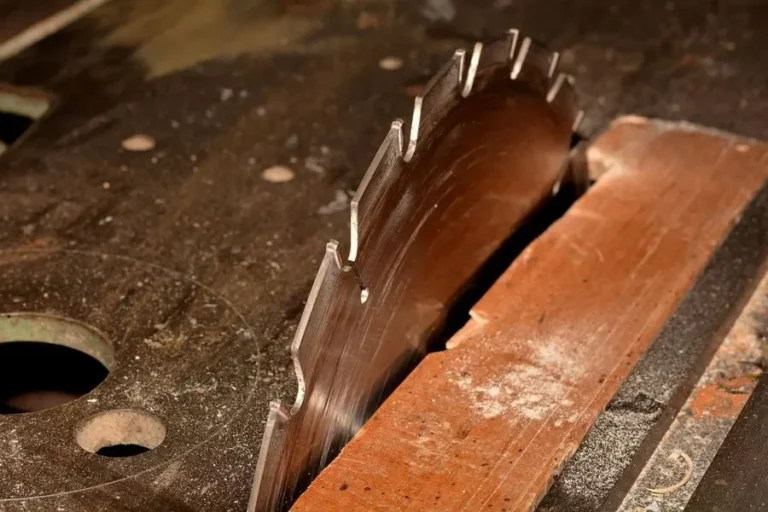
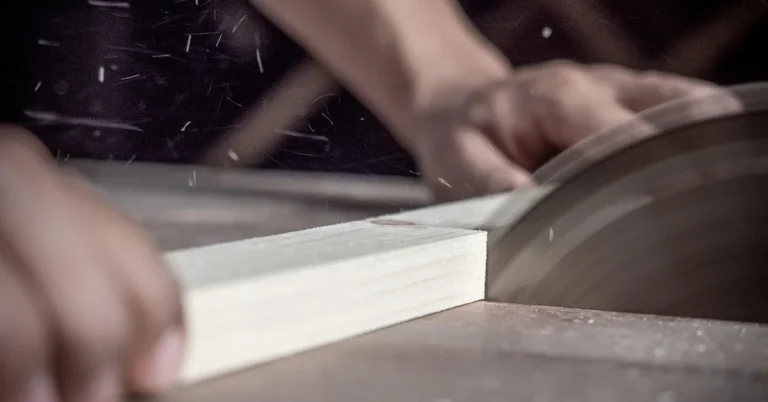
End grain is more prone to tear-out when you flatten it, especially if you take aggressive passes on a planer. Light passes, a sled, or careful sanding are safer than forcing a cutter through end grain that is not well supported. This is one reason build quality matters so much.
Which is better end grain or edge grain cutting boards
End grain is usually better for knife care and for hiding shallow cut marks, while edge grain is often simpler to build, lighter, and cheaper. Choose end grain if you cut a lot, use good knives, or want a board that can be refreshed more often. Choose edge grain if cost, weight, and simpler care matter more.
Edge grain boards can still be perfectly functional. They just show knife lines sooner and do not give the same fiber cushion under the edge. For many home cooks, the right answer is to match the board to the tools and the cooking rhythm.
When edge grain makes more sense
If you need a lighter board for quick weeknight prep, edge grain can be the practical call. It is also easier to make from narrower stock and often costs less in hardwood and labor. For a gift board or a second board near the stove, edge grain may be enough.
What wood is best for an end grain cutting board
Walnut, maple, and cherry are the most practical choices for most end grain boards because they are hardwoods, food-safe when properly finished, and stable enough for repeated washing and oiling. Walnut gives a darker look, maple gives a bright and clean appearance, and cherry sits between them with a warm tone.
Hardness matters, but not in a simple “harder is always better” way. Very hard woods can feel firmer under the knife, while slightly softer hardwoods can be easier on edges. The best choice is usually a dense hardwood with a finish you can maintain.
Walnut
Walnut has a dark color and strong visual contrast, which is why it is popular in premium boards. It usually reads as a good default because it combines solid durability with a calm knife feel and does not demand the bright upkeep look of lighter woods.
Maple
Maple is the classic butcher-block wood. It is hard, food-safe, and visually clean, but it shows stains and scratches more readily than walnut. That makes it a strong choice if you like a light board and do not mind keeping up with oiling.
Cherry
Cherry offers a warmer appearance and sits comfortably between walnut and maple in color. It is often chosen for a more furniture-like look. Buyers should still expect the same maintenance routine as any other hardwood end grain board.
How to finish end grain cutting board
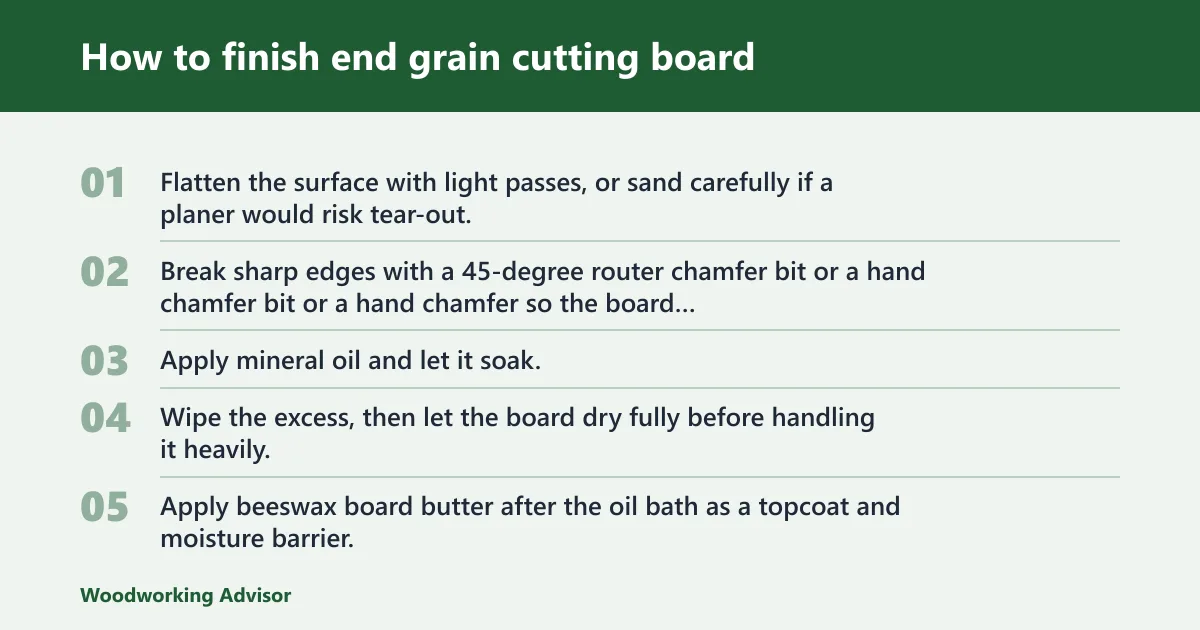
A practical finish starts with flattening, sanding, and a mineral oil soak, then moves to a beeswax board butter topcoat after the oil has had time to penetrate and dry. The goal is not a plastic shell. The goal is a food-safe surface that slows moisture exchange and is easy to renew.
One example project used one piece of 8/4 walnut, about 9 feet long and about 7 inches wide, with the board costing $140 and the lumber price about $12 per board foot. The strips were cut to 1.5 inches, soaked in mineral oil for about 30 minutes per side, and then finished with board butter.
Finish workflow that makes sense
- Flatten the surface with light passes, or sand carefully if a planer would risk tear-out.
- Break sharp edges with a 45-degree router chamfer bit or a hand chamfer so the board feels better in hand and chips less at corners.
- Apply mineral oil and let it soak. For the example project, that soak time was about 30 minutes per side.
- Wipe the excess, then let the board dry fully before handling it heavily.
- Apply beeswax board butter after the oil bath as a topcoat and moisture barrier.
Mineral oil and board butter, in order
Mineral oil is the usual food-safe conditioner. It penetrates the wood, helps slow moisture movement, and should be reapplied when the board looks dry. Beeswax board butter is typically a blend of mineral oil and beeswax; it acts as a topcoat, gives a little sheen, and improves water resistance after the oiling step.
Board butter should come after oil, not before. The wax layer helps hold the conditioning oil in place at the surface, but it does not replace oiling. That is why boards with only a glossy topcoat can still dry out underneath.
How to care for end grain cutting board
Wash the board by hand, dry it right away, and store it upright or in a place with air on both faces. Do not soak it in water or put it in a dishwasher. Re-oil when the board starts looking dry, and use board butter after oiling if you want extra surface protection.
Care also means watching the underside. A board that sits in a damp sink area or against a wet counter is more likely to cup or check. Stability matters as much as cleaning.
Daily and weekly care
- Scrape off food residue first.
- Wash with mild soap and warm water.
- Dry both faces and the edges immediately.
- Stand the board on edge until fully dry.
- Reapply mineral oil when water stops beading.
- Use board butter after the oil has settled and the surface is dry.
Storage and stability details
Weight can help a board stay put, which is useful for fast chopping. Finger holds, feet, and beveled edges can improve handling, but each feature has a tradeoff. Finger holds help with carrying; feet improve airflow; deep juice grooves help with wet prep but reduce usable flat surface.
Are end grain cutting boards better for japanese knives
End grain boards are often a good match for Japanese knives because the surface is generally a little easier on knives, and thin edges usually prefer softer cutting action. Still, the board must be flat, well-sanded, and properly finished. A rough board can stress a fine edge even if the grain orientation is ideal.
If you use a thin gyuto, santoku, or petty, avoid overly hard or poorly finished boards. A board that is too abrasive can shorten edge life faster than its end grain layout suggests. Choose the smoothest board you can maintain, not simply the thickest one.
What Japanese knife owners should look for
For Japanese knives, a 1.5-inch-plus end grain board is a solid baseline, but surface quality matters more than hype. Maple and walnut are both common choices. Very hard surfaces, deep scratches, and dry fibers are the things that cause the most frustration.
How much does an end grain cutting board cost
End grain cutting board prices vary by wood species, size, thickness, and labor. Small boards can be relatively affordable, while thick walnut or premium maple boards cost more because they require more material and more machining time. Design details such as feet, juice grooves, and hand routing also add cost.
In one example, a walnut board project cost $140, with walnut lumber about $12 per board foot. That gives a useful reminder: the wood itself is only part of the bill, and waste from cutting strips, flattening, and finishing raises the real cost.
What drives price up
Larger boards cost more because they use more hardwood. Thicker boards cost more because they use more material and can take longer to flatten. Better fitting, tighter glue lines, and more careful edge treatment also raise the price, but those are the details that usually improve day-to-day use.
How to choose
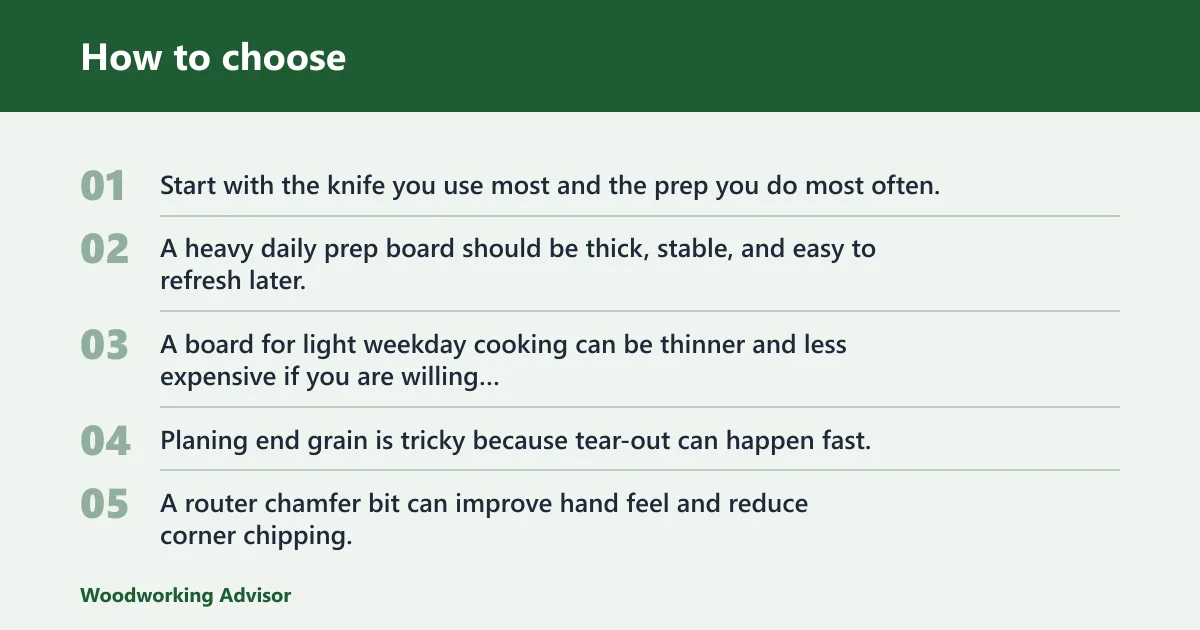
Start with the knife you use most and the prep you do most often. A heavy daily prep board should be thick, stable, and easy to refresh later. A board for light weekday cooking can be thinner and less expensive if you are willing to oil it on schedule.
Buyer decision matrix
| Board option | Wood species | Thickness | Finish type | Repairability | Knife gentleness | Best fit |
|---|---|---|---|---|---|---|
| Walnut, thick build | Walnut | 1.5 to 2 inches | Mineral oil plus board butter | High | High | Daily cooking, mixed knives |
| Maple, lighter build | Maple | About 1.25 inches | Pre-oiled or re-oiled | Medium | High | Budget buyers, lighter prep |
| Cherry, mid-thickness build | Cherry | About 1.5 inches | Oil plus wax topcoat | High | High | Gift board, warm appearance |
| Teak, large wet-prep build | Teak | 1.5 inches | Oil blend finish | Medium | Medium to high | Juicy prep, large counters |
Special-use recommendations
| Need | Best board profile | Why it fits | What to watch |
|---|---|---|---|
| Japanese knives | Dense walnut or maple, smooth finish | Gentler contact and predictable feel | Avoid rough sanding and dry fibers |
| Heavy prep | Thick walnut or teak, 1.5 inches or more | More mass and better stability | Weight and cabinet space |
| Gift purchase | Premium maple or walnut with finished edges | Looks deliberate and useful | Choose a size that fits the recipient’s counter |
Repair and build details worth paying for
Planing end grain is tricky because tear-out can happen fast, so flatter boards with careful sanding often age better. A router chamfer bit can improve hand feel and reduce corner chipping. Finger holds make a heavy board easier to lift, while epoxy fill belongs on the underside for knots or defects that do not belong in the food-contact face.
That last point matters. Epoxy is useful as a repair, not as a front-face decoration when the goal is durable food contact. Underside placement keeps the surface cleaner and avoids turning a repair into a cleaning problem.
Say your kitchen setup is small
Suppose you cook for two in a kitchen with a narrow 18-inch counter by the sink. A thinner maple board may be the most practical choice because it is easier to store and dry, even if a thicker walnut board would be better for heavy prep.
A common first-timer mistake is this
A common first-timer mistake is buying a beautiful board and then leaving it wet after washing. That can lead to cupping or split glue lines over time. A board that is wiped dry and stored upright usually lasts far longer than a prettier board that is left flat and damp.
Which one should you buy
Buy the muso wood walnut board if you want the best default for most kitchens and you do enough prep to benefit from its 2-inch thickness. Buy the Labell maple board if price matters most and your cutting load is lighter. Buy the EZ FURNITURE teak board if you want a very large surface with handgrips and wet-prep convenience. Buy The Boardsmith maple board if fit, finish, and stability matter more than price.
For Japanese knives, start with the smoothest maple or walnut option rather than the most decorative one. For heavy prep, choose the thickest board with good mass and a finish you can maintain. For a gift, prioritize a clean look, easy handling, and a size that will not overwhelm the recipient’s counter.
Frequently asked questions
are end grain cutting boards better
End grain cutting boards are often better if you want a surface that is a little easier on knives and more resistant to visible deep gashes. They are not maintenance-free, though. Build quality, sanding, thickness, and finish still determine how well the board holds up.
what is the best oil for an end grain cutting board
Food-safe mineral oil is the standard choice because it penetrates the wood and is easy to reapply. Beeswax board butter is usually added after oiling to improve surface sheen and water resistance. Avoid keeping the board dry for long stretches, because the finish will not hold up as well.
Sponsored / affiliate links. As an Amazon Associate I earn from qualifying purchases. I may earn additional commission from eligible campaigns.