Maple vs Cherry Cutting Board: Which Is Better?
Maple is the better pick if you want maximum hardness and abrasion resistance; Cherry Cutting Board is the better pick if you want a slightly softer, knife-friendlier board with a warmer look. Construction, drying habits, and reoil timing also matter, because they affect wear, warping, and food safety.
| Decision factor | Maple | Cherry Cutting Board | Winner |
|---|---|---|---|
| Hardness | Hard maple is about 1,450 lbf on the Janka scale. | Cherry is about 995 lbf on the Janka scale. | Maple |
| Knife-friendliness | Harder surface, slightly more edge wear over time. | Softer surface, a bit kinder to knife edges. | Cherry Cutting Board |
| Dent resistance | Better at resisting dents from heavy chopping. | Easier to dent than maple under the same use. | Maple |
| Stain visibility | Lighter color shows stains and discoloration more clearly. | Darker tone can hide some marks better. | Cherry Cutting Board |
| Color change over time | Stays relatively light with age. | Darkens with light and age. | Cherry Cutting Board |
| Maintenance sensitivity | Needs the same oiling and drying discipline as cherry. | Needs the same oiling and drying discipline as maple. | tie |
| Typical price tendency | Common hardwood, often cost-effective in standard boards. | Often a premium hardwood, especially in attractive boards. | Maple |
| Best use case | Heavy chopping, rougher daily use, raw meat prep. | Appearance-first kitchens and lighter daily prep. | Depends on use |
Hardness and durability comparison
Which wood is harder, maple or cherry?
Maple is generally harder than cherry on the Janka hardness scale. The Janka scale measures resistance to denting, so the higher number means the board will resist compressive marks better. (Wikipedia)
That gap is large enough to matter in daily use. A maple board is less likely to collect dents from a cleaver, a heavy chef’s knife, or repeated prep in the same spot. Cherry is still a suitable cutting board wood, but it gives a little more under pressure.
Why hard maple resists dents better
Dense, tight-grain hard maple stands up well to repeated impact. That makes it common in cutting boards and butcher-block tops where long wear matters. It also tends to hold flatness better under heavy service, provided the board is built and sealed correctly.
Cherry’s lower hardness does not make it a poor board material. It simply means the surface will show compression marks sooner, especially if you use very sharp force or store the board in a place with changing humidity.
What cherry’s lower hardness means in daily use
Cherry will still perform well for slicing vegetables, bread, herbs, and general prep. The difference shows up more in long-term denting than in immediate use. If you chop hard items often, maple usually keeps a cleaner working face for longer.
How do they feel under a knife?
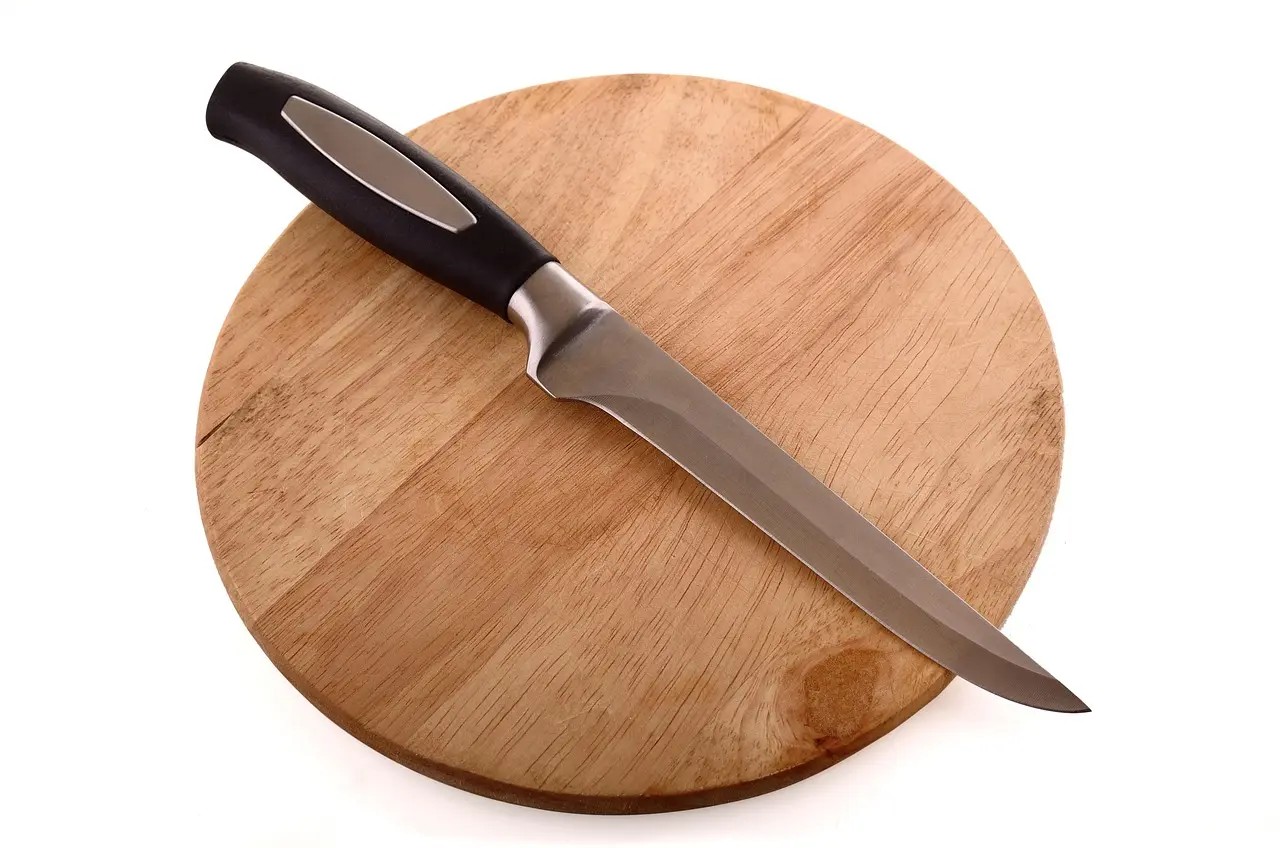
Cherry feels a bit gentler on knife edges than maple, but board construction often matters more than species. End grain is easier on blades than edge grain, and end grain usually costs more because it takes more labor and wood to build.
Knife edge retention trade-offs
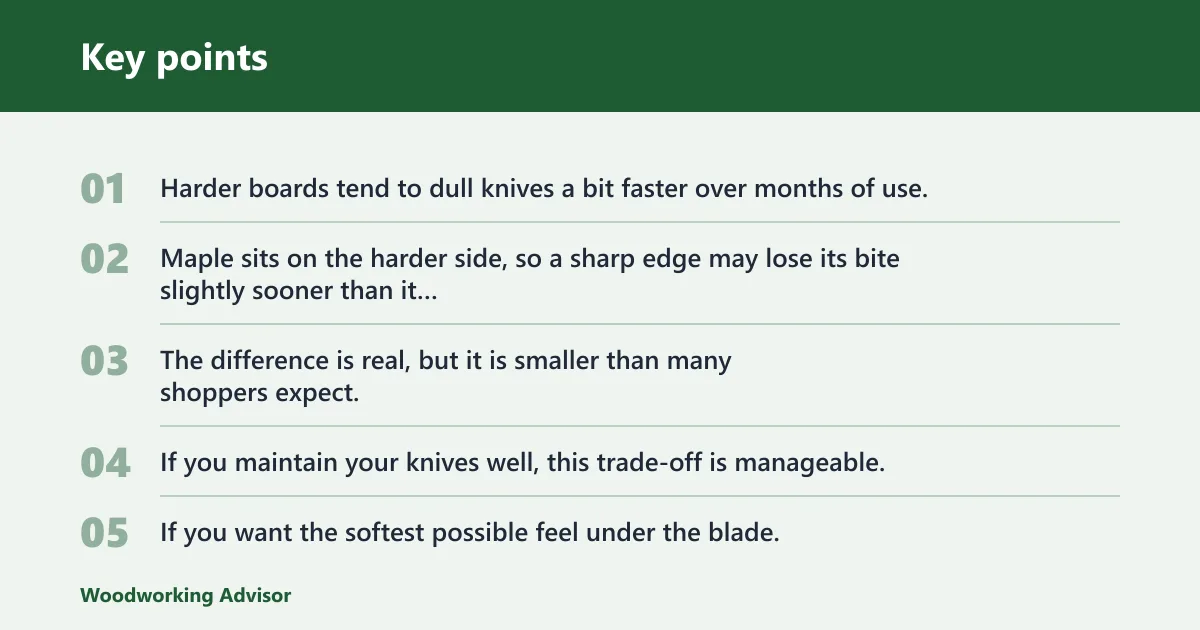
Harder boards tend to dull knives a bit faster over months of use. Maple sits on the harder side, so a sharp edge may lose its bite slightly sooner than it would on cherry. The difference is real, but it is smaller than many shoppers expect.
If you maintain your knives well, this trade-off is manageable. If you want the softest possible feel under the blade, construction matters more than switching from maple to cherry. End grain can make either wood easier on knives than edge grain form.
End grain vs edge grain surfaces
End grain cutting boards present the wood fibers more like a bundle of straws, so the knife slips between fibers more easily. That gives the board a more self-healing appearance and a softer cutting feel. The downside is cost and routine oiling.
Edge grain boards are the common middle ground. They are usually less expensive than end grain, more stable than flat-sawn face grain, and a good everyday choice. For many buyers, an edge grain maple board will outperform a cherry board in durability, while an end grain cherry board may feel nicer than an edge grain maple one.
Picture a 18 x 12 inch edge grain board used for daily onion and carrot prep. In maple, the surface will usually stay cleaner-looking longer; in cherry, the knife may feel a touch smoother, but the board may show dents sooner if you also use it for heavy squash work.
Cutting board decision matrix
Use the matrix below when the choice is less about species alone and more about what you need from the board over time. The winning choice changes with the priority, which is why the same wood does not win every row.
| Buyer type | Priority | Maple | Cherry Cutting Board | Rule |
|---|---|---|---|---|
| Heavy chopper | Dent resistance | Best | Good | Choose maple for repeated hard use. |
| Raw meat prep | Easy cleaning and flatter wear | Best | Good | Choose maple if you want the harder, longer-wearing surface. |
| Knife-conscious cook | Softer cutting feel | Good | Best | Choose cherry for a slightly kinder feel on edges. |
| Appearance-first buyer | Warmer look and aging | Good | Best | Choose cherry if you want darker color over time. |
| Low-maintenance household | Simple routine care | Good | Good | Choose the construction you will dry and oil consistently. |
Criteria and scoring rules
The point of the matrix is not to crown one wood for every buyer. Maple wins when durability and dent resistance matter most. Cherry Cutting Board wins when appearance and a slightly softer cutting feel matter more than maximum hardness.
Both species still need regular care. If you ignore drying, oiling, and surface maintenance, the better wood will still age badly.
Does cherry or maple handle moisture better?
Neither wood is automatically moisture-proof. Maple and cherry generally need similar basic protection from water, because wood movement comes from changing moisture content rather than from species alone. If the board stays wet or dries unevenly, it can warp, cup, or crack.
Wood movement and cracking risk
Wood expands and contracts as it absorbs and releases moisture. That movement is why sealing all sides matters, not just the top face. A board finished only on one side can move unevenly and lose flatness.
Warping risk rises when one side gets repeated water exposure and the other side stays drier. Cracking risk rises when a board dries too fast after washing or sits near heat. The species can influence how quickly wear shows, but moisture habits do most of the damage.
Why sealing all sides matters
Apply finish to the top, bottom, and edges. That helps slow moisture absorption and keep the board more stable. It does not make the board waterproof, but it reduces uneven swelling that can lead to twist or cup.
Beeswax finish is often paired with mineral oil because it adds a little water resistance and slows absorption. It is not a substitute for drying the board after washing.
Drying habits that prevent warping
Wash the board with hot soapy water, rinse, and dry it immediately. Do not leave it flat in a wet sink or stacked while damp. Airflow on both faces helps the board dry evenly and lowers movement.
A common first-timer mistake is washing a board after raw chicken prep, then setting it face-down while one side stays wet for hours. That uneven drying can leave the board cupped even when the wood itself is sound.
Food safety and maintenance basics
Food safety depends more on cleaning and drying than on maple versus cherry. Tight-grain hardwoods are preferred because they do not have large open pores, but neither species is automatically sanitary. You still need to wash after raw meat and keep the board dry.
Cleaning after raw meat
Use hot soapy water, scrub the surface, rinse well, and dry immediately. Do not use the dishwasher. High heat, soaking, and prolonged moisture can crack or warp a wooden board very quickly.
If the board has deep gouges, those cuts can hold moisture and debris longer than a smooth surface. That is one reason dent resistance matters: fewer deep marks usually mean easier cleaning and less wear over time.
Food-grade mineral oil and beeswax finish
Food-grade mineral oil is the standard routine conditioner for wooden cutting boards. It is a non-drying oil, so it soaks in and helps reduce moisture loss from the wood. Many boards also use a beeswax blend for extra surface protection.
Reapply when the board looks dry, feels rough, or no longer beads water. That is a better schedule than following a fixed calendar only, because dryness depends on washing frequency, room humidity, and storage.
- Wash the board with hot soapy water.
- Dry both sides and the edges immediately.
- Let it air-dry upright or on a rack.
- Reoil when the surface looks dull or thirsty.
- Add beeswax finish when you want a little more water resistance.
Choose Maple if… / Choose Cherry Cutting Board if…
Choose Maple if you want the harder, more dent-resistant board for heavy chopping, frequent raw meat prep, or a long service life with visible wear kept to a minimum. Choose Cherry Cutting Board if you want a warmer-looking board, a slightly kinder feel under the knife, and a premium appearance that darkens with age.
Choose maple if…
Choose maple if you cut a lot of dense vegetables, use the board every day, or prefer a surface that stays flatter-looking longer. Maple is also the better pick if you care more about abrasion resistance than about a slightly softer cutting feel.
Choose cherry if…
Choose cherry if you value appearance, want the board to age toward a deeper tone, or prefer a small step toward knife-friendliness. It is a sound choice for light to moderate prep, especially when you are choosing an end grain board and want the premium look.
Suppose you are comparing two 16 x 12 inch boards for a kitchen that handles weekday salads, fruit, and occasional roast prep. If one is edge grain maple and the other is end grain cherry, the end grain construction may matter more than the species choice for knife feel, while the maple board may still win for dent resistance.
Best pick for end grain or edge grain boards
If the board is end grain, either species can feel excellent, and the construction will do most of the work for knife comfort. If the board is edge grain, maple usually has the stronger durability edge, while cherry gives up some hardness for a warmer look and softer feel.
For a low-maintenance household, the safest rule is simple: buy the board you will dry promptly and oil when it looks dry. A neglected cherry board can fail faster than a well-kept maple board, but a neglected maple board can still warp or crack.

Frequently asked questions
Is maple or cherry better for a cutting board?
Maple is better if you want maximum hardness, dent resistance, and a longer-wearing work surface. Cherry is better if you want a warmer look and a board that feels a bit kinder under the knife. Construction and care still matter more than species alone.
Does cherry cut marks show less than maple?
Cherry often hides some marks better because it starts darker and deepens with age. Maple is lighter, so stains and cut marks tend to stand out more. That does not make cherry stain-proof, but it can look less marked between cleanings.
Is maple more sanitary than cherry?
Not automatically. Sanitation depends more on cleaning, drying, and surface maintenance than on the wood species. Both maple and cherry are suitable hardwoods, but a clean, dry board is safer than a dirty or damp one of either species.
Which cutting board is easier on knives, maple or cherry?
Cherry is a little easier on knives because it is slightly softer. The larger difference usually comes from board construction: end grain is gentler on edges than edge grain, regardless of whether the wood is maple or cherry.
Will cherry cutting boards darken over time?
Yes. Cherry darkens with age and exposure to light. That change is part of its appeal for many buyers, especially if they want a board that develops a deeper, warmer color rather than staying pale.
Are maple cutting boards more likely to warp or crack?
No. Maple is not more likely to warp or crack simply because it is maple. Any wooden board can move if it is dried unevenly, soaked, or not sealed on all sides. Good drying habits matter more than the species label.
What wood is best for a cutting board if I want low maintenance?
Maple is usually the safer pick if you want the most abuse tolerance, but low maintenance depends more on your habits than the wood species. Edge grain construction, prompt drying, and regular oiling matter more than choosing maple over cherry.
Is maple better for raw meat prep than cherry?
Maple is the better choice if raw meat prep means heavier wear and frequent cleaning. Its higher hardness helps it resist dents and deep marks that can hold debris. Even so, both woods need the same hot-soapy wash, immediate drying, and no-dishwasher rule.
How do I choose between maple and cherry for end grain or edge grain boards?
For end grain, let the construction lead the decision: either wood can work well, and the board will feel kinder on knives than edge grain. For edge grain, maple usually wins for durability, while cherry wins if you want a warmer look and slightly softer cutting feel.
Sponsored / affiliate links. As an Amazon Associate I earn from qualifying purchases. I may earn additional commission from eligible campaigns.