Laminated MDF: Types, Best Uses, and Edge-Sealing Tips
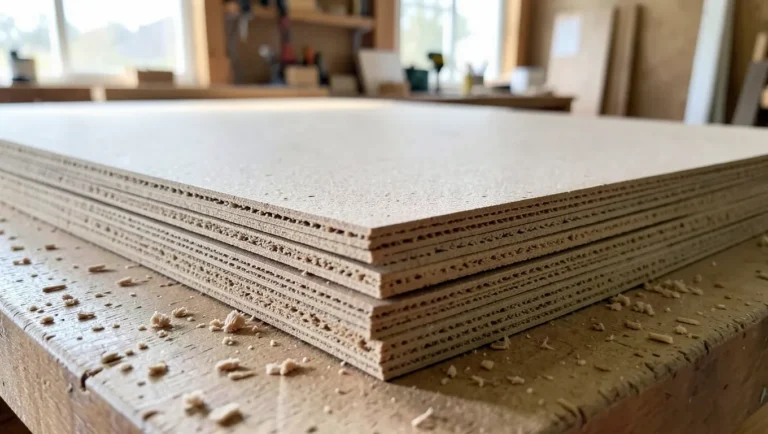
Laminated MDF is medium-density fiberboard with a thin decorative layer, usually melamine, foil, high-pressure laminate (HPL), or real wood veneer, fused to its faces and edges. The core is what makes it strong and machinable; the laminate is what makes it look finished, resist scuffs, and survive daily wiping without sealing or painting. That combination is why it shows up in flat-pack furniture, kitchen cabinet boxes, retail shelving, and office furniture more than almost any other sheet good.
It is not one product. A cheap 2mm-thick foil-wrapped panel from a big-box store and a 3/4-inch melamine-faced MDF panel rated for commercial cabinetry are both “laminated MDF,” but they behave very differently under a router, a wet sponge, or ten years of drawer slides opening and closing. Below is what actually separates the finish types, where each one holds up, and the one step almost every DIY project skips that causes the boards to fail early: sealing the cut edge.
What Laminated MDF Actually Is
Medium-density fiberboard is made by breaking softwood and hardwood down into fine fibers, mixing them with resin, and pressing the mat under heat until it forms a dense, uniform panel with no grain and no voids. That uniformity is the whole appeal: unlike plywood or particleboard, MDF has no internal knots, chips, or gaps to telegraph through a thin surface layer, which makes it an ideal substrate for lamination.
“Laminated” simply means a decorative face has been bonded to that core under heat and pressure (for melamine and HPL) or with contact adhesive (for veneer and some foils). The lamination adds the color, texture, and wipeable surface; the MDF core supplies the screw-holding strength and dimensional stability. Standard thicknesses run from 1/4 inch (6mm) for cabinet backs and drawer bottoms up to 3/4 inch (18mm) or even 1 inch (25mm) for load-bearing shelving and worktops.
Best Fix for Exposed Cut Edges
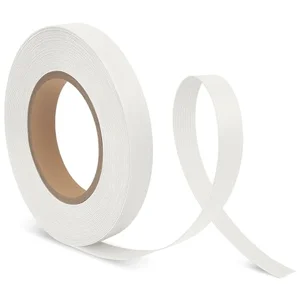 |
BEVTEE Melamine Edge Banding, 3/4 in x 50 ft – $9.99 Every cut you make in laminated MDF exposes raw, unsealed core along that edge. This iron-on tape covers it in minutes and stops moisture from wicking in and swelling the board.
|
Melamine, Foil, HPL, or Veneer: The Laminate Finishes You’ll Actually See
“Laminated MDF” at a hardware store almost always means one of four finish types, and they are not interchangeable in price or durability.
- Melamine-faced MDF (MFC/MFMDF): a resin-impregnated paper fused to the core under heat. This is the most common option for cabinet boxes and closet systems, holds up well to daily wiping, and is the cheapest per square foot of the four. (If you’re wondering whether that surface is actually safe once it’s in your home, the short answer is yes on the sealed face – the only real exposure risk is at an unbanded cut edge.)
- Foil-wrapped MDF: a thin PVC or paper foil wrapped over profiled (routed) edges, common on ready-to-assemble furniture and cabinet doors with rounded or shaped profiles. It looks good out of the box but the foil can lift at corners if the board gets damp.
- High-pressure laminate (HPL): a much thicker, harder laminate (think countertop-grade material) bonded to MDF. It costs more but resists scratches, heat, and impact far better than melamine, which is why it shows up on worktops and commercial furniture.
- Wood veneer over MDF: a thin slice of real hardwood glued to the face. It can be stained and refinished like solid wood, unlike the other three, but it is the least water-resistant option and the most expensive.
If you are buying pre-made sheets, check the edge banding that ships with the panel before assuming it will match: many suppliers sell the laminated MDF sheet and the matching edge tape as separate items.
Where Laminated MDF Earns Its Keep
Laminated MDF is the default material behind most flat-pack and semi-custom furniture you can buy today, for a simple reason: it machines cleanly, takes cam-lock and dowel hardware without splitting, and the laminate hides the fact that the core isn’t solid wood.
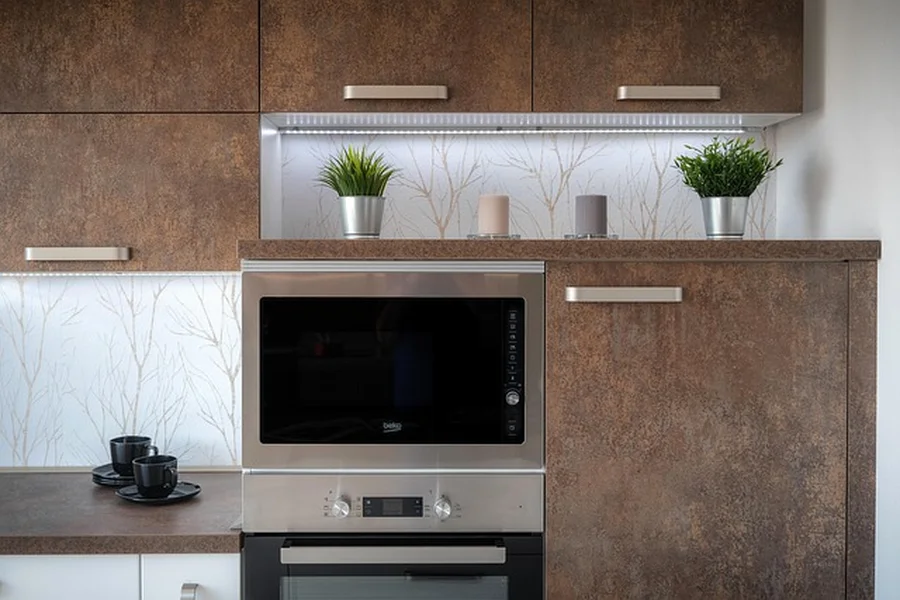
- Kitchen and bathroom cabinets: melamine and foil-faced MDF cabinet boxes dominate mid-range and budget cabinetry because the surface resists steam and daily wear without a separate paint or sealer step.
- Closet and shelving systems: the consistent thickness and smooth surface make it easy to bore accurate shelf-pin holes and hang cam-lock hardware.
- Office and retail furniture: HPL-faced MDF worktops and store fixtures need to survive constant contact without showing scratches, which is where the harder laminate earns its higher price.
- Wall paneling and decorative partitions: digitally printed melamine faces can now reproduce wood grain, stone, or solid color patterns at a fraction of the cost of the real material.
Laminated MDF vs. Plywood and Solid Wood: The Honest Tradeoffs
Laminated MDF wins on cost, surface consistency, and how cleanly it machines. It loses on impact resistance, weight (it is notably heavier than an equivalent sheet of plywood), and long-term water tolerance at unprotected edges. For a deeper side-by-side on strength and cost, see our comparison of MDF vs. plywood for kitchen cabinets.
Solid wood can be sanded and refinished repeatedly and handles a hard knock without leaving a permanent dent or chip in the surface layer. Laminated MDF cannot be refinished (short of veneer, which can be lightly sanded); once the laminate is gouged through to the core, that spot has to be patched or the panel replaced. What laminated MDF does better than solid wood is stay flat: because it has no grain direction, it does not cup, twist, or expand and contract across its width the way solid lumber does with seasonal humidity changes.
Cutting, Edge-Finishing, and Installing It Without Chipping the Laminate
Most of the “laminated MDF failed on me” complaints trace back to two mistakes made during the cut and install, not a defect in the material itself.
Chipping at the cut line. A standard wood-cutting blade tears the brittle laminate face as it exits the cut. Use a fine-tooth, triple-chip-grind (TCG) carbide blade made for laminates, score the cut line with a utility knife first on the show face, and cut with that face down on a table saw (or up on a track saw, since a circular saw’s blade exits upward through the top face). A sacrificial backer board under the panel further reduces tear-out on the exit side.
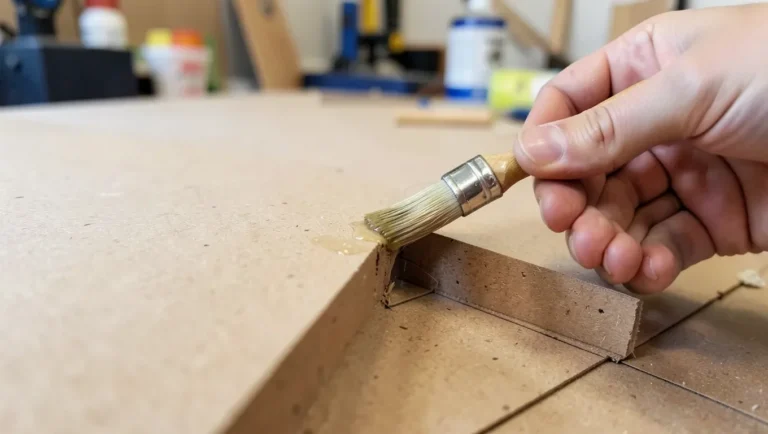
Unsealed cut edges. This is the failure mode that actually shortens the life of laminated MDF furniture, and it is rarely mentioned: manufacturers laminate the flat faces, but a cut edge made on-site is bare MDF core with nothing protecting it. Bare MDF swells and crumbles when it absorbs water, so any cut edge left exposed near a sink, a plant, or an exterior wall is the panel’s weak point, not the laminated faces. Cover every cut edge with iron-on edge banding, PVC edge trim, or at minimum two coats of a penetrating sealer before the piece goes into service.
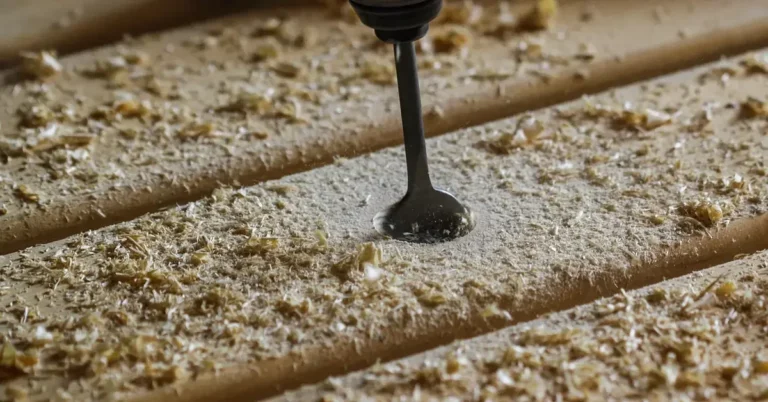
For fasteners, always pre-drill: MDF has excellent screw-holding strength for its density, but only if the pilot hole matches the screw, since driving directly into MDF without one commonly blows out the surrounding fiber and strips the hole. Coarse-thread, cabinet-specific screws (not drywall screws) hold noticeably better in MDF’s fiber structure.
Cleaning and Long-Term Care
Day to day, a damp microfiber cloth and a mild detergent are all laminated MDF needs; skip abrasive powders and scouring pads, which dull the laminate’s surface sheen over time. Wipe up standing liquid promptly, especially around sink cutouts and cut edges, and avoid dragging appliances or heavy objects across the surface, since laminate can scratch or gouge if it takes a direct hard impact.
If you’re weighing laminated MDF against other engineered options for a specific project, our guide to MDF vs. engineered wood breaks down how it compares to particleboard and OSB. And if formaldehyde emissions or off-gassing are a concern for an indoor project, we’ve corrected the common myths around that in why MDF is (and isn’t) restricted in the US.
Frequently Asked Questions
Is laminated MDF waterproof?
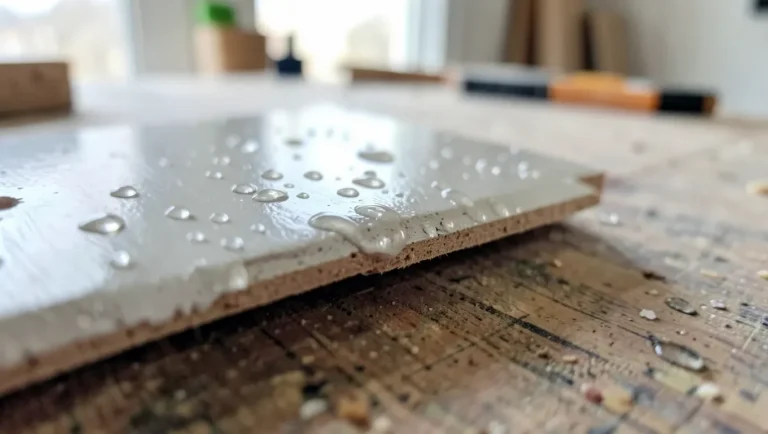
No. The laminate face resists surface moisture and light spills, but it is not waterproof, and the material is only as water-resistant as its weakest point: an unsealed cut edge. Standing water at an edge or a seam will still swell the MDF core underneath the laminate.
Can you paint over laminated MDF?
Only with the right prep. Melamine and HPL surfaces are slick and need to be scuff-sanded and coated with a bonding primer before paint will adhere; skipping the primer is the most common reason painted laminate peels within months. Wood veneer over MDF can usually be painted or stained with standard prep, since it behaves like solid wood.
Is laminated MDF good for kitchen cabinets?
Yes, and it’s the material behind most mid-range cabinet boxes sold today. Melamine-faced MDF resists the daily wiping, steam, and humidity a kitchen produces, as long as any field-cut edges (for sink cutouts or on-site adjustments) get sealed or banded before installation.
How do you fix a chipped or swollen edge on laminated MDF?
Small chips can be filled with wood filler or auto body filler, sanded flush, and touched up with matching paint or an iron-on edge strip. A swollen edge from water damage, however, cannot be pressed back to its original shape; the affected section needs to be cut back to solid material and re-banded, or the panel replaced if the swelling has spread far into the board.
Bottom Line
Laminated MDF is a genuinely good material for cabinets, shelving, and furniture as long as you match the laminate type to the job (melamine for general use, HPL for high-wear surfaces, veneer if you want to refinish it later) and treat every field-cut edge as bare, unprotected core until you seal or band it. Skip that last step and even the best laminate finish will not save the panel from the first spill it sits in.
Sponsored / affiliate links. As an Amazon Associate I earn from qualifying purchases. I may earn additional commission from eligible campaigns.