Does Lowe’s Sell Balsa Wood? What’s Really In Stock
Lowe’s carries balsa wood, but not the way most hobbyists expect — it’s mostly “Oasis” brand floral-craft balsa strips (1 inch wide, sold in packs of 24), not the thickness-sorted 1/16″ to 1/4″ sheets a model builder needs. Several of those listings have also gone in and out of stock or been pulled from Lowes.com entirely. This guide covers exactly what Lowe’s actually stocks, why it may not fit a model-building project, and where to buy real dimensional balsa sheets instead.
What Lowe’s Actually Stocks (It’s Not What You Think)
Best Balsa Wood Sheets Pick
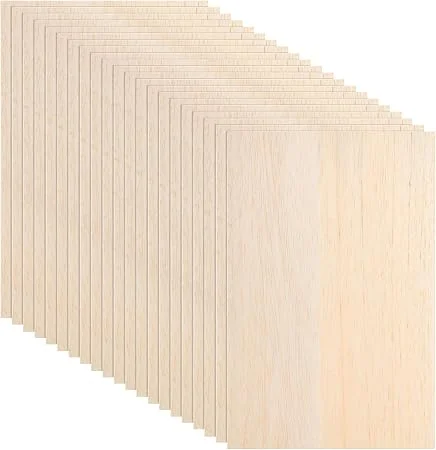 |
MIVIDE 20-Pack Balsa Wood Sheets, 8x12x1/16 In – $25.99 Real dimensional modeling-grade balsa sheets in the thin 1/16-inch thickness this guide recommends for model skins and craft details — the exact category Lowe’s floral strips don’t cover.
|
Lowe’s balsa wood selection centers on the Oasis Flat Balsa line — a different product from the dimensional “whitewood” lumber Lowe’s also sells — a floral and craft product, not a modeling one. It comes in 1-inch-wide by 31.5-inch-long strips, sold in packs of 24, in natural, gold glitter, and silver glitter finishes. It’s designed for wreaths, floral arranging, and bold craft accents, not for cutting precise thickness-matched parts for a model airplane or architectural model.
Lowe’s has also carried novelty items like the Paul Guillow balsa glider plane kits in its seasonal toy section, but availability on both the Oasis strips and the glider kits is inconsistent — several listings we checked were marked “no longer sold on Lowes.com” or “currently unavailable,” with some fulfilled by third-party marketplace sellers rather than stocked directly. If you’re heading to a physical store specifically for balsa wood, call ahead and confirm the craft aisle actually has it in stock that day.
Why This Matters for Model Building
Real model-building balsa is sold by thickness — typically 1/32″, 1/16″, 3/32″, 1/8″, and 1/4″ sheets and strips — because a model airplane wing, an architectural model wall, or a diorama base each need a specific thickness-to-weight ratio to work. Lowe’s 1-inch floral strips don’t come in that range and aren’t graded for grain straightness or density the way hobby-grade balsa is, so a wing rib cut from a floral strip will likely be heavier and less consistent than one cut from actual modeling stock.
Where to Actually Buy Modeling-Grade Balsa
For real dimensional balsa sheets and strips, skip the home improvement store and go to a dedicated hobby retailer instead:
- Hobby Lobby or Michaels: Both carry basic balsa sheets in common hobby thicknesses in the craft wood aisle, usually cheaper per sheet than ordering online for small quantities.
- Dedicated balsa suppliers (National Balsa, SIG Manufacturing): Sell balsa sorted by density and grain quality, which matters for RC aircraft where weight consistency affects flight performance.
- Amazon multi-packs: The most convenient option for craft and school projects that don’t need aviation-grade density sorting — see our pick below.
Tools for Working With Balsa
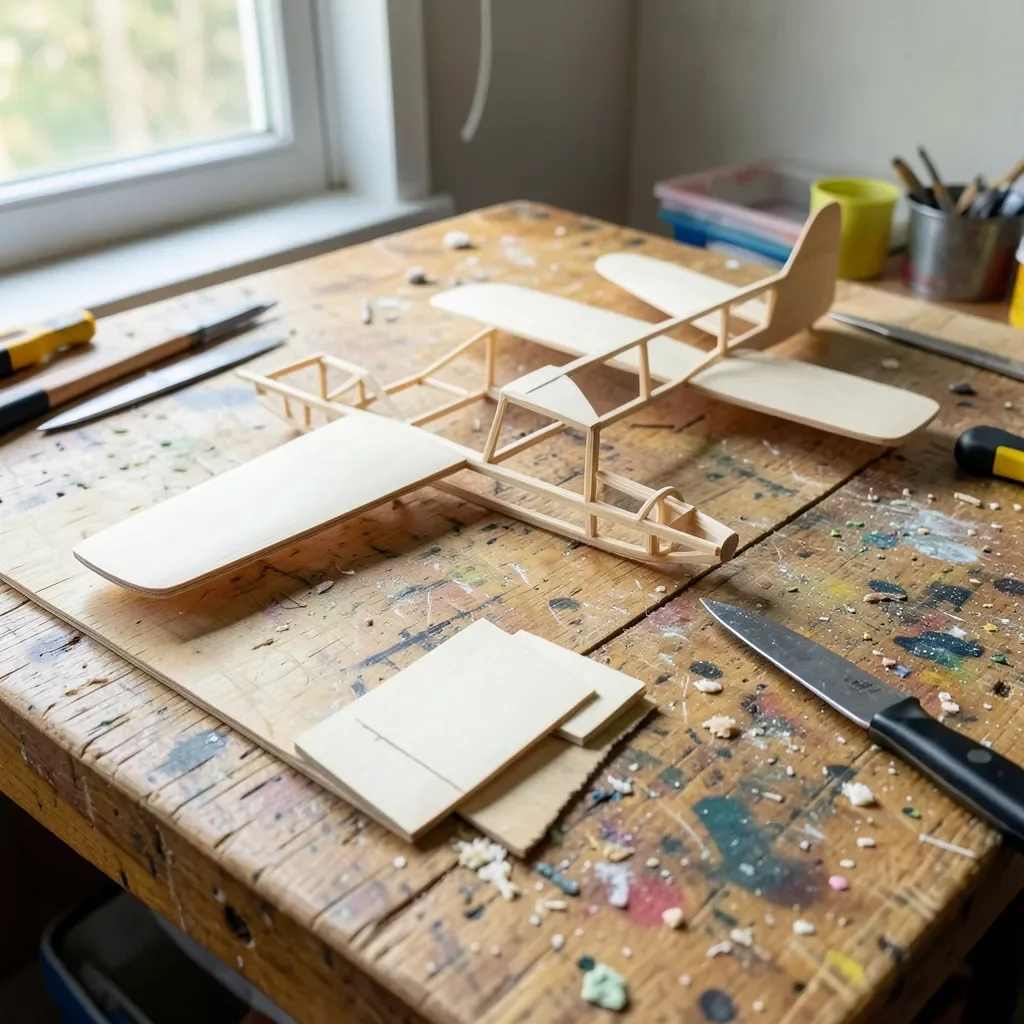
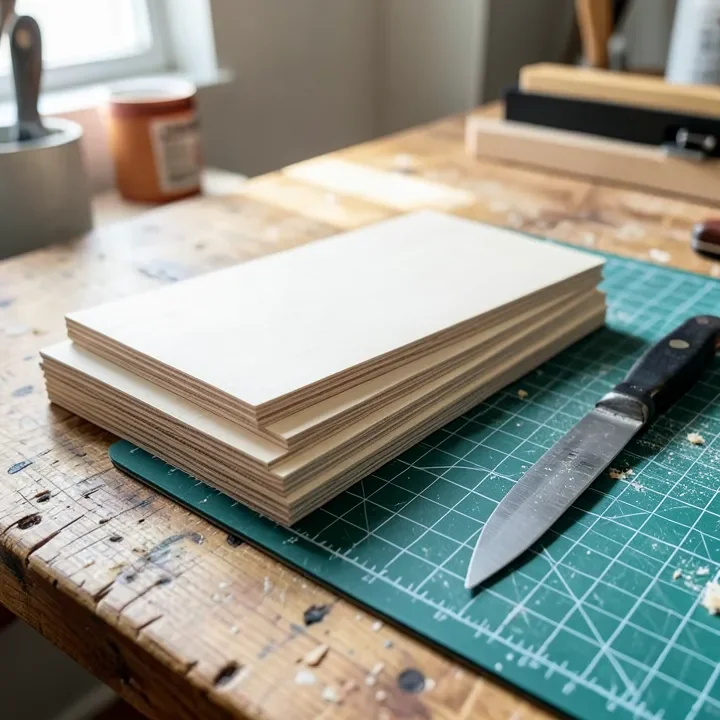
Balsa’s softness is exactly what makes it easy to cut wrong. A hobby knife with a fresh blade, a self-healing cutting mat, a metal ruler for straight scored cuts, and wood glue (not super glue, which can dry brittle on balsa’s open grain) cover most projects. Always score the wood lightly before cutting through — balsa’s grain tears rather than cutting cleanly if you try to slice through in one pass.
Wear eye protection when cutting, keep the blade moving away from your body, and use a sharp blade — a dull one requires more pressure and is more likely to slip through the soft wood unpredictably.
What People Actually Build With Balsa
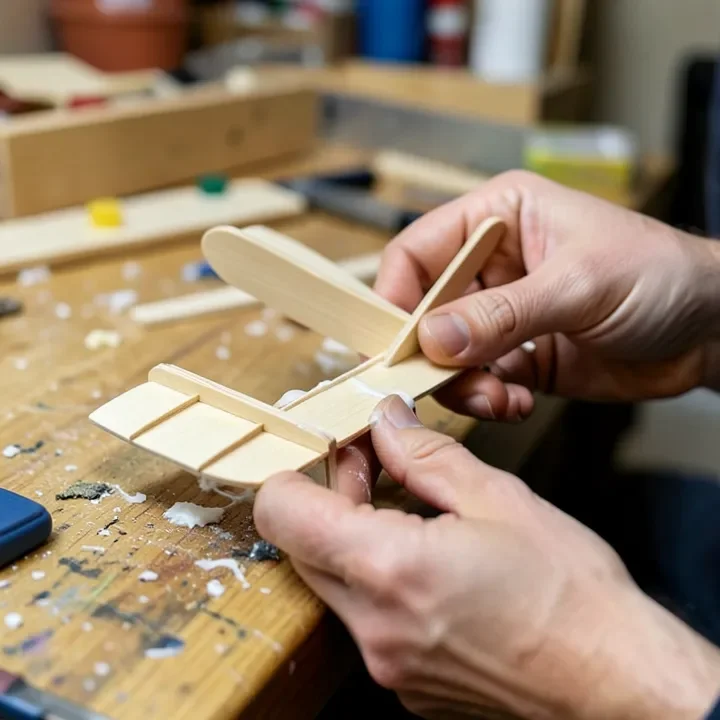
Balsa’s strength-to-weight ratio is why it’s the default material for RC glider and powered model airplanes — a wing spar cut from 1/8″ balsa is light enough to fly on a small motor but rigid enough to hold its shape under flight loads. The same properties make it popular for architectural scale models (easy to cut fine details at 1/4″ scale), dioramas, and simple school-project builds like bridges tested for load capacity.
Finishing Balsa: Sanding, Painting, and Sealing
Sand with progressively finer grits (start around 220, finish around 400) using light pressure — balsa dents easily under a heavy sanding hand. Water-based acrylic paints go on more evenly than oil-based ones, which can soak unevenly into balsa’s open grain and raise the surface fibers. For a smoother painted finish, seal the wood first with a thin coat of diluted wood glue or a dedicated sanding sealer, let it dry, then lightly sand before painting — this fills the open grain so the paint sits on top instead of soaking in blotchy.
📊 Balsa is one of the fastest-growing commercial timbers, reaching harvestable size in as little as 5–7 years compared to decades for most hardwoods — which is part of why it stays inexpensive relative to other modeling woods despite most commercial supply coming from Ecuador. Source: USDA Forest Service research database.
In our experience, one thin sealing coat is enough for most craft and display projects — oversealing balsa adds back the weight that’s the entire reason to use it over a denser wood in the first place.
Frequently Asked Questions
Does Lowe’s sell balsa wood sheets?
Lowe’s carries balsa, but mostly as “Oasis” floral-craft strips (1 inch wide, packs of 24) rather than the thickness-sorted 1/16″–1/4″ hobby sheets model builders need. Stock is inconsistent, and several listings have been pulled from Lowes.com or gone unavailable. For real modeling-grade balsa, a hobby store or Amazon is a more reliable source.
Is balsa wood eco-friendly?
Generally yes. Balsa trees grow to harvestable size in about 5–7 years, far faster than most hardwoods, which makes it a comparatively renewable material when sourced from managed plantations rather than illegally logged old-growth stands.
How do you cut balsa wood without splintering it?
Use a sharp hobby knife on a stable cutting mat, and score the wood lightly along your line before cutting all the way through. Balsa’s grain tears if you try to slice through in one pass; two or three light scoring passes followed by a final cut gives a cleaner edge than forcing it through at full depth immediately.
What thickness of balsa wood should I buy?
It depends on the project: 1/16″ to 3/32″ for lightweight model airplane skins and small craft details, 1/8″ for structural model parts like wing ribs and architectural model walls, and 1/4″ or thicker for load-bearing project pieces like school-project bridges that need to hold weight without flexing.
Sponsored / affiliate links. As an Amazon Associate I earn from qualifying purchases. I may earn additional commission from eligible campaigns.
 46Pack Balsa Wood Sheets Basswood Craft Plywood 12"x12"x1/8", Smooth Wood Blanks, Wood Sheet for Laser Engraving, Suitable for Laser Cutting, Pyrography, DIY Architectural Models & Wood Craft Projects
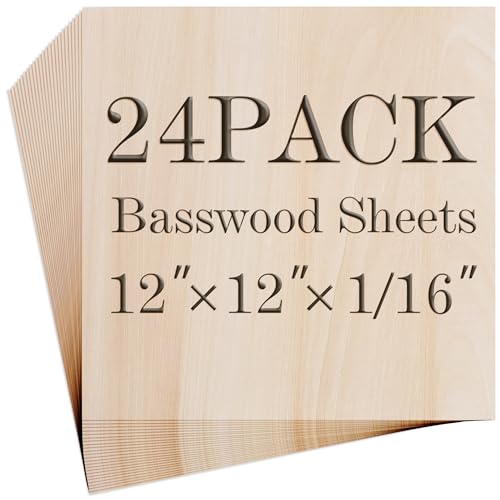 Balsa Wood Sheet, 24 Pack Plywood Sheets, Basswood Sheets 12X12X1/16 Inch, Unfinished Wood Boards Blanks for Laser Cutting, Engraving, Burning, Crafts((H305/17-24)