Makita LS1019L 10-Inch Dual-Bevel Sliding Miter Saw Review
The Makita LS1019L is a 10-inch dual-bevel sliding compound miter saw with a 15-amp motor and a 2-steel-rail sliding system — but at 57.9 lbs it is not the lightweight saw some listings imply, and its 3,200 RPM no-load speed is slower than several competitors. This review covers real specs, who it actually fits, and where cheaper saws match it.
Makita LS1019L: Real Specs
Best 10-Inch Sliding Miter Saw Pick
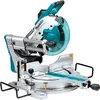
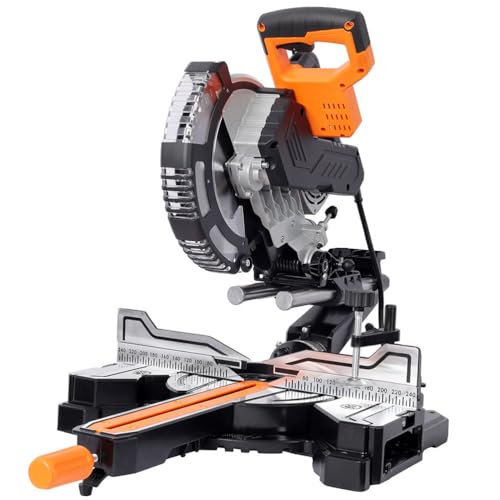
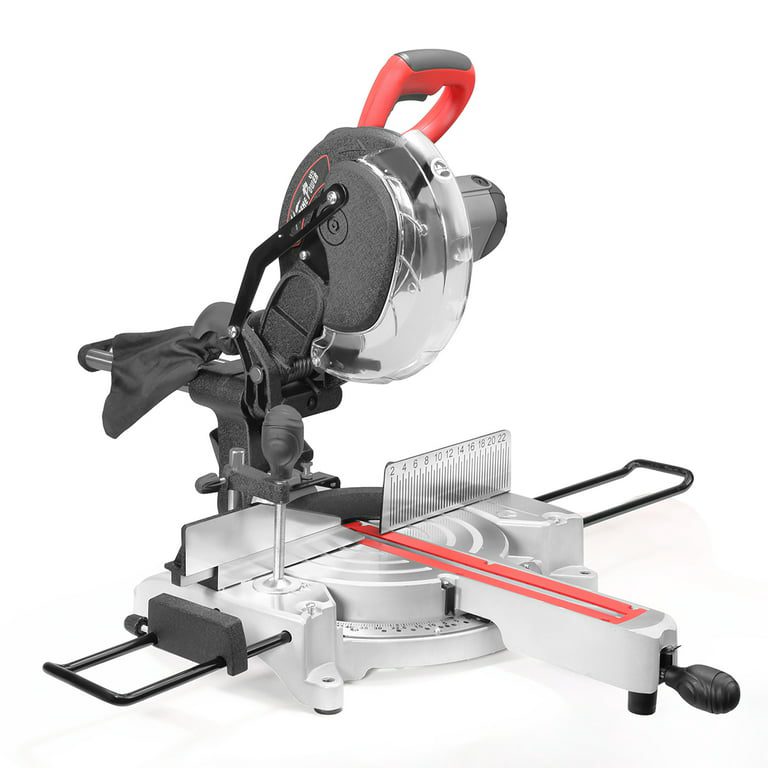
Makita LS1019L 10″ Dual-Bevel Sliding Miter Saw – $739.00
The saw reviewed above — 12″ crosscut capacity from a 10-inch blade via the 2-steel-rail slide, at about half the weight of a 12-inch sliding saw with the same reach.
- Best for: trim, crown molding, and framing where a 12-inch saw’s bulk and weight are a real drawback
- Why we picked it: dual-bevel saves re-flipping stock for opposite-angle cuts, and the compact rails let it sit closer to a wall
- Main drawback: 3,200 RPM is on the slower side for a 15-amp saw, and it’s still 57.9 lbs — not a truly light, one-hand-carry tool
As an Amazon Associate we earn from qualifying purchases.
The LS1019L pairs a 10-inch blade with a dual-bevel design (tilts both left and right, no flipping boards for opposite-angle cuts) and a compact 2-steel-rail sliding system instead of the bulkier round-rail sliders on many 12-inch saws.
| Spec | Value |
|---|---|
| Blade size | 10 inches |
| Motor | 15 Amp, direct drive (no belt) |
| No-load speed | 3,200 RPM |
| Crosscut capacity (90°) | 2-13/16″ x 12″ |
| Crown molding (nested) | Up to 6-5/8″ |
| Baseboard (vertical) | Up to 5-1/4″ |
| Weight | 57.9 lbs |
| Street price | $739 (tool only) |
📊 At 57.9 lbs, the LS1019L is not a “lightweight” saw — it is roughly half the weight of a comparable 12-inch sliding miter saw, which is the real portability advantage, not a small overall weight. No-load speed is 3,200 RPM, not the higher figures some listings quote. Source: manufacturer spec sheet, cross-checked against Tool Nut’s LS1019L listing.
Cutting Performance and Precision
The laser guide projects a line on the workpiece before the blade drops, useful for lining up a cut mark without lifting the blade guard to check. The dual-bevel head tilts 0–48° both directions, so crown molding and other compound angles that need opposite bevels don’t require flipping the board and re-marking it.
Build, Sliding System, and Portability
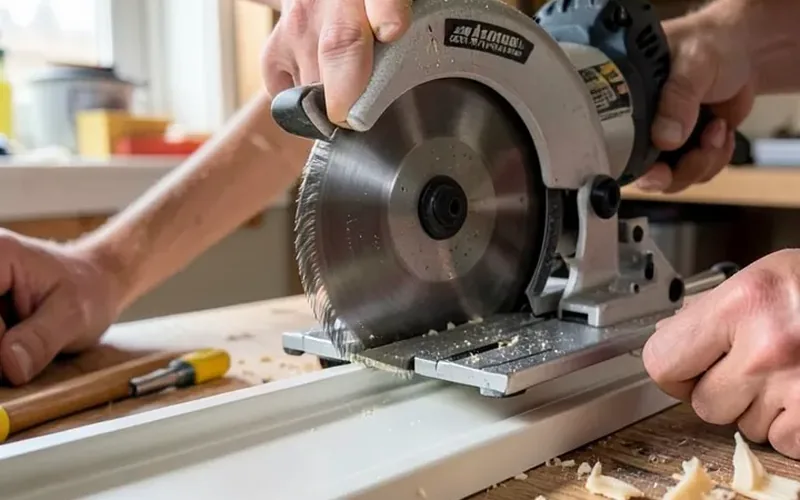
The 2-steel-rail sliding system uses a linear ball-bearing design built for low deflection and smooth travel, and lets the saw sit closer to a wall than round-rail sliders that need clearance behind the saw for the rails to extend. That’s the real space/portability win over a 12-inch slider — not the saw’s own weight, which at 57.9 lbs is still a two-hand carry.
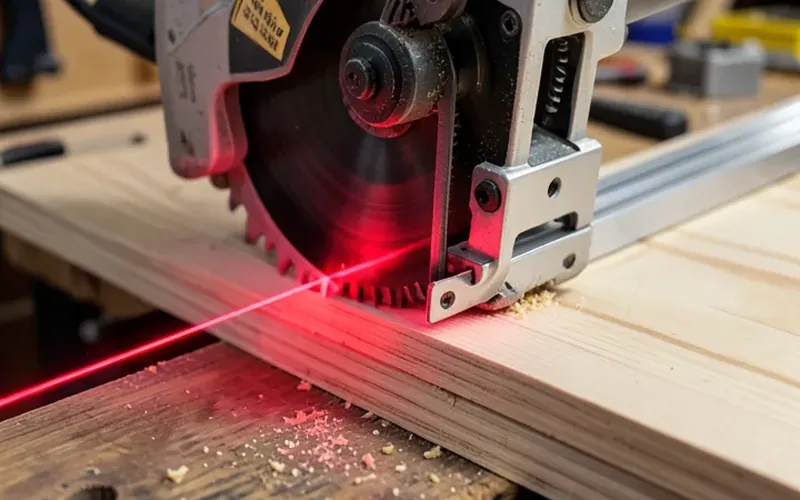
“2-steel rail design with a linear ball bearing system engineered for low deflection and smooth travel” that lets the saw “operate flush against a wall.”
Safety and Maintenance
Standard protections apply: a retractable blade guard and an electric brake that stops the blade in a couple of seconds instead of coasting down. As with any miter saw, wear eye and ear protection and keep hands clear of the cut line. Routine care is simple — clear dust from the vents and rail after each use, and check the dust bag or shop-vac connection since the direct-drive motor has no belt to maintain.
Who Should (and Shouldn’t) Buy This Saw
| Good fit | Look elsewhere |
|---|---|
| Trim carpenters needing 12″ crosscuts in a compact footprint | Buyers who need under-50-lb portability — check a non-sliding 10″ compound saw instead |
| Anyone cutting compound/crown angles regularly (dual-bevel saves setup time) | Occasional users who rarely bevel — a single-bevel saw is cheaper |
| Shops tight on space behind the saw | Framers cutting wide dimensional lumber routinely — a 12″ saw crosscuts wider stock |
For the full 10-inch vs. 12-inch decision, see our 10-inch vs 12-inch sliding miter saw crosscut comparison. Browse more models on our miter saw hub.
Frequently Asked Questions
What is the Makita LS1019L used for?
Crosscuts, miters, and compound bevel cuts up to 12 inches wide at 90 degrees — framing, trim, crown molding, and general shop cutting where a 12-inch-capacity saw in a more compact footprint is useful.
How accurate is the Makita LS1019L?
It uses a 2-steel-rail linear ball-bearing slide built for low deflection, plus a laser guide for line-up. Accuracy in practice also depends on blade quality and fence alignment, which any miter saw needs checked periodically.
How much does the Makita LS1019L weigh?
57.9 lbs. That is lighter than a comparable 12-inch sliding miter saw, but it is not a lightweight, one-hand-carry tool — plan for a two-hand lift or a rolling stand.
Is the Makita LS1019L worth the price?
At roughly $739 for the tool alone, it costs more than basic 10-inch compound saws but less than most 12-inch sliders. It’s worth it if you need the 12-inch crosscut reach and dual-bevel convenience in a smaller footprint; a non-sliding saw is cheaper if you don’t need that capacity.
Conclusion
The Makita LS1019L delivers real 12-inch crosscut capacity and dual-bevel convenience from a 10-inch blade, in a footprint smaller than most 12-inch sliders — that compactness, not raw weight, is its actual advantage. At 57.9 lbs and 3,200 RPM it won’t win a spec sheet against every competitor, but for trim and crown work in a space-limited shop, it’s a solid, accurately-specced choice.
Sponsored / affiliate links. As an Amazon Associate I earn from qualifying purchases. I may earn additional commission from eligible campaigns.