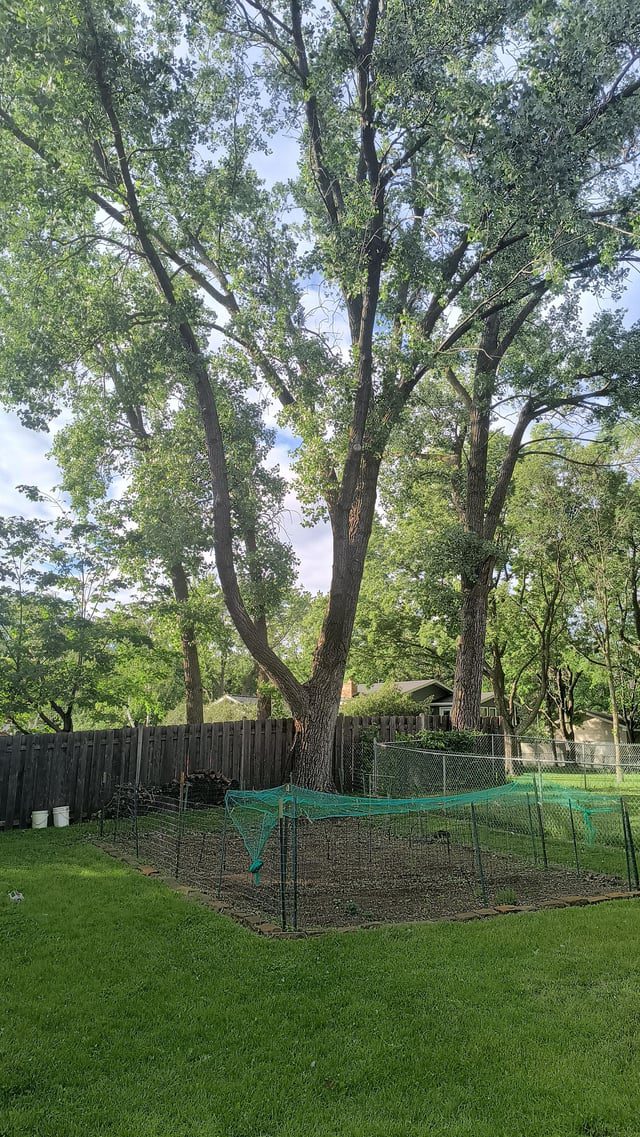
How to Stop Cottonwood Trees from Producing Cotton
Only female cottonwood trees produce cotton — male trees never do, since the fluff is the tree’s seed-carrying mechanism, not pollen. Pruning helps a little, but the only ways to actually stop it are removing/replacing the female tree or spraying it with an ethephon-based growth regulator while it’s blooming. Get the timing wrong and the spray does nothing, or a DIY attempt on a 60-foot tree becomes a safety problem. This guide covers identifying male vs. female trees, when to spray, and what pruning can and can’t fix.
Identifying Cottonwood Trees
Best Cottonwood Growth Regulator Pick
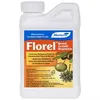
Monterey Florel Plant Growth Regulator (16 oz)
The standard ethephon-based spray for aborting flowers on fruitless/cottonless tree varieties, including cottonwood.
- Best for: Smaller/younger female cottonwoods you can reach yourself
- Why we picked it: The exact product named in university extension guidance for this use
- Main drawback: Tall, mature trees still need a professional applicator
Compare more cottonwood control options
 Option 1 Monterey Florel Growth Regulator (1 Gallon)
|
 Option 2 Chapin 2-Gallon Stand ’N Spray Pressure Sprayer
|
 Option 3 Fiskars XtendControl 12′ Tree Pruner
|
As an Amazon Associate we earn from qualifying purchases.
Cottonwood trees are easy to spot once you know the signs: broad, triangular leaves that quake in the slightest breeze, gray bark that gets deeply furrowed with age, and a wide, shade-heavy canopy over a thick trunk. They almost always grow near water, since cottonwoods need consistently moist soil to reach their full size.
There are three cottonwoods common across the U.S. The Eastern Cottonwood is the tallest of the three, growing fast and topping out near 100 feet. The Black Cottonwood, found mostly in the Pacific Northwest, has noticeably darker, more deeply ridged bark. The Fremont Cottonwood grows in dry Southwest climates near rivers and washes, with glossier leaves than its eastern relative. All three are female-or-male trees, and only the female of any type produces cotton.
Understanding Cotton Production
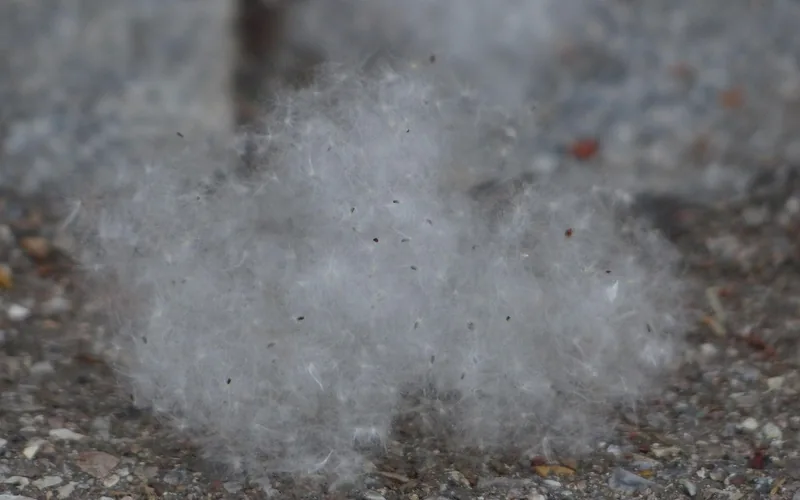
Cottonwoods are dioecious — each tree is either male or female, and only the females produce cotton. Male trees release pollen in spring; wind carries it to nearby female trees, which then develop the fluffy, wind-dispersed seeds that blanket yards for two to three weeks. A healthy, well-watered female tree simply produces more cotton, not less.
This is why the single most effective long-term fix isn’t a spray or a pruning schedule — it’s tree selection. If you’re planting new cottonwoods (or replacing an existing female), choose a male cultivar and the cotton problem disappears entirely, since male trees never produce seed fluff.
📊 Ethephon growth-regulator sprays are typically applied when the tree is about 80% through its spring bloom, at air temperatures between 61°F and 94°F — timing outside this window sharply reduces effectiveness. — Source: Ask Extension, Cooperative Extension System (2026)
Pruning Techniques
Pruning is best done in late winter, while the tree is dormant, and won’t stop cotton production on its own — it only reduces the volume by removing some of the seed-bearing branches. Cut branches before new spring growth starts, using sharp, clean tools to avoid unnecessary stress on the tree.
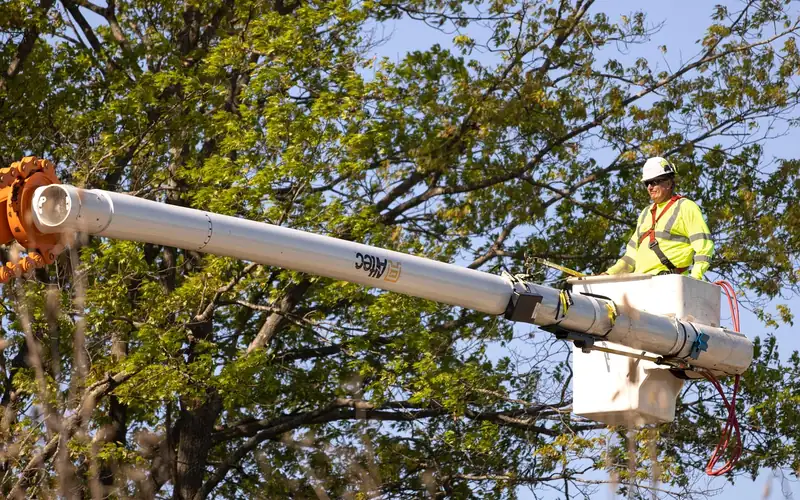
For anything above a step-ladder’s reach, a pole saw or pole pruner lets you cut higher branches from the ground safely; for very large, mature cottonwoods, hire a certified arborist rather than working from a ladder.
“Because cottonwood trees are so tall, only a professional can safely reach and cover the tippy top of the tree. Plus, if you use too much of the product, you can damage your tree and cause it to drop leaves. A certified arborist knows how much (and when) to apply the product, which is crucial to making sure it works as well as can be expected.”
Chemical Treatments
The product actually used for cottonwood cotton is an ethephon-based growth regulator (sold as Florel or similar Fruit Eliminator sprays) — not a general growth retardant. Ethephon breaks down into ethylene inside the plant, which causes it to abort its flowers before the seed fluff ever forms.
Spray once, while the tree is in full bloom, at a rate of about 3 oz. per gallon of water, and apply within 4 hours of mixing — diluted ethephon doesn’t store. Skip fertilizing for two weeks before and after treatment, since it can interfere with results.
Alternative Solutions
Female cottonwood trees make the fluffy cotton. Removing these trees can stop cotton production. This method is effective. But it might be costly. Professional help may be needed. Safety is important when cutting large trees. Consider the space where the tree stands. Does the removal leave a big gap? Think about planting a new tree in its place.
Male cottonwood trees don’t make cotton. Choose male varieties when planting new trees. This is a simple way to keep spaces clean. Male trees are easier to manage. They help in reducing allergies. They are a good choice for gardens and yards. Always ask experts when buying new trees. They can help pick the right ones.
Long-term Management Strategies
Keep an eye on your cottonwood trees. Check them regularly for signs of stress. Healthy trees produce less cotton. Water them properly and ensure they get enough nutrients. Prune them to remove dead branches. This helps the tree stay strong. A strong tree means less cotton. Monitor for pests or diseases. These can harm tree health.
Work with your neighbors to manage cottonwood trees. Form a community group to share resources. This makes it easier to care for trees. Plan tree maintenance days together. Hire a professional for big tasks. Educate the community on tree health. Healthy trees benefit everyone. You can also plant alternative trees. Choose species that produce less cotton. This helps reduce the problem over time.
Frequently Asked Questions
How Do You Get Rid Of Cottonwood Cotton?
Use a leaf blower to remove cottonwood fluff from your yard. Mow lawns frequently to prevent accumulation. Install netting or mesh screens to block cotton from entering spaces. Regular cleaning of gutters and air filters helps reduce buildup. Consider planting non-cotton producing trees for long-term solutions.
How Do I Get Rid Of Cottonwood Fluff In My Yard?
Rake or sweep cottonwood fluff regularly to keep your yard clean. Use a leaf blower for larger areas. Wet the fluff with a hose to prevent it from spreading. Consider installing a mesh screen to catch fluff. Maintain tree health to reduce fluff production.
How Long Do Cottonwood Trees Give Off Cotton?
Cottonwood trees release cotton for two to three weeks during late spring to early summer. This period varies depending on climate and location. The cotton carries seeds, aiding in reproduction. Keep areas clean by regularly removing fallen cotton to prevent accumulation.
How Do You Control Cottonwood Trees?
The most reliable control method is an ethephon-based growth regulator spray (like Monterey Florel) applied at around 80% spring bloom, which causes the tree to abort its seed catkins before they release cotton. Pruning cottonwood trees during the dormant season also reduces next year’s flowering wood, though on mature trees this usually requires a certified arborist rather than a homeowner with a pole saw. Remove root suckers as they appear, keep the tree well-watered and drained, and avoid planting new female cottonwoods near patios, pools, or gutters.
Do Male Cottonwood Trees Produce Cotton?
No. Cottonwoods are dioecious, meaning each tree is either male or female, and only female trees produce the cottony seed fluff. Male trees release pollen in spring but never produce cotton, so if you are planting a new cottonwood and want to avoid the mess entirely, choosing a male cultivar (or a male clone sold specifically as cotton-free) solves the problem permanently without any spraying or pruning.
Conclusion
Cottonwood cotton comes from female trees only, and it is temporary — usually two to three weeks each spring. If a couple of trees are the problem, dormant-season pruning by a qualified arborist thins out the flowering wood that produces next year’s cotton. If the mess is worse than that, a correctly timed ethephon spray (applied around 80% bloom, in the 61-94°F range) stops seed formation before the cotton ever appears. And if you are planting new trees, skip the guesswork: choose a male cultivar and you will never deal with cotton at all.
Sponsored / affiliate links. As an Amazon Associate I earn from qualifying purchases. I may earn additional commission from eligible campaigns.
 EZ Kut Professional Pole Saw 20’ Extendable - Manual Pole Saw for Tree Trimming. Branch Cutter with Double Hook for Branch Removal - Best Tree Pruner. Tree trimmer pole saw. Since 1988
 27 Feet Tree Pole Pruner Manual Branches Trimmer Tree Branch Garden Tools Loppers Hand Pole Saws Extendable Height Adustable System for Sawing and Shearing