Wood Deck Tiles: Real Wood vs. Wood-Look, Cost, and Installation
Quick answer: Wood deck tiles are modular, interlocking squares — real hardwood (Ipe, teak, cedar) or wood-look composite — that click together over an existing concrete patio, old deck, or rooftop without fasteners. Real wood tiles cost $8–$25 per square foot and last 10–50 years depending on species; wood-look composite runs $7–$15 per square foot and lasts 15–25 years with less upkeep.
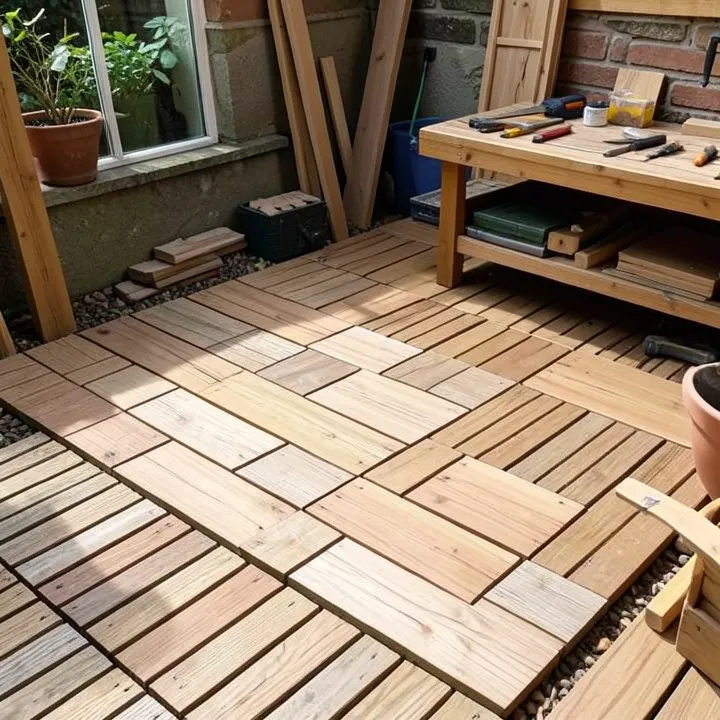
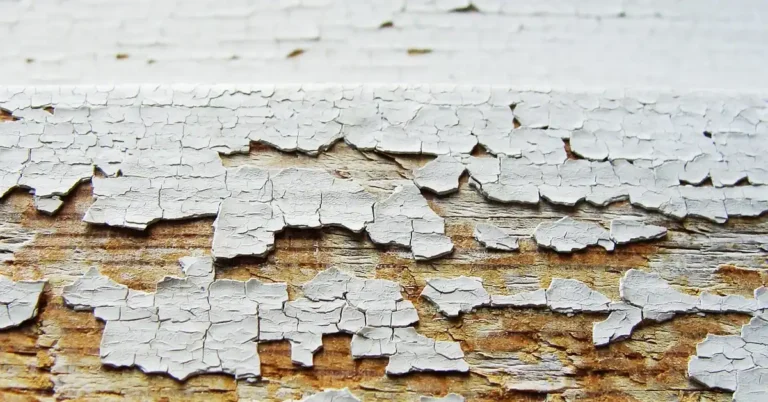
If your patio slab is cracked, your old deck boards are gray and splintering, or your balcony is bare concrete, wood deck tiles cover it in an afternoon without demolition. The catch: “wood deck tile” gets used for two genuinely different products, and picking the wrong one for your climate or budget is the single most common regret buyers report.
What Are Wood Deck Tiles?
Best for Wood Deck Tiles
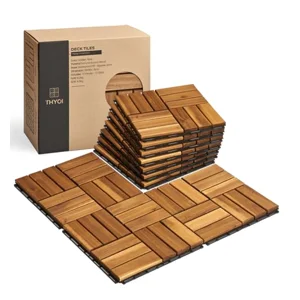 |
THYOI Premium Deck Tiles, 10 Pcs Patio Flooring – Golden Teak – Crossed – $37.59 The product this guide names by name for wood deck tiles – matched here to a real, currently listed ASIN.
|
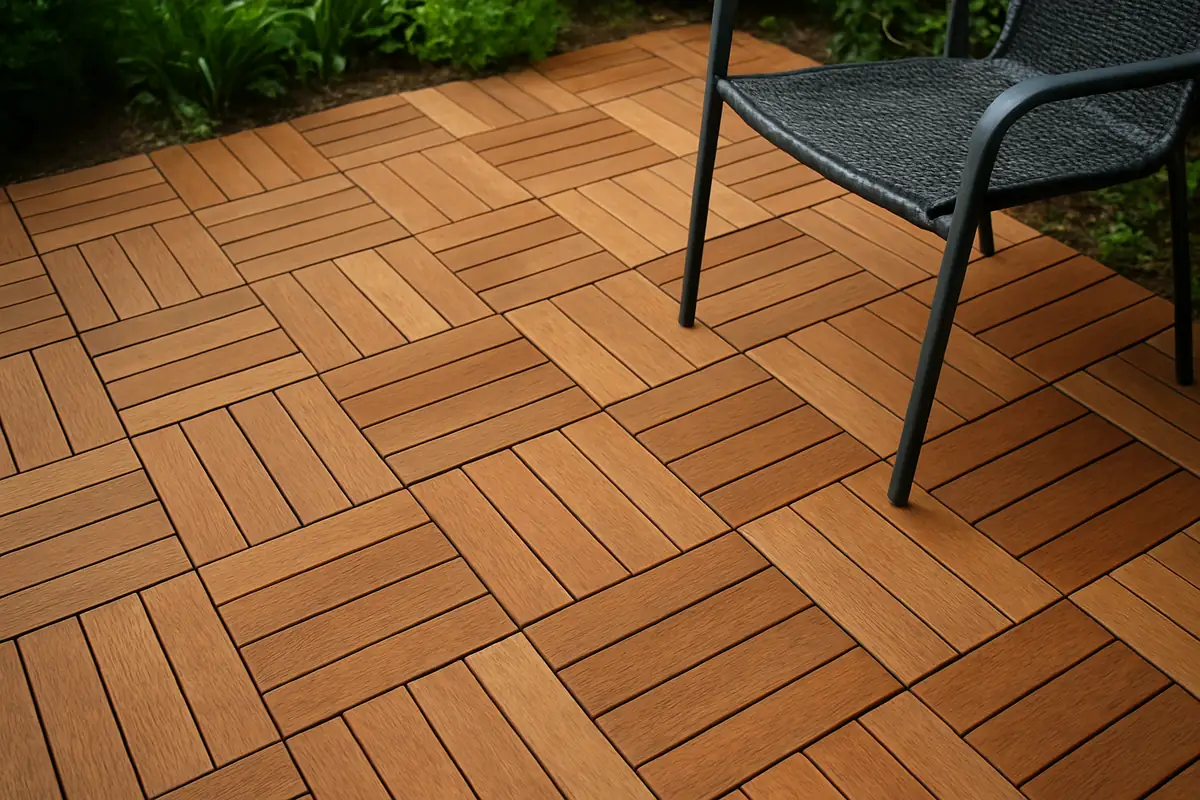
Wood deck tiles are pre-assembled squares, usually 12×12 to 24×24 inches, built from wood slats fastened to a plastic or wood support grid underneath. The grid lifts the tile off the ground by roughly 3/8 to 1/2 inch, so water drains through instead of pooling.
Each tile has interlocking tabs or clips on its edges. You set the first tile in a corner, snap the next one against it, and repeat — no screws, no adhesive, no subfloor demolition. A tile system covers an existing concrete patio, a tired wood deck, a rooftop, or a paver base directly.
The wood face is either solid hardwood slats (Ipe, teak, cumaru) fastened to a support batten, or a thinner wood veneer over a composite core. Both look similar in photos; they behave very differently outdoors, which is the distinction the next section covers.
What’s the Difference Between Wood Deck Tiles and Wood-Look Composite Tiles?
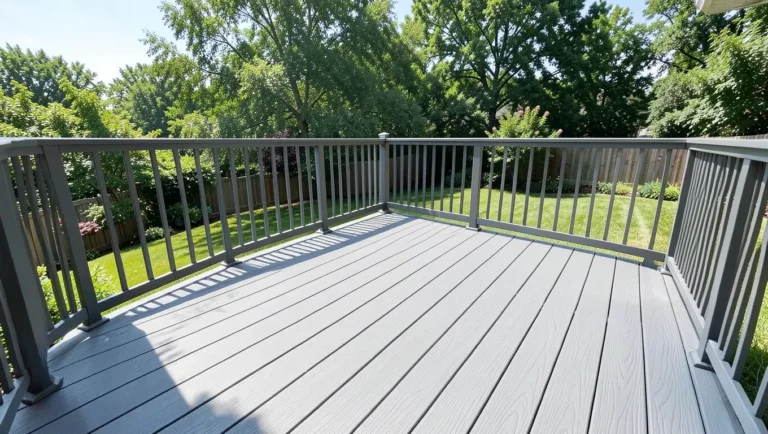
Real wood deck tiles use solid hardwood slats that require periodic oiling and show natural grain and color change over time. Wood-look composite tiles use a plastic-and-wood-fiber blend molded to resemble wood grain, need no sealing, and hold their color longer but never look fully like real timber up close.
Retail decking-tile displays rarely separate these two categories clearly, and that ambiguity is where most buyer disappointment starts. A shopper expecting the feel of real hardwood underfoot gets a composite tile with a printed wood pattern, or the reverse — someone wanting zero maintenance ends up with a hardwood tile that needs annual oil. IKEA’s outdoor decking tiles are a good example of the wood-look composite category: click-together, plastic-based, and built for zero maintenance rather than authentic wood grain.
| Attribute | Real Wood Deck Tiles | Wood-Look Composite Tiles |
|---|---|---|
| Face material | Solid hardwood slats (Ipe, teak, cumaru, cedar) | Wood-fiber/plastic composite or printed-grain PVC |
| Maintenance | Oil or seal 1–2x per year | Rinse with water; no sealing |
| Lifespan | 10–50 years, species-dependent | 15–25 years |
| Cost per sq ft | $8–$25 | $7–$15 |
| Feel underfoot | Genuine wood texture and warmth | Slightly harder, plastic-like edge |
| Fading | Grays naturally without oil (patina, not failure) | Fades slightly but color is more stable |
Neither option is objectively better — they answer different priorities. Choose real wood tiles for authentic material and the option to refinish; choose wood-look composite for the lowest upkeep and the most weather-stable color.
What Is the Best Wood Species for Deck Tiles?
Ipe is the most common premium wood species for deck tiles because its 3,680 lbf Janka hardness rating and natural oil content resist rot and insects without chemical treatment, giving it a 25- to 50-year outdoor lifespan. Cedar and pressure-treated pine cost less but last a shorter 10–15 years. Hardness figures below are sourced from The Wood Database’s Janka hardness data.
| Species | Janka hardness | Typical lifespan | Cost per sq ft |
|---|---|---|---|
| Ipe | 3,680 lbf | 25–50 years | $15–$25 |
| Cumaru | 3,540 lbf | 20–35 years | $12–$20 |
| Tigerwood | 2,160 lbf | 20–30 years | $10–$18 |
| Teak | 1,155 lbf | 15–25 years | $14–$22 |
| Cedar | 350 lbf | 10–15 years | $8–$12 |
| Pressure-treated pine | 690 lbf | 8–12 years | $8–$10 |
Ipe’s density is also why it needs pre-drilling for any add-on hardware — a standard drill bit will skate or snap trying to bite directly into it. Cedar and pine take screws and stain easily but need refinishing every 2–3 years to hold their color, versus Ipe’s 4–5 year oil cycle.
How Much Do Wood Deck Tiles Cost Per Square Foot?
Wood deck tiles cost $8 to $25 per square foot for materials, depending on species, plus $3 to $10 per square foot if you hire installation. A 120-square-foot patio (a common 10×12 balcony-to-small-patio size) runs $960–$3,000 in materials alone before labor.
- Pressure-treated pine tiles: $8–$10/sq ft
- Cedar tiles: $8–$12/sq ft
- Teak or tigerwood tiles: $10–$22/sq ft
- Ipe or cumaru tiles: $12–$25/sq ft
- Wood-look composite tiles: $7–$15/sq ft
- Professional installation (optional): $3–$10/sq ft
Because tiles interlock without fasteners, DIY installation eliminates most of that labor cost — the same reason tile systems are frequently cheaper installed than a traditional board deck of the same square footage, even though the tile material itself often costs more per square foot than raw decking boards. For a full structural deck build instead of a tile overlay, see our breakdown of the average cost of a wood deck, and our wood vs. composite decking comparison if you’re still deciding between board materials before you get to the tile-vs-board decision at all.
How Do You Install Interlocking Wood Deck Tiles?
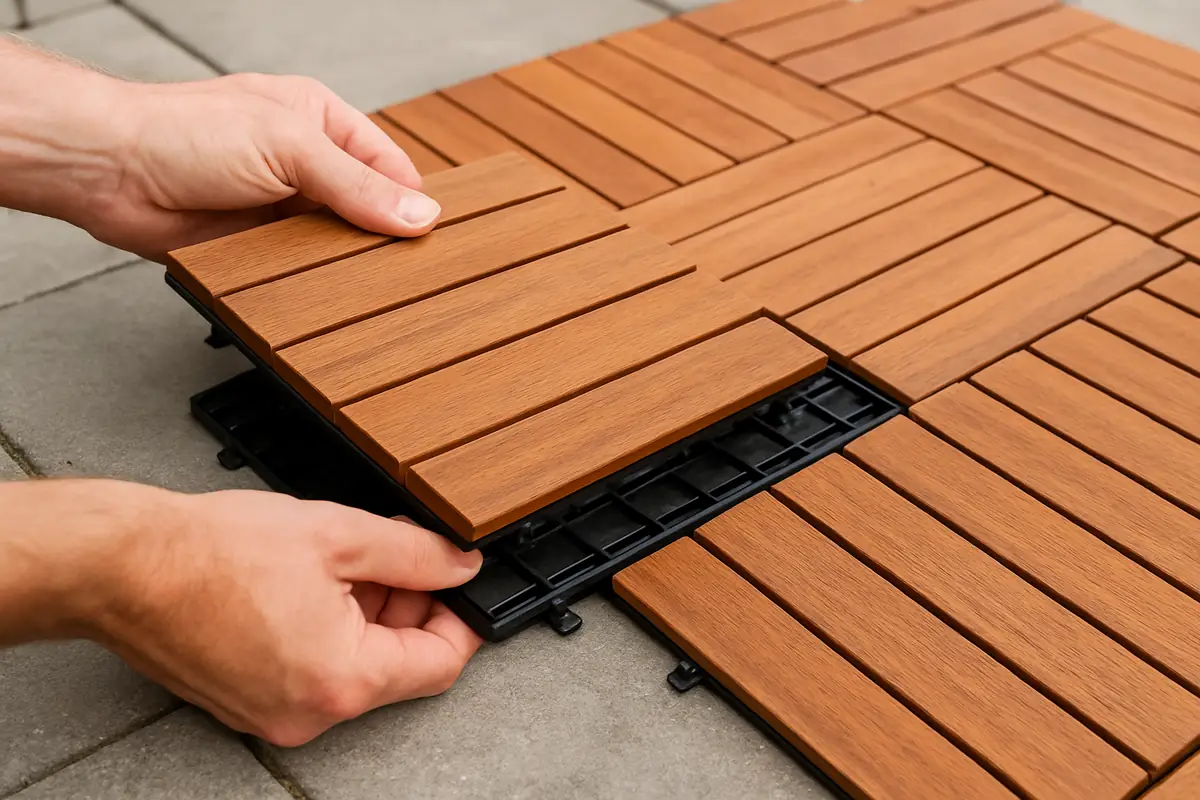
Install wood deck tiles by leveling the substrate, laying the first tile in a corner, and clicking each subsequent tile into its neighbor’s connector tabs, working row by row across the space. Most tile systems need only a tape measure, a utility knife, and a saw for edge cuts — no screws or adhesive.
- Check the substrate. Concrete, an existing wood deck, pavers, or a compacted gravel base all work directly. Fill cracks or depressions larger than 1/4 inch first — tiles telegraph an uneven surface and will rock underfoot.
- Prep grass or dirt separately. Remove sod, level and compact the soil, and lay a weed-control mat before setting tiles — skipping this step is the top cause of tiles sinking unevenly within a year.
- Start in a corner. Place the first tile flush against two adjoining edges (a wall and a step, for example) and work outward in one direction.
- Snap tiles together. Align the connector tabs on the new tile with the previous one and press down firmly until they lock flush.
- Leave an expansion gap. If the area is boxed in by walls on opposite sides, leave a 1/4- to 1/2-inch gap at the perimeter — wood tiles expand slightly with humidity and temperature swings.
- Cut border tiles to fit. Use a circular saw or jigsaw along a marked line for edges, corners, or cutouts around posts and drains.
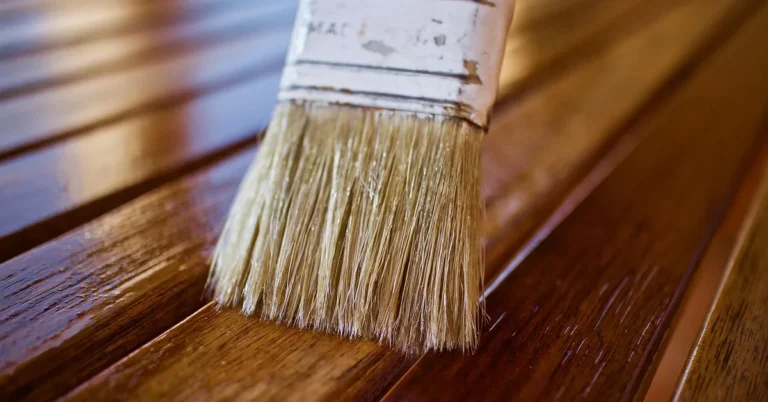
- Oil real-wood tiles after installation. A UV-protective decking oil applied once installation is finished seals cut edges and starts the maintenance clock (composite tiles skip this step entirely).
A single installer can typically finish a 100-square-foot area — a small patio or a large balcony — in three to five hours once the substrate is already flat, with most of that time spent on edge cuts rather than the field of full tiles.
Do Wood Deck Tiles Rot or Need Sealing?
Real wood deck tiles can rot if moisture is trapped underneath and the surface is never oiled, but the drainage grid under each tile — combined with oiling every one to two years — prevents the standing water and fungal growth that cause rot. Wood-look composite tiles do not rot; they are not wood.
The most common failure point is not the tile face — it’s debris trapped in the drainage grid underneath. Leaves and dirt that collect between the grid and the substrate hold moisture against the wood from below, where you can’t see it. Lifting and rinsing tiles once or twice a year (they unclick as easily as they click) clears this and is the single highest-leverage maintenance habit for wood tiles.
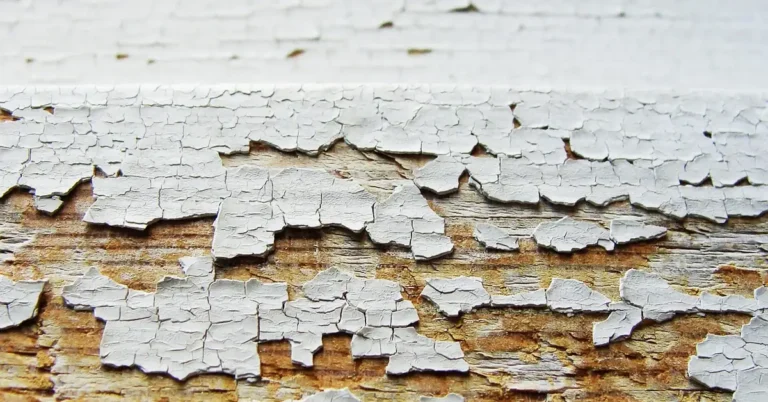
Left unoiled, most softwood tiles (cedar, pine) gray and start showing surface checking within 2–3 years — cosmetic, not structural, but it does accelerate splintering if ignored past year 4 or 5. Ipe and cumaru gray too but hold their structural integrity for decades even with no oil at all, since their density resists water absorption on its own; oiling on hardwoods is purely cosmetic. Our wood care and maintenance guide covers the oiling schedule and products in more depth for outdoor wood generally.
Where Can You Install Wood Deck Tiles?
Wood deck tiles work over any flat, structurally sound surface: concrete patios, rooftop decks, existing wood or composite decks, poolside concrete, and balconies. They are not a substitute for a structural deck over open ground — they need a solid surface underneath, not joists of their own.
- Old concrete patios — the single most common use; covers cracked or stained concrete without demolition.
- Apartment balconies — no permanent attachment needed, so renters can take tiles with them when they move.
- Rooftop decks — lightweight tile systems distribute load evenly and allow the roof membrane underneath to stay inspectable.
- Over a tired wood deck — covers weathered boards without pulling them up, as long as the old deck is still structurally sound.
- Poolside concrete — the drainage grid handles splash-out and quick drying better than a solid slab surface alone.
Are Wood Deck Tiles Worth It?
Wood deck tiles are worth it for covering an existing hard surface fast and without demolition; they are not worth it as a replacement for a structural deck built over open ground, since they need a solid substrate underneath and are not rated to span joists on their own.
Where they win: no demolition, no permits in most jurisdictions (confirm locally — tile systems are usually classified as surface finish, not structural work), a weekend timeline, and the ability to remove and reset tiles if the substrate ever needs attention.
Where they fall short: individual tile seams stay visible up close in a way a continuous board deck doesn’t; hardwood tiles need pre-drilling for anything you fasten to them; and tiles laid over an uneven substrate will rock or click underfoot no matter how well the tiles themselves are made — the prep work, not the tile, is what most installs get wrong.
Interlocking hardwood deck tile kits are sold pre-assembled by the square foot, which makes it easy to buy exactly the coverage a patio or balcony needs without custom-cutting full boards.
Ready to cover a patio or balcony without demolition?
See Interlocking Wood Deck Tile Kits on AmazonAs an Amazon Associate we earn from qualifying purchases.
Frequently Asked Questions
Are wood deck tiles the same as composite decking?
No. Composite decking is full-length boards installed over a structural frame, while wood deck tiles are modular squares that click together over an existing hard surface. Composite deck tiles exist too, but they’re a wood-look surface on a composite core, not composite boards.
Can you install wood deck tiles over grass or dirt?
Yes, but only after removing the sod, leveling and compacting the soil, and laying a weed-control mat first. Tiles set directly on grass sink unevenly within months as the ground settles and grass grows up through the gaps.
How long do wood deck tiles last?
Softwood tiles (cedar, pressure-treated pine) last 10–15 years; premium hardwood tiles (Ipe, cumaru) last 25–50 years with minimal care. Wood-look composite tiles typically last 15–25 years and need no oiling at all.
Do wood deck tiles need to be sealed every year?
Softwood tiles benefit from oiling every 1–2 years to hold color and slow surface checking. Dense hardwoods like Ipe don’t structurally need it — oiling there is purely cosmetic, to prevent the natural gray patina.
Can you cut wood deck tiles to fit a custom space?
Yes. A circular saw or jigsaw cuts most tile systems cleanly along a marked line for borders, corners, and cutouts around posts or drains. Hardwood species like Ipe dull blades faster than cedar or composite tiles, so a carbide-tipped blade lasts longer. If you’re working with ceramic or porcelain tile instead of the wood tiles covered here, see our guide on cutting tile without a wet saw for nipper and scoring methods that skip the saw entirely.
Do wood deck tiles increase home value like a built deck?
Wood deck tiles improve a space’s appearance and usability but are not typically appraised as an added structure the way a permitted, built deck is, since they sit as a surface finish rather than permanent construction.
Sponsored / affiliate links. As an Amazon Associate I earn from qualifying purchases. I may earn additional commission from eligible campaigns.
 Wood Interlocking Deck Tiles, 12"X12" 36 PCS Patio Wooden Deck Flooring Waterproof for Balcony, Backyard, Garden & Poolside, All Weather Use, Natural Wood
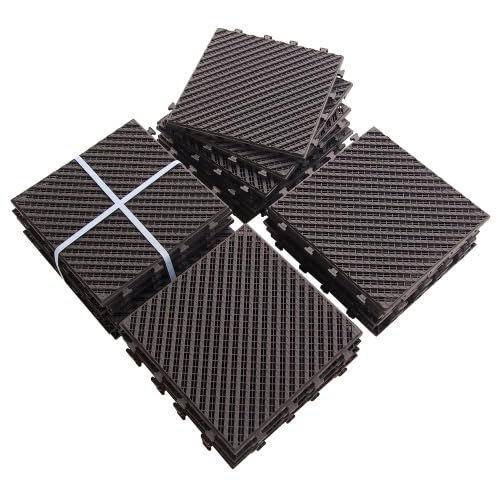 Patio Interlocking Deck Tiles, 12"x12" Composite Decking Tiles, 37-Pack, Four Slat Weatherproof Outdoor Flooring for Balcony, Porch, Backyard, Dark Brown