1/2-Inch OSB vs Plywood Price at Lowe’s: Which Costs Less?
1/2-inch OSB is the cheaper sheet good at Lowe’s – a nominal 1/2-inch (7/16-in actual) OSB sheathing panel runs roughly $18-25, while a comparable 1/2-inch plywood panel typically runs $45-65 or more depending on grade. The gap holds up whether you’re comparing basic construction sheathing or a sanded project panel – OSB is reliably the lower-cost option at the same nominal thickness. But price alone doesn’t tell you which one belongs in your project. OSB swells more at cut edges if it gets wet, and plywood holds screws better at the edge – two real tradeoffs worth knowing before you load either one onto a cart.
Note: if you searched for “1/2 price” expecting a Lowe’s clearance sale, that’s not what this guide covers – this is about the actual shelf price of 1/2-inch-thick OSB and plywood sheets. Below is what both actually cost right now, why OSB is cheaper to manufacture, and how to decide between them.
1/2-Inch OSB vs Plywood Prices at Lowe’s (Current Listings)
Lowe’s prices shift by store, region, and stock levels, so treat these as a real, sourced starting range rather than a fixed number – always check your local store or Lowes.com before buying. Checked live on Lowes.com (September 2026):
| Product | Actual thickness | Price |
|---|---|---|
| 7/16-in OSB Sheathing (bestseller, sold as basic wall/roof sheathing) | 0.42-in | $18.43 |
| 19/32-in OSB Subfloor (thicker, floor-rated) | 0.563-in | $31.25 |
| ZIP System 7/16-in OSB Sheathing (integrated weather barrier) | 0.4375-in | $35.50 |
| 1/2-in CDX Pressure-Treated Plywood Sheathing | 0.469-in | $60.18 |
| 1/2-in Sanded Project Plywood (paint/stain grade) | 0.453-in | $54.98–$65.28 |
The exact “1/2-inch” label is a nominal size on both products – actual thickness runs slightly under 1/2 inch (typically 7/16 to 19/32 for OSB, 15/32 to 1/2 for plywood) because of how the panels are sanded and manufactured. Lowe’s doesn’t stock a plain untreated 1/2-inch CDX sheathing panel at every store; where it’s available, expect it to land well above basic OSB sheathing and below the pressure-treated price shown here. Across every pairing checked, OSB came in lower – the basic 7/16-in sheathing panel most homeowners actually use costs less than half of what a comparable plywood panel runs.
Best OSB Edge Sealer Pick
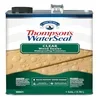 |
Thompson’s WaterSeal Clear Wood Sealer, 1 Gallon – $19.94 If you go with OSB for anything exposed to weather or ground contact, seal the cut edges – that’s where OSB’s edge-swelling weakness actually shows up, as covered below.
|
As an Amazon Associate we earn from qualifying purchases.
One thing most price comparisons skip: Lowe’s applies real bulk-quantity discounts on sheet goods that change the per-sheet math on a full framing job. The 7/16-in OSB sheathing above drops 5% per sheet once you buy 68 or more, and the ZIP System OSB panel drops 10% at 80+. Plywood panels carry similar step-discounts at lower quantities (the pressure-treated CDX panel above saves 10% at 24+). If you’re sheathing an entire wall or roof rather than buying a sheet or two for a small repair, price out the bulk tier before assuming the per-sheet price above is what you’ll actually pay – it can meaningfully narrow or widen the OSB-vs-plywood gap depending on how many sheets each option needs you to buy to hit the discount.
Why OSB Costs Less Than Plywood at the Same Thickness
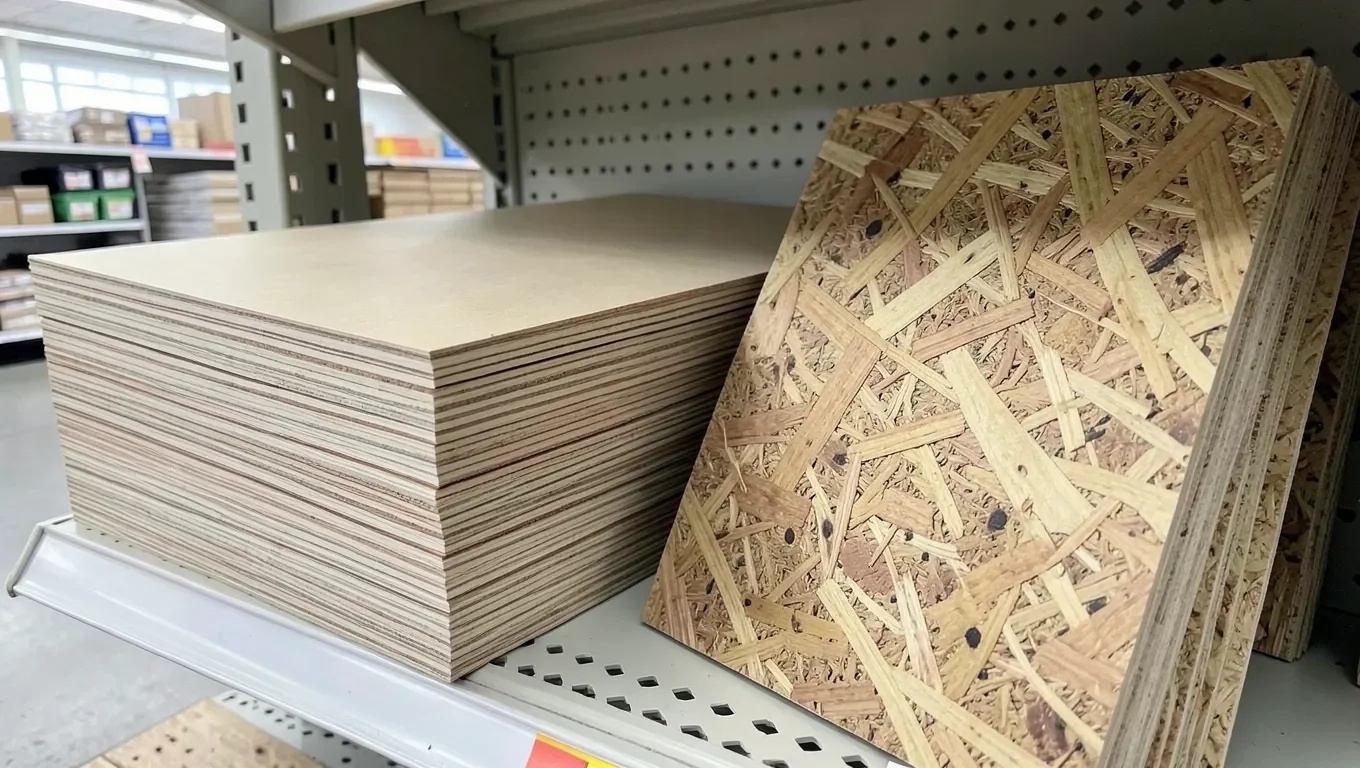
The price gap isn’t a marketing trick – it comes from how each panel is actually made. OSB (oriented strand board) is manufactured from wood strands and flakes, sliced from logs, dried, coated with resin, and pressed in cross-oriented layers under heat and pressure into a solid panel. Because the raw material is chopped strands rather than full-length veneer, OSB mills can use smaller-diameter, faster-growing trees and get more usable panel out of each log – there’s very little waste compared to peeling a log for veneer.
Plywood is built differently: thin sheets of veneer are peeled off higher-grade logs in one continuous ribbon, dried, graded, and glued together in cross-laminated layers. That process needs straighter, larger-diameter logs to peel a clean veneer ribbon, more processing steps per sheet, and historically pricier raw material sourcing than OSB’s strand-based approach. More processing and a narrower supply of suitable logs is why plywood has carried a real, consistent price premium over OSB at the same nominal thickness for years – not just currently at Lowe’s.
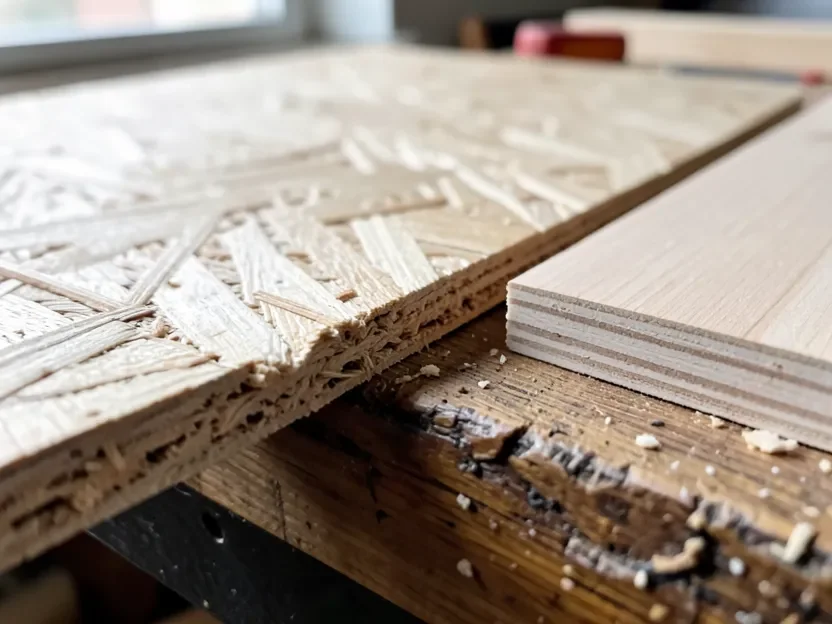
The Real Tradeoff: Screw-Holding and Moisture Resistance
Cheaper isn’t automatically better, and this is where the two materials genuinely diverge instead of just being “the same thing at a different price.”
Screw-holding and surface finish favor plywood. Plywood’s continuous veneer layers give screws more consistent, uninterrupted wood fiber to bite into, especially near a cut edge – OSB’s strand-and-resin structure is more prone to crumbling or stripping out right at an edge under repeated stress. Plywood’s face is also smoother and more consistent for painting, staining, or clear-coating; OSB’s visible strand pattern telegraphs through most finishes and generally isn’t used where appearance matters.
Moisture resistance favors plywood, and this is OSB’s best-documented weakness. When OSB’s cut edges get wet and stay wet – a leaking roof edge, a subfloor seam that sees standing water, ground contact without a vapor barrier – the compressed wood strands absorb water and swell permanently at the edge, creating a raised, spongy ridge that doesn’t fully shrink back down once it dries. Plywood absorbs some moisture too, but its solid veneer layers swell far less dramatically and are more likely to return close to their original dimension once dry. This is exactly why edge-sealing OSB (the product above) is a genuinely useful step for OSB used outdoors, near grade, or anywhere a cut edge won’t stay bone dry – plywood needs it less for the same exposure.
Which One Should You Buy?
For wall and roof sheathing that stays covered and dry once the building is closed in – the most common 1/2-inch use case – OSB’s lower price is a straightforward win, and it’s what most framing crews already use by default. For subfloor seams, shed floors, or any application where an edge could sit in standing water or ground moisture, either upgrade to plywood or budget for edge sealer on the OSB. For anything you’ll paint, stain, or want to look finished – shelving, built-ins, furniture backs – plywood’s smoother face and better screw-holding are worth the extra cost per sheet.
FAQ
Is 1/2-inch OSB cheaper than 1/2-inch plywood at Lowe’s?
Yes. Checked live on Lowes.com, basic 7/16-in OSB sheathing (the closest widely-stocked equivalent to a nominal 1/2-inch panel) runs about $18.43, while comparable 1/2-inch plywood panels run $45-$65 or more depending on grade and treatment. The gap holds across construction-grade sheathing and higher-grade sanded panels – OSB is consistently the lower-cost sheet good at the same nominal thickness. Prices vary by store and change over time, so confirm the current price for your local Lowe’s before buying.
Why is OSB cheaper than plywood?
OSB is made from wood strands and flakes bonded with resin under heat and pressure, which lets mills use smaller, faster-growing trees with very little waste. Plywood is made by peeling thin veneer sheets from larger, higher-grade logs and cross-laminating them, which needs straighter logs and more processing steps per sheet. That difference in raw material and manufacturing has kept plywood priced above OSB at the same thickness for years, not just currently.
Does OSB need to be sealed at the edges?
Not for every use, but it matters more for OSB than for plywood. OSB’s compressed wood strands absorb water and swell permanently at a cut edge if it stays wet, leaving a raised, spongy ridge that doesn’t fully shrink back once dry. For OSB used outdoors, near ground contact, or anywhere a cut edge could sit in standing water, sealing the edges with a clear penetrating wood sealer meaningfully slows that absorption. Plywood’s solid veneer layers swell less under the same exposure, so it needs edge sealing less often.
For more on related sheet goods, see our guides on CDX plywood vs. OSB, 4×8 1/2-inch plywood sheet prices, and MDF vs. OSB if you’re weighing a third option. You can browse every plywood and sheet-good guide on the site for more sizing and pricing breakdowns.
Bottom line: 1/2-inch OSB is the cheaper sheet good at Lowe’s by a wide margin, and for covered, dry framing applications that lower price comes with no real downside. Once moisture, ground contact, or a finished appearance enters the picture, plywood’s better screw-holding and moisture resistance can be worth paying more for – or seal the OSB’s edges and get most of the way there for a few dollars.
Sponsored / affiliate links. As an Amazon Associate I earn from qualifying purchases. I may earn additional commission from eligible campaigns.