Does Marine Ply Warp? Yes – Why It Happens and How to Stop It
Yes, marine plywood can warp, but not for the reason most people expect. Its waterproof glue keeps the layers bonded when the sheet gets wet. It does nothing to stop the wood itself from swelling on one face and shrinking on the other, and that imbalance is what bends a sheet.
Marine ply is a better bet than ordinary plywood anywhere moisture is a problem, and a well-made sheet stays flat for decades on boats, docks and in wet rooms. This guide explains what actually makes a sheet cup or bow, how to read a warped sheet to find the cause, and the handful of habits (storage, sealing, fastening) that keep it flat.
Does Marine Plywood Warp? The Short Answer
Best Edge Sealer Pick
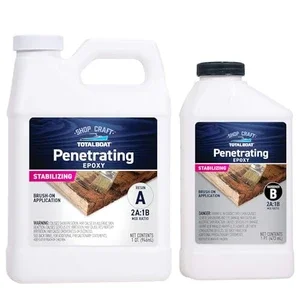 |
TotalBoat Clear Penetrating Epoxy Wood Sealer, 1.5 Quart Kit – $59.99 Low-viscosity epoxy that soaks into plywood edges and bare faces, the step that keeps moisture out and both sides of a sheet in balance.
|
Marine plywood warps less than construction or interior plywood, but it is not warp-proof. The warping that does happen is almost never a glue failure. It is a moisture-balance problem: one face or edge takes on or loses water faster than the other, the wood fibers on that side change size, and a flat sheet becomes a shallow bowl or a propeller-shaped twist.
Three points explain nearly every case:
- Thin sheets bow more than thick ones. A 1/4 in (6 mm) sheet has very little stiffness to resist an uneven moisture load, while a 3/4 in (18 mm) sheet resists it far better.
- Unsealed sheets bow more than sealed ones. A coating slows moisture movement, and a coating on only one face makes the imbalance worse, not better.
- Badly stored sheets bow before you ever use them. A sheet leaned at a steep angle for months can take a permanent set in the shop.
Why Waterproof Glue Does Not Stop Warping
The most common myth about marine plywood is that the waterproof glue makes it immune to movement. It helps to know what the glue is actually doing. Proper marine ply, made to the British Standard BS 1088, is bonded with a boil-proof phenolic adhesive (usually called WBP, for weather and boil proof). That glue line will not let go if the sheet is soaked or even boiled, which is why delamination is rare in genuine marine ply.
The veneers themselves are a different story. Each ply is thin wood, and wood takes on water from the air and from spills whether or not the glue is waterproof. Plywood is built with the grain of neighboring plies running at right angles, which cancels most in-plane swelling and shrinking and is the whole reason plywood is more stable than a solid board. That cancellation only works if the two faces are in the same moisture condition. Once they are not, the cross-grain construction has nothing to cancel and the panel curves.
This is also why the type of veneer matters. Okoume, the light wood used in a lot of marine plywood, is easy to bend and gives a smooth sheet, but it is not a rot-resistant species. Meranti and other tropical faces have better natural durability. Neither one is a reason to leave a sheet unprotected. If you are comparing species, our okoume vs mahogany comparison covers the trade-offs.
What Actually Makes Marine Ply Warp
Moisture reaching one face more than the other
This is the main cause. A sheet lying on a damp concrete floor with the top exposed to dry shop air, a deck panel that is wet from above and shaded underneath, and a cabinet side against a steamy shower wall all have the same problem: two faces at two different moisture contents. The face that dries shrinks, the face that stays damp stays larger, and the sheet curves toward the drier side.
A finish on only one side
Painting or varnishing the visible face and leaving the back raw is a classic way to create a bow. The coated side gains and loses moisture slowly, the raw side does both quickly, and seasonal humidity swings pull the sheet out of flat. Coat both faces with the same system and the same number of coats, even if the back never shows.
Bare edges and end grain
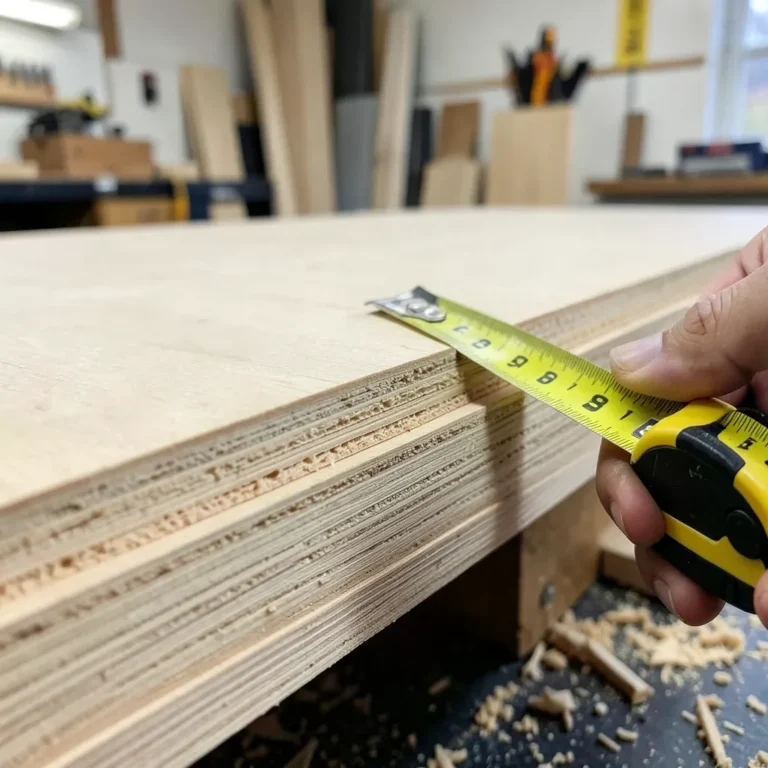
The edges of a sheet are the veneers cut across their ends, and end grain drinks water many times faster than a flat face. A bare edge left in standing water wicks moisture into every ply, which can cause edge swelling and, over time, ripples along the panel. This is the most preventable cause, and the fix is covered in the sealing section below.
Sheet thickness and panel size
Wide, thin panels are the worst case, because there is little cross-section to hold the shape and a lot of surface for moisture to work on. A 4×8 sheet of 6 mm ply is much more likely to sag or bow than a 12 mm sheet, and a long narrow strip cut from a sheet will bow more than the same wood left as a full panel.
Sun, heat and fastening stress
Direct sun on one face dries that face fast. Screwing a wet, still-swollen sheet tightly to a rigid frame locks it in place, and as it dries it pulls against the fasteners and bows in the gaps between them. Let a sheet settle in the room it will live in before you fix it down.
How to Read a Warped Sheet
The direction of the curve tells you which face is losing moisture. The rule is simple: the drier face is the shorter face, so it ends up on the inside of the curve (the concave side). Use that to find the cause and decide what to fix.
| What you see | Most likely cause | What to change |
|---|---|---|
| Sheet cups, concave face is the coated or upper face | That face is drying or the other face is absorbing moisture from below | Seal the underside and edges, lift the sheet off damp surfaces |
| Sheet bows along its length while stored | Stored standing at a steep angle or resting on uneven supports | Store flat on a level platform with evenly spaced supports |
| Edges ripple or feel thicker than the middle | Edge and end grain has soaked up water | Seal all cut edges with epoxy before installation |
| Sheet twists like a propeller | Uneven support or an uneven moisture load, common on wide thin sheets | Support the full sheet and use a thicker grade |
| Panel bows after painting one face | Unbalanced finish | Apply matching coats to both faces |
How to Store Marine Plywood So It Stays Flat
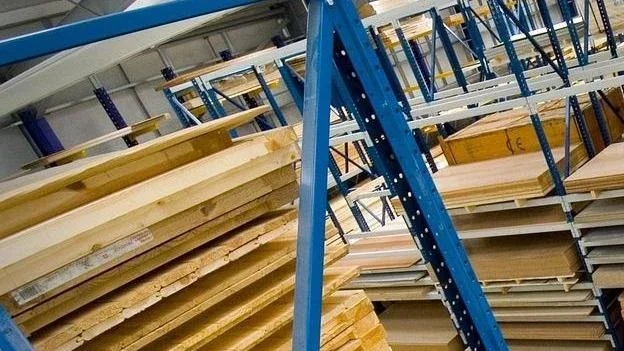
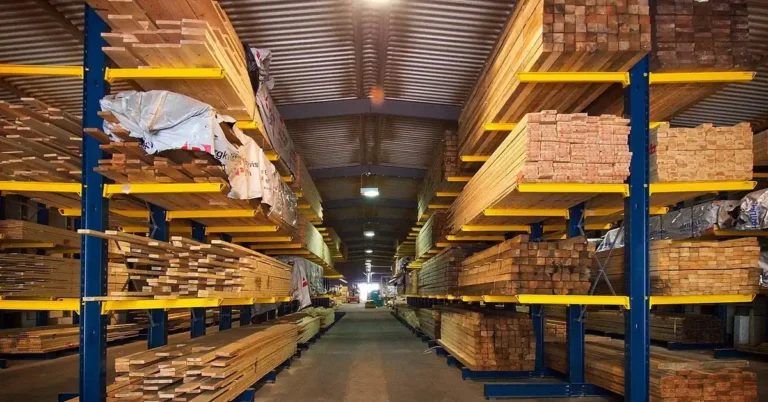
Storage is where a lot of avoidable warping starts, because a sheet can sit for months before it is cut. The best practice is straightforward:
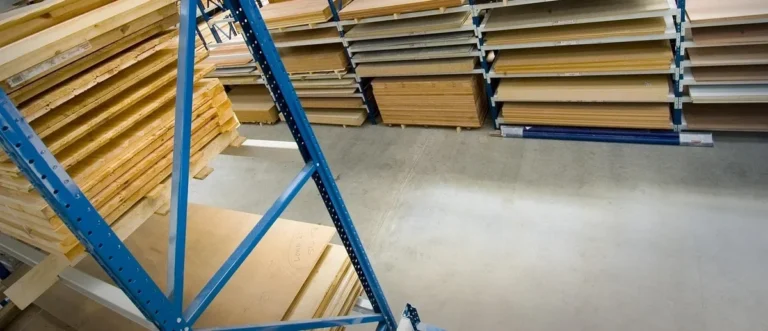
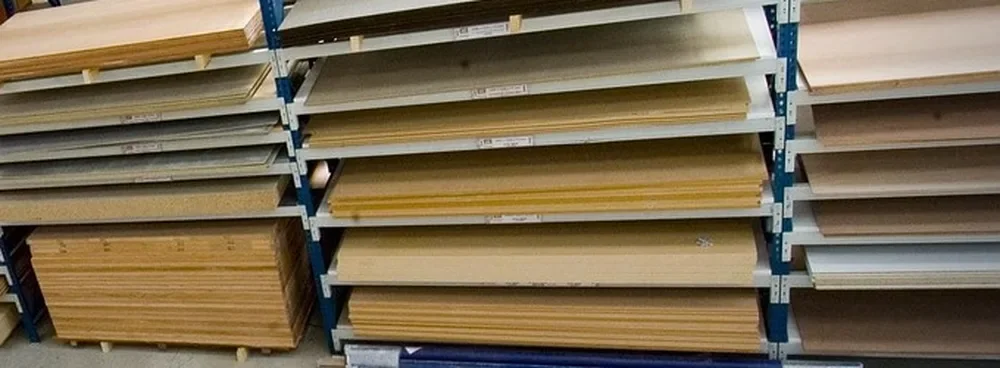
- Store flat on a level platform. Build a frame or use pallets, with supports (stickers) about every 16 in (40 cm) so no part of the sheet is left unsupported.
- Keep it off concrete. Concrete floors release moisture, and a sheet lying directly on one is in the exact one-face-damp situation described above.
- Put a flat weight or a spare sheet on top so the top sheet does not curl as the room humidity changes.
- If you must stand sheets up, keep them close to vertical with support along the full length, not leaning at a steep angle against a wall where the middle sags.
- Keep sheets out of sun and away from heaters and vents. Uneven drying is the enemy, so even air around the stack is best.
How to Seal Marine Plywood to Prevent Warping
Sealing does not make plywood waterproof, but it slows moisture movement enough to keep both faces close to the same condition. For a step-by-step method with cure times, see our guide on how to seal marine plywood, and use these points as the anti-warp checklist:
- Seal all six sides (both faces and all four edges), not just the visible one.
- Do the edges first and give them extra coats. A low-viscosity penetrating epoxy soaks into the end grain and is one of the most effective edge treatments, which is why we picked one for the box above.
- Match the coats on both faces. If the front gets epoxy plus varnish, the back needs at least the epoxy.
- Coat before you install and seal every cut edge, drilled hole and screw hole made afterward.
- Use compatible products. Epoxy under most marine varnishes works well, but follow the manufacturer directions for the recoat window.
Sealing all sides also matters for a second reason: it protects the outer veneers from moisture reaching the glue lines, which is where long-term delamination starts on sheets that are constantly wet.
Can You Flatten a Warped Sheet?
A mild, recent bow can often be pulled back. Because the concave face is the shrunken, drier one, the approach is to give that face moisture again slowly while the sheet rests flat. Dampen the concave face lightly, lay the sheet concave side up on a flat, level surface, and weigh it down evenly for a few days while it equalizes. Do not soak it, and do not use heat.
This works best on unfinished sheets and small bows. A sheet with a hardened finish on the concave face will not take up water there, and a bow that has been held for a long time, or a sheet that was fastened while wet, may not fully recover. In those cases, cutting the sheet into smaller panels and fixing them to a stiffening frame is often a better use of the material than fighting the curve.
Marine Plywood vs Exterior and Standard Plywood for Warping
Marine ply is not immune, but it starts from a better position. The differences that matter for flatness are glue, core quality and how closely the panel is inspected.
| Type | Glue | Core quality | Warp resistance |
|---|---|---|---|
| Marine (BS 1088) | Boil-proof phenolic | Void-free or tightly limited voids, durable face veneers | Best of the three, still needs sealing |
| Exterior grade | Exterior-rated waterproof glue | Voids and patches allowed | Fair, edges soak up water quickly |
| Standard interior | Interior glue, not made for repeated wetting | Voids and thin faces common | Poor when wet, can delaminate as well as bow |
Void-free cores matter for flatness because a gap in an inner ply is a soft spot where the sheet flexes and where water collects. Genuine marine ply is also selected for consistent veneer quality. In the US the words “marine grade” on a label are not always backed by a standard, so look for a BS 1088 or Lloyd’s stamp on the panel if you need the real thing. For cost trade-offs and cheaper options, see our list of alternatives to marine plywood, and for a wider look at plywood movement, read does plywood warp.
When Marine Plywood Is Worth It
If the project will be wet for long periods, such as a boat, a dock, a shower surround or an outdoor cabinet that will get soaked, marine ply is worth the cost because the glue lines and cores hold up. If the piece will stay dry, a cheaper grade sealed well will stay just as flat. We cover that decision in when a builder would use marine grade plywood, and if you are weighing it against treated lumber, see our marine plywood vs pressure treated wood comparison.
Frequently Asked Questions
Does marine ply warp over time?
Marine plywood can warp over time if the two faces sit at different moisture levels, if it is stored at a steep angle, or if only one side is finished. A sealed, well-supported sheet in a stable environment usually stays flat for many years.
How to prevent marine ply from warping?
Store sheets flat on a level platform with supports about every 16 in, seal all six sides with matching coats, and give the edges extra epoxy before installing. Let the sheet acclimate to the room before fastening it.
Is marine plywood waterproof?
Marine plywood is water-resistant, not waterproof. The phenolic glue survives soaking, but the wood veneers still absorb water and can swell, so the sheet should be sealed, especially the edges.
What causes marine plywood to warp?
The main cause is uneven moisture between the two faces, which makes one side shrink or swell more than the other. Bare edges, one-sided finishes, thin sheets, direct sun and poor storage all contribute.
Can a warped sheet of marine plywood be flattened?
A mild, recent bow can often be reduced by lightly dampening the concave face and weighing the sheet flat for a few days. Sheets with a hard finish on the concave face or a long-held bow may not fully recover.
The Bottom Line
Marine plywood is the most warp-resistant plywood you can buy for wet conditions, but it needs the same basics as any sheet: balanced moisture, sealed edges and flat storage. Treat the glue as insurance against delamination and treat sealing and storage as your protection against bending, and a sheet of marine ply should stay flat for the life of the project.
Sponsored / affiliate links. As an Amazon Associate I earn from qualifying purchases. I may earn additional commission from eligible campaigns.