Paste Wax on a Table Saw Top: Does It Stop Rust?
Paste wax can slow rust on a table saw top, but it usually works as a short-lived barrier. If shop humidity stays above about 50% relative humidity for long periods, controlling the moisture in the room first is a common rule of thumb. Leave that alone, and cast iron can stain, pit, and drag enough to affect feed. This guide explains what paste wax does, when it is enough, and when you need dehumidification, heat, or better storage habits.
Paste wax’s limits on preventing table saw rust
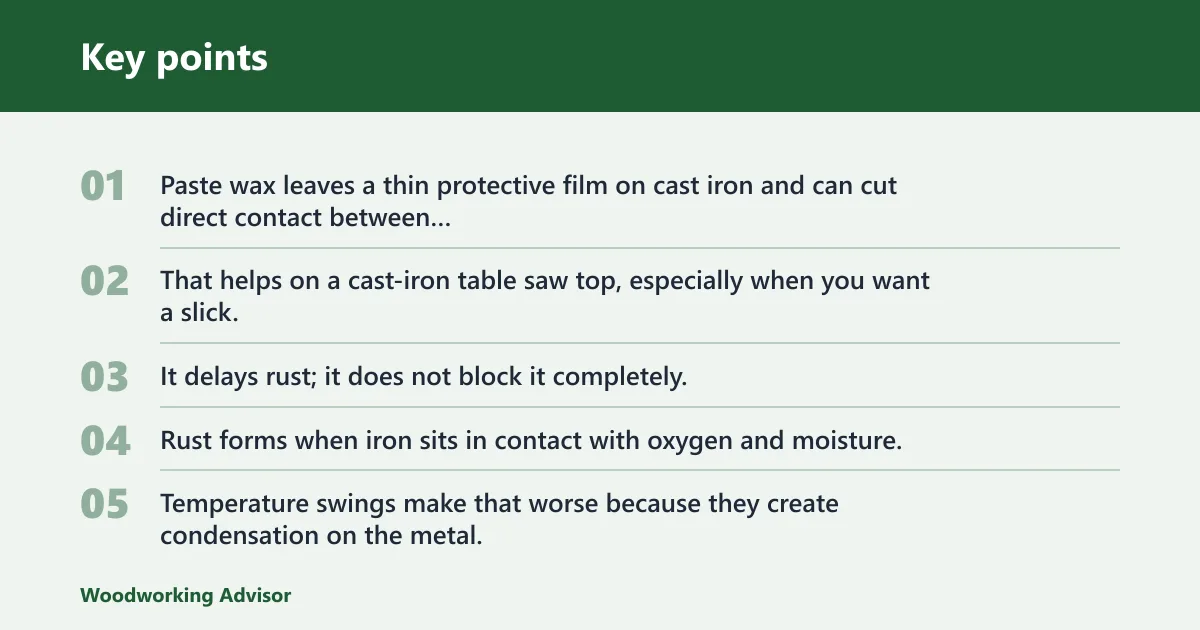
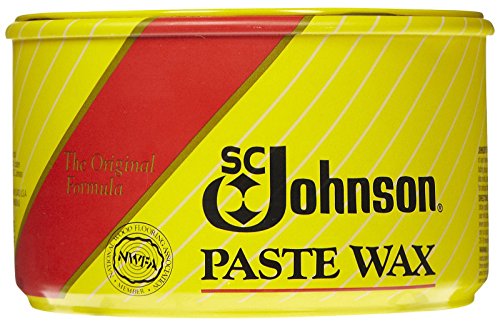

Yes, but only partly. Paste wax leaves a thin protective film on cast iron and can cut direct contact between air, moisture, and the surface. That helps on a cast-iron table saw top, especially when you want a slick, low-friction work surface. It delays rust; it does not block it completely.
Rust forms when iron sits in contact with oxygen and moisture. Temperature swings make that worse because they create condensation on the metal. In an unheated garage shop, that moisture can defeat weak coatings quickly enough that wax becomes a temporary aid rather than a dependable rust plan.
What paste wax does on cast iron
Use floor wax or furniture paste wax made for stationary machinery tops. It dries to a thin film after the solvent flashes off, then buffs to a smoother surface. That film can slow light surface rust and help stock glide more easily across the top.
Where the wax film falls short
Wax wears off with use, dust, and repeated wiping. It also breaks down when the top keeps sweating from cold-to-warm swings. In humid coastal shops or garages with daily temperature cycling, the coating may still look fine while moisture finds weak spots under the film.
Slickness versus rust prevention
These are related but not identical. Wax often does more for feed than for long-term corrosion control. A saw top can feel slick and still rust if the shop air keeps condensing on the iron.
📊 Fine Woodworking tested 20 commonly available rust preventers. Source: The Best Rust Preventers.
What you’ll need
- Paste wax for floors or furniture, not car wax
- Clean microfiber cloths
- Mineral spirits or a safe cleaner for cast iron
- Hand pad or fine abrasive for light rust removal
- Dry rags for final wipe-down
- Optional: dehumidifier for the shop
Start with a clean, dry top. Dust, pitch, and old wax residue can block the film and make buffing uneven. If the cast iron already has orange spotting, remove the light rust first so the new coat sits on metal instead of debris.
- Unplug the saw and clear the table surface.
- Wipe the top with mineral spirits or a safe cleaner until no grime transfers.
- Remove light rust with a hand pad or fine abrasive, then wipe dry.
- Apply a thin coat of paste wax with a clean cloth.
- Let the solvent flash off, then buff until the surface feels slick, not grabby.
- Recheck corners, miter slots, and fence-contact areas for missed residue.
A thin coat matters. Heavy wax buildup can leave streaks, trap dust, and make the top feel uneven. If the coat looks cloudy after drying, buff again rather than adding more product right away.
Say your 27-inch cast-iron top sits in an insulated but unheated shop. A winter warm-up from about 35°F to 60°F can leave moisture on the metal before the room fully dries. In that case, wax may still improve glide, but it will not outrun repeated condensation without help from heat or a dehumidifier.
How often should I reapply wax?
Reapply based on shop severity, not a fixed calendar alone. In a heated shop with light use, paste wax can often be refreshed when the surface starts feeling dry or less slick. In an unheated garage or humid shop, expect to recoat much more often because moisture and wiping strip the film faster.
Light-use heated shop
Reapply when feed starts feeling sticky or after a thorough cleaning. For many shops, that means a few times per year. If the saw is covered and the room stays dry, the coating can last longer than in a garage shop.
Weekly-use unheated shop
Plan on checking the top often during winter and recoating whenever the surface loses its slick feel. A weekly inspection makes more sense than a rigid schedule, because condensation events can wipe out the film between uses.
Daily-use humid shop
Wax alone is rarely enough here. Reapply after each deep clean, but treat the coating as a temporary friction aid. If rust keeps returning, the better fix is shop-wide humidity control.
Suppose a saw in a coastal shop shows dull gray streaks at the front edge every few weeks. That pattern usually points to air moisture and touch wear together. In that setup, more wax may buy time, but it does not solve the cause.
Paste wax vs. better rust prevention
| Shop condition | Expected wax performance | Reapplication interval | Failure risk | Better alternative |
|---|---|---|---|---|
| Unheated garage | Short-term slickness; light rust delay only | Every 1–4 weeks in winter, then recheck after condensation events | High | Boeshield plus dehumidifier or heated storage |
| Insulated but unheated shop | Moderate slip, limited rust protection | Monthly to every 6 weeks | Moderate to high | TopCote or Boeshield, plus humidity control |
| Heated shop | Good slickness and fair short-term rust delay | Every 2–4 months | Low to moderate | Paste wax is usually enough if humidity stays stable |
| Humid coastal climate | Weak rust control unless the room stays dry | Every 2–4 weeks | High | Dehumidifier, then a spray protectant |
| Frequent temperature swings | Wax film breaks down fast | After each major swing or weekly | High | Humidity control and a better protective spray |
What works better than wax in a damp shop?
In cold, heavy-moisture conditions, Boeshield and similar spray protectants usually hold up better than paste wax alone. TopCote is another common option for unheated garages, and users often report reapplying it several times per year. Even then, coatings are only part of the answer when condensation keeps forming.
Boeshield for cold, heavy-moisture conditions
Boeshield is often discussed for damp, cold shops because it leaves a protective film that can outlast wax in harsher conditions. Forum reports also mention wiping the film before cutting so the surface does not feel oily or transfer residue to workpieces.
TopCote for repeat spray maintenance
TopCote is commonly used as a spray-on rust preventer and lubricant on cast iron. It is often applied several times per year, which makes it practical for a shop that needs quick maintenance. It still needs regular renewal in an unheated garage.
Dehumidifier for shop-wide control
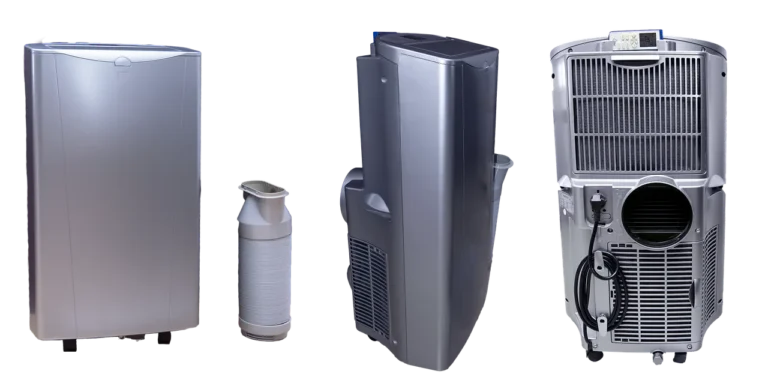
When rust keeps coming back, the stronger fix is to reduce moisture in the room itself. A dehumidifier usually does more than any coating alone, especially in humid climates and winter shops with condensation. For convenience, many shops need a drain setup so the unit can run without constant emptying.
Use coatings on the machine, but fix the air if the air is the problem. That is the clean line between a temporary surface aid and a real rust plan.
Should I use Boeshield, TopCote, or paste wax on cast iron?
Use paste wax for light-use heated shops where slickness matters and rust pressure is modest. Choose TopCote when you want a spray-on maintenance routine for an unheated garage or a shop that sees seasonal dampness. Pick Boeshield when cold and moisture are the main problem and you need a tougher film.
None of these products is permanent. Paste wax is the simplest and most furniture-friendly option. Boeshield and TopCote give more protection in harsh conditions, but they still need reapplication. If condensation keeps winning, the product choice matters less than humidity control.
Does condensation make wax fail on table saw tops?
Yes. Condensation is one of the main reasons wax fails early on cast iron. A thin film can slow rust, but it cannot stop water from forming on the top when the shop temperature swings fast. That is why unheated garage shops are such a high-risk use case.
A common first-timer mistake is putting wax on a cold saw, then closing the shop while the temperature drops overnight. The next morning, the top can look hazy or spotty even though the surface was buffed well. The issue is the air, not the buffing alone.
Common mistakes
Using the wrong product is the easiest way to create more problems than protection. These are the failures that matter most on cast iron.
Using silicone furniture polish
Avoid aerosol furniture polishes on shop surfaces that touch wood. Many contain silicone oil, and silicone can cause fisheye in finishing if it transfers to boards or parts. That risk is not worth a little extra shine.
Using car wax on machinery
Do not default to car wax. Popular woodworking guidance advises against car paste waxes for machinery and recommends wax made for floors or furniture instead. The right product should dry quickly and buff cleanly on stationary tops.
Leaving old wax buildup on the top
Old layers can trap dust and turn patchy. Strip the surface periodically, then start fresh with a thin coat. A smooth film protects better than a thick, uneven one.
Skipping humidity control in winter
Wax alone is too weak for a shop that sweats every time the temperature changes. If rust returns after each cold snap, add a dehumidifier or heat before you keep stacking on more coating.
Frequently asked questions
Does paste wax actually stop rust on a table saw top?
It slows rust, but it is not a complete fix in damp shops. Fine Woodworking tested 20 commonly available rust preventers on a cast-iron tablesaw top and A2 tool steel samples, which reflects how seriously woodworkers treat the problem. In a humid or unheated shop, humidity control still matters more.
How often should I reapply paste wax to cast iron?
Match the schedule to your shop. In a heated shop, a few times per year may be enough. In a weekly-use unheated shop, recheck monthly in winter. In a daily-use humid shop, wax is temporary and needs much more frequent attention.
Is car wax better than paste wax for a table saw?
No. Popular Woodworking advises avoiding car paste waxes for machinery. Use a floor or furniture paste wax instead, because it is meant to dry into a thin film on stationary tops and buff cleanly after the solvent flashes off.
Will paste wax interfere with wood finishing or cause fish eyes?
Paste wax itself is the safer choice. The bigger risk comes from silicone oil, which is often present in aerosol furniture polishes. Keep silicone-containing products away from surfaces that contact wood, or you can contaminate boards and trigger fish eyes in finish.
What works better than wax in an unheated garage shop?
TopCote or Boeshield usually outperforms paste wax in cold, damp conditions, but neither replaces shop-wide moisture control. If the garage swings from cold to warm, add a dehumidifier or another dry-storage strategy. One forum report also described using a plywood cover to keep moist air off the table.
Sponsored / affiliate links. As an Amazon Associate I earn from qualifying purchases. I may earn additional commission from eligible campaigns.