Protect Hardwood Floors From Furniture: Pads, Rugs & Fixes
The fastest way to protect hardwood floors from furniture is to put a felt or rubber pad under every leg, use a rug or slider under anything you move often, and check those pads every few months since foot traffic and seasonal wood movement wear them down faster than most people expect.
Most guides stop at “use furniture pads,” which is true but incomplete — it doesn’t explain why a 40-pound end table can dent a floor labeled “extra hard,” or why the pad that worked fine in spring suddenly lets a chair leg slide in January. The short version: hardness ratings measure resistance to a wide, flat impact, not the concentrated point-load of a narrow furniture leg, and hardwood expands and contracts with humidity all year, which changes how tightly a pad grips. Understanding both lets you pick the right protection instead of just the cheapest one.
Why Even “Hard” Hardwood Floors Get Dented by Furniture
Our Pick For Everyday Furniture Protection
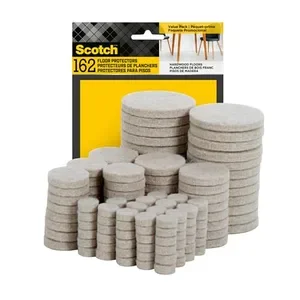 |
Scotch Felt Pads, 162-Piece Assorted Value Pack – $7.79 A self-stick assortment sized for everything from lamp bases to sofa legs, so you can pad an entire room from one pack instead of guessing sizes at the store.
|
Hardness ratings like the Janka scale (red oak: about 1,290 lbf; white oak: about 1,360 lbf; hickory: about 1,820 lbf) measure how much force it takes to embed a steel ball halfway into a wide, flat sample — not what happens when 200+ pounds of sofa rests on a leg with a contact patch the size of a coin. Concentrate that same weight into one square inch and you can exceed 200 psi, which is enough to compress the wood fibers of even a “hard” species over time, especially in humid months when wood is naturally softer. That’s why dents show up under sofa and recliner legs specifically, even on floors that never scratch under normal foot traffic.
Finish type doesn’t change this math much. A UV-cured aluminum-oxide finish on prefinished flooring resists surface scuffs better than a site-applied oil-based polyurethane, but both sit on top of the same wood underneath — neither one adds meaningful resistance to a concentrated point-load. Padding the furniture, not just protecting the finish, is what actually prevents dents.

Felt, Rubber, or Silicone: Which Pad Material Actually Fits Your Furniture
Felt pads are the default for a reason: they’re cheap, self-adhesive, and glide smoothly without marking the finish, which makes them the right call for chairs, dining tables, and anything you slide in and out regularly. Their weakness is compression — under a heavy, mostly-stationary piece like a recliner or a loaded bookcase, felt flattens out within months and stops cushioning the point-load discussed above.
Rubber pads and cups grip better and resist crushing longer, which suits heavy stationary furniture, but that same grip means they don’t glide — dragging furniture on rubber feet can scuff the finish instead of protecting it. Reserve rubber for pieces you rarely move. Silicone furniture cups (small dome-shaped feet the entire leg sits in, rather than a stick-on disc) spread weight over a wider footprint than either felt or rubber alone and hold up best under beds, sofas, and other furniture that stays put for years; they cost more per leg but need replacing far less often.
Match the pad to the furniture leg shape and size rather than buying one size for the whole house — a pad smaller than the leg’s actual footprint leaves an unprotected rim of wood or bare metal that still contacts the floor, which defeats the purpose.
Installing Pads So They Actually Stay Put
Clean and dry the bottom of each leg before applying a pad — adhesive backing bonds poorly to dust or old wax residue, which is the single most common reason pads fall off within weeks. Press each pad firmly for a few seconds after applying so the adhesive sets fully, and for legs wider than the pad, use two overlapping pads rather than one undersized one so the full footprint is covered.
Check pads on furniture you move often (dining chairs, stools) monthly, and on stationary furniture (sofas, cabinets, beds) every three to four months. Humidity swings matter here: wood floors expand slightly in humid summer months and contract in a dry winter heating season, which can shift how flush a pad sits against the leg and the floor. A pad that fit snugly in July can curl at the edge by January — that’s normal seasonal movement, not a defective pad, but it’s worth a quick check each time the seasons change.
Rugs, Mats, and Sliders as a Second Layer of Protection
An area rug under a sofa or dining table does two jobs pads can’t: it spreads weight across a much wider area than four small leg contacts, and it catches grit before it gets ground into the finish underfoot. Choose a rug with a felt or natural-fiber backing rather than a rubber-backed rug for daily placement — some rubber backings can react with a floor’s finish over months of constant contact and leave a discolored outline, especially on oil-based polyurethane finishes.

For furniture you rearrange occasionally rather than daily, felt or plastic furniture sliders let you move a couch or dresser across the room without dragging it — dragging is what actually gouges hardwood, since a leg without a slider catches on the grain and tears fibers rather than sliding smoothly over them. Always lift heavy pieces when a slider isn’t practical; two people lifting a sofa takes the same effort as one person struggling to drag it, with none of the floor risk.
Daily Habits That Prevent Most of the Damage
Vacuum or sweep before mopping, not after — grit left on the floor acts like sandpaper under a rolling chair or a dragged stool, and it’s the single biggest cause of fine scratches that accumulate into a dull, hazy finish over a few years. Use a slightly damp (never wet) mop with a wood-safe cleaner, and dry any spill immediately; standing water can dull the finish and, over enough repeated exposure, cause the wood underneath to cup slightly at the seams.
Rotate rugs and furniture placement every year or two if your schedule allows it. It’s a small habit, but it prevents the same four spots from bearing all the point-load and finish wear indefinitely, which spreads normal aging evenly across the floor instead of concentrating it under the couch.
Fixing Dents and Scratches That Already Happened
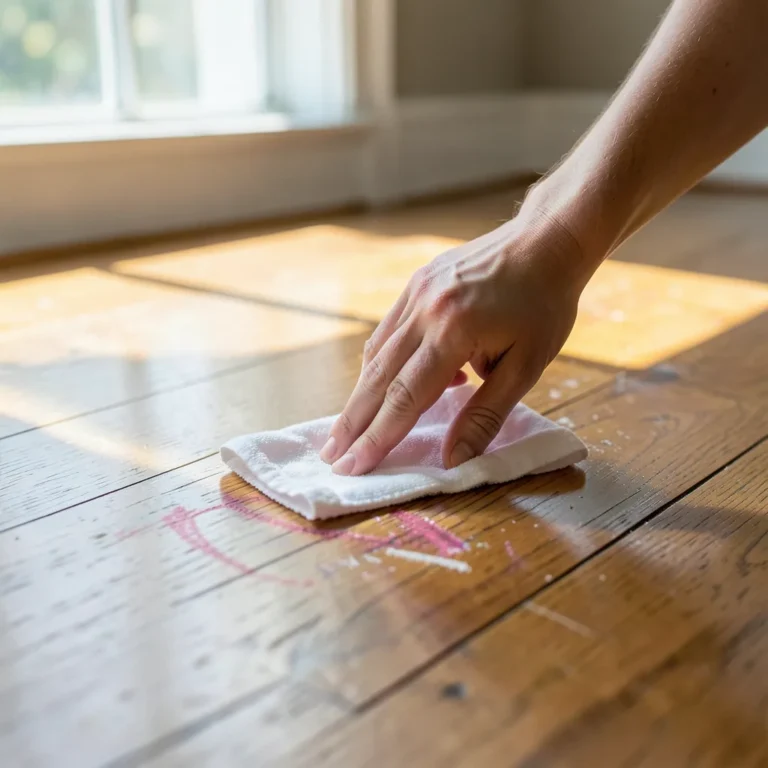
Light surface scratches that haven’t broken through the finish can often be minimized with a color-matched touch-up marker or a wax filler stick, both of which fill the scratch optically without requiring refinishing. Deeper gouges that expose bare wood need wood filler, light sanding, and a matching finish coat — test any filler or stain on a hidden spot first, since exact color matching against an aged floor is harder than it looks on the product label.
Dents from a compressed point-load are the hardest to fix without professional refinishing, since the wood fibers themselves have been crushed rather than cut. A damp cloth and a warm iron held briefly over the dent can sometimes swell the compressed fibers back up on solid wood floors (never try this on engineered flooring’s thin veneer top layer), but a deep dent usually needs sanding and refinishing to fully disappear.
When to Replace Your Furniture Pads
Replace a felt pad as soon as it feels hard, flat, or crunchy to the touch — that’s compressed felt that’s stopped cushioning anything, and it can start acting like sandpaper if grit works its way into the flattened fibers. Replace rubber or silicone protectors when they crack, harden, or lose their grip; a cracked cup no longer distributes weight evenly and can concentrate pressure right back onto a single point. As a rule of thumb, inspect all pads at each seasonal humidity swing (roughly every three months) and expect to fully replace felt pads on high-use furniture about twice a year.
Frequently Asked Questions
What Is the Best Way to Protect Hardwood Floors From Furniture?
Put a self-adhesive felt pad or a rubber/silicone cup under every leg, matched to the leg’s actual size, and add a rug or slider under anything heavy or frequently moved. Check pads every few months, since seasonal humidity changes affect how snugly they fit.
Why Do Furniture Legs Dent Hardwood Floors Even With a High Hardness Rating?
Hardness ratings measure resistance to a wide, flat impact, not the concentrated point-load of a narrow leg carrying hundreds of pounds on a contact area the size of a coin. That concentrated pressure can exceed the wood’s compressive strength even on species considered “hard,” which is why dents form under sofa and recliner legs specifically.
Do Area Rugs Actually Help Protect Hardwood Floors?
Yes — a rug spreads furniture weight over a much larger area than four small pad contacts and also catches grit before it grinds into the finish. Choose a felt or natural-fiber backing rather than rubber for rugs left in place long-term, since some rubber backings can discolor a finish over months of constant contact.
How Often Should Furniture Pads Be Replaced?
Inspect pads every three to four months alongside seasonal humidity swings, and replace felt pads on high-use furniture roughly twice a year, or as soon as a pad feels hard, flat, or crunchy. Replace rubber or silicone protectors as soon as they crack or harden, since damaged protectors can concentrate pressure right back onto one point.
Conclusion
Furniture pads solve most of the problem, but matching the pad material to the furniture, sizing it to the actual leg, and rechecking it as humidity shifts through the year is what actually keeps hardwood floors dent- and scratch-free for the long term. Combine that with a rug or slider under anything heavy and a quick grit-sweep before mopping, and the floor issues that used to require sanding and refinishing become much rarer.
Sponsored / affiliate links. As an Amazon Associate I earn from qualifying purchases. I may earn additional commission from eligible campaigns.