Proven Hardwood Flooring Ideas: Living Room
Choosing the right hardwood flooring for your living room is easier than you think! Focus on light oaks for airy vibes, rich walnuts for classic warmth, or trendy maple for modern appeal. Consider plank width and finish for a look that’s both beautiful and durable, perfectly suited for your beginner DIY project.
Transforming a living room with hardwood floors can feel like a big project, but it doesn’t have to be overwhelming! Many homeowners worry about picking the right style or matching it to their existing decor. What if you could get beautiful, durable floors that make your living room shine, even if you’re new to DIY? You absolutely can! This guide breaks down the best hardwood flooring ideas for your living room, making the process simple and rewarding. Get ready to create a welcoming space you’ll love!
We’ll explore popular wood species, different plank styles, and finishes that are perfect for beginner projects. You’ll learn how to choose floors that add value and warmth to your home. Let’s dive into making your living room a showstopper!
Why Hardwood Flooring for Your Living Room?
Hardwood floors are a popular choice for living rooms for many good reasons. They bring a natural warmth, elegance, and timeless beauty that carpet or laminate often can’t match. Plus, they can actually increase the value of your home!
- Timeless Appeal: Hardwood has been a flooring staple for centuries, and its classic look never goes out of style.
- Durability: With proper care, hardwood floors can last a lifetime, outlasting many other flooring options.
- Easy to Clean: Spills and dirt are generally easier to clean up on hardwood than on carpet.
- Allergy Friendly: Unlike carpet, hardwood doesn’t trap dust, pollen, and pet dander, making it better for those with allergies.
- Increases Home Value: Hardwood floors are a significant selling point for potential homebuyers.
Understanding Wood Species: The Heart of Your Flooring
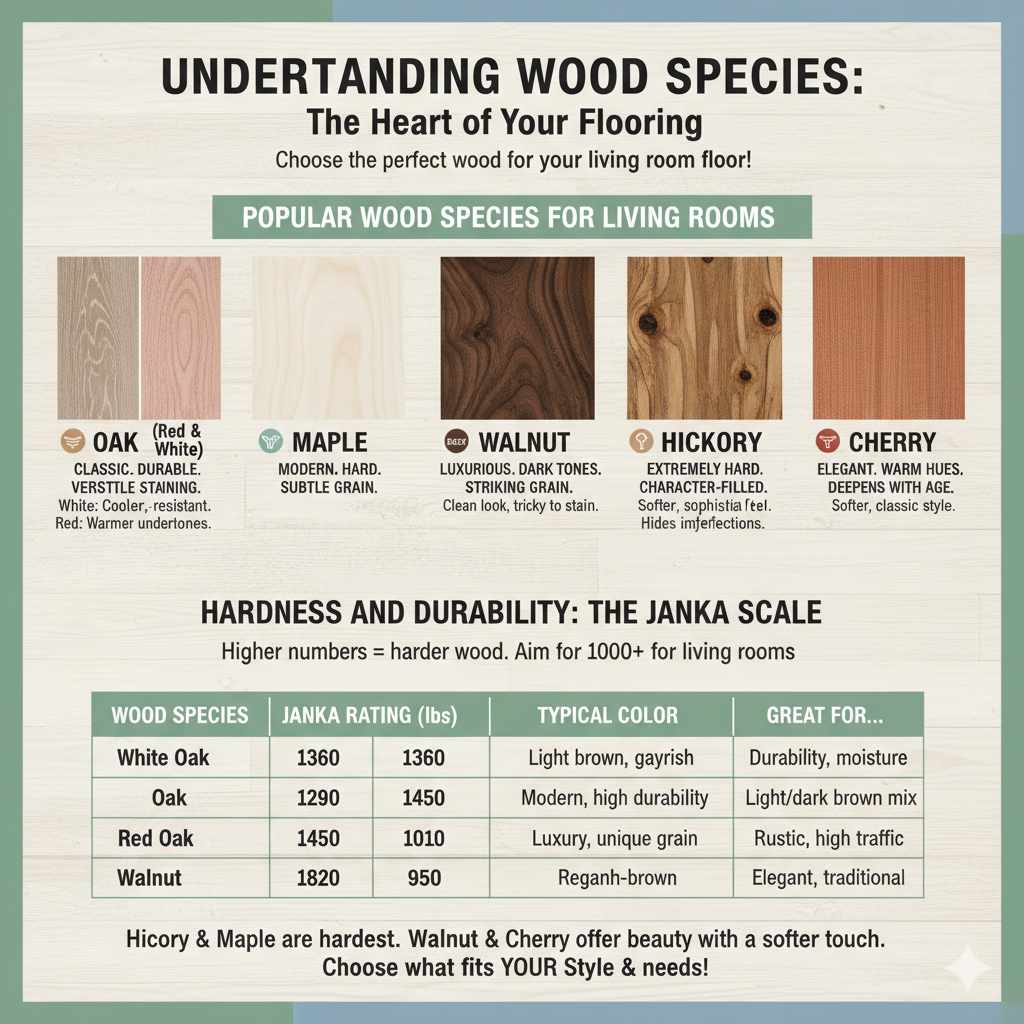
The type of wood you choose for your living room floor is key. Each species has its own unique color, grain pattern, and hardness, which affects its durability and look. For beginners, it’s good to know these basics!
Popular Wood Species for Living Rooms
Here are some of the most loved hardwood species for living room flooring, along with why they’re great choices for DIYers looking for beautiful results.
- Oak (Red & White): This is the classic workhorse of hardwood flooring. It’s durable, widely available, and takes stains beautifully, offering a lot of flexibility in color choice. White oak is known for its slightly cooler, grayer tones and superior resistance to moisture compared to red oak. Red oak has warmer, pinker undertones.
- Maple: Maple flooring is known for its light color and subtle, smooth grain. It’s a very hard wood, making it durable, and it offers a clean, modern look. It can be a bit trickier to stain evenly, so often a clear or light finish is preferred.
- Walnut: For a richer, more luxurious feel, walnut is a fantastic choice. It has beautiful dark brown tones and striking grain patterns. While softer than oak or maple, it’s still durable enough for a living room and offers a sophisticated, high-end appearance.
- Hickory: Hickory is one of the hardest domestic woods. It boasts a lot of natural color variation and dramatic grain, giving it a rustic or character-filled charm. This natural variation can also help hide minor imperfections that might occur in a DIY installation.
- Cherry: Known for its warm, reddish-brown hues that deepen with age and sunlight, cherry offers a classic, elegant look. It’s softer than oak but still suitable for living rooms with moderate traffic.
Hardness and Durability: The Janka Scale
Worried about scratches and dents? The Janka hardness scale is your friend here. It measures the resistance of wood to denting and wear. Higher numbers mean a harder, more durable wood. For a living room, aim for a Janka rating above 1000.
| Wood Species | Janka Hardness Rating (lbs) | Typical Color Tone | Great For… |
|---|---|---|---|
| White Oak | 1360 | Light brown, grayish | Durability, moisture resistance, modern or classic looks |
| Red Oak | 1290 | Pinkish to reddish-brown | Classic warmth, stainability, great value |
| Maple | 1450 | Creamy white to light brown | Modern spaces, clean look, high durability |
| Walnut | 1010 | Rich dark brown | Luxury, sophisticated style, unique grain |
| Hickory | 1820 | Light to medium brown, strong color contrast | Rustic charm, extreme durability, high traffic |
| Cherry | 950 | Pinkish to reddish-brown, darkens with age | Elegant warmth, traditional styles |
As you can see, options like Hickory and Maple are very hard, while Walnut and Cherry offer beautiful aesthetics but are a bit softer. For a beginner, oak is often a safe and versatile bet!
Exploring Finishes: Protection and Style
The finish on your hardwood floors is crucial. It protects the wood from spills, dirt, and wear, and it significantly impacts the overall look. For living rooms, you have a few excellent options.
Common Hardwood Finishes
- Polyurethane (Water-Based & Oil-Based): This is the most common protective finish. Water-based polyurethanes are clear, dry quickly, and have low VOCs (volatile organic compounds), making them a healthier choice for DIYers. Oil-based polyurethanes offer a slightly warmer tone and excellent durability but take longer to dry and have stronger fumes.
- Hardwax Oils: These penetrate the wood and create a matte or satin finish that feels very natural. They are excellent for highlighting the wood’s natural beauty and are repairable in sections, which is great for DIY touch-ups.
- Pre-finished vs. Site-Finished:
- Pre-finished: The boards come from the factory already stained and sealed. This is often the easiest option for beginners as it’s quicker to install and the finish is very durable.
- Site-Finished: The raw wood is installed, then sanded, stained, and sealed right in your living room. This allows for complete customization of color but requires more time, skill, and tools, and involves dealing with dust and fumes.
Hardwood Flooring Styles for Your Living Room
Beyond the wood itself, the style of the planks and how they are laid out makes a big difference in your living room’s aesthetic. When looking at “hardwood flooring ideas living room,” think about these styles:
Plank Width Matters
The width of your hardwood planks can dramatically change the feel of your living room.
- Narrow Planks (2-3 inches): These create a more traditional, classic look. They can make a room feel busy if there are many different wood tones or patterns.
- Medium Planks (4-5 inches): This is a very popular width, offering a good balance. They suit most room sizes and styles, from modern to traditional.
- Wide Planks (6 inches and up): Wide planks give a more contemporary, rustic, or grand feel. They can make a room feel more spacious and highlight the natural beauty of the wood grain. This is a great choice for a statement floor.
What About Plank Length?
The length of the planks can also impact the visual flow. Longer planks generally create a more cohesive and spacious look, especially in larger living rooms. Shorter planks can add a sense of movement and are sometimes preferred in smaller or more traditionally styled rooms.
Stair-Step Pattern vs. Straight Lay
Almost all hardwood flooring is installed in a “straight lay” pattern, meaning the planks are laid parallel to the longest wall in the room. This is the standard and easiest method for DIYers. A “stair-step” or “brick” pattern, where planks are offset randomly, is also common and generally easy to achieve with standard installation.
Consider Engineered Hardwood
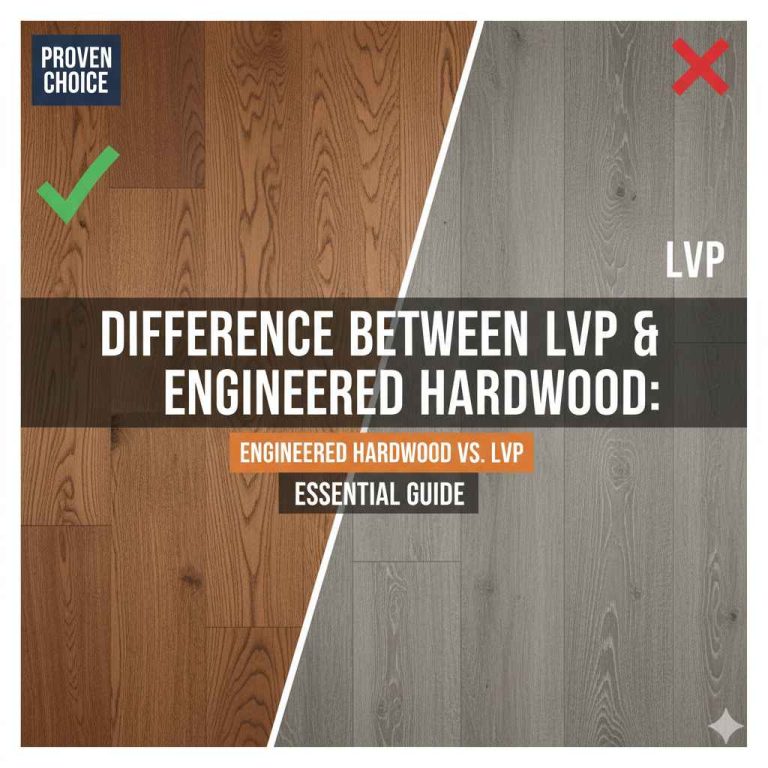
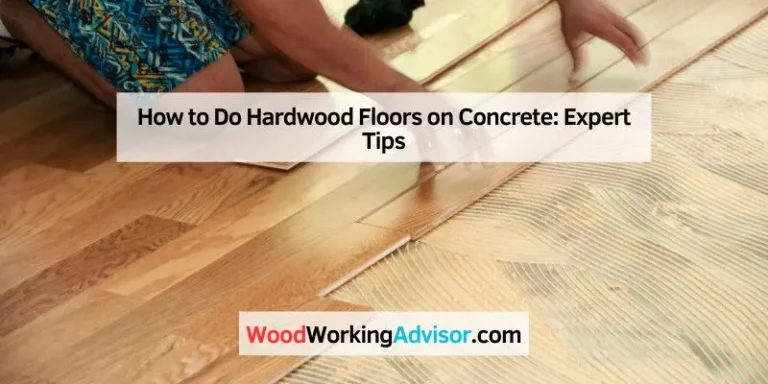
For beginners, engineered hardwood is often a fantastic alternative to solid hardwood. It’s made of several layers of wood veneer with a solid hardwood top layer. This construction makes it more stable and less susceptible to expansion and contraction due to humidity changes, which is a common issue with solid wood. It can be installed in areas where solid hardwood isn’t recommended, like basements or over concrete slabs, and many types come with easy-to-use click-lock systems that are very beginner-friendly. Learn more about engineered wood here.
Top Living Room Hardwood Flooring Ideas by Style
Now, let’s get to the fun part – visualizing your new living room floor! These ideas cater to different tastes and are achievable for DIY enthusiasts.
1. The Airy & Bright Modern Look
Wood Species: Maple, White Oak, Ash
Plank Width: Medium to Wide (4-7 inches)
Finish: Natural, light stain, or a clear matte polyurethane. White or very light gray wash finishes are also popular.
Why it works: Light-colored floors reflect light, making your living room feel more spacious and airy. This style pairs beautifully with minimalist decor, clean lines, and a neutral color palette. Maple’s subtle grain keeps the look uncluttered, while light oak offers a bit more character with its natural patterns.
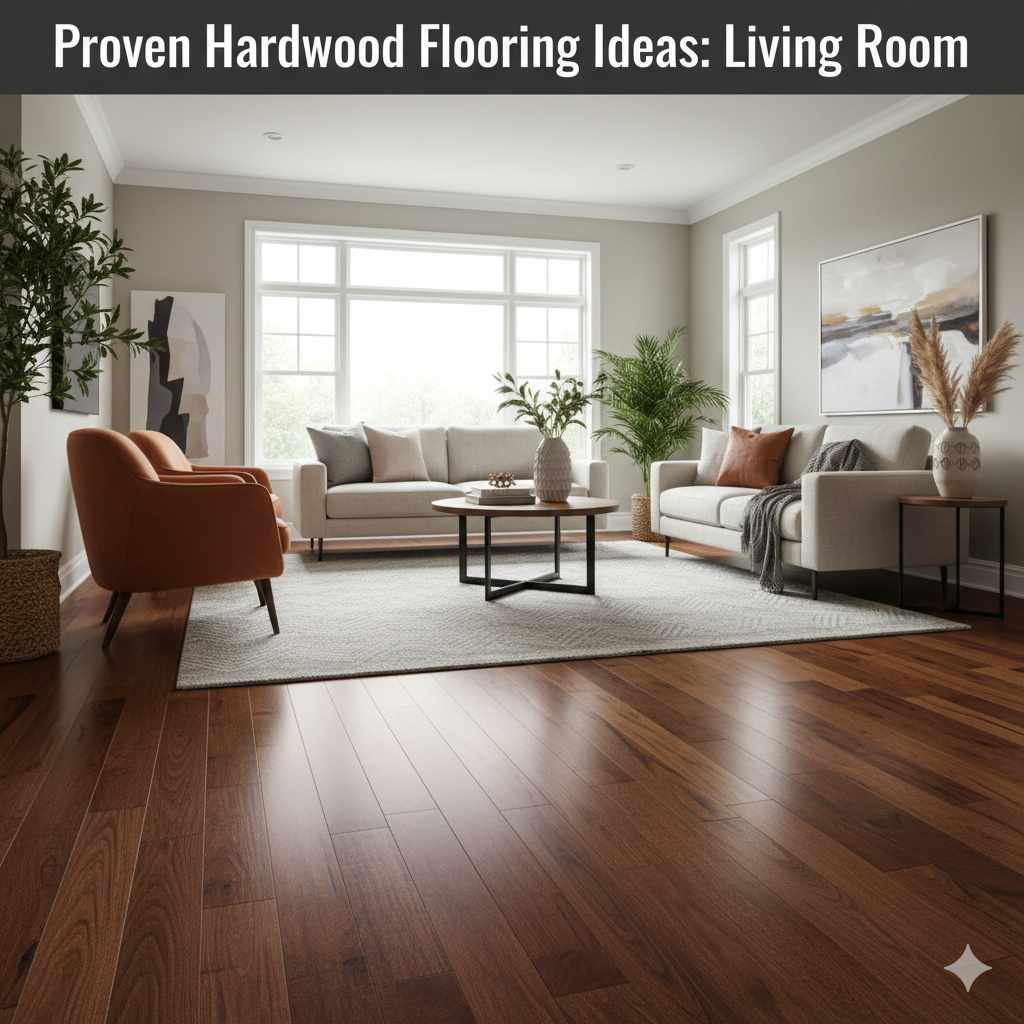
2. The Warm & Classic Traditional Space
Wood Species: Red Oak, Walnut, Cherry
Plank Width: Narrow to Medium (3-5 inches)
Finish: Medium to deep brown stains, satin or semi-gloss polyurethane.
Why it works: Richer wood tones like those found in red oak or walnut create a cozy and inviting atmosphere. This is the timeless look that many people associate with comfortable, elegant living rooms. It pairs well with traditional furniture, warmer color schemes, and classic decorative elements. Walnut, in particular, adds a touch of deep luxury.
3. The Rustic Charm Retreat
Wood Species: Hickory, Oak (with natural knots and character marks), Pine (though softer)
Plank Width: Wide (6 inches and up)
Finish: Hand-scraped texture, matte finish, natural or lightly distressed stains.
Why it works: This style embraces the natural irregularities of wood. Wide planks and prominent grain patterns, perhaps with a bit of texture, evoke a sense of history and warmth. It’s perfect for homes with farmhouse, country, or lodge-style decor. Hickory’s natural variation is a star here.
4. The Sleek & Sophisticated Contemporary
Wood Species: Maple, White Oak, Bamboo (a sustainable option)
Plank Width: Wide (6-8 inches)
Finish: Matte or low-sheen finish, natural tones, or very dark, almost black stains.
Why it works: Contemporary design often favors clean, simple lines and a sophisticated palette. Wide, smooth planks in either very light or very dark, solid colors create a dramatic and modern foundation. This look pairs well with bold art pieces, geometric patterns, and modern furniture.
5. The Trendy Two-Tone or Contrasting Floor
Wood Species: Any, often combined with contrasting accent planks or borders.
Plank Width: Can vary, but often medium.
Finish: Contrasting stains (e.g., light oak main floor with a dark walnut border).
Why it works: If you want to add a unique touch and define different areas of your living room, contrasting wood tones can be stunning. This is a more advanced technique, but even simple border designs can elevate your flooring. It adds visual interest and a custom feel.
DIY Considerations for Beginners
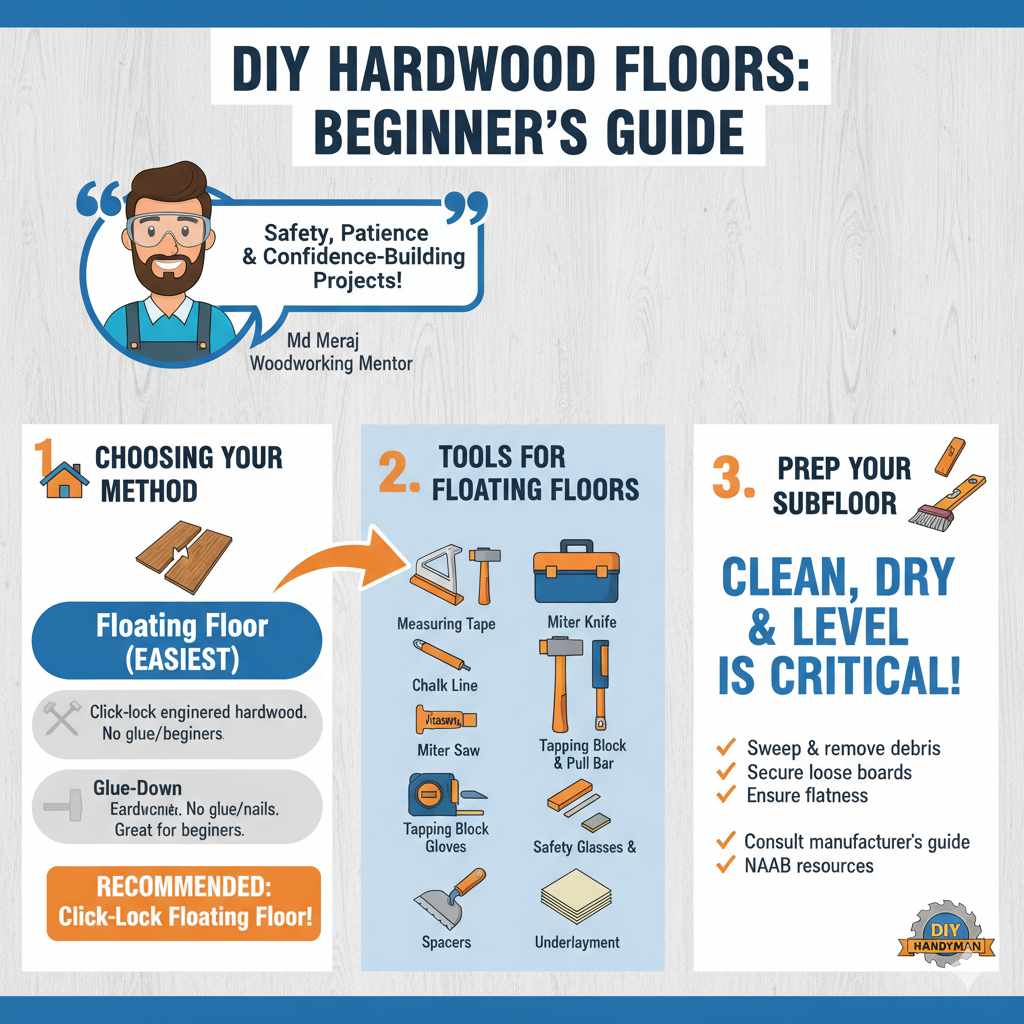
As Md Meraj, your woodworking mentor, I always emphasize safety, patience, and picking projects that build your confidence. Installing hardwood floors can be a rewarding DIY experience!
Choosing Your Installation Method
- Floating Floor: This is often the easiest for beginners, especially with click-lock engineered hardwood. The planks connect to each other, and the floor “floats” over the subfloor, attached only at the edges by baseboards. No glue or nails are needed except possibly in very large rooms for stability.
- Nail-Down: This involves nailing the planks to a wooden subfloor. It requires a specialized flooring nailer (often rentable) and some practice. It’s very secure but more involved.
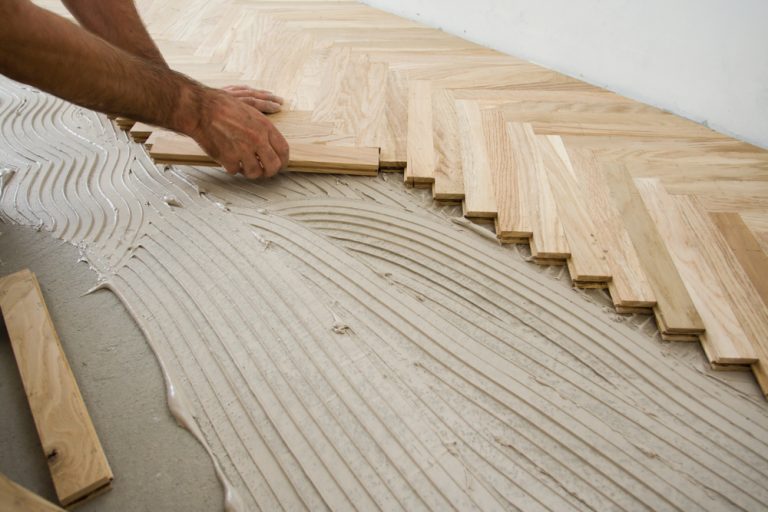
- Glue-Down: The most challenging for DIYers, this involves adhering the planks directly to the subfloor with specialized adhesive. It requires a very clean, flat subfloor and careful application.
For most beginners, a click-lock floating floor (especially with engineered hardwood) is the way to go. It significantly reduces the complexity and tool requirements.
Tools You Might Need (for a floating floor):
- Measuring tape
- Pencil
- Chalk line
- Utility knife
- Miter saw or circular saw (for cutting planks)
- Jigsaw (for cutting around obstacles like door frames)
- Rubber mallet
- Tapping block and pull bar (usually come with the flooring kit)
- Spacers (to maintain expansion gaps)
- Safety glasses and gloves
- Underlayment (depending on flooring type and subfloor)
Always consult the manufacturer’s installation guide for your specific flooring. They provide the best instructions for their product.
Preparing Your Living Room Subfloor
A clean, dry, and level subfloor is CRITICAL for a successful installation, no matter the method. Any imperfections can telegraph through the new flooring, leading to squeaks or unevenness. For new installations, ensure the subfloor is cleaned, any loose boards are secured, and it’s as level as possible. You can check out resources like the National Association of Home Builders (NAHB) for subfloor preparation tips.
FAQ: Your Living Room Flooring Questions Answered
Q1: How do I choose the right plank width for my small living room?
For smaller living rooms, medium widths (4-5 inches) are often best. They provide a good balance without making the room feel too busy or too empty. Very wide planks can sometimes overwhelm a small space. Aim for a style that complements your furniture and overall decor.
Q2: Can I install hardwood flooring myself if I’m a beginner?
Yes! Many types of hardwood, especially engineered hardwood with click-lock systems, are very beginner-friendly. A floating installation is the most accessible DIY method. Just be sure to read all instructions carefully, take your time, and gather the right tools.
Q3: What’s the difference between pre-finished and site-finished hardwood? Which is easier for DIY?
Pre-finished flooring comes from the factory already stained and sealed, making installation cleaner and faster. Site-finished flooring is installed raw and then sanded, stained, and sealed in your home, allowing for custom colors. Pre-finished is definitely easier for beginners due to less mess and fewer steps.
Q4: How much should I budget for hardwood flooring per square foot?
Costs vary widely! Basic pre-finished solid or engineered oak can range from $3 to $7 per square foot for materials alone. More exotic woods, wider planks, or premium finishes can go up to $10-$15+ per square foot. Always factor in underlayment, transitions, and any necessary tools.
Q5: Are light wood floors more durable than dark ones?
Durability is primarily determined by the wood species and its finish, not its color. A hard wood like hickory with a tough polyurethane finish will be very durable, regardless of whether it’s light or dark. However, lighter natural finishes on softer woods might show scratches or dents more readily than darker, richer stains can hide them.