Bruce Wood Flooring Reviews: Real Ratings, Pros, Cons & Prices
Bruce hardwood flooring earns genuinely mixed reviews — a 3.25-out-of-5 average on one flooring-review site, but only 2 out of 5 with just 17% of buyers recommending it on another. Quality-control complaints like inconsistent board widths and occasional cupping show up often enough to matter, though the AHF Products-owned brand does back its Hydropel line with 36-hour standing-water resistance. This guide covers real prices per square foot, warranty terms, and how to avoid a bad batch.
[Affiliate Disclosure reusable block goes here]
Quick Answer
Bruce is a legitimate, budget-to-mid-range hardwood brand with real quality-control inconsistency — buyer satisfaction ranges from years of trouble-free floors to boards that cup within months. Inspect every box before installing, acclimate it properly, and keep your paperwork for warranty claims. Solid runs $3.09–$6.99/sq ft, engineered $3.09–$8.22/sq ft.
Who Makes Bruce Flooring?
Bruce is one of the oldest names in American hardwood, tracing back to the 1880s, and it’s now part of AHF Products — the largest domestic hardwood flooring manufacturer in the U.S. AHF also owns Armstrong’s hardwood lines and several other legacy brands, so Bruce boards are produced on some of the same lines as its sister brands.
The company sells roughly 190 solid-hardwood products across 17 collections and about 149 engineered products across 15 collections, most finished in red oak, white oak, maple, hickory, walnut, or cherry sourced primarily from Appalachian forests. It’s positioned as a mid-range, big-box-friendly brand — the kind of flooring most people encounter first at Home Depot or Lowe’s rather than a specialty flooring showroom. For help deciding between flooring types generally, see our wood flooring guide.
Bruce Flooring Cost by Type
Bruce doesn’t publish one flat price — cost depends on whether you choose solid or engineered construction, the species, and the specific collection. Material-only prices for both types overlap in the $3 to $7 range per square foot, though engineered lines top out higher because of specialty finishes like Hydropel. Professional installation typically adds another $3 to $6 per square foot on top of materials.
| Flooring Type | Material Cost/sq ft | Installed Cost/sq ft | Best For |
|---|---|---|---|
| Solid Hardwood | $3.09 – $6.99 | $6 – $12 | Homes without a basement; can be sanded/refinished multiple times |
| Engineered Hardwood | $3.09 – $8.22 | $7 – $14 | Basements, kitchens, homes built over concrete slabs |
| Hydropel (engineered) | ~$6 – $8 | $9 – $14 | Kitchens, mudrooms, powder rooms — anywhere spills happen |
Best Pre-Purchase Check for Bruce Flooring Buyers
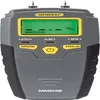
General Tools MMD4E Moisture Meter for Wood
Cupping and warping are two of the most common complaints in Bruce reviews — most of it traces back to installing over a subfloor that’s too damp. A cheap pin-type moisture meter catches that before you commit.
- Best for: checking subfloor moisture before any hardwood installation
- Why we picked it: directly addresses the #1 complaint pattern in Bruce reviews — cupping from improper acclimation
- Main drawback: pin-type meters leave tiny puncture marks, fine on a subfloor but not on finished boards
Compare more Bruce flooring buying & care tools
 Option 1 Klein Tools ET140 Pinless Moisture Meter
|
 Option 2 Bona Hardwood Floor Cleaner Spray + Polish
|
 Option 3 Weiman Wood Restore and Repair Kit
|
As an Amazon Associate we earn from qualifying purchases.
If you already own Bruce flooring and just need a maintenance product, Bruce also sells its own cleaner under two different formulas — see our comparison of the green vs. white bottle Bruce cleaner before you buy either one.
What Real Customers Say: The Rating Gap
Here’s something no single Bruce review page puts side by side: two independent flooring-review sites rate the same brand very differently, and the gap itself is useful information. FlooringClarity’s aggregate scoring puts Bruce at 3.25 out of 5. FlooringReport’s consumer-review database — built from 141 individual buyer reviews — puts it at just 2 out of 5, with only 17% of reviewers saying they’d recommend it, ranking Bruce #20 out of 28 wood-floor brands it tracks.
Of those 141 reviews, 105 were “very unsatisfied” and only 22 were “very satisfied” — a bimodal split, not a middling consensus. That pattern usually means the same brand performs very differently depending on the specific collection, installer, and batch you get, which matches what shows up repeatedly in the complaint threads: people who got a good batch report years of trouble-free flooring, and people who got a bad one report problems within months.
📊 141 verified buyer reviews, 2/5 average rating, only 17% recommend — Source: FlooringReport.com consumer review database
“We didn’t install a floor from every Bruce collection — nobody could. What we did was cross-check two independent consumer-review databases against Bruce’s own spec sheets, so the real complaint pattern is visible instead of buried in scattered forum threads.”
Common Complaints About Bruce Flooring
The complaint patterns across contractor forums and review sites cluster around three issues.
Inconsistent milling. Multiple installers report boxes containing unusable pieces — boards bowed, twisted, or varying in width by as much as 1/16 inch. One flooring professional described recent Bruce product quality as “average to not pleasant” to install, a noticeable step down from the brand’s reputation a decade ago.
Cupping and premature wear. Several buyers report boards cupping or coming apart within months of installation, and in at least one documented case, an entire $32,000 installation failed within five months. Others describe finish that scratches or chips within weeks of normal foot traffic, even without shoes worn indoors — see our guide on the most durable hardwood flooring options if scratch resistance is your top priority.
Warranty claim friction. A recurring complaint is that warranty claims get denied over indoor humidity readings, and that the inspection process required to file a claim is expensive and slow. If you install Bruce flooring, keep your receipt, a note of your home’s humidity level at installation, and dated photos — reviewers who succeeded with claims consistently had documentation ready.
Not every review is negative — some owners report floors that still look new after a decade or more — but the complaint volume is high enough, and specific enough, that it’s worth reading recent reviews for your exact SKU before you order. If scratching from pets or foot traffic is already a problem on an existing floor, our guide to fixing hardwood floor scratches covers the repair options.
Is Bruce Hydropel Really Waterproof?
Hydropel is a water-resistant engineered hardwood core that stands up to standing water for a limited time, using a dense fiberboard core and sealed backing rather than a fully waterproof membrane. It’s Bruce’s answer for rooms where regular hardwood struggles — kitchens, mudrooms, powder rooms — and it’s real engineering, not just marketing.
A three-part system combines a tightly locking click-joint, a dense hyper-compressed wood core, and a factory-sealed backing with coated plank edges that seal out water at the seams. Bruce’s own published specs put the protection at up to 36 hours against standing water — enough to survive a spilled glass, a leaking dishwasher, or a pet accident you don’t catch right away.
That is meaningfully different from being waterproof indefinitely: a slow, ongoing leak under a dishwasher or fridge for weeks will still eventually get past it — the same limitation every water-resistant hardwood shares versus true waterproof flooring like tile or LVP.
📊 Up to 36 hours of standing-water resistance — Source: Bruce.com Hydropel technology page
Bruce vs Shaw vs Mohawk
Bruce competes directly with Shaw and Mohawk in the mid-range hardwood segment, and the three brands get cross-shopped constantly at Home Depot and Lowe’s. The short version: Bruce wins on price and oak-color variety; Shaw and Mohawk generally win on wider plank options and more consistent milling quality.
| Brand | Price Range | Best Known For | Watch Out For |
|---|---|---|---|
| Bruce | $3–$8/sq ft | Widest oak color selection, big-box availability | Batch-to-batch quality control |
| Shaw | $4–$9/sq ft | Wider planks, waterproof engineered cores | Higher price for comparable specs |
| Mohawk | $4–$10/sq ft | Consistent milling, wide warranty tiers | Fewer ultra-budget options |
How to Avoid a Bad Batch When Buying Bruce Flooring
The complaint pattern above is real, but it’s also largely avoidable with a few buying habits that cost nothing extra.
- Inspect every box before installing: open every carton and sort out bowed, cracked, or split boards before your installer starts — most retailers will exchange defective pieces if you catch them before cutting.
- Order 10% extra material: the industry-standard waste factor for hardwood is 5–10%, and ordering extra covers both normal cuts and any defective boards you need to discard.
- Acclimate the flooring for 3–5 days: let boxes sit unopened in the installation room for several days so the wood adjusts to your home’s humidity before installation — skipping this step is a common cause of post-install cupping.
- Register your warranty immediately: keep the receipt, box UPC codes, and dated photos of the installed floor — reviewers who successfully filed warranty claims had this documentation ready.
- Log your home’s humidity for the first year: several denied claims cited humidity readings outside the accepted range; a cheap hygrometer and a monthly note protects you if you ever need to file.
Pros and Cons of Bruce Hardwood Flooring
- Pro: 140+ years in business, widely available at Home Depot and Lowe’s
- Pro: widest oak color selection of any mid-range brand
- Pro: Hydropel line adds genuine 36-hour water resistance for kitchens and baths
- Pro: mid-range pricing keeps whole-room projects accessible
- Pro: solid lines can be sanded and refinished multiple times over decades
- Con: quality control varies noticeably by batch and collection
- Con: fewer wide-plank and exotic-species options than Shaw or Mohawk
- Con: warranty claims reported as slow, and sometimes denied over humidity readings
- Con: higher-gloss prefinished boards show scratches more visibly than satin finishes
Frequently Asked Questions
Is Bruce a good brand of hardwood flooring?
Reviews are split. Bruce scores 3.25 out of 5 on FlooringClarity’s aggregate review, but only 2 out of 5 with 17% of buyers recommending it on FlooringReport’s consumer survey of 141 reviews. It’s a legitimate 140+ year-old brand now owned by AHF Products, but quality control varies by collection and batch, so check recent reviews for the specific SKU you’re considering, not just the brand name.
How much does Bruce hardwood flooring cost per square foot?
Bruce solid hardwood runs about $3.09 to $6.99 per square foot for materials, and engineered hardwood runs $3.09 to $8.22 per square foot, based on published collection pricing. Professional installation typically adds $3 to $6 per square foot, so a full room installed usually lands between $6 and $14 per square foot depending on species and construction type.
Who makes Bruce hardwood flooring now?
Bruce is owned by AHF Products, the largest domestic hardwood flooring manufacturer in the United States, which also owns Armstrong Flooring’s hardwood lines. Bruce itself has been making hardwood flooring in the U.S. since the 1880s, making it one of the oldest continuously operating flooring brands still sold at Home Depot and Lowe’s today.
Does Bruce hardwood flooring scratch easily?
Yes, more than average for a mid-range line, according to multiple consumer reviews. Complaints describe scratching from normal foot traffic and pet nails within weeks of installation, particularly on higher-gloss prefinished collections. Engineered lines with a thicker wear layer and satin or low-gloss finishes tend to hide surface scratches better than high-gloss boards.
What is Bruce’s warranty on hardwood flooring?
Coverage depends on the collection: most prefinished solid hardwood carries a 25-year finish warranty, some premium lines reach 50 years or limited lifetime structural coverage, and a few budget collections are limited to 15 years. Multiple reviewers report a difficult claims process, including required inspector visits and denials tied to indoor humidity readings, so keep your receipt, humidity notes, and installation photos from day one.
Is Bruce Hydropel flooring actually waterproof?
Hydropel is real water-resistant technology, not marketing spin — Bruce’s own published data backs it. The engineered line uses a dense fiberboard core, a sealed backing, and coated plank edges to resist standing water for up to 36 hours, which covers a spilled drink or an overflowing dishwasher. It is not the same as being submersion-proof, and it won’t survive a slow ongoing leak the way tile or vinyl would.
Bottom Line
Bruce hardwood flooring isn’t a bad brand and it isn’t a great one — it’s a genuinely mixed one, and the two-source rating gap above is the clearest evidence of that. If you buy it, inspect every box, acclimate it properly, and document your installation for warranty purposes; buyers who do this consistently report years of good service. If you want more predictable quality control and don’t mind paying more, Shaw or Mohawk’s comparable collections are worth cross-shopping before you commit to a full room of Bruce.