What Is Rift Cut Ash? Grain Angle, Cost & Best Uses Explained
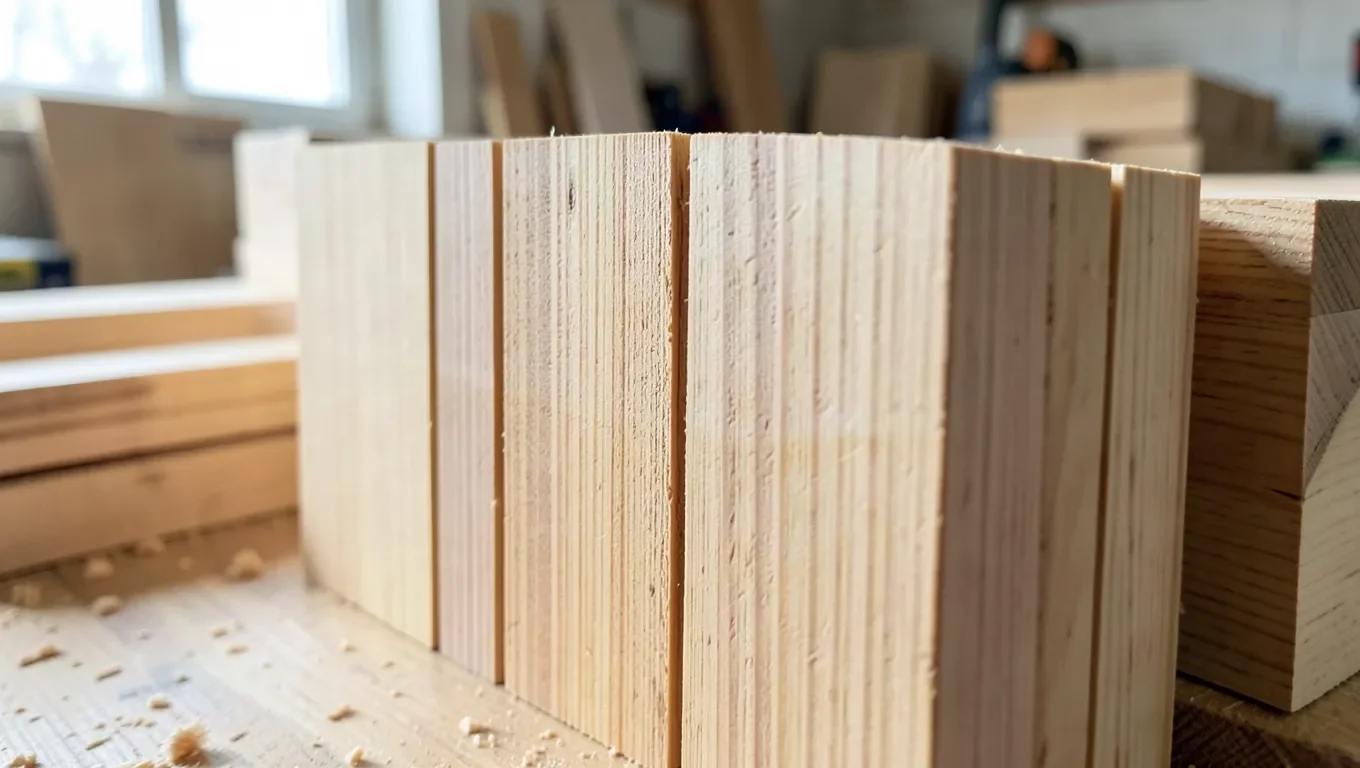
Rift cut ash is lumber sawn so the growth rings meet the board’s face at roughly 30–60 degrees (closest to 45 degrees is considered ideal), which produces a straight, ruler-like grain line running the length of the board with almost none of the flecked figure you see in quartersawn wood. Because ash already has a fairly open, visible pore structure, rift-cutting is one of the few milling choices that actually calms that grain down instead of exaggerating it — which is exactly why cabinetmakers reach for it on face frames, table legs, and anywhere a busy grain pattern would look distracting.
What Rift Cut Ash Actually Is
Every board cut from a log falls somewhere on a spectrum based on the angle between the growth rings and the board’s flat face. Plain-sawn (also called flat-sawn) lumber is cut at 0–30 degrees and shows the familiar cathedral or flame-shaped figure. Quartersawn lumber is cut at 60–90 degrees and, in ray-fleck species like white oak, shows those bright ray fleck patterns. Rift sawn lumber sits in between at 30–60 degrees, with sawyers targeting close to 45 degrees as the sweet spot. That angle keeps the growth rings running almost straight up and down through the board’s face, so the grain reads as a tight, uniform set of parallel lines with none of the arches or flecking of the other two cuts.
Ash doesn’t have the prominent ray fleck that oak shows when quartersawn, so the usual argument for quartersawing — showing off the fleck — doesn’t really apply to it. What rift-cutting does for ash instead is tighten up its naturally open, ring-porous grain into a clean, linear pattern, which is the real reason it shows up in higher-end ash furniture and cabinetry rather than as a decorative flex.
Best Finish For Rift Cut Ash
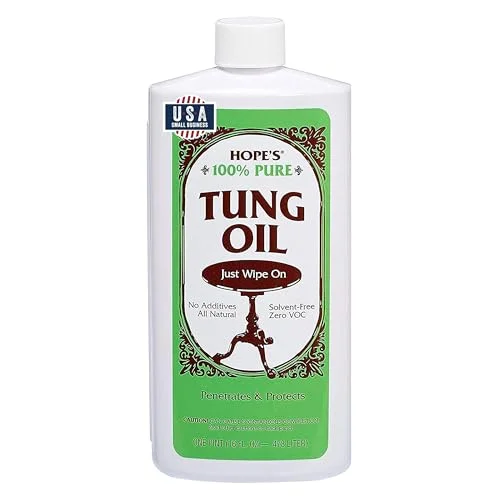 |
Hope’s 100% Pure Tung Oil, 16 Fl Oz – $17.99 A penetrating oil finish that soaks into rift cut ash’s straight grain instead of sitting on top of it, so the linear pattern stays visible rather than getting hidden under a film.
|
Rift, Quarter, and Plain Sawn: The Angle Differences That Actually Matter
The angle a board is cut at isn’t just a technical detail — it drives everything else: how the grain looks, how stable the board is, and how much it costs. Here’s how the three main cuts compare:
| Cut Type | Ring Angle to Face | Grain Appearance | Relative Cost |
|---|---|---|---|
| Plain sawn | 0–30° | Cathedral/flame figure | Lowest (most yield per log) |
| Rift sawn | 30–60° (~45° ideal) | Straight, tight, minimal fleck | Highest (most waste per log) |
| Quarter sawn | 60–90° | Straight grain plus ray fleck in species like oak | High |
A quick way to picture the milling: a log is first cut into wedge-shaped sections radiating out from the center, similar to how you’d cut a pie. Each wedge is then resawn parallel to its own rays. Because a round log only yields so many wedges that land in the 30–60 degree window, and the offcuts between usable rift boards are irregular, mills get noticeably less usable lumber per log than they would plain-sawing the same log straight through. That lower yield is the entire reason rift cut ash costs more — it isn’t a marketing markup, it’s a direct function of how much of the log ends up as waste. If you want the full mechanics of how mills cut wedges for rift and quarter sawing versus rotary-cutting veneer, our guide to how veneer is made breaks down each cutting method in more detail, and our piece on quarter sawn oak covers the ray-fleck side of that comparison for a species where it actually shows.
Why Rift-Cutting Suits Ash’s Grain Specifically
Ash is a ring-porous hardwood, meaning the large earlywood pores form a visible line at the start of each growth ring — similar in principle to oak, though less dramatic. On a plain-sawn ash board, that pore structure combines with the cathedral grain to create a fairly busy, active-looking surface. Rift-cutting straightens that same pore structure into parallel lines running the board’s length, which is why rift cut ash reads as calmer and more uniform than flat-sawn ash even though it’s the same wood with the same Janka hardness (around 1,320 lbf) and the same open pores — only the cutting angle changed. If you want to see the visual difference side by side, our guide on what ash wood grain looks like compares rift, quarter, and plain-sawn ash directly.
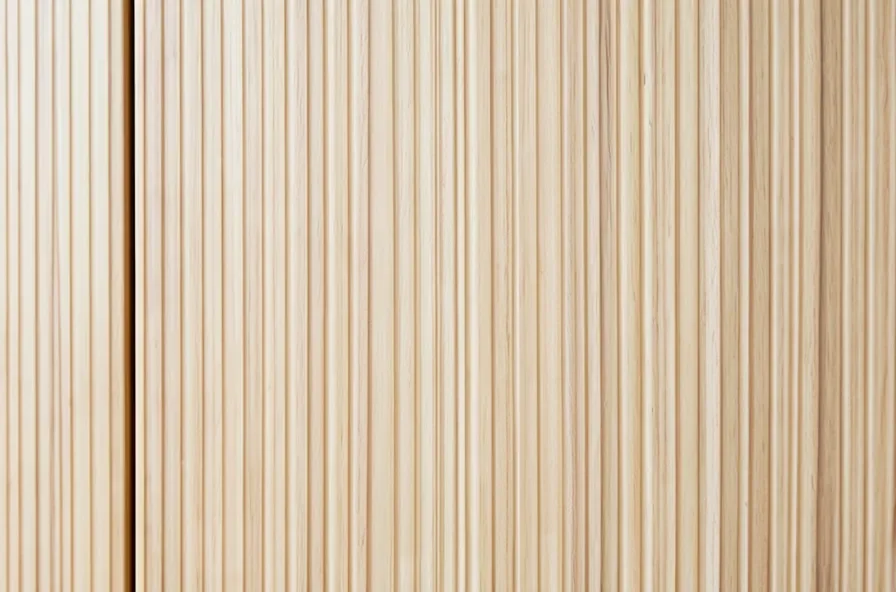
This straightening effect also has a practical, non-cosmetic upside: because the growth rings run nearly perpendicular to the board’s width, rift sawn boards expand and contract more evenly across their width when humidity changes, which is why they cup and twist less than plain-sawn boards of the same species. For a species like ash, whose density and hardness are already well documented in our ash wood density guide, that extra dimensional stability is often more valuable to furniture makers than the grain appearance alone.
Where Rift Cut Ash Works Best
Because the grain reads as uniform strips rather than large arches, rift cut ash is most useful anywhere you’re joining multiple narrow pieces and want the seams to disappear visually:
- Face frames and cabinet doors — the straight lines from rail to stile keep the joinery from standing out
- Table and chair legs — a straight-grained leg looks intentional from every viewing angle, not just one face
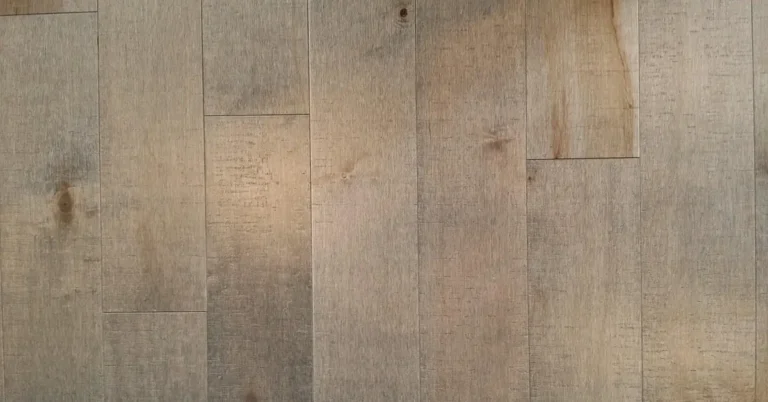
- Strip flooring — rift and quarter sawn flooring is graded specifically because the narrow, straight grain hides seams between boards better than plain-sawn
- Edge-glued panels and tabletops — consistent grain direction across glued-up boards makes the glue lines far less visible than mixing plain and rift stock
It’s less useful where you actually want ash’s more dramatic, expressive side — a statement tabletop or a piece meant to show off natural figure is usually better served by plain-sawn or figured ash, since rift-cutting’s whole job is to tone that figure down.
Finishing Rift Cut Ash
Ash’s open pores take finish differently than a closed-grain wood like maple, and that’s true whether the board is rift, quarter, or plain-sawn. A penetrating oil finish (tung oil or a wiping/Danish oil) soaks into those open pores and lets the straight grain of a rift cut board stay visible under the finish, rather than filling the surface into a uniform sheen the way a thick polyurethane film can. If you’re planning a darker or more uniform look instead, our guide on finishing open-grain ash covers grain-filling and conditioning steps in more depth, and our piece on whether ash takes stain well covers blotching risk and pre-conditioning before you commit to a color.
Whichever finish you choose, always condition or seal end grain first and apply thin coats — ash’s open pores can pull in finish unevenly if you flood the surface, which shows up as blotchy patches once it cures.
Sourcing Rift Cut Ash
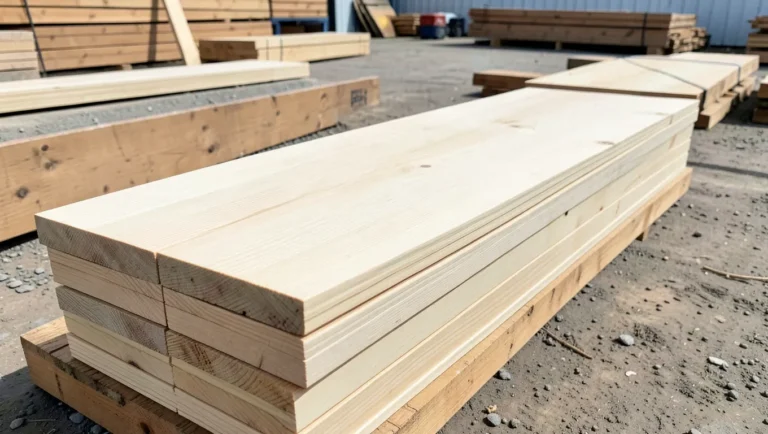
Because rift cut ash yields less usable lumber per log, most general lumberyards carry it as special order rather than stocking it by default — call ahead rather than expecting to find it on the rack next to plain-sawn boards. When a supplier does have it in stock, check the board ends yourself rather than trusting the label: growth rings that run close to straight up and down across the board’s thickness confirm a true 30–60 degree rift cut, while rings that curve noticeably toward one face mean the board is drifting toward plain-sawn territory. Ask about kiln-drying too — properly dried stock resists the warping rift-cutting is meant to minimize in the first place, while poorly dried rift stock can still cup despite the favorable grain orientation.
Frequently Asked Questions
What angle is rift cut ash sawn at?
Rift cut ash is sawn so the growth rings meet the board’s face at roughly 30 to 60 degrees, with sawyers generally targeting close to 45 degrees as the ideal angle for the straightest possible grain.
Why is rift cut ash more expensive than plain sawn?
Rift-cutting yields fewer usable boards per log because only a limited portion of a round log falls within the 30 to 60 degree angle window, and the irregular offcuts between usable boards go to waste. That lower yield, not the grain pattern itself, is what drives the higher price.
What’s the difference between rift cut and quarter sawn ash?
Rift sawn ash is cut at 30 to 60 degrees and shows a straight, uniform grain with almost no fleck. Quarter sawn ash is cut at 60 to 90 degrees; since ash doesn’t show the pronounced ray fleck that oak does when quartersawn, the practical difference between the two in ash specifically is mostly about stability and yield rather than a dramatic visual difference.
Does rift cut ash warp less than plain sawn ash?
Yes. Because the growth rings run nearly perpendicular to the board’s width in a rift cut board, the board expands and contracts more evenly across its width as humidity changes, which reduces cupping and twisting compared to plain sawn boards of the same species.
Bottom Line
Rift cut ash is a 30–60 degree cut (about 45 degrees at its best) that trades lumber yield for straight, uniform grain and better dimensional stability than plain-sawn ash. It costs more because the milling wastes more of the log, not because of any added processing step. For face frames, legs, flooring, and glued-up panels where you want the joinery and seams to disappear, that tradeoff is usually worth it; for a piece meant to show off ash’s natural figure, plain-sawn stock is the better fit.
Sponsored / affiliate links. As an Amazon Associate I earn from qualifying purchases. I may earn additional commission from eligible campaigns.