Saman Wood vs Walnut: Which Is Better for Furniture?
Have you ever stood in front of two stunning pieces of furniture and wondered why one feels more appealing than the other? You might be looking at the beautiful grains of Saman wood versus the rich tones of Walnut.
Here’s a stat that surprises most people: Saman (monkeypod) actually scores harder on the Janka hardness scale, at roughly 1,540 lbf, than black walnut’s 1,010 lbf — so despite walnut’s premium reputation, Saman is the more dent-resistant wood of the two. Walnut still wins on color depth, grain consistency, and how predictably it takes a finish.
Choosing the right wood for your home or project can be daunting, especially when these two popular options are on the table. But what if you could make a decision that not only enhances your space but also resonates with your personal style and values?
You’ll uncover the secrets behind Saman wood and Walnut, helping you understand their unique characteristics. Discover which one aligns with your needs, and find out why your choice could be more impactful than you ever imagined.
Wood Characteristics
Best Finish for Saman & Walnut Furniture
 |
Watco Danish Oil Wood Finish (Natural, Pint) – $12.99 This is the finish type referenced in Finishing Options above.
|
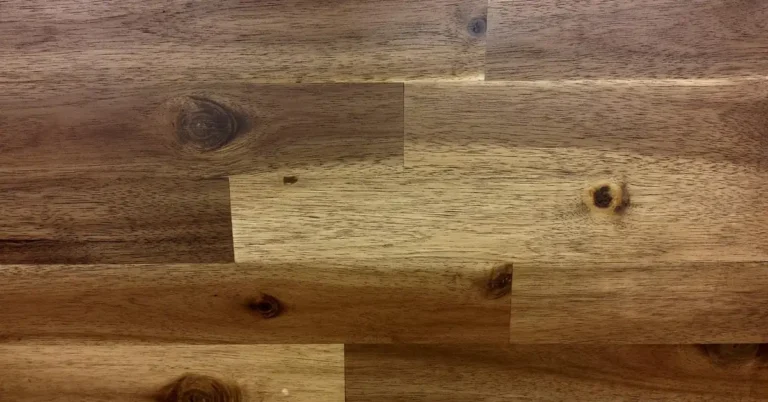
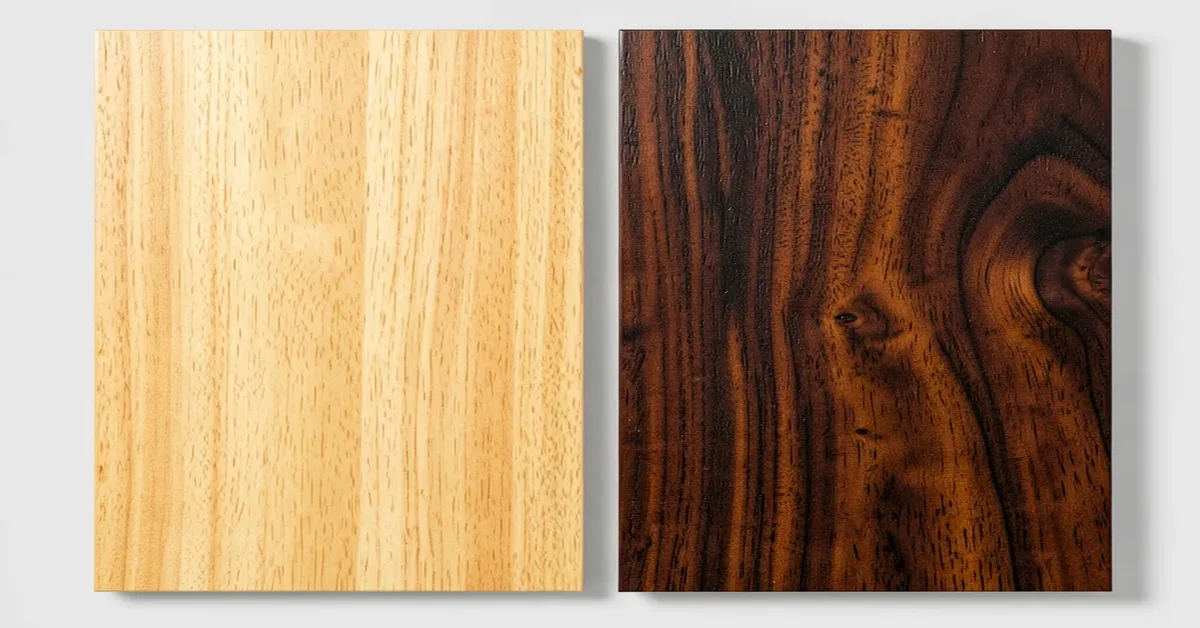
The grain is where these two woods diverge most visibly. Saman’s grain is interlocked and wavy — adjacent growth rings run in slightly different directions, which is part of why it can be tricky to plane cleanly without tear-out on the wrong pass. Walnut’s grain runs straighter and more uniformly, which is a big part of why it machines and finishes so predictably compared to Saman.
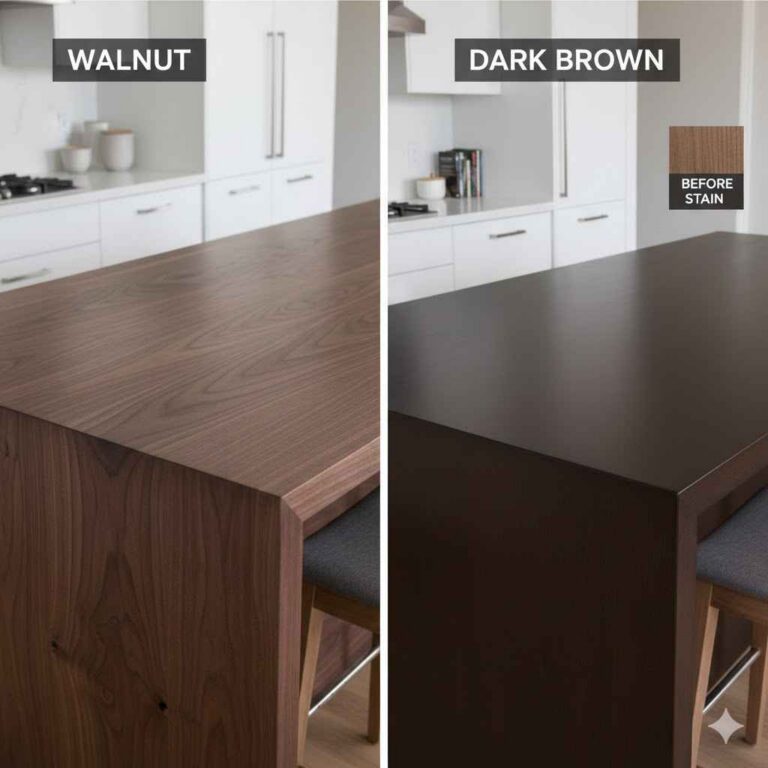
Color follows a similar pattern: Saman ranges from a light golden brown to a deeper reddish-brown depending on the specific tree and how it was dried, while walnut runs consistently darker, a chocolate brown that can show subtle purple or gray undertones in the heartwood. That consistency is one reason walnut commands a premium — a batch of walnut boards color-matches far more reliably than a batch of Saman.
On raw hardness, Saman actually edges out walnut — 1,540 lbf versus 1,010 lbf on the Janka scale, meaning it resists dents and dings from daily use slightly better in absolute terms. Where walnut pulls ahead is long-term dimensional stability: it moves less with seasonal humidity swings and holds tight joinery better over decades, which matters more for heirloom furniture than surface hardness alone does.
Saman Wood Features
Also called monkeypod or rain tree, Saman is native to Central and South America but is now grown commercially on plantations across Southeast Asia as well, particularly Indonesia and Thailand — plantation growing is a big part of why it’s affordable and widely available compared to old-growth tropical hardwoods that are harder to source sustainably.
It resists rot better than most tropical hardwoods of similar price, which is why it shows up so often in live-edge slab furniture — a single Saman tree can produce a wide enough trunk section for a full table slab without joining multiple boards, something few other affordable hardwoods can offer. It also carves and turns easily thanks to its relatively open, even texture, which is why it’s a favorite for carved bowls and decorative pieces as well as furniture.
Walnut Wood Features
Black walnut, the species most furniture makers mean by “walnut,” is native to eastern North America, with European walnut a related but distinct species used more in Old World furniture traditions. A mature black walnut takes 60-80 years to reach a harvestable diameter, which is the real driver behind its price — it’s not scarcity of the species itself so much as the decades of growing time that go into every board.
Machinability is where walnut earns its reputation among woodworkers: it planes, routs, and sands cleanly with minimal tear-out even against the grain, and it holds crisp detail in carved work better than most domestic hardwoods. That combination of workability and dimensional stability is exactly why it’s the standard choice for gunstocks and musical instrument backs, applications where a warped or unstable board ruins the piece.
Beyond furniture and cabinetry, walnut’s stability makes it a favorite for flooring in homes that see real seasonal humidity swings, and its fine, consistent grain is why it’s often the wood of choice for sculptural and carved work where predictable behavior under the tool matters as much as looks.
Cost Comparison
Saman typically runs $5-10 per board foot compared to walnut’s $10-20, and that gap widens further for wide slabs — a single-slab walnut table top in a large size gets expensive fast simply because wide, clear walnut boards are rare, while Saman’s naturally wide trunks make large slabs more attainable at a given price point.
The value calculation isn’t just about upfront cost, though: Saman’s plantation-grown supply keeps prices stable and consistently available, while walnut prices have climbed over the past decade as old-growth supply has tightened, making it more of a premium-tier investment than it was a generation ago.
Sustainability Factors
Saman’s 15-20 year plantation growing cycle versus walnut’s 60-80 years in the wild is the single biggest sustainability difference between the two — a Saman plantation can be replanted and harvested multiple times within one human generation, while a harvested walnut tree represents decades of growth that took an entire lifetime to replace.
Look for FSC certification specifically when sustainability matters to your purchase, since it’s the most widely recognized standard verifying the wood came from a responsibly managed source rather than illegal logging — this matters more for walnut, given how much old-growth and slow-regrowth supply factors into the species, than it does for plantation-grown Saman, which is inherently lower-impact by virtue of its growing cycle alone.
Aesthetic Considerations
Saman wood offers a rich, warm tone, making spaces feel cozy. Walnut presents a darker, elegant look, perfect for sophisticated designs. Both woods are versatile, lending unique charm to furniture and decor styles.
Design And Style
Saman’s light, warm tones and dramatic wavy grain read as casual and organic — it’s a natural fit for live-edge tables, rustic farmhouse pieces, and anywhere you want the wood itself to be the visual centerpiece. Walnut’s deeper, more uniform color and straighter grain lend themselves to cleaner, more formal lines, which is why it shows up so often in mid-century modern and traditional furniture where the wood supports the design rather than dominating it.
Finishing Options
Saman is almost always finished clear rather than stained, since its natural color range already covers light-to-medium brown and staining tends to muddy the grain’s wavy figure rather than enhance it. Walnut takes a clear finish just as well, but many woodworkers stain it slightly darker anyway to deepen the contrast with sapwood (the lighter-colored outer wood that sometimes shows up at a board’s edge). A penetrating oil finish like Danish oil works well on both woods for the same reason: it soaks into the grain rather than forming a film on top, so it deepens color and adds sheen without hiding either wood’s natural texture the way a thick polyurethane coat can.
Practical Applications
Saman’s relatively low density for a hardwood (it’s noticeably lighter to lift than walnut despite the similar Janka rating) makes it a practical choice for larger furniture pieces like dining tables and coffee tables where weight matters for moving the finished piece. Walnut’s density and refined look are why it’s the default choice for fine cabinetry and case furniture meant to last generations rather than get rearranged often.
In flooring, Saman offers a budget-friendly way to get a wide-plank, dramatic-grain look, while walnut flooring reads as a premium, timeless option that tends to hold resale value in a home better than most alternatives. Both work well as accent wall paneling, where Saman’s bold grain pattern or walnut’s rich, even tone can anchor a room depending on the style you’re going for.
Maintenance And Care
Saman wood needs simple cleaning with a damp cloth to keep its shine. Walnut requires regular polishing to maintain its rich color. Both types offer durability, but their care routines differ slightly. Choose based on your willingness for upkeep.
Cleaning Tips
Both woods do best with a dry or barely damp microfiber cloth for routine dusting — skip ammonia-based or abrasive cleaners on either, since they can strip the natural oils in the finish and dull the surface over repeated use. Wipe up spills immediately rather than letting them sit; Saman’s more open grain absorbs liquid faster than walnut’s tighter grain, so it’s actually more prone to staining from a lingering spill.
Preservation Techniques
Re-oil Saman furniture roughly once a year with a penetrating oil like Danish oil or teak oil to keep its open grain from drying out and drawing in dust; walnut, with its tighter grain, holds a finish longer and generally only needs a fresh coat of paste wax every couple of years to maintain its shine. Both woods fade with prolonged direct sunlight — walnut noticeably lightens toward tan over years of sun exposure, which surprises people who assume its dark color is permanent — so rotating furniture or using UV-filtering window film helps preserve the original tone on either wood.
Final Decision Factors
Choosing between Saman wood and Walnut involves considering color, durability, and grain patterns. Saman wood offers a lighter, tropical look, while Walnut provides a rich, dark finish. Both types of wood have unique features, making the decision dependent on personal preference and intended use.
Purpose And Function
Choose Saman for a statement piece where you want the grain itself to be the focal point — a live-edge dining table or a bold coffee table where budget also matters. Choose walnut when the project calls for tight, stable joinery or fine detail work that has to hold up structurally over decades, like a heirloom cabinet, a musical instrument, or precision-fitted case furniture, since its dimensional stability and finer grain give you more margin for exacting joinery.
Personal Preference
Beyond the technical differences, this often just comes down to how much visual weight you want a piece to carry in a room. Saman’s lighter color and dramatic grain brighten a space and draw the eye, which works well in an open, casual layout but can feel busy in a small formal room. Walnut’s deep, even tone recedes more visually while still reading as high-quality, which is why it pairs so easily with almost any existing color scheme without competing for attention.
Frequently Asked Questions
Is Saman Wood Good?
Saman wood is durable and versatile. It resists decay and is easy to work with. Its attractive grain makes it popular for furniture and decorative items. Saman wood’s sustainability and affordability enhance its appeal. It’s a good choice for various woodworking projects, offering both beauty and functionality.
What Is Saman Wood Similar To?
Saman wood is similar to mahogany and walnut. It features a rich brown hue and attractive grain patterns. Its durability and smooth texture make it ideal for furniture and cabinetry.
Is Saman Wood A Hard Wood?
Saman wood is classified as a hardwood. It offers durability and strength for various applications. Ideal for furniture and carpentry, its texture and grain are appealing. Popular in tropical regions, it withstands wear and tear effectively. Consider saman wood for projects requiring robust materials.
Is Walnut The Best Wood?
Walnut is popular for its rich color and durability. Its versatility suits furniture and woodworking projects. Personal preference and project requirements determine if it’s the best wood. Other woods like oak or cherry may be better for specific needs. Evaluate your project’s demands before choosing.
Conclusion
Neither wood is objectively better — they solve different problems. Saman wins on price, on availability in wide slabs, and on raw dent resistance; walnut wins on long-term stability, color consistency, and the kind of refined look that ages well in formal settings. If budget and a bold, organic look matter most, Saman is the practical choice. If you’re building something meant to last generations with predictable behavior in the shop and on the wall, walnut earns its higher price.
Sponsored / affiliate links. As an Amazon Associate I earn from qualifying purchases. I may earn additional commission from eligible campaigns.