Sande vs Birch Plywood: Which Is Better?
Choosing the right plywood can feel tricky when you’re starting out. You see names like Sande and Birch, and you wonder which one will work best for your project. It’s a common question because both are popular, but they have differences.
Don’t worry though! We’ll break down Sande vs Birch Plywood: Which Is Better? in a simple, easy-to-follow way. Get ready to learn the basics so you can pick the perfect plywood for your next build.
Sande Plywood Explained
Sande plywood is a popular choice for many woodworking projects. It’s known for its attractive grain pattern, which can look quite nice. This type of plywood is often made from the Sande tree, which grows in West Africa.
Because of its appearance, Sande plywood is frequently used when the visible grain is important, like on cabinet doors or furniture surfaces. It’s generally considered a good balance between cost and looks.
One of the main reasons people choose Sande plywood is its surface quality. It often has a smoother finish compared to some other types of plywood. This can mean less work sanding before you paint or stain it.
It’s also usually quite stable, meaning it won’t warp or twist easily. This stability is important for keeping your projects looking good over time.
Sande plywood is available in different grades, which affects its appearance and price. Higher grades will have fewer knots and a more uniform color. Lower grades might have more imperfections, which are fine for projects where appearance isn’t the main concern.
It’s a versatile material that can be used for a wide range of applications.
Sande Plywood Appearance and Grain
The look of Sande plywood is one of its biggest selling points. The grain is often described as straight and uniform, with a reddish-brown or golden color. It can have a subtle wavy pattern that adds visual interest.
This natural beauty makes it a good alternative to more expensive hardwoods when you want a nice finish.
When you sand Sande plywood, it typically takes stain very well. This allows you to customize the color to match your decor. You can achieve a light, natural look or a darker, richer tone.
The grain pattern will show through, giving your project depth and character.
It’s important to remember that plywood is made of layers, or plies, glued together. The face veneer is the top layer you see. With Sande plywood, this face veneer is chosen for its attractive appearance.
The inner plies are usually less decorative but provide strength and stability.
- Uniform Grain Patterns Sande plywood often features straight, consistent grain lines. This makes it easy to work with and provides a predictable look. It’s less likely to have wild, swirling patterns that can sometimes be difficult to match or finish evenly. This uniformity is a key advantage for projects requiring a smooth, classic appearance.
- Color Variations Sande plywood can range in color from light tan to a reddish-brown. The exact shade can depend on where the tree grew and how the wood was processed. While generally consistent, some slight variations are normal and add to its natural appeal. It often looks warm and inviting.
- Surface Smoothness The outer layers of Sande plywood are typically quite smooth. This means you can often get away with less sanding before applying a finish. A smoother surface helps paint and stains adhere better, leading to a more professional-looking final product.
Working with Sande Plywood
Sande plywood is relatively easy to cut and shape with standard woodworking tools. Its smooth surface means your saw blades will glide through it with less resistance. This makes it a good choice for both experienced woodworkers and those who are just getting started.
You don’t need special equipment to work with it.
When you’re gluing Sande plywood, make sure to use a good quality wood glue. The smooth surface helps the glue bond well. Clamping the pieces together firmly ensures a strong joint.
It’s also important to clean up any excess glue before it dries.
Finishing Sande plywood is where its beauty really shines. Whether you choose to paint, stain, or use a clear coat, the results are usually very pleasing. The natural grain will show through, adding a unique touch to your project.
Always test your finish on a scrap piece first to make sure you like the look.
- Cutting and Machining Sande plywood cuts cleanly with most saws, including circular saws and table saws. Its consistent structure helps prevent tear-out, especially when using sharp blades. Routing edges or creating decorative profiles is also straightforward.
- Gluing and Joining Standard woodworking glues work well with Sande plywood. Ensure surfaces are clean and free of dust. Proper clamping pressure is key for strong bonds. It holds screws and nails well, making assembly straightforward.
- Finishing Options You can paint, stain, varnish, or clear coat Sande plywood. Its smooth surface accepts finishes evenly. For a natural look, a clear coat will highlight the wood’s inherent color and grain.

Birch Plywood Explained
Birch plywood is another very common and popular material in woodworking. It’s known for its strength, stability, and smooth, light-colored appearance. This plywood is made from layers of birch wood, which is a hardwood.
This makes it a very durable option for many applications.
Because birch is a hardwood, birch plywood is generally stronger and denser than many other types of plywood. This is why it’s often used for projects that need to withstand a lot of wear and tear. Think about things like workbenches, shelving, or even structural components in furniture.
The surface of birch plywood is typically very smooth and light in color. This makes it a fantastic canvas for painting. If you want a smooth, paintable surface, birch is an excellent choice.
It also takes stains well, allowing you to achieve different looks.
Birch plywood comes in various grades, similar to Sande. The grades often refer to the quality of the face and back veneers. Higher grades have very smooth, clear faces with no defects.
Lower grades might have small knots or minor imperfections, which are usually hidden when painted.
Birch Plywood Appearance and Grain
The appearance of birch plywood is one of its defining characteristics. It typically has a pale, creamy white to light yellow color. The grain is usually straight and fine, giving it a clean and modern look.
This light color makes it very versatile for finishing.
When you apply a clear finish to birch plywood, you get a beautiful, natural wood look. The fine grain pattern is subtle but attractive. If you plan to paint, birch provides an ideal surface.
It’s so smooth and consistent that paint adheres beautifully, creating a flawless finish.
Unlike Sande, which can have a reddish hue, birch is generally much lighter. This lightness can make a space feel brighter and more open. It’s a popular choice for modern and minimalist designs where a clean aesthetic is desired.
- Light Coloration Birch plywood is known for its pale, often creamy, color. This makes it easy to paint any color or stain it to mimic other woods. Its light tone can brighten up projects and rooms.
- Fine Grain The grain of birch is typically straight and has a fine texture. This contributes to its smooth appearance and makes it a preferred choice for smooth finishes. The subtle grain is often appreciated in minimalist designs.
- Smooth Surface The face veneers of birch plywood are usually very smooth. This means less prep work is needed before painting or applying other finishes. A high-quality birch plywood can have a nearly perfect surface right off the shelf.
Working with Birch Plywood
Birch plywood is a joy to work with because of its strength and stability. It cuts cleanly and doesn’t tend to splinter easily, which is a big plus for woodworking. Its density means it holds fasteners like screws very well, reducing the chance of splitting.
When assembling projects with birch plywood, you’ll find that glue bonds strongly to its surface. The uniform layers provide a solid base for creating strong joints. Whether you’re using screws, nails, or glue, birch plywood offers excellent holding power.
Finishing birch plywood is straightforward and rewarding. Its smooth surface accepts paint and stains evenly. A clear coat will reveal the subtle, natural grain pattern, while paint can create a solid, uniform color.
Many people choose birch for its excellent paintability.
- Durability and Strength Birch plywood is very strong due to its hardwood construction. It resists denting and scratching better than many softer woods. This makes it suitable for high-traffic areas or items that will see heavy use.
- Ease of Cutting and Machining It cuts cleanly with sharp blades, minimizing splintering. Its density means it holds edges well when routing or shaping. This makes detailed work easier and more precise.
- Excellent Finishing Surface Birch plywood provides an exceptionally smooth surface for paint and stain. It’s a top choice for furniture, cabinets, and other items where a flawless finish is desired. The light color is a blank slate for any design.
Sande vs Birch Plywood Key Differences
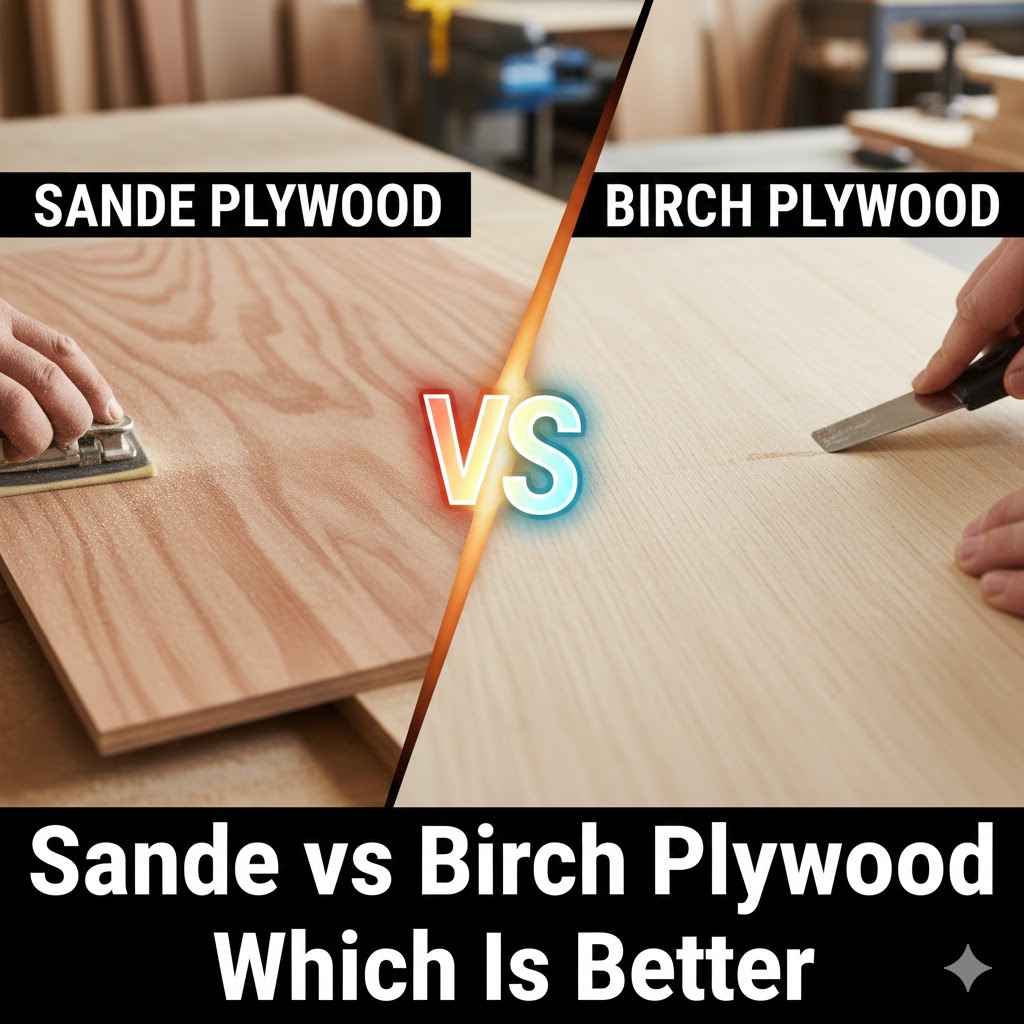
When comparing Sande and Birch plywood, several key differences stand out. The most noticeable is their appearance. Sande plywood often has a warmer, sometimes reddish, tone and can exhibit more varied grain patterns.
Birch plywood, on the other hand, is typically lighter, with a creamy color and a more subtle, uniform grain.
Another important distinction is their hardness and density. Birch is a hardwood and is generally denser and harder than Sande. This means birch plywood is usually stronger and more durable, making it better for applications that require high resistance to wear and tear.
Sande plywood is still strong enough for many uses, but birch often has an edge in pure toughness.
Cost can also be a factor. Generally, birch plywood tends to be more expensive than Sande plywood. This is because birch wood itself is often more costly, and the demand for its specific qualities drives up its price.
Sande plywood often offers a more budget-friendly option, especially for projects where premium durability isn’t the top priority.
The choice between them also depends on the intended use. If you need a strong, durable material for shelves or cabinets that will be heavily used, birch might be your better bet. If you’re looking for a plywood with a more visually interesting grain for decorative elements and don’t need extreme hardness, Sande could be a great choice.
Appearance Comparison
The visual difference between Sande and Birch plywood is quite striking. Sande plywood often has a richer, warmer color. It can range from a light tan to a reddish-brown, and its grain can sometimes have more movement or distinct figuring.
This gives it a more traditional or exotic wood look.
Birch plywood presents a much cleaner, brighter aesthetic. Its light, creamy color and fine, straight grain are ideal for modern or minimalist designs. If you want a wood that feels fresh and airy, birch is often the way to go.
It’s also an excellent choice when you want the plywood itself to be a focal point of a project’s design.
Think of it this way: if you want a project to have a noticeable, warm wood character, Sande might be perfect. If you want a smooth, consistent surface that either blends in or serves as a neutral backdrop for paint or a very subtle wood grain, birch is probably better.
| Feature | Sande Plywood | Birch Plywood |
|---|---|---|
| Color | Tan to reddish-brown | Creamy white to light yellow |
| Grain | Can be varied, sometimes with more figuring | Straight, fine, and uniform |
| Visual Appeal | Warm, rich, natural wood look | Clean, bright, modern look |
Durability and Strength Comparison
When it comes to pure toughness, birch plywood generally holds the advantage. As a hardwood, birch wood is naturally denser and harder than the wood used for Sande plywood. This translates into greater resistance to dents, scratches, and overall wear.
Birch plywood is often preferred for applications where the material will experience a lot of physical stress. This includes high-traffic areas, work surfaces, or furniture that gets a lot of use. Its structural integrity is a key reason for its popularity in cabinet construction and shelving.
Sande plywood is still durable enough for many common woodworking tasks. It can certainly be used for cabinets, furniture, and decorative elements. However, if your project absolutely requires the highest level of impact and abrasion resistance, birch plywood will likely perform better over the long term.
A study by the Forest Products Laboratory found that hardwood plywoods, in general, offer superior strength-to-weight ratios compared to softwood alternatives. While the specific densities vary, birch typically falls at the higher end of the hardwood spectrum, contributing to its robust nature.
| Feature | Sande Plywood | Birch Plywood |
|---|---|---|
| Hardness | Good | Excellent |
| Dent Resistance | Good | Very Good |
| Scratch Resistance | Good | Very Good |
| Overall Durability | Suitable for most uses | Excellent for high-wear applications |
Cost and Value
The price point is a significant factor for many DIYers and professionals. Typically, Sande plywood is more affordable than birch plywood. This makes it an attractive option when budget is a primary concern or when a large amount of material is needed.
Birch plywood, while more expensive, is often considered to offer good value for its durability and quality. If a project demands strength and a smooth, premium finish that will last, the higher initial cost of birch plywood can be justified by its longevity and performance.
For projects where the surface will be painted or covered, and extreme durability isn’t paramount, Sande can be a more cost-effective choice. However, if you want a beautiful wood grain finish or need the strongest possible material, the investment in birch might be worthwhile.
Market research indicates that hardwood plywood prices can fluctuate based on availability and demand. In recent years, demand for high-quality plywood for cabinetry and furniture has kept birch prices relatively stable, often higher than less common hardwoods like Sande.
When to Choose Sande Plywood
Sande plywood is an excellent choice when the visual appeal of the wood grain is a priority. If you’re building furniture, decorative panels, or accent pieces where the natural beauty of the wood is meant to be showcased, Sande’s warm tones and interesting grain can be very appealing.
It’s also a good option when you’re looking for a cost-effective solution that still offers a decent quality surface. For many everyday woodworking projects, Sande plywood provides a good balance of aesthetics, workability, and price. If you plan to stain your project, Sande takes stain very well, allowing you to achieve a variety of rich looks.
Consider Sande if your project involves:
- Decorative cabinet doors or drawer fronts where the grain pattern is important.
- Wooden wall paneling or accent walls that benefit from a warm wood appearance.
- Picture frames or decorative boxes where a nice finish is key.
- Projects where you want to stain the wood and show off its natural character.
Sande plywood is also a solid choice for hobby projects or prototypes where you want a good looking material without the highest possible price tag. Its workability makes it forgiving for those learning new techniques.
When to Choose Birch Plywood
Birch plywood is the go-to material when durability, strength, and a smooth, paintable surface are most important. If you’re building kitchen cabinets, workbenches, storage units, or anything that needs to withstand heavy use and potential abuse, birch plywood is an outstanding choice.
Its light color and fine grain make it a perfect base for painting. If you want a flawless, professional-looking painted finish on your furniture or cabinets, birch provides an ideal canvas. It minimizes the visibility of grain lines under the paint, giving a smooth, solid look.
Think about using birch plywood for:
- Kitchen and bathroom cabinets that require durability and a clean aesthetic.
- Workbenches and shop furniture that need to be tough and resist damage.
- Children’s furniture where a strong, safe, and smooth finish is essential.
- High-traffic shelving units that need to support significant weight.
- Projects where a modern, light-colored wood finish is desired.
The stability of birch plywood also makes it excellent for drawer construction, ensuring smooth operation and longevity. Its ability to hold screws securely is also a major advantage in structural applications.
Sande vs Birch Plywood Which Is Better for Specific Projects
Deciding between Sande and Birch plywood ultimately comes down to the specific needs of your project. There isn’t one single answer to Sande vs Birch Plywood Which Is Better? as both have their strengths.
For instance, if you’re crafting a display cabinet where the beauty of the wood grain is the star, Sande might be the perfect fit due to its warmer tones and potential for interesting figuring.
However, if you’re building a home office desk that will see daily use, experience spills, and need to hold up under the weight of monitors and other equipment, Birch plywood’s superior hardness and durability would make it the better choice. Its smooth, light surface also makes it ideal for a clean, professional look when painted or stained.
Let’s look at a few common project scenarios to illustrate this.
Project Scenario 1 Bookshelves
For standard home bookshelves that will hold books but won’t be subjected to extreme abuse, both Sande and Birch can work well. However, if the shelves are intended for a living room where appearance is important and they might be bumped occasionally, Sande’s warmer grain could be a nice touch.
If these are garage shelves intended to hold heavy tools and materials, and durability is the absolute top priority, Birch plywood would be the more robust option. Its hardness and strength mean it’s less likely to sag or get damaged over time from heavy loads.
- Appearance Focused Bookshelves If you want the shelves to look like natural wood and add warmth to a room, Sande plywood is a great choice. It stains nicely and its grain can be quite attractive.
- Heavy Duty Storage Bookshelves For garage or utility storage, Birch plywood is superior. It resists damage better and can handle heavier loads without showing wear.
Project Scenario 2 Cabinet Doors
For cabinet doors, the decision often hinges on the desired finish. If you’re aiming for a painted finish, Birch plywood is generally preferred because of its very smooth, light surface which provides an excellent base for paint. You’ll get a cleaner, more uniform painted look.
If you want to stain the cabinet doors and showcase the natural wood grain, Sande plywood can offer a more visually interesting and warmer aesthetic. Its grain can add character and a distinct look that Birch might not provide with its more uniform pattern.
- Painted Cabinet Doors Choose Birch plywood for its smooth, light surface that paints beautifully. It results in a flawless, professional-looking finish.
- Stained Cabinet Doors Consider Sande plywood for its warmer tones and potentially more varied grain patterns, which can add depth and character when stained.
Project Scenario 3 Tabletops
For tabletops, especially those used for dining or work, durability is often a key consideration. Birch plywood, with its superior hardness, will resist scratches and dents better than Sande plywood. This makes it a more practical choice for surfaces that will see frequent use and potential impacts.
Sande plywood can certainly be used for tabletops, especially if it will be protected by a thick, durable finish like epoxy or a very hard polyurethane. However, without such protection, Birch will likely hold up better against daily wear and tear.
Sande vs Birch Plywood Which Is Better Summary
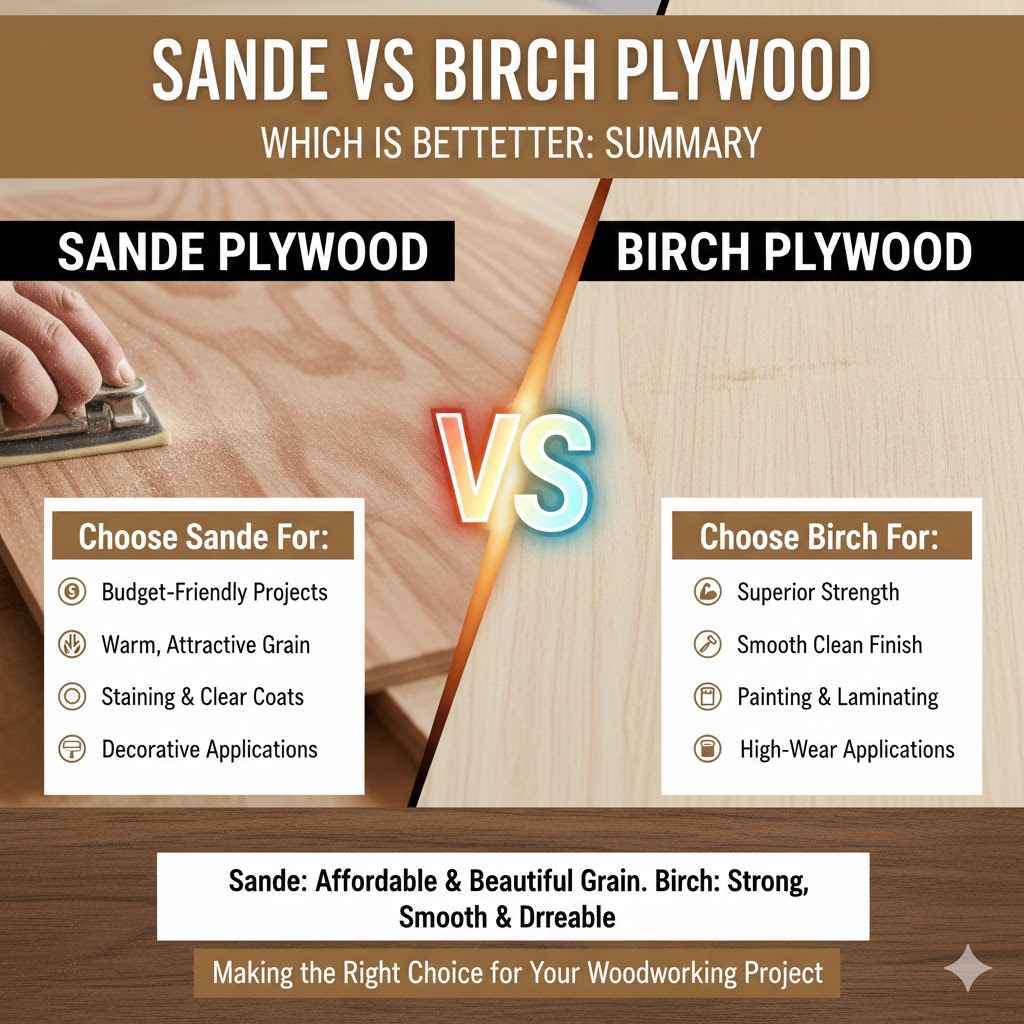
So, when it comes to Sande vs Birch Plywood: Which Is Better?, the answer really depends on what you need. Sande plywood offers a warm, attractive grain and is a good budget-friendly option for decorative projects. Birch plywood is tougher, stronger, and provides a superior surface for painting, making it ideal for high-wear applications and modern designs.
Frequently Asked Questions
Question: Is Sande plywood stronger than Birch plywood?
Answer: Birch plywood is generally stronger and more durable than Sande plywood because it is made from hardwood, which is denser and harder.
Question: Which plywood is better for painting?
Answer: Birch plywood is usually better for painting because it has a very smooth, light, and uniform surface that accepts paint very well, providing a flawless finish.
Question: Which plywood looks better for furniture?
Answer: This depends on your preference. Sande plywood offers a warmer, sometimes reddish, tone and more varied grain patterns, which can be attractive for a natural wood look. Birch plywood offers a clean, light, and subtle grain, which is great for modern designs or as a base for paint.
Question: Is Sande plywood more expensive than Birch plywood?
Answer: No, Sande plywood is typically less expensive than birch plywood. Birch plywood is generally considered a premium material.
Question: Can I use Sande plywood for cabinet construction?
Answer: Yes, Sande plywood can be used for cabinet construction, especially for cabinet doors or drawer fronts, but for carcases that need maximum durability, especially in a kitchen, birch is often preferred.
Conclusion
Choosing between Sande and Birch plywood boils down to your project’s needs. Sande offers warmth and visual interest at a good price for decorative tasks. Birch provides superior strength and a perfect painting surface for durable, high-use items.
Select the plywood that best matches your desired look and functional requirements for a successful build.