Plywood vs Luan: Which Should You Use
Plywood and luan aren’t really two competing choices for the same job — luan is a specific, thin type of plywood, made from lightweight tropical hardwood, and it’s built for a much narrower set of tasks than general construction plywood. If you’re choosing between them, the real question is usually “do I need structural strength (plywood) or a thin, cheap, paintable panel (luan)?” rather than a straight head-to-head.
Plywood Basics
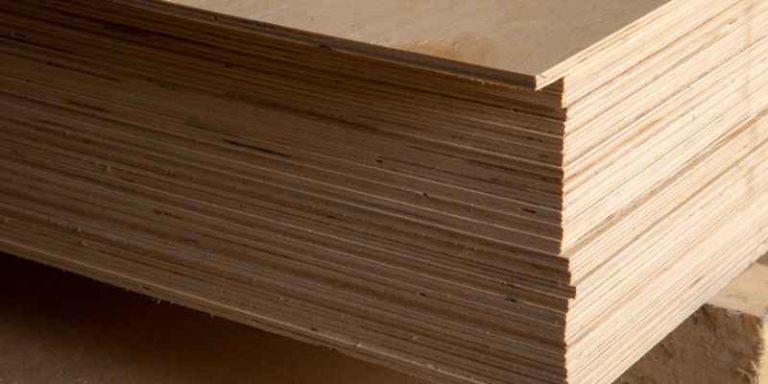
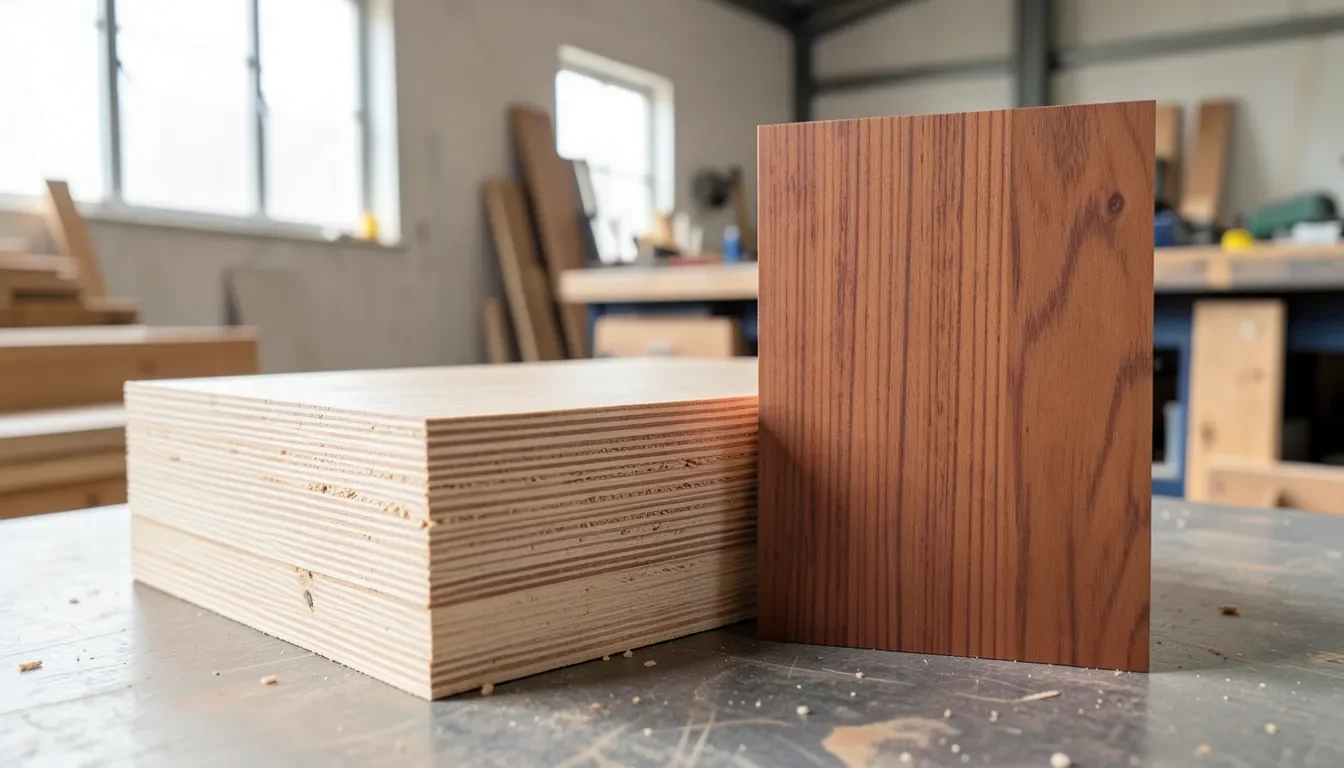
Plywood is built from thin layers (“plies”) of wood veneer glued together with the grain of each layer running perpendicular to the one below it. That cross-grain construction is what gives plywood its strength and resistance to warping — wood is naturally weaker across the grain than along it, so alternating the direction in each layer cancels out that weakness. Common construction plywood runs from about 1/4 inch up to 3/4 inch thick, and it’s rated by grade (A, B, C, D) based on how many voids and knots show on each face.
It’s used everywhere structural strength matters: subfloors, roof and wall sheathing, furniture carcasses, and shelving. Higher grades (like cabinet-grade birch plywood) also work well for furniture faces where appearance matters, not just strength.
Luan Basics
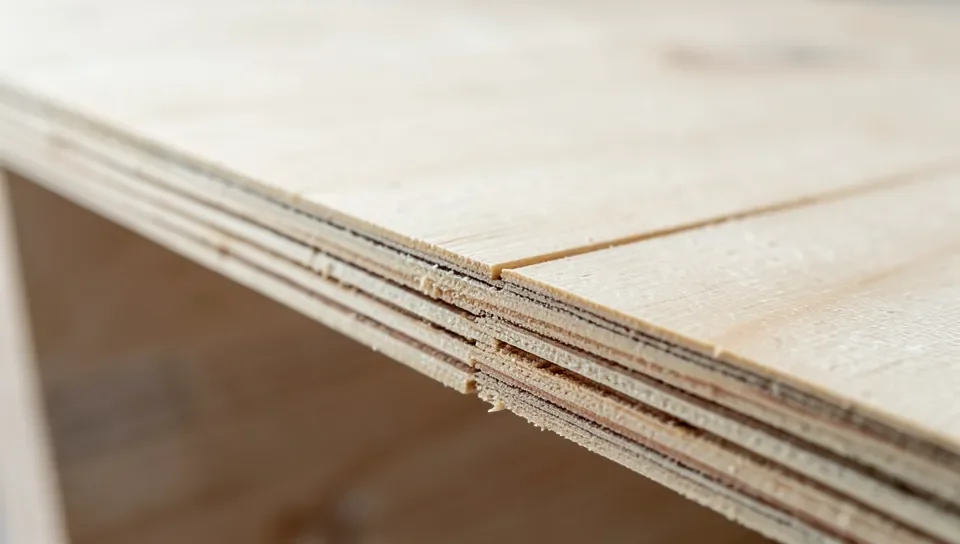
Luan (also spelled lauan) is a plywood made from Southeast Asian tropical hardwoods — historically Philippine mahogany and related species, sold under the trade name meranti in some regions. It’s typically sold at 1/8 inch (sometimes 3mm or 1/4 inch), with a smooth, sandable face and a reddish-brown color and grain that’s more uniform than most construction plywood. For actual thickness tolerances and how 1/8″ luan compares to stronger 1/8″ Baltic birch, see our full 1/8 plywood sheets guide.
Because it’s thin and made from a softer tropical hardwood, luan bends and dents more easily than construction plywood, and it isn’t rated for structural loads. It’s not weather-rated either — moisture makes it warp and delaminate quickly, so it’s an indoor-only material.
Strength, Durability, and Moisture
Construction plywood’s thickness and cross-grain layup make it genuinely load-bearing — it’s what holds up a subfloor or a roof deck. Luan’s thinness is the whole point of what it’s good at (light weight, easy to cut, cheap), but that same thinness means it can’t take a structural load or resist a hard impact the way thicker plywood can. Exterior or “marine-grade” plywood is built with waterproof glue and can handle damp conditions; luan has neither the glue rating nor the thickness for that and should stay indoors, away from consistent moisture.
Appearance and Cost
Construction-grade plywood often shows visible knots, patches, and mixed grain on at least one face, which usually needs sanding or filling for a finished look. Luan’s face is smooth and consistently grained out of the box, which is exactly why it’s a common choice for paintable panels and door skins. On cost, luan is cheaper per sheet than plywood of comparable size, mainly because it’s so much thinner — comparing them by thickness rather than by sheet price gives a fairer picture, since a 3/4″ plywood sheet is doing a completely different job than 1/8″ luan.
Environmental and Air Quality Considerations
Luan’s tropical hardwood sourcing is a real environmental consideration — lauan/meranti species have historically been harvested from Southeast Asian rainforests, and unsustainable logging of these species has been a documented deforestation concern for decades. Look for FSC-certified luan when it’s available. Both plywood and luan are also glued products, and imported luan in particular has occasionally been flagged for higher formaldehyde emissions than domestic softwood plywood — if indoor air quality matters for your project (a kids’ room, an enclosed cabinet), look for luan or plywood specifically labeled CARB2-compliant or NAF (no added formaldehyde).
Best Uses For Plywood
Reach for plywood for subfloors, wall and roof sheathing, furniture carcasses, shelving, and anything else that needs to actually bear weight or resist impact. It’s also a practical furniture material on its own — lighter and cheaper than solid wood, easy to cut into consistent panels, and, at cabinet grade, attractive enough to use as a finished face.
Best Uses For Luan
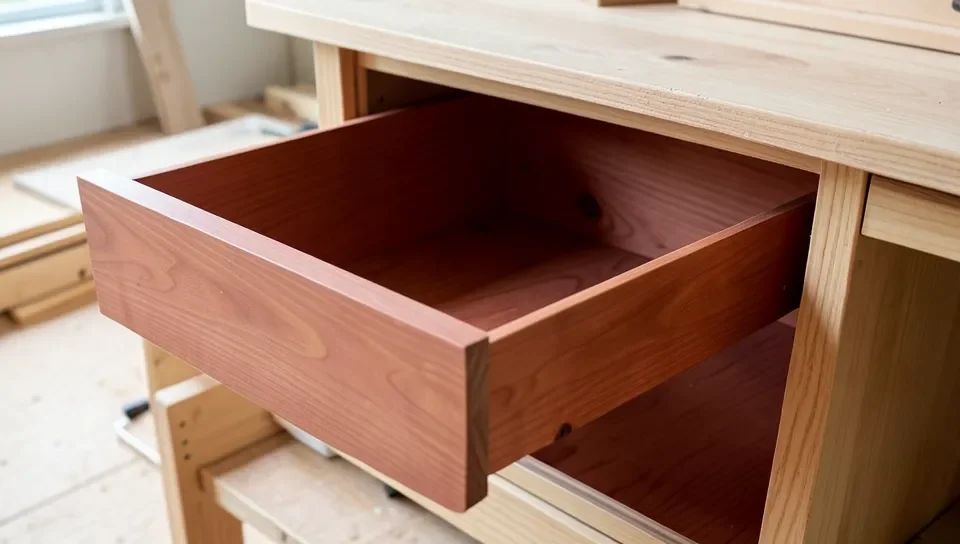
Luan’s job is being thin, light, cheap, and paintable — cabinet backs, drawer bottoms, interior door skins, wall paneling, and floor underlayment (as a smooth base under vinyl or laminate flooring). It’s also a favorite for craft and model-making projects where a hard, structural material isn’t the point. Skip it anywhere it needs to bear weight, resist an impact, or handle moisture.
Choosing Between Them
Ask what the panel actually has to do, not just what it costs. If it needs to hold weight, resist moisture, or take an impact, that’s plywood — and the specific grade and thickness should match the load, not just “plywood” in general. If you need a thin, smooth, easy-to-paint panel for something like a cabinet back or a door skin, luan is the cheaper, lighter, purpose-built choice, provided it’s staying indoors and out of anything structural. Buying thicker plywood than a non-structural job actually needs just adds cost and weight for no benefit; using luan for anything load-bearing is a real failure point waiting to happen.
Frequently Asked Questions
Is Luan And Plywood The Same Thing?
Not exactly — luan is a specific type of plywood, made from thin layers of tropical hardwood, typically sold at 1/8 inch thick. General “plywood” covers a much wider range of thicknesses, wood species, and grades built for structural use. Luan is a plywood, but most plywood isn’t luan.
What Is Luan Used For?
Cabinet backs, drawer bottoms, interior door skins, wall paneling, floor underlayment, and craft or model-making projects. Its smooth, paintable surface and low cost make it a go-to for non-structural interior panels.
Is Luan Plywood Strong?
Not in a structural sense. Its thinness and softer tropical hardwood make it fine for non-load-bearing panels, but it isn’t rated for weight-bearing or impact-resistant use the way construction-grade plywood is.
What Is A Substitute For Luan?
Thin (1/8″-1/4″) birch or Baltic birch plywood, or hardboard/MDF panels, all work as substitutes depending on the job — birch plywood is stronger and takes finish better, hardboard is cheaper but less paint-friendly, and thin MDF is smooth and stable but heavier and more moisture-sensitive than luan.
Conclusion
Plywood and luan solve different problems more than they compete for the same one: plywood is the structural, load-bearing choice, and luan is the thin, cheap, paintable panel for non-structural interior work. Match the material to what the panel actually has to do — strength and moisture resistance point to plywood, a smooth paintable surface on a budget points to luan — and you’ll rarely pick the wrong one.
Sponsored / affiliate links. As an Amazon Associate I earn from qualifying purchases. I may earn additional commission from eligible campaigns.
 Baltic Birch Plywood Sheets Box of 45 - Laser Engraving Cutting, Scroll Saw Nature Veneer Color, Stronger Than Basswood, A/A Grade,12 x 12 x 1/8”, 3mm Thickness Perfect for Wood Burning
 12Pcs 12 x 17.5 x 1/8 Inch Baltic Birch Plywood Sheets 3mm Unfinished Plywood Sheet for Arts and Crafts, Painting, Pyrography, Wood Engraving, Wood Burning, Laser, Architectural Models