Vinyl Plank vs Engineered Hardwood: Which Adds More Resale Value?
Engineered hardwood usually adds more resale value in main living areas of mid-market and luxury homes. Premium vinyl plank can win in bathrooms, basements, rentals, and value-tier homes. Pick the wrong floor, and buyers may not pay back the difference. This guide compares resale value by home price tier, room use, and buyer type.
| Decision factor | Vinyl Plank | Engineered Hardwood | Winner |
|---|---|---|---|
| Installed cost | Material $2–$7 per square foot; installation $1.50–$3 per square foot. | Material $4–$14 per square foot; installation $3–$6 per square foot. | Vinyl Plank |
| Moisture tolerance | Often marketed as 100% waterproof. | Water-resistant, not waterproof. | Vinyl Plank |
| Buyer perception in main living areas | Accepted in many homes, but can read as a budget choice in higher-end spaces. | Stronger premium signal in move-up and luxury homes. | Engineered Hardwood |
| Resale flexibility by room | Works well in kitchens, baths, basements, and other moisture-prone zones. | Best in dry main living areas where buyers expect a wood look and feel. | Tie |
| Refinishing potential | Not refinishable. | Can be refinished one to three times. | Engineered Hardwood |
| Long-term value signal | Can help resale efficiency when moisture risk or budget pressure is high. | Usually carries the stronger resale ROI ranking in the right market. | Engineered Hardwood |
Vinyl plank vs engineered hardwood: resale trade-off

The short version: engineered hardwood usually sends the stronger resale signal, but premium vinyl plank can be the smarter resale choice when moisture, basement conditions, or a tight budget matter more than status. Buyers react to room context, not a blanket rule. In the wrong room, the pricier floor can be the weaker sale.
Why room type changes the answer
Main living areas reward floors that feel premium and hold their appeal. Kitchens, baths, and basements reward materials that handle spills, slab moisture, and humidity without creating a buyer objection. The same floor can help in one room and hurt in another.
| Home price tier | Room type | Preferred flooring | Reason |
|---|---|---|---|
| Entry-level | Main living areas | Vinyl Plank | Lower upfront cost fits the budget-sensitive buyer pool, and premium LVP can read as fresh and move-in ready. |
| Mid-market | Main living areas | Engineered Hardwood | It usually carries the stronger buyer-perception premium in living rooms and dining rooms. |
| Luxury | Main living areas | Engineered Hardwood | Higher-end buyers often expect real wood in primary living spaces, and engineered wood supports that expectation. |
| Any tier | Kitchens and baths | Vinyl Plank | Waterproof positioning is a direct fit for splash zones and repeated cleaning. |
| Any tier | Basements | Vinyl Plank | Basement humidity and slab moisture can weaken the resale case for wood. |
| Mid-market and luxury | Main living areas | Engineered Hardwood | It tends to add more perceived value where buyers compare finish level closely. |
When premium LVP can beat engineered hardwood on resale: In entry-level homes, investor-heavy neighborhoods, basement finish-outs, and moisture-prone rooms, premium LVP can create better resale efficiency because it looks current, holds down labor and material costs, and avoids water-risk objections.
Does engineered hardwood add more resale value?
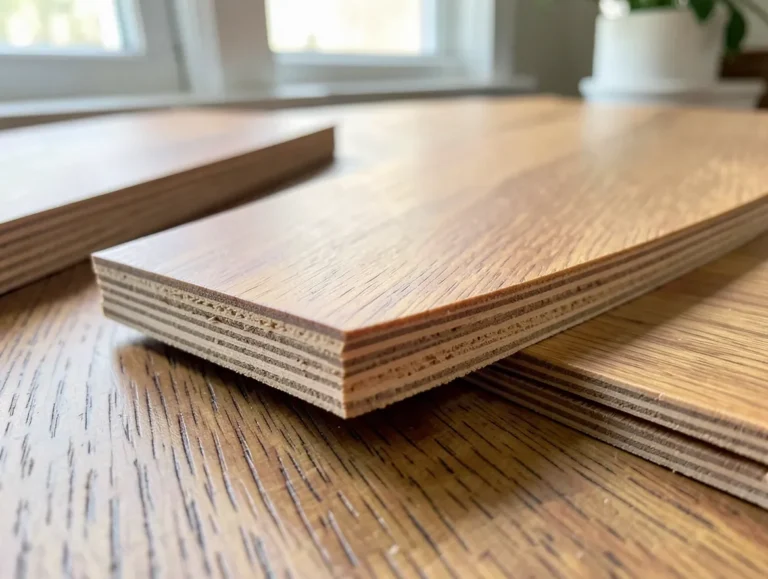
Yes, usually in the places where resale signals matter most: main living areas, mid-market homes, and luxury homes. Engineered hardwood generally carries a stronger buyer-perception premium than vinyl plank because it contains a real wood veneer over a plywood or HDF core, and that matters when buyers compare finish quality.
Perception is part of resale value. A 3 mm or thicker engineered veneer is a common resale-safe threshold because it suggests more sanding and refinishing potential, which helps buyers trust the floor as a longer-life asset. Veneers typically range from about 1 mm to 6 mm, and thinner products can feel less durable to informed buyers.
Appraisal sensitivity
Appraisals do not always move with buyer preference. A nicer floor may improve marketability more than appraised value, especially if the neighborhood does not support a large price jump for upgraded finishes. That is why the resale gain often shows up in buyer response first.
Days-on-market impact
Flooring can affect days on market even when the appraisal changes little. A home with engineered hardwood in the main rooms may draw more attention from move-up buyers than a similar home finished in standard LVP, especially when comparable listings already have wood or wood-look floors.
Does vinyl plank add value to a home?
Yes, premium vinyl plank can add value when the alternative is a higher-risk or higher-cost floor that does not suit the room. It is synthetic PVC/polymers construction, often sold as water-resistant or waterproof, and many of the better products use about a 20-mil or higher wear layer with rigid-core SPC or WPC construction. That combination can help resale in wet or price-sensitive settings.
Premium LVP is often the better choice when the buyer pool cares more about clean presentation and low maintenance than about real-wood status. In kitchens, baths, basements, rental properties, and lower-price homes, it can look polished enough to help the sale without pushing the seller into a hardwood budget.
Water, slab moisture, and basement risk
Moisture changes the math. Vinyl plank is positioned as 100% waterproof, while engineered hardwood is water-resistant, not waterproof. On slab-on-grade homes or basement finish projects, the moisture risk can erase the premium buyers might otherwise pay for wood.
Suppose a 1,400-square-foot townhouse basement needs a floor that can handle occasional seepage and humidity. Premium LVP can be the safer resale choice because it limits buyer worry about cupping, swelling, or future replacement.
When lower upfront cost matters more
If the sale depends on staying within a strict budget, the lower installed cost of LVP can be the better ROI move. The material and labor gap is real, and in some markets buyers will not pay enough extra for engineered wood to recover that difference quickly.
Cost and installation comparison
Engineered hardwood costs more to buy and more to install. Vinyl plank material is listed at $2–$7 per square foot, with installation at $1.50–$3 per square foot. Engineered hardwood is listed at $4–$14 per square foot for material and $3–$6 per square foot for installation. That gap can shape resale efficiency as much as the floor itself.
Labor, underlayment, trim, and transitions
Installed cost is not just board price and labor. Underlayment, trim, reducers, and transitions add to both products, and those extras matter more when you are comparing a whole-house update. A cleaner transition plan can improve the visual result, but it also adds cost that may or may not be recovered at sale.
What higher installation cost means for ROI
Higher upfront spend only helps if the market pays for it. Engineered hardwood may bring a better resale signal, but in a mid-range home with tight comps, some of that extra spend can sit outside the price band buyers will support. In that case, premium LVP can produce a cleaner return on dollars spent.
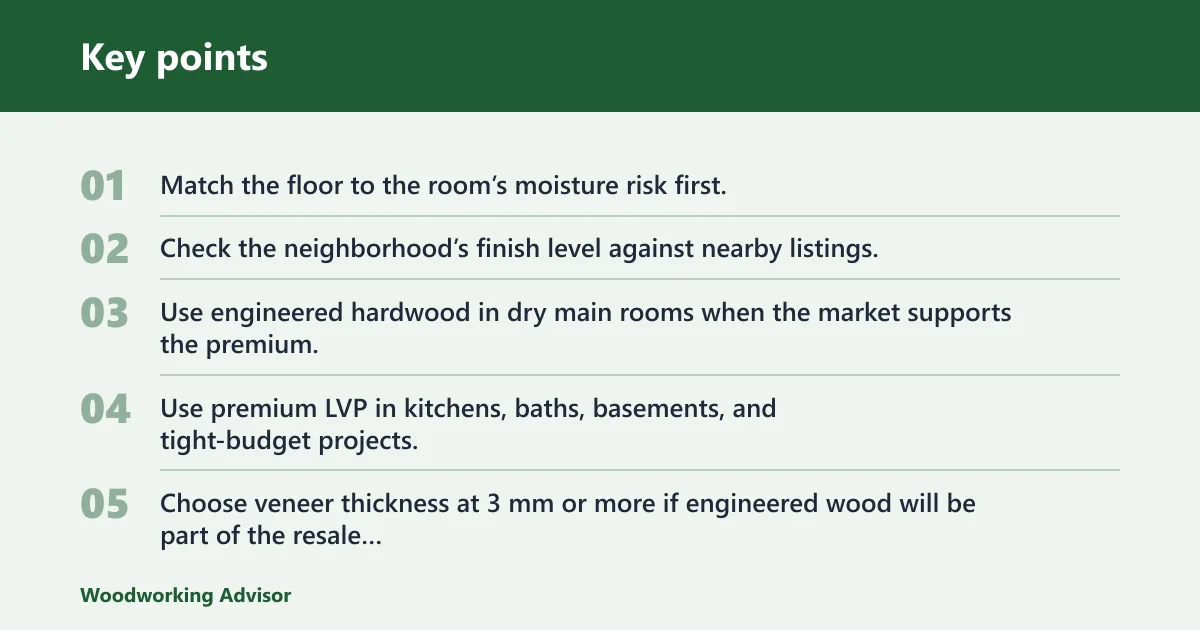
- Match the floor to the room’s moisture risk first.
- Check the neighborhood’s finish level against nearby listings.
- Use engineered hardwood in dry main rooms when the market supports the premium.
- Use premium LVP in kitchens, baths, basements, and tight-budget projects.
- Choose veneer thickness at 3 mm or more if engineered wood will be part of the resale story.
- Choose a 20-mil or higher wear layer if you want premium LVP to read as a serious finish.
What to choose by room and price tier
Choose by segment, not by slogan. In a mid-market colonial with a formal living room, engineered hardwood often sends the stronger signal. In an investor-heavy subdivision with finished basements and recurring humidity complaints, premium LVP can be the better fit because it lowers risk and stays inside buyer expectations.
Main living areas
For living rooms and dining rooms, engineered hardwood usually wins in move-up and luxury homes. The real-wood veneer fits higher-end expectations, and a thicker veneer gives buyers more confidence in the floor’s long-term life.
Kitchens and bathrooms
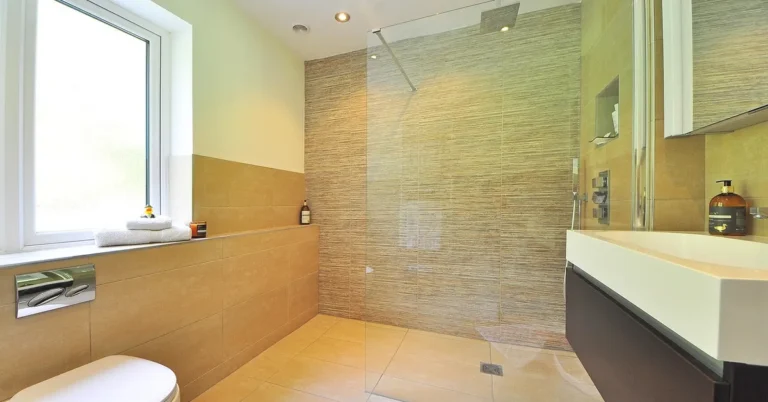
Buyers usually prefer LVP in kitchens and baths because water exposure is routine. Even where engineered hardwood is technically acceptable, the waterproof positioning of premium LVP can remove a hesitation point during showings.
Basements and other moisture-prone rooms
Basements are the strongest case for premium LVP. Slab moisture, humidity swings, and prior water issues can reduce the appeal of engineered hardwood, especially if the seller needs a fast, low-drama sale.
Sell-soon vs long-hold decisions
If you plan to sell soon, use the floor that best fits the local buyer pool, not the one with the highest theoretical lifespan. If you plan to hold the home for years, engineered hardwood’s longer service life and refinishing potential can matter more, especially in the main living area.
Choose Vinyl Plank if… / Choose Engineered Hardwood if…
Choose Vinyl Plank if the room is a kitchen, bath, basement, mudroom, or other moisture-prone area; if the home sits in an entry-level or investor-heavy market; if you need to keep upfront cost low; or if slab moisture makes a wood floor a weaker resale bet. Premium LVP with a 20-mil or higher wear layer is the version to consider.
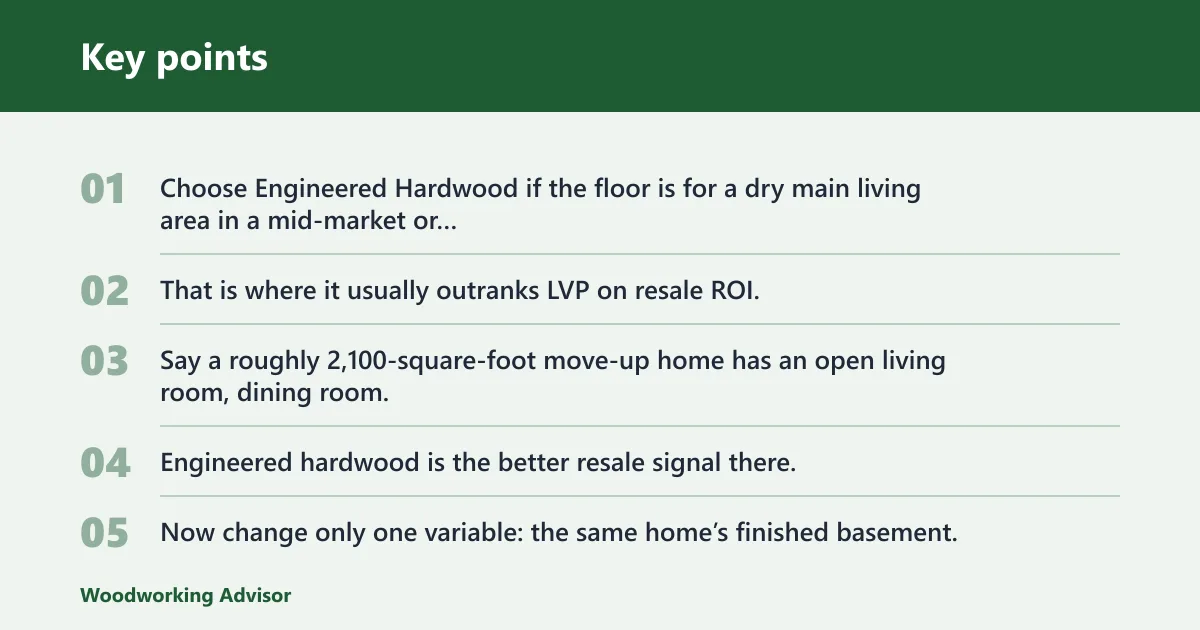
Choose Engineered Hardwood if the floor is for a dry main living area in a mid-market or luxury home; if the neighborhood supports a higher finish level; if you want the stronger buyer-perception premium; or if the veneer is 3 mm or thicker and refinishing potential matters to the sale story. That is where it usually outranks LVP on resale ROI.
Say a roughly 2,100-square-foot move-up home has an open living room, dining room, and hall in a market where nearby listings already show wood floors. Engineered hardwood is the better resale signal there. Now change only one variable: the same home’s finished basement. Premium LVP becomes the better pick.


Frequently asked questions
Does engineered hardwood add more resale value than LVP?
Usually yes, but mainly in the right setting. Engineered hardwood tends to carry the stronger resale signal in main living areas, especially in homes where buyers expect a higher finish level. In basements, baths, and moisture-prone spaces, premium LVP can be the better resale choice.
Which flooring is better for resale in a mid-range home?
For mid-range homes, engineered hardwood often wins in living rooms and dining rooms, while premium LVP can be smarter in kitchens, baths, and lower-level spaces. The best choice depends on whether the room is supposed to feel premium or simply durable and easy to maintain.
Is engineered hardwood worth it if I plan to sell soon?
It is worth it only if the market will pay for the upgrade. If comparable homes in your price band already have wood floors, engineered hardwood can support a faster sale. If the neighborhood is cost-conscious, premium LVP may return more of its cost at resale.
How much more does engineered hardwood cost than vinyl plank?
Based on the listed ranges, engineered hardwood costs more on both material and labor. Vinyl plank is listed at $2–$7 per square foot for material and $1.50–$3 per square foot for installation, while engineered hardwood is listed at $4–$14 and $3–$6. That gap is large enough to change ROI.
What flooring do buyers prefer in kitchens and basements?
Buyers usually prefer premium LVP in kitchens and basements because it handles water better and reduces concern about damage. Engineered hardwood can work in some kitchens, but basements and other moisture-prone spaces often favor the synthetic option on resale grounds.
Yes, in the right market segment. Premium LVP can compete well in entry-level homes, investor-heavy areas, and moisture-prone rooms where the buyer values practicality more than real-wood status. It closes the gap most effectively when installed cleanly and specified at the premium end of the product range.
Sponsored / affiliate links. As an Amazon Associate I earn from qualifying purchases. I may earn additional commission from eligible campaigns.