How Much Does It Cost to Refinish Stairs to Match Floors?
Refinishing a standard staircase to match existing hardwood floors often costs roughly $600 to $2,500, or about $75 to $150 per tread, with higher pricing when stain matching, repairs, or banister work are involved. Poor color matching or weak prep makes the stairs stand out and can force a redo. This guide breaks down stair-specific pricing, what changes the total, and how matching wood, stain, and sheen affects the quote.
Typical cost range


For a typical interior staircase, professional refinishing often falls in the $600 to $2,500 range, with a simple recoat at the low end and a full sand-and-stain job with matching work near the high end. Square-foot pricing often falls in the broader hardwood range of about $3 to $8 per square foot, though stair work is commonly priced by tread because the labor is more detailed.
Labor can account for up to 80% of the final project cost, and stairs push that share higher because each tread, edge, and rail-side corner takes time. A standard hardwood floor project may average about $1,800, but stairs rarely fit that average cleanly because access, hand work, and finish matching change the scope fast. (Thisoldhouse)
Stair refinishing cost breakdown
| Line item | Low | Typical | High | When this cost appears |
|---|---|---|---|---|
| Treads | $45 | $85 | $140 | When the walking surface is sanded, stained, and topcoated |
| Risers | $15 | $35 | $60 | When the visible vertical faces need color and sheen matching |
| Nosing | $20 | $45 | $90 | When front edges are worn, rounded, chipped, or stripped bare |
| Prep and removal | $100 | $250 | $500 | When carpet, staples, glue, trim protection, or cleanup are needed |
| Sanding and edge work | $150 | $350 | $700 | When three sanding passes and tight-angle hand work are needed |
| Stain matching | $75 | $200 | $400 | When samples, blending, or extra color correction are required |
| Topcoat | $75 | $175 | $300 | When one or more protective finish coats are applied after coloring |
This breakdown is useful because stair quotes often hide the real cost in the details. The tread price may look modest, then the total rises after prep, hand sanding, and finish matching are added. If the stair set includes a landing, newel posts, balusters, or trim, expect those to add time as well.
📊 This Old House says the average hardwood floor refinishing project costs about $1,800. Source: Thisoldhouse.
What affects the price of refinishing wood stairs?
The biggest price drivers are stair count, access, finish condition, and how much detail work surrounds the rails and trim. A 12-step staircase is one pricing story; a 16-step set with a landing, carpet removal, and damaged nosing is another. Contractors also charge more when setup and cleanup take longer than the sanding itself.
Number of stairs and overall project size
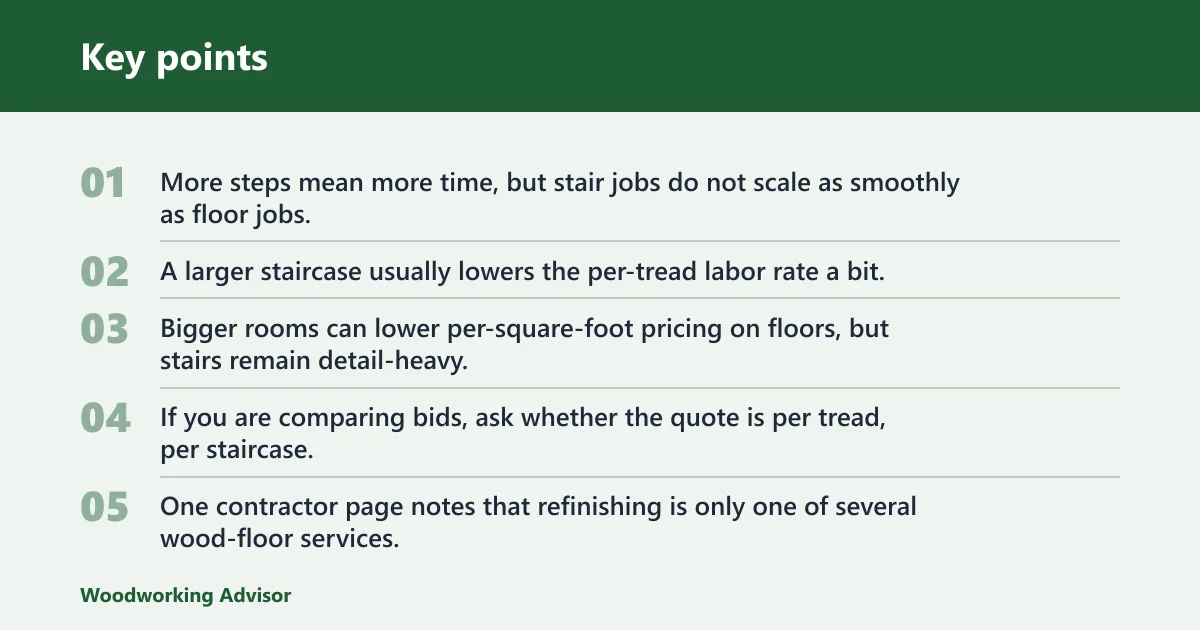
More steps mean more time, but stair jobs do not scale as smoothly as floor jobs. A larger staircase usually lowers the per-tread labor rate a bit, yet it also raises total cost because every tread still needs its own sanding, stain, and finish sequence. Bigger rooms can lower per-square-foot pricing on floors, but stairs remain detail-heavy.
If you are comparing bids, ask whether the quote is per tread, per staircase, or bundled with a landing and rail components. Refinishing is only one of several wood-floor services, alongside installation and repair, so the stair line item may be priced differently from a floor-only refinish.
Access, furniture moving, and site setup
Moving furniture out of the way, protecting nearby walls, and setting up dust control all add labor. Stairs often sit in tighter hallways and landings than open floors, so crew access is limited and equipment can be harder to position. In a multi-level home, getting material and tools to the work area can add another layer of setup time.
Say your stairs are open on one side and the landing is clear. That job may move faster than a fully enclosed staircase with a banister, closet door, and nearby built-ins, even if both have the same number of steps.
Hand sanding around rails, corners, and trim
Hand sanding is a major stair premium because machines cannot reach every edge. The source material notes that edge work increases labor and that hand grinding edges adds considerable time. Around balusters, trim, and nosing returns, the work slows down further because the finish has to be even where tools cannot run flat.
For stairs, that extra time often matters more than the machine passes themselves. A stair refinish may include the same basic sanding progression as a floor, but the perimeter and corners are where the quote grows.
Repairs before refinishing starts
Loose treads, split nosing, popped fasteners, or soft spots change the job from a finish project to a repair project. If the wood has movement or damage, refinishing alone will not solve it. Repair work should happen before stain and topcoat, or the defects will remain visible and can telegraph through the finish.
A common first-timer mistake is assuming worn stairs only need sanding. If the front edge is crushed or the tread flexes underfoot, the contractor may need to repair or replace that component before matching the rest of the staircase.
Do stairs need full refinishing to match floors?
Not always. A screen and coat can work when the existing finish is sound, but stairs often need full sanding and staining because the goal is color match, not only surface renewal. If the topcoat is worn through, the stain is inconsistent, or the stair wood differs from the floor, a deeper refinish is usually the safer path.
Screen and coat versus full sand-and-stain
A screen and coat is a light abrading plus a fresh finish layer. It is useful when the color is already close and the surface only needs renewal. Full sand-and-stain removes the old finish, reworks the color, and resets the sheen, which is more common on stairs that need to match adjacent hardwood floors.
The sanding process matters here. The cited guidance describes a standard three-step sanding process using progressively finer grits, with Tom’s demonstration naming the grits as 36, 60, and 80. Pros vacuum between each sanding pass, which helps reduce dust before stain and topcoat go on.
When a simple recoat is enough
Choose a recoat only when the stair color already lines up with the floor and the finish is intact enough to accept a new top layer. That means no peeling film, no deep scratches through the coating, and no major color drift from tread to tread. In those cases, the goal is protection, not a new color system.
When the finish has to come off
If the stairs were previously stained a different color, have patchy wear, or show coating failure, the old finish usually has to come off. Matching an existing floor often requires sample staining, sheen control, and extra coat time because old wood can absorb color unevenly. The more visible the transition, the more careful the matching has to be.
Why stairs often need more hand work than floors
Floors are open, wide, and easier to run with machines. Stairs are broken into short runs with edges, nosing, corners, and rail parts. That is why two projects with similar square footage can have very different bids. Stairs usually demand more finishing judgment and more time at the edges.
Can stair treads match existing hardwood floors?
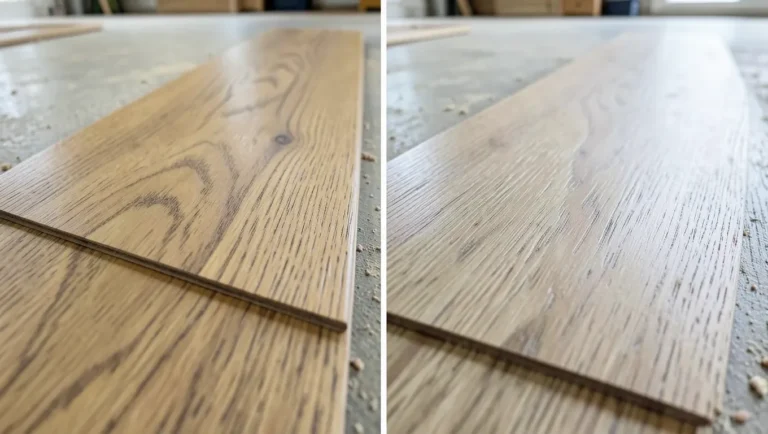
Yes, often closely, but not always perfectly. Matching depends on the species, grain, and hardness of the stair wood, plus the stain color and final sheen on the existing floor. Even then, old floors may have aged differently from new stair treads, so the best result is usually a controlled visual match, not a perfect clone.
Species, grain, and hardness differences
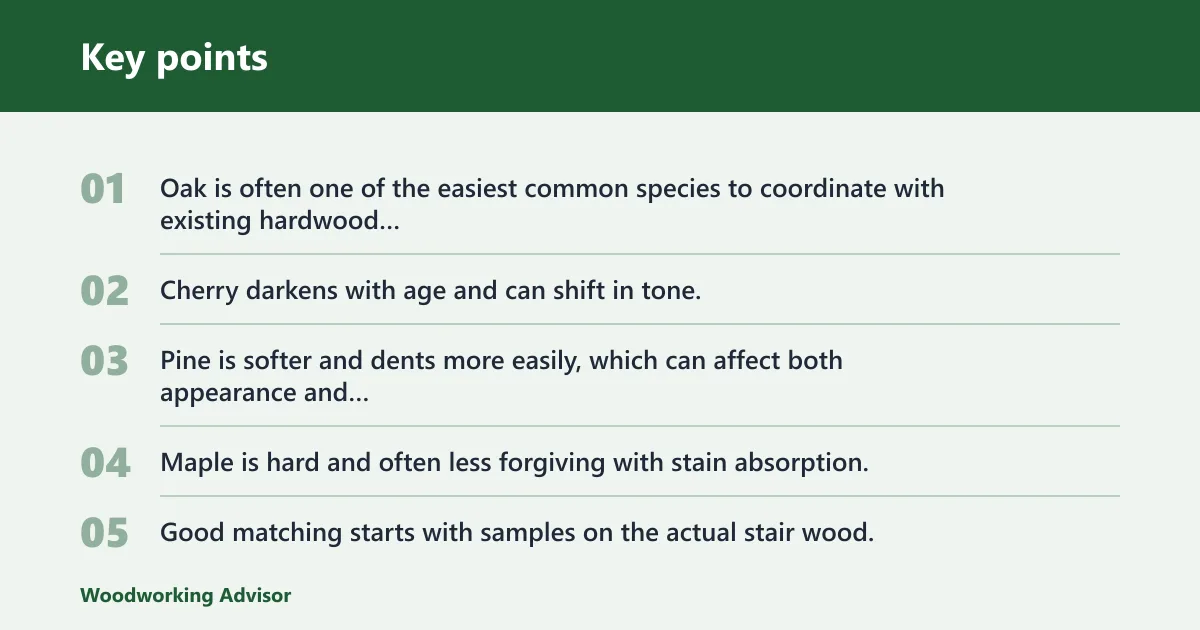
Oak is often one of the easiest common species to coordinate with existing hardwood because it tends to take stain predictably. Cherry darkens with age and can shift in tone, so a fresh tread can look different from an older floor even before stain is applied. Pine is softer and dents more easily, which can affect both appearance and refinishability. Maple is hard and often less forgiving with stain absorption, so matching can be more exacting.
Sample staining and sheen matching
Good matching starts with samples on the actual stair wood, not on scrap from another project. The color that looks right in a sample square can still read differently once the full staircase is finished. Sheen matters too. A satin floor beside a semi-gloss stair finish will look mismatched even if the stain color is close.
Color variation between old floors and new stair wood
Existing hardwood floors change color with sun exposure, wear, and time. New stair treads have not gone through that same aging process, so the contractor may need to blend stain or adjust the topcoat sheen to hide the difference. The goal is consistency across the transition at the landing, not identical color in every square inch.
Picture an oak staircase meeting an older oak floor at a landing. If the floor has ambered over time, the stair treads may need sample staining in more than one tone before the final color looks right beside the hallway.
Transition details at landings and rail parts
Newel posts, balusters, and trim can pull the eye if their finish does not match the treads and nearby floor. Rail-adjacent details also collect overspray and brush marks if the job is rushed. A clean transition should look intentional at the landing and along the rail line, not like separate finishes were forced together.
Repair or replace the stairs?
Refinishing works best when the tread structure is sound. If the wood is thin, split, warped, or structurally damaged, replacement may be the better choice. A stair can be refinished only as many times as its material and condition allow, and damaged nosing often changes the scope first.
Signs the treads are too worn for refinishing
If the tread has deep gouges, exposed substrate, major cupping, or repeated patch repairs, sanding may remove too much material or still leave visible defects. Soft pine treads can wear out faster than harder species, especially on the front edge. In those cases, replacing the tread can be more sensible than chasing a cosmetic fix.
When nosing damage changes the scope
Nosing takes a lot of foot traffic, so it is often the first part to show damage. If the rounded edge is split or broken back, the job may shift from refinishing to partial rebuilding. That adds labor and can affect the quote more than the sanding itself.
Can you refinish stairs without replacing the treads?
Yes, if the treads are solid and thick enough to sand safely. That is the normal route for many stair jobs. But if the wood is too thin, badly gouged, or uneven from prior repairs, replacement may be safer and more predictable than another refinish cycle.
What should you expect for carpet-to-wood stair conversion?
Carpet-to-wood conversion usually costs more than a basic refinish because it starts with removal, then cleanup of staples, glue, tack strips, and any damage hidden under the carpet. The finished wood also needs sanding, possible nosing repair, stain matching, and topcoat work. This is a conversion plus a refinish, not only a finish refresh.
Suppose a 13-step staircase is covered in carpet and the treads underneath are sound hardwood. The quote will still include removal and cleanup, and if the carpet hid chipped nosing or old adhesive, those repairs can push the total well above a simple sand-and-stain job.
Lead paint and older finishes
Older stairs can hold lead paint or old varnish that needs careful handling. If the home predates modern finish practices, testing is the safer starting point before sanding begins. Lead-safe work rules, dust control, and proper disposal matter because stair sanding can spread debris into nearby rooms and along the stairwell.
Why testing matters before sanding
Sanding a lead-coated stair without testing first creates a health and compliance problem. Even if the top layer looks like ordinary varnish, older coatings may hide lead beneath. Testing before work starts helps determine whether special containment and cleanup are needed.
Dust control and safety compliance
Stair sanding should use dust extraction and careful vacuuming between passes. That matters on floors, and it matters even more on stairs where dust can settle into corners, trim joints, and the landing. A safer setup usually costs more, but it is the right starting point when older finishes are involved.
Frequently asked questions
How much does it cost to refinish stairs to match hardwood floors?
Matching an existing hardwood floor often adds sample work, stain blending, and extra finish time, which is why stair quotes usually run above a basic floor refresh.
Is it cheaper to refinish stairs or replace them with new wood?
Refinishing is usually cheaper when the treads and nosing are still sound. Replacement becomes more attractive if the wood is thin, damaged, or structurally weak. Once you factor in demolition, new parts, carpentry, and finishing, replacement often costs more than refinishing unless the stairs need major repair anyway.
Do you have to sand stairs before staining them to match floors?
Usually yes, if the goal is a true color match. Sanding removes the old finish and opens the wood so new stain can absorb more evenly. A light screen and coat will not correct mismatched color, worn-through finish, or patchy stain, so a full sand is often the better option.
Can stair treads be matched to an existing hardwood floor color?
Often, yes, but the match depends on wood species, age, grain, and sheen. Oak tends to be more cooperative than pine or maple, while cherry can shift with age. Sample staining on the actual stair wood is the best way to close the gap between the stairs and the floor.
How much extra does hand sanding edges and corners add?
It can add a meaningful amount because machines cannot reach every edge, especially near balusters, trim, and nosing returns. On stairs, hand work often becomes one of the main labor premiums. The exact add-on depends on the layout, but it is common for edge work to change the quote more than the finish product itself.
How much does hardwood flooring cost for a 1,500-square-foot house?
Whole-home hardwood refinishing can range from $2,400 to $6,000, and professionally refinishing hardwood floors typically costs $3 to $8 per square foot. That is a floor estimate, not a stair estimate, but it helps explain why stairs can look expensive per tread: the labor is concentrated into a much smaller, more detailed area.
Sponsored / affiliate links. As an Amazon Associate I earn from qualifying purchases. I may earn additional commission from eligible campaigns.