Washer Head Wood Screws: When to Use Them
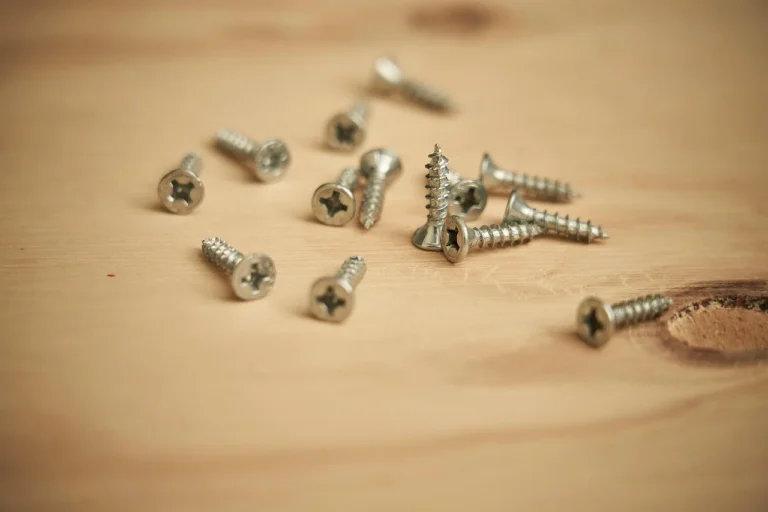
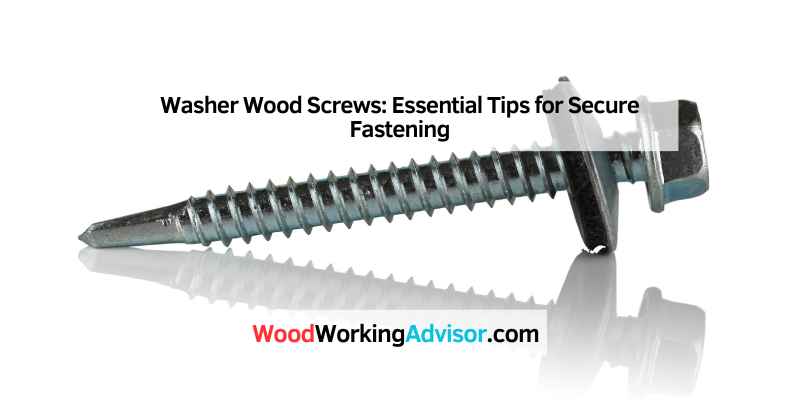
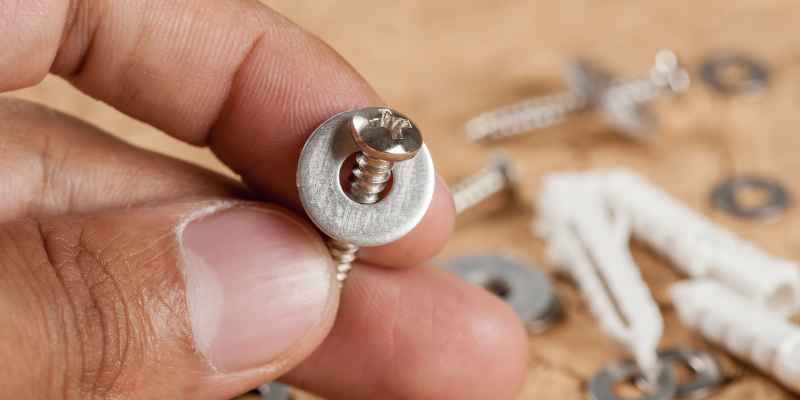
Washer wood screws use a built-in, oversized head instead of a separate washer — the head diameter runs roughly 40–60% wider than a standard pan or flat head on the same gauge screw, so clamping force spreads across more wood fiber instead of pulling straight through it.
That extra bearing surface is exactly why Kreg-style pocket-hole jigs specify washer-head screws by design: a standard flat head would sink into the angled pocket and strip out softwood or plywood face veneer long before it reached full clamping torque. You’ll also see them spec’d on cabinet hardware, drawer slides, and deck-hardware mounting brackets, where composite decking and pressure-treated lumber are both soft enough to crush under a narrow head.
They’re sold in the same #4–#14 gauge range as standard wood screws, in lengths from about 5/8 inch up to 4 inches, and in steel, stainless, or brass depending on the exposure. The head style is the whole point of the design, so getting that part right – and driving it with the correct pilot hole and torque – matters more here than with an ordinary screw.
Wondering where a separate washer goes instead? See our guide to where a washer goes with a screw.
Introduction To Washer Wood Screws
Best Multi-Size Washer-Head Kit
 |
LIONMAX Pocket Hole Screws Assortment KitLIONMAX | Our pick | View |
Washer wood screws earn their keep in three places: pocket-hole joinery, cabinet hardware, and anything mounted to composite or pressure-treated lumber where a narrow head would simply crush the fibers around it. The oversized head isn’t decorative – on a typical #8 washer-head screw the head runs about 11–13mm across versus roughly 7mm on a standard #8 pan head, and that extra ring of steel is what keeps the fastener from sinking past flush the moment torque climbs.
Characteristics Of Washer Wood Screws
Most washer-head screws sold for woodworking are either case-hardened carbon steel (strong, but needs a coating to resist rust) or 18-8 stainless steel, which trades some shear strength for corrosion resistance and is the better call anywhere the screw will see moisture – outdoor furniture, planters, mudroom benches. The thread is almost always a coarse, deep-cut design (roughly 40 threads per inch on a #8, versus the finer 32 TPI you’d see on a machine-thread equivalent) because coarse threads grab more wood fiber per turn, which matters more in soft materials like pine and plywood than it does in dense hardwoods. The head itself is usually a flat or modified-truss profile rather than a rounded pan, since a flatter underside seats more evenly against the angled wall of a pocket hole or the face of a cabinet bracket.
Applications And Benefits
Kreg specifies washer-head screws for its pocket-hole system for a concrete reason: a pocket hole’s angled floor gives a standard flathead almost nothing to bear against, so the screw either strips the hole or blows through the plywood veneer before it reaches clamping torque. The same logic applies to deck hardware brackets (Simpson Strong-Tie and similar structural connectors call out washer-head screws by name in their install instructions), drawer slide mounting, and any composite-decking application where the board material is soft enough that a narrow head will dish into the surface within a season. The practical benefit isn’t just holding power – it’s that the wider bearing surface spreads clamping force across roughly twice the wood fiber, which is what actually prevents the classic failure mode of a screw head pulling straight through soft material under load.
Head Styles: Flat, Truss, And Hex Washer
“Washer head” isn’t one shape – it covers a handful of head profiles that all share the same wide, load-spreading principle but suit different jobs.
- Flat washer head: A slightly domed, low-profile head that sits nearly flush; this is the style used on most pocket-hole and cabinet screws because it won’t snag drawer glides or interfere with a flush cabinet back.
- Truss/washer head: Wider and lower still, closer to a button shape, common on sheet-metal-to-wood fasteners (HVAC brackets, metal drawer runners) where you need maximum bearing area against thin sheet stock.
- Hex washer head: Built for a nut-driver or impact socket instead of a bit, typically found on structural lag-style screws (GRK RSS, Simpson Strong-Drive SDWS) rated for deck ledger boards and structural framing connections where you need to drive high torque without cam-out.
Picking the wrong profile mostly shows up as fit problems rather than strength problems – a hex washer head on a cabinet screw will jam against a face frame, while a flat washer head on a structural connection won’t accept the torque a socket driver can deliver.
Material Choices For Durability
Stainless Steel Vs. Galvanized
The choice usually comes down to where the screw lives. 18-8 stainless (sometimes labeled Type 304) handles rain, sprinkler overspray, and general outdoor exposure well; if the project sits within a few hundred feet of saltwater, step up to 316 marine-grade stainless, since 18-8 can still pit under chloride exposure over several years. Hot-dip galvanized screws cost noticeably less and hold up fine for framing and general outdoor work, but the zinc coating is a sacrificial layer – it protects the steel underneath only until it wears through at the threads, which is exactly where repeated driving and removal abrades it fastest.
| Feature | 18-8 Stainless | Hot-Dip Galvanized |
|---|---|---|
| Corrosion resistance | High – holds up for decades outdoors | Moderate – coating wears at threads over years |
| Shear strength | Slightly lower than case-hardened steel | Strong, case-hardened core |
| Typical cost | 2–3x galvanized | Lower, widely stocked |
| Best use | Outdoor furniture, marine-adjacent, exposed hardware | Deck framing, fence posts, general exterior |
Coatings And Corrosion Resistance
For screws that aren’t solid stainless, the coating is doing all the corrosion-fighting work. Zinc dichromate (the yellow-gold tint on many cabinet screws) is fine indoors but breaks down within a year or two outdoors. Ceramic and epoxy coatings, used on premium deck screws like GRK’s climaTek finish, are rated for direct ground contact and treated lumber’s copper-based preservatives, which corrode plain zinc coatings surprisingly fast – that’s the detail most DIYers miss when a “galvanized” deck screw rusts within a season in ACQ-treated lumber.
Size And Length Selection
How To Choose The Right Size
The standard rule of thumb for framing and general fastening is to get at least 1 inch of thread penetration into the base (receiving) member, or roughly 1.5 times the thickness of the top piece being fastened, whichever is greater. For pocket-hole joinery specifically, Kreg’s own spec calls for 1-1/4-inch screws in 3/4-inch stock and 1-inch screws in 1/2-inch material – going longer than that risks blowing through the receiving board’s opposite face.
| Material Type | Typical Screw Gauge | Notes |
|---|---|---|
| Pine / softwood | #8–#10 | Coarse thread; pilot hole optional except near board ends |
| Oak / dense hardwood | #10–#12 | Pilot hole mandatory to prevent splitting |
| 3/4″ plywood/cabinet-grade | #8–#10 | Match to pocket-hole depth setting if using a jig |
Impact Of Length On Fastening Security
Undersized length is the more common mistake – a screw that only bites 1/2 inch into the base material relies almost entirely on the wood fiber immediately around the tip, which strips out under lateral load far more easily than a properly embedded screw. Going too long causes the opposite problem: on stock under about 3/4 inch thick, a screw that’s more than roughly 1/4 inch longer than needed will often punch through the far face or split the board if it’s within 2 inches of an end.
Pre-drilling And Pilot Holes
Pre-drilling matters most in two situations: dense hardwoods like oak or maple, and any screw placed within about 2–3 inches of a board’s end grain, where splitting risk jumps sharply regardless of species. For softwoods like pine or SPF framing lumber driven well away from an edge, most washer-head screws with a sharp auger-point tip can self-drill without a pilot hole.
| Drill Bit Size | Matching Screw Size |
|---|---|
| 1/16″ | #4–#6 |
| 5/64″ | #8 |
| 7/64″ | #10 |
| 5/32″ | #12 |
A useful rule for hardwoods: size the pilot hole to roughly 70% of the screw’s root (minor) diameter, not its outer thread diameter – drilling to the full outer diameter removes so much material that the threads have nothing left to bite, and the screw will spin without gaining depth.
Installation Techniques
Manual Vs. Power Driving
A hand screwdriver gives the most feedback for stopping right at flush, which matters on visible cabinet faces, but it’s genuinely impractical for anything beyond a handful of screws. An impact driver or drill/driver set to a clutch position between 4 and 8 (for a typical #8 screw in softwood) will drive fast without regularly stripping heads, but cranked to full torque on a drill without a clutch, it’s easy to sink the head below the surface or shear it off entirely in hardwood.
Ensuring Tightness Without Stripping
Set the clutch (or torque setting on an impact driver, if it has one) low enough that the tool stalls just as the head seats flush, then adjust up only if it isn’t fully seating. Bits matter more than most people expect – a worn or mismatched Phillips or square-drive bit is the single most common cause of cam-out and stripped heads, more so than tool power. On pocket-hole screws specifically, driving too fast can generate enough friction heat to soften the thread lock coating some brands apply, so a moderate, steady speed outperforms full trigger.
Common Mistakes To Avoid
Over-tightening Issues
Past the point of full seating, additional torque does nothing productive – it either strips the wood fiber around the threads (leaving a loose connection that won’t hold a second screw in the same hole), deforms the head’s drive socket, or in brittle woods like oak, cracks the surface in a starburst pattern radiating from the screw. If a hole strips out, the fix isn’t a bigger screw on the spot; it’s filling the hole with a glue-soaked wood plug or toothpick fragments, letting it cure, and re-drilling.
Choosing The Wrong Screw For Wood Type
| Wood Type | Recommended Screw |
|---|---|
| Pine / SPF | Coarse-thread, sharp-point washer head |
| Oak / hard maple | Fine-thread washer head, mandatory pilot hole |
| Cedar / redwood (outdoor) | Stainless – standard steel coatings react with the wood’s natural tannins and stain the surface black |
That tannin reaction is worth calling out on its own: cedar and redwood both contain enough tannic acid that plain steel or even some galvanized screws will leave a dark stain radiating from the screw head within weeks, which is why stainless is the standard recommendation for those species specifically, not just outdoor use in general. For general wood-to-fastener matching beyond washer heads, see our guide on choosing the right screw type for outdoor wood.
Maintenance And Inspection Tips
Outdoor and exposed washer-head screws are worth a physical check twice a year – spring and fall – rather than waiting for visible failure. Look specifically for a reddish-brown ring bleeding out from under the head (early corrosion under the coating, even if the head itself still looks clean), any head that’s backed out slightly proud of the surface, and surrounding wood that’s gone soft or spongy, which usually means moisture has already gotten past the fastener.
Replacing Worn-out Screws
Back the old screw out slowly rather than forcing it – a corroded head can shear off mid-removal, leaving the shank embedded and much harder to extract. If the original hole has enlarged or gone soft, don’t just drive a new screw of the same size into it; either step up one gauge or pack the hole with epoxy putty first so the new threads have solid material to grip.
Advanced Fastening Strategies
Using Adhesives With Washer Wood Screws
Adding glue turns a mechanical fastener into a bonded joint, which is worth doing on anything load-bearing. Titebond III (waterproof PVA) works well for interior and covered-outdoor joints and has a roughly 8–10 minute open assembly time; PL Premium or Gorilla Glue’s polyurethane formulas expand slightly as they cure and are better suited to gap-filling on slightly uneven joints, but need clamping pressure and typically 24 hours to cure fully before the joint should carry load. Apply adhesive to both mating faces, assemble, then drive the screws while the glue is still wet – the screws are doing the clamping while the adhesive cures, not replacing it.
Weather Considerations For Outdoor Use
| Material | Corrosion Resistance | Best Use |
|---|---|---|
| 316 stainless | Very high | Coastal / marine-adjacent |
| 18-8 stainless | High | General outdoor, ACQ-treated lumber |
| Hot-dip galvanized | Moderate | Fence posts, framing, non-coastal decks |
For anything touching ACQ or MCA pressure-treated lumber – the copper-based preservatives standard since the older CCA formula was phased out – skip plain zinc or electro-galvanized screws entirely. The copper accelerates galvanic corrosion on plain zinc fast enough that fasteners can start failing within a single season; hot-dip galvanized survives longer because of its thicker coating, but stainless is the only option rated for direct, long-term contact without a corrosion allowance.
Frequently Asked Questions
What Are Washer Wood Screws Used For?
Washer wood screws are designed for fastening materials together. They provide a larger bearing surface, which helps to distribute the load. This prevents the screw from pulling through softer woods. They are ideal for securing items like wood panels and furniture.
How Do I Choose The Right Washer Wood Screw?
Choosing the right washer wood screw involves considering several factors. Think about the material thickness, screw length, and diameter. Also, consider the type of wood and environmental conditions. Selecting the right screw ensures a secure and lasting connection.
Can Washer Wood Screws Be Reused?
While washer wood screws can sometimes be reused, it’s not always advisable. Frequent use may cause wear, compromising their strength. Inspect the screw for damage before reusing. If the threads or washer are worn, it’s best to replace them for safety.
Are Washer Wood Screws Waterproof?
Washer wood screws are not inherently waterproof. However, some are coated with materials that enhance their resistance to moisture. For outdoor projects, look for screws specifically labeled as weather-resistant. This ensures durability against elements like rain and humidity.
Conclusion
The oversized head is a simple fix for a specific problem – a fastener pulling through soft or angled material – and it works because it spreads clamping force over more wood fiber rather than concentrating it under a narrow rim. Match the head style to the job (flat for pocket-hole and cabinet work, hex for structural connections), size the screw using the 1-inch-of-penetration rule, and pick stainless or a rated exterior coating for anything that will see weather, and the fastener will outlast most of the project around it.
Sponsored / affiliate links. As an Amazon Associate I earn from qualifying purchases. I may earn additional commission from eligible campaigns.