How Much Does A Drill Press Cost? (2026 Guide)
What is a Drill Press and Why It Matters
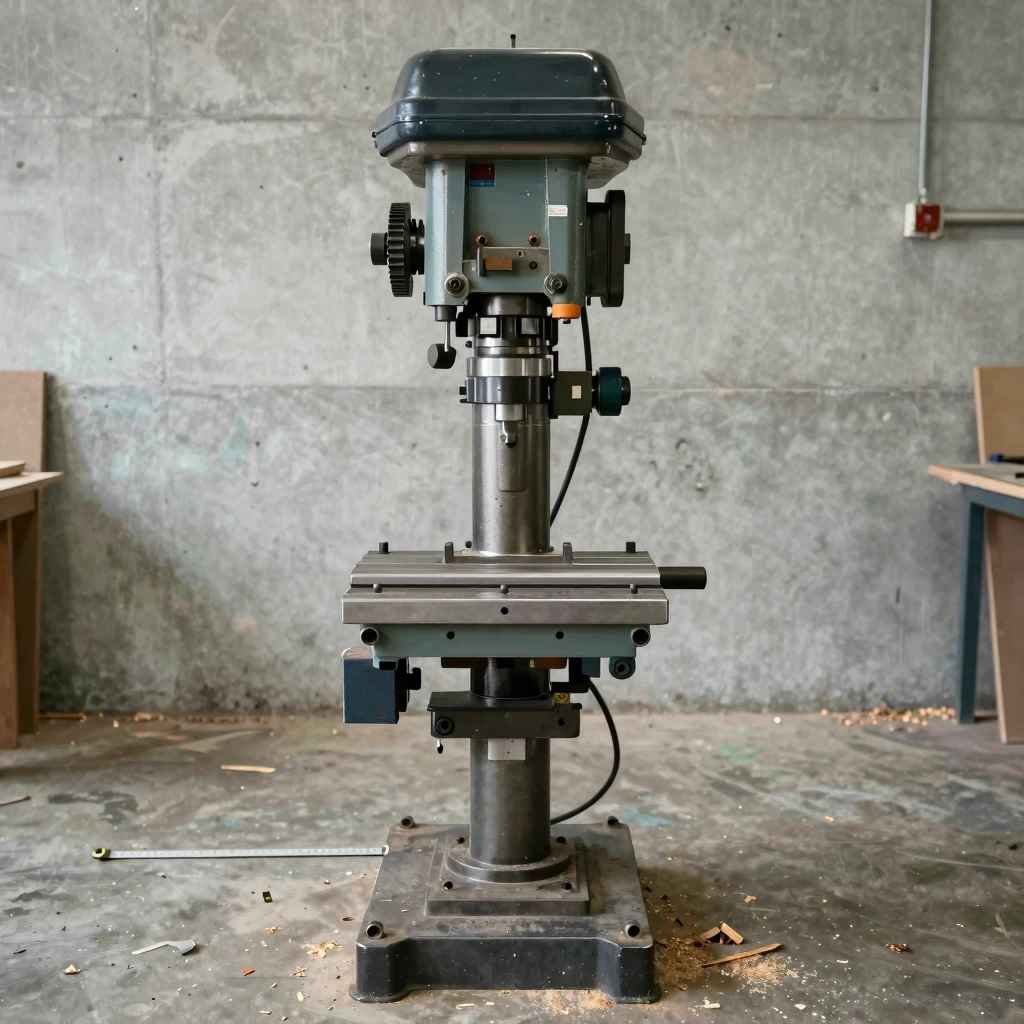
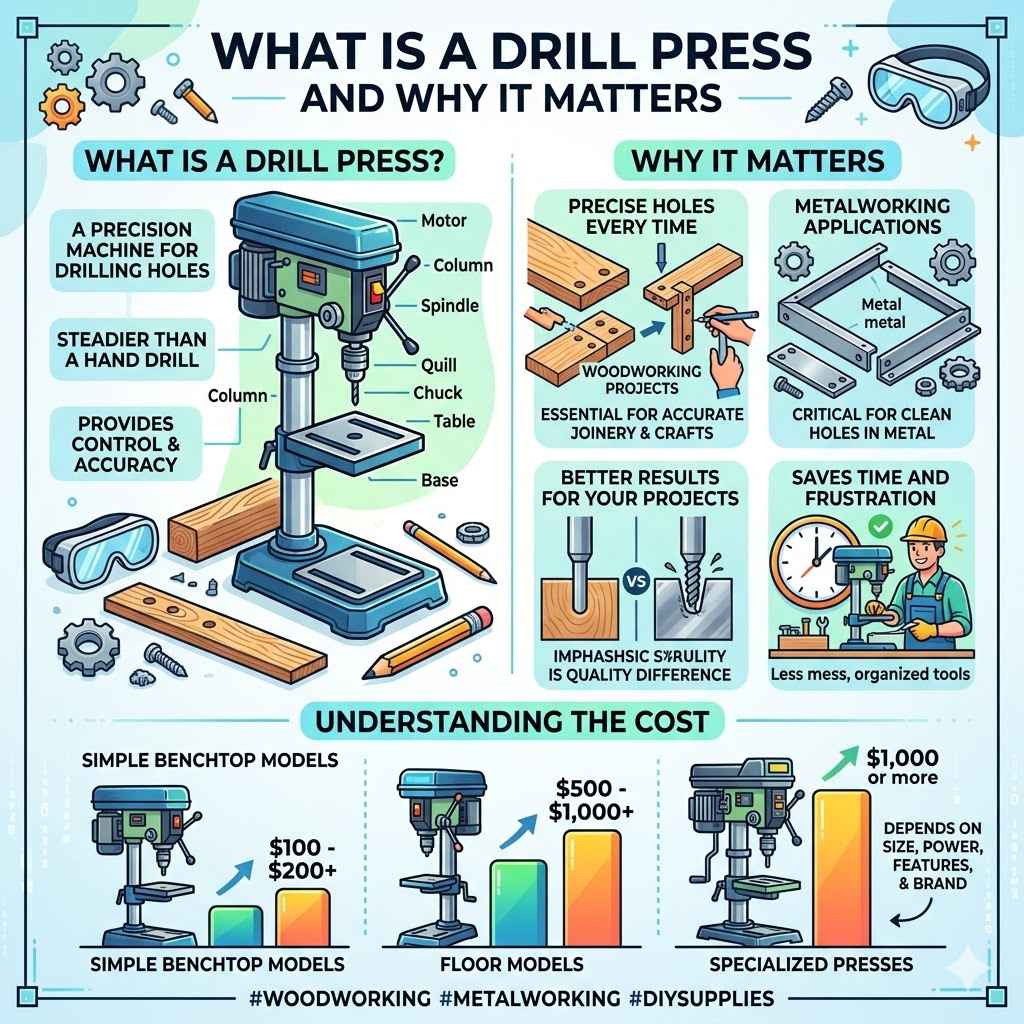
A drill press is a tool for making holes. It’s much steadier than a hand drill. This means more control and accuracy.
It helps you make precise holes every time. This is super important for woodworking and metalworking projects. Getting the right drill press means better results for your crafts.
It can save you time and frustration too. Having the right tool makes a big difference.
The cost of a drill press can range widely. It depends on its size, power, features, and brand. Simple benchtop models often start around $100 to $200.
More powerful floor models or specialized presses can cost $500 to $1,000 or more. The exact price depends on the specific type and its capabilities.
Understanding Drill Press Costs: The Big Picture
When you look at drill press prices, it’s easy to get overwhelmed. There’s a huge range. Some cost less than a good dinner out.
Others cost as much as a used car! But each price point usually means something. It reflects the tool’s quality, its power, and what it can do.
We need to look at the main things that push the price up or down. This helps us understand why one drill press costs $150 and another $700.
It’s not just about the sticker price. It’s about the value you get. A cheap drill press might break quickly.
A more expensive one might last a lifetime. We’ll explore the factors that make these costs vary so much. This way, you can make a smart choice.
You want a tool that fits your projects and your wallet.
Key Cost Factors at a Glance
Motor Power: More horsepower means a higher price.
Size and Capacity: Larger machines cost more.
Build Quality: Sturdy materials like cast iron add to the cost.
Brand Reputation: Known brands often charge more.
Features: Variable speed, laser guides, or digital readouts increase cost.
My First Drill Press: A Tale of Budget Blues
I remember my first “workshop.” It was really just my garage. I needed to drill some consistent holes for a bookshelf I was building. I had a cheap handheld drill.
It was okay for basic stuff. But for precise shelf pin holes? Not so much.
The holes always ended up a little off. The shelf looked a bit wonky. I felt so frustrated.
I knew I needed something better.
I started looking at drill presses. The prices shocked me! I saw really cheap ones online.
Then I saw some that looked super professional. They were way out of my budget. I remember finding a small benchtop model.
It was around $120. It looked okay in the pictures. I clicked “buy” without much research.
When it arrived, it felt flimsy. The motor sounded weak. Drilling even soft pine felt like a struggle.
The chuck wobbled. It was barely better than my hand drill for accuracy. That $120 taught me a hard lesson: you often get what you pay for.
That flimsy tool ended up sitting in the corner, unused. It was a waste of money and a source of annoyance. I learned I needed to understand the factors that make a good drill press, not just the cheapest one.
Types of Drill Presses and Their Price Ranges
Drill presses aren’t all the same. There are a few main types. Each one is built for different jobs and has a different price tag.
Knowing these types helps you narrow down your search. It also helps you understand why prices differ so much.
Benchtop Drill Presses
These are the smallest and usually the cheapest. You can put them on a workbench. They are great for small shops or people who don’t do heavy-duty work.
They are good for small woodworking projects or basic metal drilling.
Typical Price Range: $100 to $300
What to Expect: Smaller motors (1/4 to 1/2 HP), lighter construction, less stable. Good for occasional use and smaller materials.
Floor Drill Presses
These stand on their own on the floor. They are bigger and more powerful than benchtop models. They have more stable bases and longer columns.
This means they can handle larger workpieces. They are a good choice for serious hobbyists and small workshops.
Typical Price Range: $300 to $800
What to Expect: More powerful motors (1/2 HP and up), heavier cast iron construction, greater stability, deeper throat depth.
Industrial Drill Presses
These are the heavy-duty workhorses. They are built for constant use in professional settings. They have very powerful motors and extremely robust construction.
They offer the most precision and durability. They are usually much more expensive.
Typical Price Range: $800 to $3,000+ (can go much higher for very specialized machines)
What to Expect: Very powerful motors (1 HP and up), solid steel or heavy cast iron components, advanced features, high precision, built for commercial use.
Drill Press Tiers: A Simple View
Beginner (Benchtop)
Cost: $100 – $300
Best For: Light hobby use, small projects.
Pros: Affordable, compact.
Cons: Less power, less stable.
Intermediate (Floor)
Cost: $300 – $800
Best For: Serious hobbyists, larger projects.
Pros: More power, better stability, more capacity.
Cons: Takes up more space, higher cost.
Professional (Industrial)
Cost: $800+
Best For: Heavy use, commercial shops.
Pros: Maximum power, precision, durability.
Cons: Very expensive, often bulky.
Factors That Drive Up (or Down) the Price
So, why does a drill press cost what it does? It’s a mix of things. Let’s dive into the specifics that affect the final number on the tag.
Motor Power and Speed
The motor is the heart of a drill press. More powerful motors can handle tougher jobs. They can drill through harder materials like steel more easily.
They also tend to be more durable. Horsepower (HP) is the main measure. A 1/2 HP motor is common for benchtop models.
A 1 HP or more is found on floor or industrial models.
Speed is also key. Some drill presses have fixed speeds. You change speeds by moving a belt.
Others have variable speed controls. You can dial in the exact speed you need. Variable speed usually adds to the cost.
It offers more flexibility for different materials and drill bits.
Size, Capacity, and Throat Depth
The physical size of the drill press matters. A larger machine means more material used in its construction. This drives up the base cost.
Capacity refers to the maximum size of material you can work with. This includes the swing, which is the diameter of a circle the drill can bore. It also includes the quill travel, which is how far the drill bit can move down.
Throat depth is also very important. It’s the distance from the column to the center of the chuck. A deeper throat lets you drill holes further from the edge of a workpiece.
Larger machines generally have greater capacity and deeper throats. This means they cost more.
Construction Materials and Build Quality
This is a huge factor in durability and price. Most good drill presses use cast iron. This includes the table, the base, and the headstock.
Cast iron is heavy and stable. It reduces vibration, which is crucial for accuracy. Cheaper models might use stamped steel or lighter aluminum.
These materials are less stable and can lead to less precise results.
The overall build quality matters too. How well are the parts fitted together? Are there wobbles?
Is the movement smooth? A well-built machine feels solid. It will last longer and perform better.
This superior construction always comes with a higher price tag.
Material Matters: Cast Iron vs. Steel
Cast Iron:
- Very heavy and stable.
- Reduces vibration for accuracy.
- Durable and long-lasting.
- Found on mid-range to high-end models.
- Increases the cost significantly.
Stamped Steel/Aluminum:
- Lighter and less stable.
- More prone to vibration.
- Less durable over time.
- Found on entry-level or very cheap models.
- Lowers the cost.
Brand Reputation and Features
Some brands have been around for a long time. They have built a reputation for quality. Think of brands like Powermatic, Delta, Jet, or Shop Fox.
These brands often command higher prices. This is because customers trust their durability and performance. They invest more in research and development, too.
Features add to the cost. Basic models have manual controls for speed and depth. More advanced models might include:
- Variable Speed: Allows you to fine-tune the RPM.
- Digital Readouts: Show speed or depth precisely.
- Laser Guides: Help you line up your drill mark.
- LED Work Lights: Illuminate your workpiece.
- Tilting Tables: Allow angled drilling.
- Keyless Chucks: Easier bit changes.
Each of these adds complexity and cost to the manufacturing process.
The Cost of Features: Worth It?
Let’s talk about those extra features. They sound nice, but do they justify the extra cost? It really depends on your needs and how you plan to use the drill press.
Variable Speed Control
This is a feature many users find invaluable. Instead of moving belts, you often turn a dial or push buttons to change the speed. Why is this good?
Different materials need different drill speeds.
- Hard metals (like steel): Need slow speeds.
- Soft woods: Can handle faster speeds.
- Drilling large holes: Often requires slower speeds.
- Drilling delicate materials: Need precise speed control.
A drill press with good variable speed might cost $50-$150 more than a comparable belt-driven model. For frequent metalworking or diverse projects, this extra cost is often well worth it. It improves accuracy and prolongs drill bit life.
Laser Guides and LED Lights
Laser guides project crosshairs onto your workpiece. This helps you see exactly where the drill bit will enter. LED lights provide bright, focused illumination.
These are “quality of life” features. They don’t fundamentally change the drill press’s cutting ability.
They might add $20-$50 to the price. If you find yourself squinting in dim light or struggling to align your drill marks, these can be helpful. But they are usually the first features to sacrifice if you’re on a tight budget.
Digital Readouts (DROs)
A Digital Readout (DRO) for quill depth is a precision tool. It shows you exactly how far the drill bit has moved. This is fantastic for drilling multiple holes to the same depth.
It’s also great for tasks like drilling pocket holes or mortises.
Drill presses with DROs are usually in the mid to higher price range. They can add $100-$200 or more to the cost. If you need extreme precision for repetitive tasks, a DRO is a great investment.
For general woodworking, it might be overkill.
Feature Cost vs. Benefit
Feature: Variable Speed
Cost Add: +$50 to $150
Benefit: Improved accuracy, material flexibility, bit longevity.
Worth It If: You drill various materials or need fine control.
Feature: Laser Guide / LED Light
Cost Add: +$20 to $50
Benefit: Better alignment, improved visibility.
Worth It If: You struggle with lighting or alignment.
Feature: Digital Depth Readout
Cost Add: +$100 to $200+
Benefit: High precision for depth control, repeatability.
Worth It If: You need exact, repeatable depths often.
Budget-Friendly Drill Press Options
Don’t have a huge budget? Don’t worry! There are still good options.
You just need to be smart about where you spend your money. Focus on the core elements: a decent motor, stable construction, and smooth operation. Fancy features can come later, or you might be able to live without them.
Entry-Level Benchtop Models
For under $200, you can find basic benchtop drill presses. Brands like WEN, SKIL, and some off-brands often fall into this category. Look for models with at least 1/3 HP and a cast iron base.
While they won’t be as rigid as larger machines, they are a big step up from a hand drill.
What to look for:
- At least 1/3 HP motor.
- Cast iron base and table if possible.
- Advertised depth of cut and swing.
- Good reviews on build quality and stability.
Used Drill Presses
The used market can be a goldmine. Check online marketplaces, local tool shops, or auction sites. You can often find higher-quality older machines for a fraction of their new price.
Older Delta, Craftsman, or Powermatic drill presses are often built like tanks.
What to check when buying used:
- Wobble: Spin the chuck by hand. Does it wobble?
- Rust: Surface rust is okay. Deep pitting or rust on critical parts is bad.
- Motor: Does it sound smooth? Does it have enough power?
- Belts: Are they cracked or worn?
- Table and Base: Are they flat and stable?
Refurbished Models
Some manufacturers or dealers sell refurbished drill presses. These are tools that were returned or had minor issues. They are repaired, cleaned, and tested.
They often come with a warranty. This can be a great way to get a higher-end model at a lower cost.
Smart Shopping for Value
Focus on Core Needs: Prioritize motor power and build stability over fancy extras.
Read Reviews: Look for comments about vibration, wobbling, and motor power.
Check Specs Carefully: Compare HP, throat depth, and max chuck-to-table distance.
Consider Used: A solid used machine is better than a flimsy new one.
Don’t Forget Accessories: Factor in the cost of good drill bits, a drill press vise, and safety gear.
Costs Beyond the Purchase Price
Buying the drill press is just the first step. There are other costs to consider. These can add up.
Thinking about them upfront saves you surprises.
Drill Bits
You can’t drill holes without drill bits! The type and quality of bits you need depend on your work. High-speed steel (HSS) bits are common.
For harder metals, you might need cobalt or carbide-tipped bits. Good quality bits are sharper, last longer, and make cleaner holes. A set of decent HSS bits might cost $30-$80.
Specialized bits can cost $10-$30 each.
Drill Press Vise
For safety and accuracy, especially when drilling metal or small pieces, a vise is essential. It clamps your workpiece to the drill press table. This prevents it from spinning.
A basic drill press vise can cost $30-$60. A more robust one might be $80-$150 or more.
Safety Gear
Safety first, always! You’ll need safety glasses or a face shield. Hearing protection is also wise, especially for extended use.
Gloves can protect your hands, but be cautious. Don’t wear loose-fitting gloves that could get caught. Safety glasses are usually $10-$20.
Hearing protection is about $15-$30.
Maintenance and Accessories
Drill presses need some basic care. Keeping the table clean and applying a little lubricant helps. You might also want accessories like:
- Hold-downs: To secure larger workpieces.
- Featherboards: For added safety and control.
- Templates or jigs: For specific tasks.
These can range from $10 to $100+ each.
Accessory Checklist
Must-Haves:
- Safety Glasses/Face Shield
- Drill Bit Set (appropriate for your materials)
- Drill Press Vise
Highly Recommended:
- Hearing Protection
- Cleaning Rags & Lubricant
Nice to Have:
- Work Lamp
- Hold-downs
- Featherboards
Real-World Cost Scenarios
Let’s look at a few typical scenarios. This can help you place yourself and your needs within the cost spectrum.
Scenario 1: The Beginner Woodworker
Sarah is starting to get into woodworking. She wants to build shelves, simple boxes, and maybe some small furniture. She has a small garage workshop.
She needs to drill accurate holes for shelf pins and joinery.
Sarah’s Needs: Accuracy, ease of use, small footprint.
Recommended: A benchtop drill press, around 1/2 HP, with cast iron base. Features like variable speed might be nice but not essential at first. Look for models in the $150-$300 range.
Total Estimated Cost: $150 (press) + $50 (bits) + $40 (vise) + $20 (safety) = $260
Scenario 2: The Serious Hobbyist
Mark does a lot of DIY projects. He builds furniture, works with some metal for custom parts, and enjoys making things that require precision. He has more space in his workshop and needs a tool that can handle more demanding tasks.
Mark’s Needs: Power, stability, capacity, versatility.
Recommended: A floor model drill press, at least 3/4 HP, with a solid cast iron build. Variable speed is highly recommended. A laser guide would be a nice bonus.
Look for models in the $400-$700 range.
Total Estimated Cost: $550 (press) + $80 (better bits) + $90 (quality vise) + $30 (safety) = $750
Scenario 3: The Small Shop Owner
Alex runs a small custom cabinet shop. The drill press will be used daily. It needs to be reliable, accurate, and able to handle frequent use.
Downtime is expensive.
Alex’s Needs: Durability, high precision, power, longevity.
Recommended: A heavy-duty floor model or entry-level industrial drill press, 1 HP or more, with excellent build quality and features like variable speed. Possibly a digital readout. Look for models in the $800-$1500+ range.
Total Estimated Cost: $1200 (press) + $150 (premium bits) + $150 (heavy-duty vise) + $50 (enhanced safety) = $1550
Cost Breakdown Example (Mid-Range)
Item: Floor Drill Press
Base Cost: $550
Motor Power: 3/4 HP
Build: Cast Iron
Features: Variable Speed
Drill Bits: $80
Vise: $90
Safety Gear: $30
Total: $750
What This Means for Your Budget
Understanding these costs is key. It helps you set a realistic budget. Don’t just look at the lowest price.
Think about what you get for that money. A cheap tool that doesn’t work well is more expensive in the long run.
When is a Drill Press “Expensive”?
A drill press can feel expensive if it’s more than you planned to spend. Or if it has features you don’t need. A $1000 drill press might seem crazy for someone just making a few shelves.
But for a professional, it’s a vital tool. Expense is relative to value and need.
When is a Drill Press a “Good Deal”?
A good deal is when the price matches the quality, features, and intended use. You found a solid, stable machine for a fair price. It meets your project needs now and possibly in the future.
Buying a well-reviewed, durable benchtop for $250 is a good deal for a hobbyist. Buying a flimsy $100 one that breaks quickly is not a good deal.
Making the Smart Choice
Do your research. Read reviews from other users. Watch videos if you can.
Compare specs between models. Think about your projects for the next few years. Will a smaller press be enough?
Or do you need something more robust? Investing a little more upfront in a better-quality machine often saves money and frustration down the road.
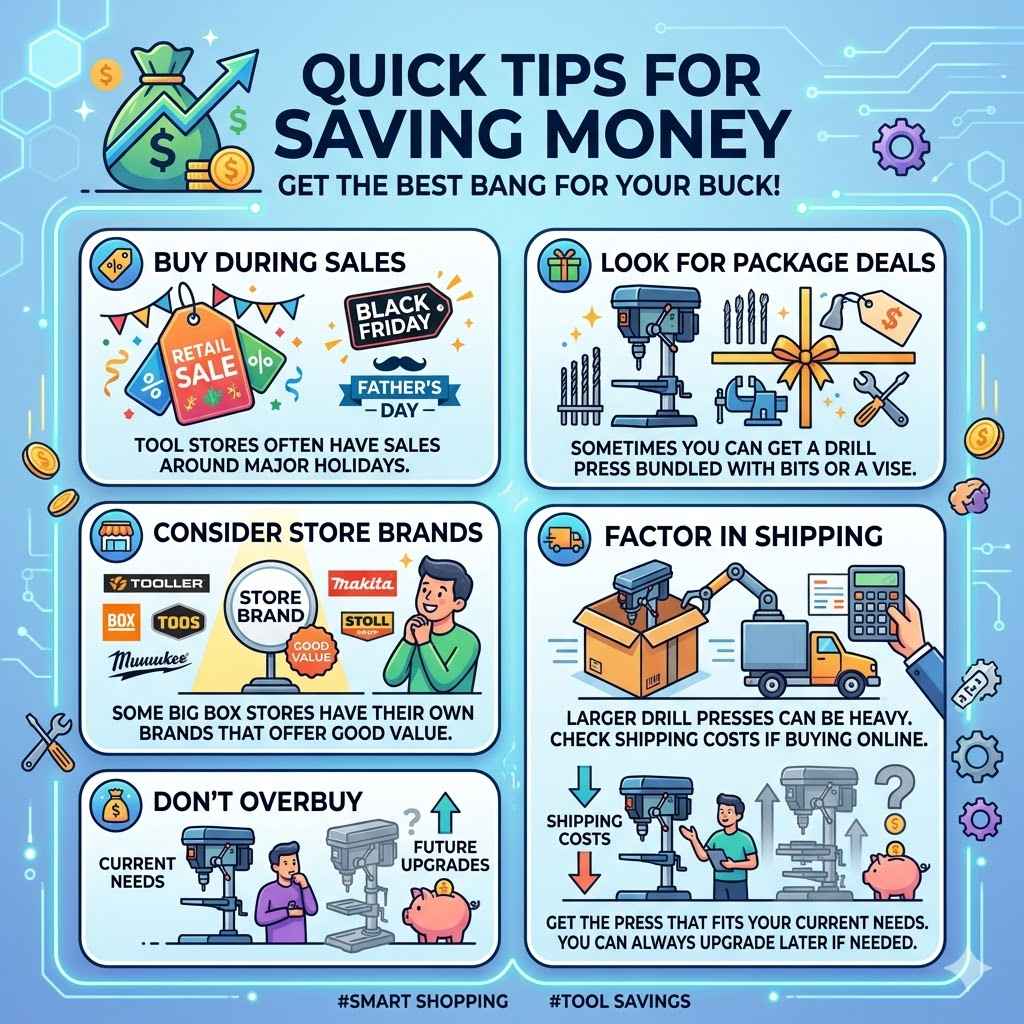
Quick Tips for Saving Money
Want to get the best bang for your buck? Here are a few tips:
- Buy during sales: Tool stores often have sales around holidays like Black Friday or Father’s Day.
- Look for package deals: Sometimes you can get a drill press bundled with bits or a vise.
- Consider store brands: Some big box stores have their own brands that offer good value.
- Factor in shipping: Larger drill presses can be heavy. Check shipping costs if buying online.
- Don’t overbuy: Get the press that fits your current needs. You can always upgrade later if needed.
Frequently Asked Questions About Drill Press Costs
How much should I expect to pay for a good beginner drill press?
For a good entry-level drill press, expect to spend between $150 and $300. This range typically gets you a benchtop model with decent power (around 1/3 to 1/2 HP) and a cast iron base for added stability. It will be a significant improvement over a hand drill for accuracy.
Is it worth buying a used drill press?
Yes, buying a used drill press can be a great way to save money. High-quality older machines are often very durable. However, always inspect it carefully for wobble, rust on critical parts, and motor condition before purchasing.
What is the biggest factor that affects drill press price?
The biggest factors are usually motor power, build materials (especially cast iron construction), and size/capacity. Industrial-grade presses with high horsepower and robust, heavy-duty construction will always cost the most.
Are expensive drill presses really that much better?
Generally, yes. Higher-priced drill presses offer better build quality, more power, greater precision, and features that enhance usability and durability. They are built to last longer and perform more demanding tasks reliably.
However, “better” is relative to your specific needs and projects.
What extra costs should I budget for besides the drill press itself?
You should budget for essential accessories like a good set of drill bits (appropriate for your materials), a drill press vise for safety and holding workpieces, and basic safety gear like safety glasses and hearing protection. These can add $100-$200 or more to your total initial cost.
Can I find a decent drill press for under $100?
It’s very difficult to find a decent, reliable drill press for under $100. While some extremely basic or very small models might be in that price range, they often lack power, stability, and accuracy. For a tool that will genuinely help your projects, aiming for at least $150-$200 is usually necessary.
Conclusion: Investing Wisely in Your Workshop
The cost of a drill press is a journey. It starts with understanding the types. Then, you look at what makes them pricier or more affordable.
From motor power to build quality, each element plays a part. Your budget will guide you, but consider value too.
A drill press is an investment in your projects. Choose wisely. Focus on what you truly need.
This guide should help you find the right tool for your workshop and your wallet.
Sponsored / affiliate links. As an Amazon Associate I earn from qualifying purchases. I may earn additional commission from eligible campaigns.